Categories
Social Studies

Landforms and Natural Resources

Listed below are selected teacher resources, picture books, and non-fiction related to landforms and natural resources.

Teacher Resources
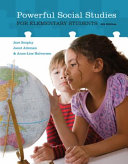
Powerful social studies for elementary students

by Jere Brohpy, Janet Alleman, and Anne-Lise Halvorsen

Grades: K-6

This book combines theory and research with examples from classroom practice, and outlines ways to select content and teach history, geography, and social sciences meaningfully in the elementary classroom.
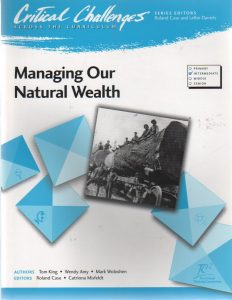
Managing our natural wealth: A unit on natural resources with a focus on forestry, fishing, and mining in British Columbia

by Tom King, Wendy Amy, and Mark Woloshen

Grades: 5-7

Through a variety of critical thinking challenges, students learn about Canada’s natural resources and then focus on problems and solutions related to forestry, fishing and mining in British Columbia. For more resources in the “Critical challenges across the curriculum series”, click here.
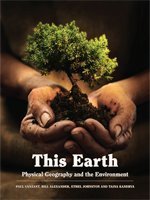
This earth: Physical geography and the environment

by Paul Vazant and others

Grades: 10-12

A case-driven text that focuses on physical geography and human interaction and covers the origin of Earth, continental shifts, water and air pollution and human impacts, and taking responsibility for the planet. Also includes teaching notes, lesson plans, and assessment rubrics.

Picture Books
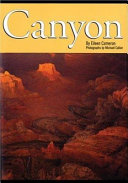
Canyon

written by Eileen Cameron, photographed by Michael Collier

Grades: K-3

Colourful photographs of landscapes are accompanied by poetry which traces water’s journey from the sky, down the mountains, in the rivers, and finally forming a canyon.
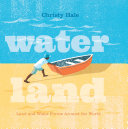
Water land: Land and water forms around the world

written and illustrated by Christy Hale

Die-cut pages identify and contrast types of water bodies and their corresponding land masses to help young readers understand how connected the earth and the water really are.

Non-fiction
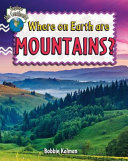
Where on earth are mountains?

by Bobbie Kalman

Grades: 1-2

Discusses how mountains form and explores different mountain ranges around the world. For more books from the “Explore the continents” series, click here.
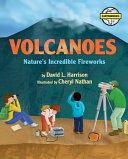
Volcanoes: Nature’s incredible fireworks

by Natalie Hyde

Grades: 1-3

Shows how volcanoes are created and why they erupt. Includes an introduction to magma, lava, colliding plates that cause earthquakes, and other natural phenomena. For more books from the “Earthworks” series, click here.
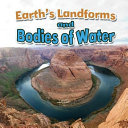
Earth’s landforms and bodies of water

by Pamela Hickman

Grades: 1-3

Explains how Earth is covered by landforms and bodies of water, how they develop, and why they change. Covers landforms such as mountains, valleys, and sand dunes, as well as waterways such as oceans, rivers, and ponds. For more books in the “Earth’s processes close-up” series, click here.
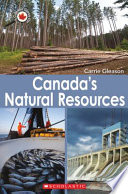
Canada’s natural resources

by Carrie Gleason

Grades: 1-4

Explores Canada’s diverse environments and the natural resources they provide. Divided into five sections, forests; oceans, rivers and lakes; land and soil; rocks and minerals; and energy resources. For more books in the “Canada close up” series, click here.
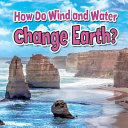
How do wind and water change Earth?

by Natalie Hyde

Grades: 2-3

Explains how landforms can be changed by weathering and erosion in both the short and long term.
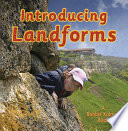
Introducing landforms

by Bobbie Kalman and Kelley MacAulay

Grades: 2-4

Provides an introduction to why the land on Earth has different shapes in different places. Photographs, illustrations, and text covers continents, mountains, valleys, plains, and caves, as well as the forests, animals, and water that may be found on each landform.
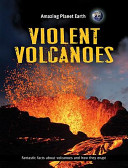
Violent volcanoes

by Terry Jennings

Grades: 3-6

Introduces volcanoes, explaining how they are formed, why they erupt, and the different shapes of volcano cones, along with descriptions of some of the most famous volcanic eruptions of the twentieth century. For more books in the “Amazing planet earth” series, click here.
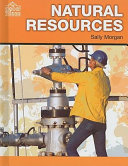
Natural resources

by Sally Morgan

Grades: 5-8

Presents a global look at where Earth’s natural resources come from and how they are traded between countries, including the benefits and drawbacks of globalization in this area.


Finding More Resources

To find more resources in this area, try the following:

  • Search using the General tab on the UBC Library website to look for material in all UBC Library branches.
  • Search using “Search Education Resources” box in the left hand bar on the Education Library website to limit your results to materials in the Education Library.
  • Use specific search terms to narrow your results, such as “Natural Resources”, “Natural Resources–Juvenile literature.”, Landforms, “Landforms–Juvenile literature.”
  • To find lesson plans, include “lesson plans”, “lesson planning”, or “activity programs” in your search terms.

For more help with searching, please visit the Library Service Desk or e-mail ed.lib@ubc.ca.

Categories
Social Studies

History of British Columbia

Listed below are selected teacher resources, picture books, fiction, and non-fiction related to the history of British Columbia.

Teacher Resources

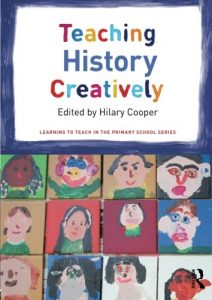
Teaching history creatively

edited by Hilary Cooper

Grades: K-12

This book introduces teachers to a range of available approaches to historical inquiry which involve creative, active and effective learning. Topics include the link between history education and creativity, investigating sources, using archives, using drama to explore events, and more. (E-book only.)

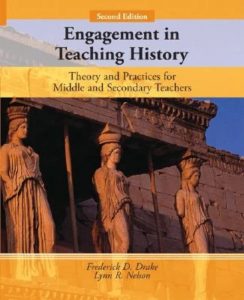
Engagement in teaching history: Theory and practice for middle and secondary teachers

by Frederick D. Drake and Lynn R. Nelson

Grades: 7-12

This book presents key elements of history instruction, including the use of primary sources and narratives, involving students in the historical inquiry through classroom discussions, teaching toward chronological thinking, and the use of historical documents.

Picture Books

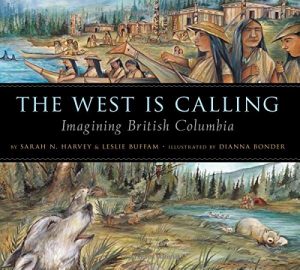
The west is calling: Imagining British Columbia

written by Sarah N. Harvey & Leslie Buffam, illustrated by Dianna Bonder

Grades: K-7

150 years of British Columbia’s history told through haiku and colourful images.

Fiction

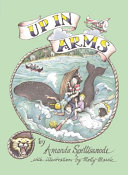
Up in arms

written by Amanda Spottiswoode, illustrated by Molly March

Grades: 3-8

During the Second World War Sophie, Molly, Mark, Harriet, Leticia, and Posy are sent to live with their eccentric uncle, Captain Gunn on the BC coast. The group embarks on adventures, stopping in Hesquiat Harbour, Estevan Point Lighthouse, Cape Scott, and Alert Bay and meet real-life historical figures such as Cougar Annie and aviator Jim Spilsbury along the way.

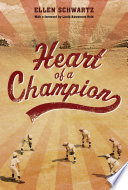
Heart of a champion

by Ellen Schwartz

Grades: 4-6

Kenny (Kenji in Japanese) wants nothing more than to play on the Asahi baseball team with his brother Mickey (Mitsuo). But when Japan attacks Pearl Harbor in 1941, everything for Kenny and his family spirals out of control: schools are closed, businesses are confiscated, fathers are arrested and sent to work camps in the BC interior and mothers and children are relocated to internment camps. Kenny fights to uplift people’s spirits and maintain his love of baseball despite seemingly insurmountable challenges.

Non-fiction

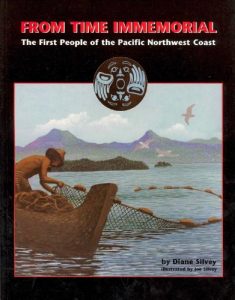
From time immemorial: The first people of the Pacific Northwest coast

written by Diane Silvey, illustrated by Joe Silvey

Grades: 3-8

From Time Immemorial provides an honest and up-to-date survey of the history of the coastal First Nations from pre-contact to the present. Includes a broad overview of traditional ways common to a large number of diverse groups. A teacher’s guide is also available for this book.

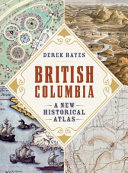
British Columbia: A new historical atlas

by Derek Hayes

Grades: 8-12

A large collection of maps related to British Columbia’s history, including the maps of Indigenous peoples, fur traders, gold seekers, and railway builders. Also includes relevant photographs and historical documents.

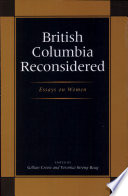
British Columbia Reconsidered: Essays on women

edited by Gillian Creese and Veronica Strong-Boag

Grades: 11-12

A comprehensive set of essays detailing the lives and contributions of women in British Columbia’s history.

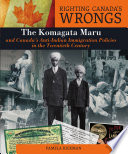
The Komagata Maru and Canada’s anti-Indian immigration policies in the twentieth century

by Pamela Hickman

Grades: 6-12

This book explores the 1914 incident in which the Canadian government refused to allow over 300 immigrants who came to Canada by ship – on the Komagata Maru – to stay in this country. Part of the Righting Canada’s wrongs series.

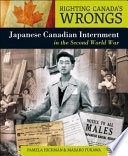
Japanese Canadian internment in the Second World War

by Pamela Hickman and Masako Fukawa

Grades: 6-12

This book uses first-person narrative from five Japanese Canadians who were youths at the time their families were forced to move to the camps to describe the experience of internment. Also includes photographs and historical documents. Part of the Righting Canada’s wrongs series.


Finding More Resources

To find more resources in this area, try the following:

  • Search using the General tab on the UBC Library website to look for material in all UBC Library branches.
  • Search using “Search Education Resources” box in the left hand bar on the Education Library website to limit your results to materials in the Education Library.
  • Use specific search terms to narrow your results, such as “British Columbia–History”, “Frontier and pioneer life–British Columbia”, “British Columbia–Juvenile fiction”
  • To find lesson plans, include “lesson plans”, “lesson planning”, or “activity programs” in your search terms.

For more help with searching, please visit the Library Service Desk or e-mail ed.lib@ubc.ca.
Categories
Social Studies

Government

Listed below are selected teacher resources, picture books, and non-fiction related to government.

Teacher Resources

Powerful social studies for elementary students

by Jere Brophy, Janet Alleman, and Anne-Lise Halvorsen

Grades: K-6

This book combines theory and research with examples from classroom practice, and outlines ways to select content and teach history, geography, and social sciences meaningfully in the elementary classroom. Includes specific content on civics and government.

Canadians and their government: A resource guide

by Canadian Heritage

Grades: 6-12

Gives a comprehensive and concise explanation of how Canada has developed, and continues to develop, as a democratic country. Includes activities to help youth become familiar with, think critically about and engage themselves in Canada’s democratic system of government. Also available online and in French.

Picture Books

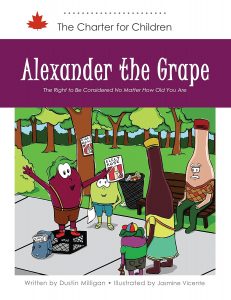
Alexander the grape: The right to be considered no matter how old you are

written by Dustin Milligan, illustrated by Jasmine Vicente

Although dreams of the exciting things that await him when he is older – like becoming a bottle of grape juice and travelling to far off lands! With an election underway, he becomes immersed in local politics— campaigning to lower the age necessary to become grape juice. This book explores the right to be considered regardless of age. For more in the “Charter for Children” series, click here.

 That’s not fair!: Getting to know your rights and freedoms

written by Danielle S. McLaughlin, illustrated by Dharmali Patel

A collection of stories illustrating civil liberties. Mayor Moe and the councillors of the City often need to come up with new laws to keep things ticking along smoothly. But what happens when they don’t agree about the solution to a problem? In each story the councillors are presented with a problem, and the group then makes a decision to address the problem with a new law, only to discover later there were unintended consequences in each instance.

Amelia Bedelia’s first vote

written by Herman Parish, illustrated by Lynne Avril

Letting an elementary school vote on school rules? It probably won’t end well, but Amelia Bedelia’s first foray into the democratic process is a clever way to engage kids in a discussion of elections. Kids will learn about absentee ballots, run-offs, and the power of persuasion. See also Amelia Bedelia 4 mayor.

Non-fiction

Get involved: Democracy

by Joy Kita

Grades: 3-6

Discusses Canada’s democratic process and the important role of Canadian citizens. Part of the To Be Canadian series.

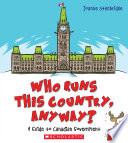
Who runs this country anyway? A guide to Canadian government

by Joanne Stanbridge

Grades: 3-7

Covers core concepts of Canadian government including the structure of government, the role of the monarch, the Constitution, Canadian Charter of Rights and Freedoms, referendums, by-elections, and everything students need to know about Parliament. Includes text, photos, and illustrations.

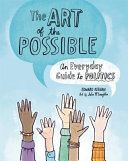
Art of the possible: An everyday guide to politics

written by Edward Keenan, art by Julie McLaughling

Grades: 5-9

An introduction to politics, and why we need them. Includes topics such as why we form societies, the basic types of governments, the power of public opinion, methods of rhetoric, and the reasons why politicians ‘lie’. Each chapter covers a single topic and includes relevant case studies.

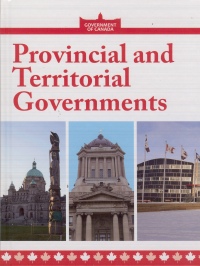
Government of Canada Series

by various authors

Grades: 6-8

The four books in this series – Federal Government, Municipal Government, Provincial and Territorial Governments, and the Rights and Responsibilities of Canadian Citizens – provide readers with a detailed look at the country’s systems of government.

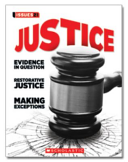
Justice

by Charles Boocock

Grades: 6-9

Part of the Issues 21 series, which examines contemporary issues in society in order to develop students’ skills in the areas of critical thinking, creativity, communication, collaboration, ethical citizenship and activism. Includes 6 student books and a teacher’s guide.

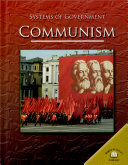
Systems of government series

by various authors

Grades: 6-9

The four books in this series – Communism, Dictatorship, Monarchy, and Democracy – look at different systems of government and discusses their origins, history and practical application in the world.


Finding More Resources

To find more resources in this area, try the following:

  • Search using the General tab on the UBC Library website to look for material in all UBC Library branches.
  • Search using “Search Education Resources” box in the left hand bar on the Education Library website to limit your results to materials in the Education Library.
  • Use specific search terms to narrow your results, such as “Canada–Politics and government–Juvenile literature.”, “Civics–Juvenile fiction.”, “Politics, practical–fiction”, “Political science”
  • To find lesson plans, include “lesson plans”, “lesson planning”, or “activity programs” in your search terms.

For more help with searching, please visit the Library Service Desk or e-mail ed.lib@ubc.ca.
Categories
Social Studies

Communities

Listed below are selected teacher resources, picture books, and non-fiction related to communities.

Teacher Resources

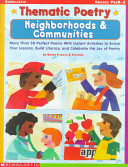
Neighborhoods & Communities: More Than 30 Perfect Poems with Instant Activities to Enrich Your Lessons, Build Literacy, and Celebrate the Joy of Poetry

by Betsy Franco and friends

Grades: K-2

Collection of easy to read poems that celebrate the places and faces that make up a community including, neighborhood helpers, the firehouse, the grocery store, cars and trucks, and homes. Includes literacy-building activities and cross-curricular projects.

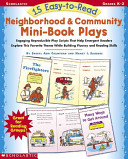
 15 easy-to-read neighborhood & community mini-book plays

by Sheryl Ann Crawford and Nancy l. Sanders

Grades: K-2

Every class will have fun developing reading skills, fluency, and confidence as they read these delightful mini-book plays. Titles include We Bring the Mail, Many Ways to Get Around, Fire Fighters, Follow the Map, Good Neighbors Help, and many more! Rhyme, repetition, predictable text, and irresistible illustrations help make these perfect read-aloud plays for beginning readers.

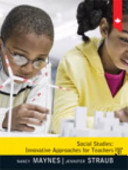
Social studies: Innovative approaches for teachers

by Nancy A. Maynes and Jennifer M. Straub

Grades: K-6

The authors focus on two important approaches to teaching social studies: the value and flexibility of social studies as a broad medium for teaching a range of skills and concepts, including literacy and numeracy; and the human aspect of social studies, in its relation to people and their activities, challenges, and choices. Includes a chapter on using the community as a resource.

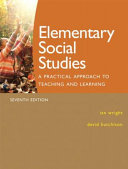
Elementary social studies: A practical approach to teaching and learning

by Ian Wright and David Hutchinson

Grades: K-7

Activities based text that emphasizes the need to be involved in social studies teaching and learning to offer effective instruction. Focuses on the process of teaching, and includes relevant information about emerging technologies, media literacy and environmental education.

2016 Census teacher’s kit: Teacher’s guide

by Statistics Canada

Grades: 5-6

Four detailed activities which emphasize the value of collecting census data in a variety of subjects. Activity 2 “Our class, our community” specifically touches upon how data can be used to understand and serve community needs. eBook only.

Picture Books

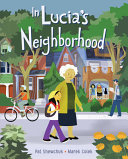
In Lucia’s neighbourhood

written by Pat Shewchuk, illustrated by Marek Colek

Grades: K-2

Inspired by the work of urban studies writer and activist Jane Jacobs, seven-year-old Lucia takes readers on a daylong tour of her own bustling city neighborhood, commenting on all the people and their activities that she encounters along the way.

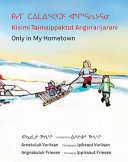
 Kisimi Taimaippaktut Angirrarijarani/Only in My Hometown

written by Angnakuluk Friesen, illustrated by Ippiksaut Friesen, translated by Jean Kusugak

The northern lights shine, women gather to eat raw caribou meat and everyone could be family in this ode to small-town life in Nunavut, written in English and Inuktitut. Sisters Angnakuluk Friesen and Ippiksaut Friesen collaborate on this story about what it’s like to grow up in an Inuit community in Nunavut. With strong social studies curriculum connections, Only in My Hometown introduces young readers to life in the Canadian North, as well as the Inuit language and culture.

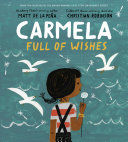
Carmela full of wishes

written by Matt de la Peña, illustrated by Christian Robinson

Carmela wakes up on her birthday and is finally old enough to join her big brother as he does the family errands. The two travel through their neighbourhood, past the crowded bus stop, the fenced-off repair shop, and the panadería, until they arrive at the Laundromat, where Carmela finds a lone dandelion growing in the pavement. Follow along as Carmela tries to think of the perfect birthday wish while exploring her community.

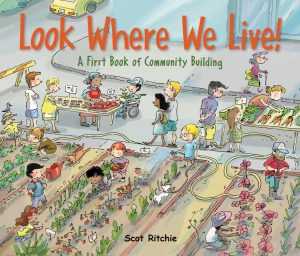
Look where we live! A first book of community building

written and illustrated by Scot Ritchie

In this book, five young friends — Nick, Yulee, Pedro, Sally and Martin — spend the day traveling around their neighborhood and participating in activities designed to raise money for their local library. Along the way, they learn about the people and places that make up their community and what it means to be a part of one.

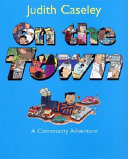
On the town: A community adventure

written by Judith Caseley

Grades: K-2

Charlie’s homework was to explore the people and places in his community. “What is my community?” he asked his mother. So they took a walk to find out. Charlie and his mother take a walk that can be taken by anyone with a keen sense of fun — and open eyes and an inquiring mind.

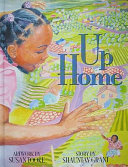
Up home

written by Shauntay Grant, illustrated by Susan Tooke

A heartwarming portrayal of the Nova Scotian community of Preston past and present, including real models from the community. Grant’s memories of growing up reflect a magical place where landscape, food, history and, most of all, people come together in a community filled with love and beauty. A powerful story with positive images of one of Nova Scotia’s most important black communities.

Non-fiction

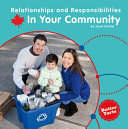
In your community

by Janet Gurtler

Grades: K-1

Explores what it means to be part of a community as well as the responsibility that brings. Part of the Relationships and Responsibilities series.

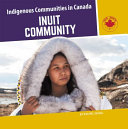
Indigenous Communities in Canada

series, by various authors

Grades: 2-4

The thirteen books in this series – Inuit Community, Mi’kmaq Community, Mohawk Nation, Nakota Community, Nisga’a Nation, Odawa Community, Nuu-chah-nulth, Tlingit Nation, Dene First Nations, Haida Nation, Salish Community, Métis Community, and Cree Community, – discuss the history, language, and cultural practices of different Indigenous communities across Canada, both in the past and in current times.

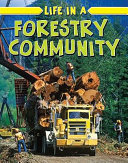
Life in a forestry community

by Lizann Flatt

Grades: 3-4

People who work in sawmills, logging camps, and in the forestry industry live in small towns close to the forests. This books follows the daily lives of families living in Mackenzie, British Columbia and shows life is changing as the town`s main industry changes. Part of the Learn About Rural Life Series.

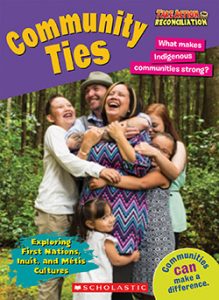
Community Ties

part of the Take Action for Reconciliation series

Grades: 3-8

Created by Indigenous educators and advisors from across Canada, these inquiry-based books explore what makes First Nations, Inuit, and Métis communities strong. Includes 16 student books and a teacher’s guide.


Finding More Resources

To find more resources in this area, try the following:

  • Search using the General tab on the UBC Library website to look for material in all UBC Library branches.
  • Search using “Search Education Resources” box in the left hand bar on the Education Library website to limit your results to materials in the Education Library.
  • Use specific search terms to narrow your results, such as, “Communities–Juvenile literature.”, “Community Life–Juvenile Literature.”, “Community life–Fiction.”, “Neighborhoods–Juvenile Literature.”, “Neighborhoods–Fiction.”
  • To find lesson plans, include “lesson plans”, “lesson planning”, or “activity programs” in your search terms.

For more help with searching, please visit the Library Service Desk or e-mail ed.lib@ubc.ca.
Categories
Social Studies

Ancient Civilizations

Listed below are selected teacher resources and non-fiction related to ancient civilizations.

Teacher Resources

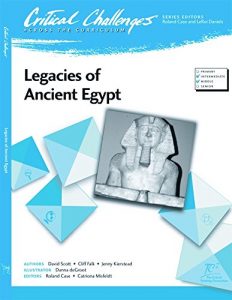
 Legacies of Ancient Egypt : A unit celebrating the wonders of ancient Egypt and their enduring connections with the modern world

by David Scott

Grades: 4-9

A unit on Ancient Egypt, including comprehensive lesson plans, and its links to present day. For more in the “Critical challenges across the curriculum series”, click here.

Ancient civilizations: China, India, Africa, Mesopotamia

by Wendy Conklin

Grades: 5-12

This book provides lessons and activities to allow students to explore various aspects of different ancient cultures, such as planning travel through different regions, acting out plays, practicing calligraphy, playing board games, and more.

Non-Fiction

 The Kingfisher atlas of the ancient world

by Simon Adams, illustrated by Katherine Baxter

Grades: K-4

This atlas has 17 maps of the ancient world, from 10,000 BC to 1000 AD. Each map shows the major sites from a particular civilization or group of civilizations, with information on the people, customs, and cultural and architectural artifacts.

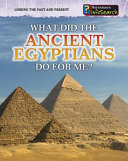
 What did the ancient Egyptians do for me?

by Patrick Catel

Grades: 3-6

This book covers many aspects of ancient Egyptian life, including art, architecture, medicine, government, and work life. For more books in the “Linking the past and present” series, click here.

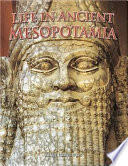
 Life in Ancient Mesopotamia

by Shilpa Mehta-Jones

Grades: 3-6

This book describes the lives of ancient Sumerians, Babylonians, and Assyrians. Lawmakers such as Hammurabi, the architectural inventiveness of ziggurats and the Hanging Gardens of Babylon, and the invention of cuneiform writing are also featured. For more books in the “Peoples of the ancient world” series, click here.

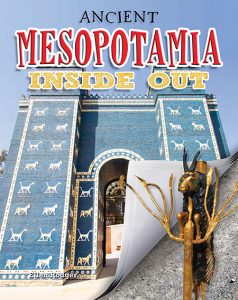
 Ancient worlds inside out series

by various authors

Grades: 4-6

A series of four books which use artifacts to explore the culture and achievements of ancient Egypt, Maya, China, and Mesopotamia.

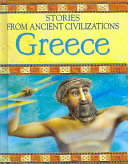
Stories from ancient civilizations: Greece

written by Shahrukh Husain, illustrated by Bee Wiley

Grades: 4-6

An anthology of Greek mythology, including background information related to the myths and characters, a glossary, and index. For more books in the “Stories from ancient civilizations” series, click here.

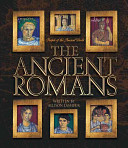
The ancient Romans

by Allison Lassieur

Grades: 4-8

Illustrates many aspects of Roman life, including the government, religion, the life of the working class, the role of women, and more. For more books in the “People of the ancient world” series, click here.

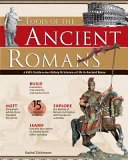
Tools of the Ancient Romans: A kid’s guide to the history & science of life in Ancient Rome

by Rachel Dickinson

Grades: 5-8

Explores the history and science of ancient Rome, teaching about Roman innovations and ideas of government, science, religion, sport, and warfare, and how they have shaped world history and our own world view. See also Tools of the Ancient Greeks.

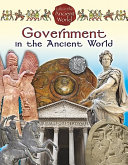
Government in the ancient world

by Paul Challen, Shipa Mehta-Jones, and Lynn Peppas

Grades: 5-8

Provides snapshots of several types of government in the ancient world, including Chinese dynasties, Greek democracy, the Mesopotamian justice system, and more. For more books in the “Life in the ancient world” series, click here.

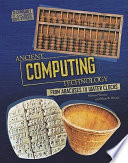
Ancient computing technology: From abacuses to water clocks

by Michael Woods and Mary B. Woods

Grades: 6-9

Describes the mathematical technology used by ancient societies, covering techniques used for counting, measurements, weights, time, and calculations, including the ancient civilizations of China, Greece, Rome, India, and the Middle East.


Finding More Resources

To find more resources in this area, try the following:

  • Search using the General tab on the UBC Library website to look for material in all UBC Library branches.
  • Search using “Search Education Resources” box in the left hand bar on the Education Library website to limit your results to materials in the Education Library.
  • Use specific search terms to narrow your results, such as “History, Ancient–Study and teaching”, “Ancient Civilizations”, “Civilization, Ancient–Juvenile literature”, “Civilization, Ancient–Study and teaching (Elementary)”
  • To find lesson plans, include “lesson plans”, “lesson planning”, or “activity programs” in your search terms.

For more help with searching, please visit the Library Service Desk or e-mail ed.lib@ubc.ca.
Spam prevention powered by Akismet