
Introduction
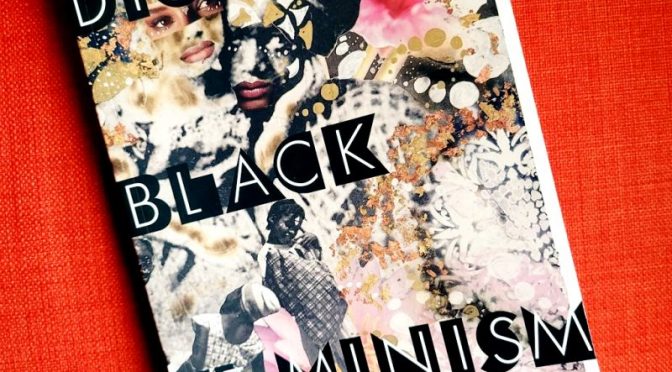
Catherine Steele’s book, Digital Black Feminism, is an exploration of critical issues surrounding race and media in modern media theory. It was published in October 2021, at the height of the #BlackLivesMatter movement. The book highlights Steele’s expertise as a scholar of race, gender, and media. Steele is an Associate Professor of Communication at the University of Maryland, where she runs the Black Communication and Technology (BCaT) lab. Her scholarship focuses on how marginalized communities have resisted oppression through digital technologies. Her book came at a crucial time, in a moment in which social media activism was at its peak, renewing attention to racial justice and the politics of technology.
Steele’s book reframes how scholars understand the intersection between race, media, and politics. It highlights the essential contributions of Black women to the media landscape while acknowledging the lack of recognition of their revolutionary innovations due to their positionality. Steele analyzes Black women’s use of the internet as a tool of recognition, activism, and survival. This work reminds us that the media is never neutral; it’s inherently political, often working to silence already marginalized voices. A central theme is acknowledging how Black women have been fighting against these political systems that surveil and constrain users due to racial and gender bias. Steele argues that Digital Black feminism works to repurpose these systems that have historically marginalized them. She states that Black women have long used media as spaces of community, extending a lineage of traditional Black feminism that predates the internet as a way to remain visible and represented in a world that wants to do the opposite.
This book report examines how Black Digital Feminism works to redefine media theory through connections to representation, politics, embodiment. By drawing on theories introduced by Grant Bollmer’s Materialist Media Theory, Simone Browne’s work Dark Matters: On Surveillance of Blackness, Safiya Noble’s Algorithms of Oppression, and Mark Hansen’s Bodies in Code. This work acts as a bridge to connecting themes raised in Steele’s work and broader media studies theories. As Media Studies students, Steele’s book reminds us to analyze systems of power and oppression. She invites the reader to take a look at who is seen, who is silenced, and how marginalized communities reimagine the world of technology.
Overview of the Book
Steele’s Digital Black Feminism explores how Black feminist thought intersects with digital technology. Steele centers Black women’s voices and highlights how their use of technology is rooted in a long history of resisting oppression. In the first chapter, she discusses how technology shaped Black women’s lives during slavery, touching on oral culture, forced labor, and communication between worlds. Steele argues that Digital Black Feminism is a “political choice that bolsters the claim that feminism practiced without adherence to racial practices is not feminism at all”(18). She warns against analyzing technology through a “colorblind” lens, as that perpetuates more oppression, ignoring the harassment Black women face online. Steele emphasizes the need to recognize Black women’s foundational roles in feminist and civil rights movements, and urges readers to approach Digital Black Feminism with awareness of its historical and political context.
In the next chapter, Steele introduces the “virtual beauty shop” as a metaphor for Black feminism in digital spaces. She describes the virtual beauty shop as a constructed space for Black women. As beauty salons have been safe havens for the Black community, Steele shows how Black women are extending these safe spaces online through conversations about hair care. In the next three chapters, she connects this idea to the work of historic Black feminist icons and argues that social media has become a powerful tool for continuing their legacy. Steele challenges stereotypes that erase Black women from technology, showing how activities like blogging, hair tutorials, and Black Twitter contribute to knowledge, resistance, and academic discourse. She argues that Digital Black Feminism broadens the idea of scholarship, making theory more accessible. This book reframes the media not as a neutral technology but as a political space that is tied to history, empowerment and resistance.
Media and Representation
Catherine Steele’s arguments in this book bring forward key ideas about media and power, and representations that align with the central themes of our course. Steele reminds the audience of the importance of Black women creators in the digital landscape, highlighting them as voices for their community and figures of representation. This resonates with Grant Bollmer’s discussion in Materialist Media Theory, where he argues that representation is essential to the politics of media, since it works to determine whose voices are heard and whose are erased. He highlights that the silencing of marginalized people is not simply an oversight but a tactic of political erasure. As representation in the media is a symbol of power, lack of visibility works to restrict political action. Steele’s analysis grounds this theory, as the harassment of Black women online, censorship, and algorithmic bias demonstrate how digital platforms function to discipline and silence marginalized users, limiting their participation in public discourse.
However, through Steele’s work, she demonstrates how Black feminists are actively defying these systems of power. The Digital Black Feminist movement emerges as a countermeasure to this silencing, transforming exclusion into a space for community. Through social media, digital storytelling, and activism, Black women are creating a space of affirmation and political critique that challenges the social hierarchies embedded in the media. This movement correlates with Bollmer’s ideas that the politics of representation lies not only in obtaining visibility but having control within these systems in order to change them. Steele reminds us that when Black women organize and create online, they are not simply using media but remaking it, pushing back against the very systems that aim to silence them.
Media Politics & Surveillance
Steele’s discussions on representation and empowerment directly connect to ideas on media politics and surveillance explored in class and broader media scholarship. In discussions on mass media, it was emphasized that the media is centered around and controlled by institutions of power. Steele’s Digital Black Feminism, alongside theories by Simone Browne and Safiya Noble, exposes how media is inherently political, reproducing racial hierarchies through surveillance and algorithmic bias. Browne’s Dark Matters: On the Surveillance of Blackness traces how the system of racialized surveillance is rooted in slavery and colonialism. She argues that racialized surveillance is “a technology of social control where surveillance practices, policies, and performances concern the production of norms pertaining to race and a power to define what is in or out of place” (Browne 77). These practices are reproduced in digital forms through tracking, data collection, and targeted harassment. These systems of power aim to control Black voices by supervising their interactions with the media.
This is prevalent in Steele’s work as she discusses how targeted harassment and “algorithms of oppression,” a concept introduced by Noble, work to push Black women off digital platforms. Safiya Noble’s Algorithms of Oppression highlights how search engines and digital infrastructures are encoded with racial bias that pushes anti-Black rhetoric. She provides an example of how Google’s photo application automatically “tagged African Americans as “apes” and “animals” (Noble 6). This is just one example of the hundreds of “accidental” algorithmic incidents of racism. These algorithms aim to control and discourage Black users rather than allowing them to speak their truths. Steele extends this analysis by discussing how this surveillance works to hide Black presence, allowing their scholarship to be drowned out by harassment or go unnoticed. It’s important to acknowledge that race impacts a person’s experience on the internet and that colorblind view on media politics does more harm than good.
Critical Reflection & Possibilities
Steele’s work highlights the blind spots that theorists often overlook when discussing race and technology. It offers more than a case study; it introduces a movement. Theory is often influenced by embodied experiences. As introduced by Mark Hansen in Bodies in Code, media is an extension of the body that shapes perception and experiences. Hansen suggests that digital media makes the body the site of mediation, closing the distinction between human and technological experience. This reminds us that Digital Black Feminism is more than just a theoretical framework; it’s a lived experience. For Black women, embodiment in digital spaces is not evenly distributed. It’s important we acknowledge that the Black body is both hypervisible and surveilled.
However, after reading Steele’s argument, I was left with questions about Digital Black Feminism and the limitations of her discussions. As an Afro-Latina media scholar, I noticed that Steele’s argument was largely grounded in a U.S. context. This focus allows her to speak on her positionality and the rich history between the African American slave experience and modern media practices. However, it is also a limitation. It left me wondering about the exploration of African, Caribbean, and Black diasporic lenses. Black Feminist media practices are at play globally, often interacting with colonial legacies and political oppression. A diasporic lens would work to extend ideas of surveillance, representation, and algorithmic bias. With the current state of the political world, I feel like analyzing the power of Digital Black Feminism and media politics in places like Sudan and Congo, which are suffering from extreme oppression and humanitarian crises, would provide another larger, inclusive perspective. Looking at Digital Black Feminism from a global lens would help root her claims as a universal Black experience rather than just through an American context, since it is bigger than just the USA. Given this, I would be interested in further analyzing Grant Bollmer’s ideas on geopolitics and colonial power influencing the media.
Conclusion
Catherine Steele’s Digital Black Feminism transforms how we understand media, politics, and representation. By connecting digital culture with the long history of Black feminist communication, Steele demonstrates that media is both an agent of control and a tool for resistance. When read alongside Bollmer’s ideas on representation, Browne’s theory of surveillance, Noble’s work on algorithmic bias, and Hansen’s discussions on embodiment, it is evident that the media is deeply political and a lived experience. For Media Studies students, Steele’s book challenges us to reevaluate our ideas on media by making the reality of Black women media users present and visible. It warns us that the media is tied to systems of power that often work to hinder marginalized voices. Steele does suggest that if used with intention, it can work to create a safe haven of community and creativity. Ultimately, Steele’s work insists that the study of Black Digital Feminism should be seen as a study of liberation (as with her example of the virtual beauty salon), showing how marginalized communities can not only survive within the political systems but transform them into a space of joy and resistance.
Written by: Aminata Chipembere
Works Cited
Bollmer, Grant. Materialist Media Theory: An Introduction. Bloomsbury Academic, 2019.
Browne, Simone. Dark Matters: On the Surveillance of Blackness. Duke University Press, 2015. JSTOR, https://doi.org/10.2307/j.ctv11cw89p. Accessed 10 Nov. 2025.
Hansen, M. B. N. Bodies in Code: Interfaces with New Media. Routledge, 2006.
Noble, Safiya Umoja. Algorithms of Oppression: How Search Engines Reinforce Racism. NYU Press, 2018. JSTOR, https://doi.org/10.2307/j.ctt1pwt9w5. Accessed 9 Nov. 2025.
Steele, Catherine Knight. Digital Black Feminism. New York University Press, 2021.
Hey Aminata!!
I loved your post! You tied Steele’s “Digital Black Feminism” to so many of the theorists we’ve discussed in class, and the connections you made with Browne, Noble, Hansen, and Bollmer were so insightful. I liked how you emphasized that Steele’s work isn’t just about theory, it’s about lived experience and how Black women actively resist systems that try to silence them. The way you described embodiment as both political and technological really stood out to me.
Your point about Steele’s American-centered perspective was also super clear and interesting. Expanding her ideas to include more global or diasporic Black feminist practices would make the framework even stronger. As I was reading your piece, it reminded me of Van den Eede and Wiener’s ideas. Van den Eede’s idea that humans and technology co-create each other connects so well with how Steele discusses Black women transforming digital spaces that were never made for them. And through Wiener’s feedback loops, that process becomes even clearer—the idea that when marginalized communities use technology in new and creative ways, they send cultural feedback into the system itself.
I think that’s what makes Steele’s work feel so powerful: it shows how Black women are not just adapting to technology but actively reshaping it. Their voices, creativity, and resistance feed back into digital culture, changing how online spaces function, setting trends, and reshaping who they serve. It turns what could have been just another system of control into a site of transformation and collective power. This was an amazing read! 🙂
Hi Sam!
Thank you so much for your comment!
I really appreciate your connection to Van den Eede and Wiener’s work, as I think these ideas help further my argument. I think it’s interesting that the idea of humans and technology co-creating each other is a concept worth exploring. I think that this theory further develops Steele’s idea about using technology to create a safe space within a system that was never “meant” for the Black Voice. I think it’s powerful to view Black Digital Feminism as a give-and-take, where both technology impacts Black Women and Black women, in turn, affect these spaces. I also really appreciate the connection to Wiener’s feedback loop; it’s a very inspiring outlook on this movement. Instead of solely focusing on the oppression within these systems of power, see the positives of how marginalized people can change the system from within.
Thank you again for your comment! I really appreciate your feedback and viewpoint 🙂
I didn’t personally read the book, but I really enjoy your summary. As both a media consumer and a filmmaker, I often notice the lack of diversity in media, so many of the points you raised were extremely relatable. In your opening paragraph, you mentioned that ”media is never neutral; it’s inherently political,” which I completely agree with. I was also able to connect this to my own book summary on Rob Cover’s identity and Digital communication, which explores how political structures impact different communities.
You did an excellent job connecting politics and surveillance. These forms of surveillance are often so subtle that we don’t notice them at first, but when you repeatedly use platforms, for instance, TikTok, you begin to see patterns such as algorithms favoring certain creators even when the content is similar. This often reflects racial biases embedded within the system. Your closing argument was strong, and I agree that expanding this conversation to a global perspective would be both interesting and necessary.