Category Archives: Book Review

Investigating ‘Becoming Beside Ourselves’ by B. Rotman

Introduction and Overview

We are no longer able to deny the post-human; we are, as Rotman reminds us, “natural born cyborgs” (2008, 1). The dawn of this cyborg condition is not recent, nor is it merely the effect of digital culture — it begins with writing itself. For Western thought, the writing of speech has long been alphabetic, forming the “dominant cognitive technology (along with mathematics)” so ingrained in our processes of thinking that it becomes “almost invisible” (2008, 2). In this era of alphabetic saturation, we cannot help but be “described, identified, certified and handled — like a text” (1988, x). Brian Rotman, a multidisciplinary scholar trained across mathematics, semiotics, media theory, and the humanities, situates writing not as a neutral tool but as a technology that has structured Western subjectivity for millennia. Becoming Beside Ourselves is the third book in his trilogy on the semiotics of mathematics and writing, and it brings together his lifelong interest in symbolic systems — mathematical notation, alphabetic inscription, and now digital code — to examine how each medium reorganizes our understanding of the self.

Rotman argues that the stability of the alphabetic order was shaken in the 19th century, when new media challenged writing’s role as the primary mode of recording and transmission. Photography, he notes, undermined writing’s claim to represent reality; the phonograph “eclipsed” writing’s earlier monopoly on “the inscription and preservation of speech sounds,” leaving alphabetic writing “upstaged” (2008, 2). Today, that dethroning has accelerated. Virtual and networked media push the alphabet to its abstract limit — a binary code of only two letters . Meanwhile, the rise of parallel computing introduces new “modes of thought and self,” new “imaginings of agency,” whose parallelisms emerge from and yet exceed the “intense seriality” of alphabetic writing (2008, 3). 

This restratification of symbolic systems reshapes more than language; it restructures how we perceive, how we interact, and how we understand our own identities. The transformation becomes clearest through the use of the word I. Rotman traces the ‘I’ across three dominant media regimes: from the spoken ‘I’ grounded in gesture, breath, and bodily presence; to the written ‘I’, an incorporeal, forever marker of selfhood; and now to a virtual ‘I’, dispersed across networked, machine, and parallel forms of agency. The contemporary subject is therefore “plural, trans-alphabetic, derived from and spread over multiple sites of agency — a self going parallel: a para-self” (2008, 9).

To follow the movement of ‘I’ through these technological shifts is to see how older conceptions of identity — single, stable, invisible, and unified, like the God-entity or the classical Psyche — are as ghosts sustained by particular media environments. Rotman’s conceptual realization is ultimately an exorcism; by deconstructing the alphabet, he reveals the media conditions that made such ghosts possible, and shows why they may come to not haunt us any further.

Parallel vs. Serial

It is easiest to understand Rotman’s para-self by beginning with the difference he draws between serial and parallel thinking. Serial thought is the form the alphabet trains us into — one letter following another, one line after the next, one thought subordinated to the previous in a linear chain. Writing, even mathematical, demands sequencing. Each unit must wait its turn. The alphabet is not only a medium but a temporal discipline, a practice of regulating thought into ordered succession.

Parallelism, by contrast, is not simply “doing multiple things at once.” It is a fundamentally different mode of processing, one in which states coexist. Rotman frequently invokes the example of quantum superposition to help illustrate the shift; a particle exists in multiple states simultaneously until observation (measurement) collapses it. The para-self operates in a similar fashion — not by replacing seriality, but by layering multiple agencies, identities, and positions at once. Where alphabetic writing demanded commitment to one linear identity, parallelism allows for co-presence, simultaneity, multiplicity.

The virtual ‘I’ emerges from this parallel condition. It is “an invisible, absent writing agency, detached from the voice, unmoored from any time or place of origination, and necessarily invisible and without physical presence” (2008, 118). This invisibility becomes a form of multiplication; the subject disperses across interfaces, platforms, and computational processes. The para-self is not a metaphor but a structural consequence of computing’s parallel logics and the systems that beg us to adapt.

Yet Rotman insists that alphabetic seriality remains buried within parallel architectures. Even the most complex computational systems rely on ordered sequences of ones and zeros. This is why parallelism cannot be fully disentangled from alphabetic logic, because it emerges from it, even as it overwhelms it. What we call digital identity, then, is already the hybrid offspring of both mothers: serial inscription and parallel computation entangled in a new, collective structure of selfhood.

The End of Utterance

To understand the movement from spoken ‘I’ to written ‘I’, Rotman returns to the medium that first displaced the body: writing. In speech, the ‘I’ is inseparable from gesture, breath, presence — it is a “haptic” event. The voice vibrates through air, the speaker’s arms open; gestures anchor meaning in lived human motion. With writing, however, “the body of the speaking ‘I’ is replaced by an incorporeal, floating agency of the text” (2008, 110). The haptic becomes the abstract as the medium replaces the body.

This replacement is only effective because the medium simultaneously effaces itself. Writing works when it disappears — when the reader forgets the physical marks on the page and is lost in the illusion of direct meaning. Rotman makes this clear in his analysis of “ghost-effects”; “They are medium-specific… their efficacy as objects of belief and material consequence derive from their unacknowledgement — their effacement — of this very fact” (2008, 113). Writing creates the illusion of a stable, enduring ‘I’ precisely because its own materiality fades from view.

As alphabetic inscription took hold, utterance became disembedded from the body. Writing “allows utterance to live beyond itself, thus inventing the idea of a perpetual, unending future and the reality of an unchanging, interminable covenant” (2008, 122). It is through writing that Western culture came to imagine enduring subjects, eternal contracts, continuous selfhood. Once utterance no longer depends on the speaker, the ‘I’ becomes a symbol instead of an event — an indication of the embodied self without body, without voice.

For media studies students, this moment marks the beginning of mediation as we understand it: the idea that the medium structures the message, the self, and the possibilities of experience long before we are aware of it.

God, Mind, and Infinity

Rotman turns to theology and ancient philosophy to show how writing generated the most influential ghosts of Western culture. Alphabetic inscription made possible the figure of a disembodied, omnipresent, invisible God — a being whose “presence” depended on the written marks that represented Him. As he asks, “How did a manmade array of written marks on a scroll of sewn-together animal skins become a ‘holy’ site, a fetish, for the presence of the eternal invisible God?” (2008, 119). Writing’s abstraction enables belief in invisible agencies. Once words detach from bodies, the divine may inhabit them.

The same process appears in Greek philosophy. The invention of the alphabet coincides with the rise of a non-somatic mental agency — the Mind — imagined as a unified, abstract, ruling entity. As Seaford notes, “both monetary value and the mind are abstractions… a single controlling invisible entity uniting the multiplicity of which in a sense it consists” (2008, 242). The alphabet produces the very idea of a singular interiority, a coherent psyche, a stable and commanding ‘I’.

Writing is not just “speech at a distance”, but “speech outside the human” (2008, 129). It is virtual in the sense that it removes utterance from people altogether. The God-entity and the classical psyche are therefore not timeless human intuitions but media-effects: ghosts generated by a technology whose power lies precisely in its invisibility.

By the time we arrive at digital media, these ghosts persist, but can no longer remain comfortable in their symbolic, alphabetic shells. 

The Virtual ‘I’ and the Para-Self

With the digital, the alphabet is pushed beyond its limits. Binary computation reduces writing to its minimal form — two characters — while parallel processing multiplies the agencies acting through and upon the subject. The virtual ‘I’ is no longer grounded in a single position. It is distributed across platforms, accounts, passwords, archives, histories, and data reports. It is acted upon by algorithms, automated processes, and network effects. The self today becomes an ensemble of collective memories, thoughts, and experiences.

Rotman’s para-self phrases this condition as a subject “beside itself”, simultaneously embodied and disembodied, local and networked, serial and parallel. It mirrors superposition — multiple potential states coexisting until interrupted by interaction. Media students encounter this every day in online identity play, algorithmically curated feeds, multi-windowed workflows, and the tension between one’s “real,” “virtual,” and “performed” selves.

The ghosts of God, Mind, and singular Identity do not disappear; they become unstable. The alphabet that once sustained them persists as binary foundations, but the computational environment overwhelms its old stabilizing powers. In this landscape, the ‘I’ is no longer an anchor, it is a node.

End Notes and Advents for Further Study

Rotman’s work opens numerous paths for further inquiry in media studies besides the topics he explores in his other works. As media students, we can use Rotman’s grounding in the logic of philosophy and mathematics to continue exploring the relationship between alphabetic seriality and digital computation, particularly through analyzing Kittler, Hayles, and Chun, among others. However, we can also use Rotman’s notions about the para-self to study how platform and digital identities form and are explored on contemporary media platforms (like social media). We can even go further back and revisit gesture, voice, and affect in a world increasingly oriented towards screens and disembodied interactions. 

All of these endeavour to explain how we as humans have transformed — evolved and contorted — around the advent of new technologies that have demanded more and more of ourselves. In order to keep up, we must constantly break the mold of what previously identified us as humans. Perhaps by revisiting the past, as Rotman suggests, we can learn an inkling of how we soar, afraid and yet determined, towards a future masked by fog and phantoms.

Rotman, Brian. Becoming Beside Ourselves: The Alphabet, Ghosts, and Distributed Human Being. Duke University Press, 2008.

Writing and visuals by Allie Demetrick

Reporting on “Queer Art of Failure”

Fellas, is it gay to fail? Yes, and it is also punk as hell. Let’s talk about it.

Queer art of Failure by Judith Halberstam

Jack/Judith Halberstam (he/him and she/her) is a modern queerness and gender philosopher, professor in the US and authoress of many books on gender and queer issues. A large part of his interest lies in female masculinity and the concept of tomboys. Halberstam is also known for coining the term “bathroom problem”: it describes a perceived genderly deviant person’s justification of being in a gender-policed zone (like a public bathroom) and how “passing” in such zone could affect that person’s identity.

In her book Queer Art of Failure, Halberstam approaches failure as something to be celebrated and embraced, and uses the argument of subversive intellectualism to see failure as an act of resistance against the restrictive societal standards of what is normal and/or successful. He suggests that unproductivity can be a radical alternative to the capitalistic heteronormative societal expectations, as well as open new ways of knowing and being. 

To support her argument, Halberstam introduces the concept of low theory. It is a mode of thinking that emphasizes the willingness to get lost and explore the “in-between spaces of high and low culture” (Halberstam, 2) to generate new forms of understanding. In other words, Halberstam suggests that wisdom and knowledge can be gathered in places other than university libraries and paywall-protected sites with highbrow studies. This is why Halberstam draws a lot of material for her analysis from animation and film and examines how these more modern and often less seriously perceived media represent the queer art of failure. Let us have a look, too!

What’s she saying?

In the very first chapter, Halberstam introduces a concept of a Pixarvolt as a genre of CGI movies about revolution and transformation, often connecting communitarian revolt and queer embodiment, showing them as equals and similars. It is important to note that while Pixar is the main producer of Pixarvolt stories, they aren’t the only ones and not everything they produce would be considered a Pixarvolt story. “The non-Pixarvolt animated features prefer family to collectivity, human individualism to social bonding, extraordinary individuals to diverse communities.” (Halberstam, 47) In Pixarvolt movies, desire for difference is not connected to a neoliberal “Be yourself!!” mentality – they connect it to selfishness, overconsumption, opposed to collective mentality. They don’t focus on the idea of nuclear family or classic romance. As such, The Incredibles, for example, cannot be considered a Pixarvolt story, since they focus on the outstanding individuals being opposed to their communities. 

Halberstam goes on to explore the theme of resistance to normality and the adult world in animated movies, such as Chicken Run, which here is viewed through multiple lenses: from class struggle and queerness to human exceptionalism. While chickens are not meant to represent literal birds in the movie, they are also used differently here than other animals are used in, say, Animal Farm. Chicken Run is not a fable about human folly told through animals, it explores ideas about humanness and alterity through the non-human characters being in the centre. 

In the second chapter, Halberstam explores themes of memory and stupidity, specifically male stupidity and its special place in the world of mainstream comedies like Dumb and Dumber (1994) and, most of all, Dude, Where’s My Car? (2000). While many things can be said about how male stupidity is treated as a charming way of knowing, as a way of openness (juxtaposed to female stupidity that is often portrayed as vain and shallow), for me, the question of memory was more interesting, since I was able to apply it to my own lived experience. 

Halberstam argues there is a duality to the act of forgetting. On one hand, many of us forget as a trauma response, as a way to move forward and not be slowed down by our past: “We may want to forget family and forget lineage and forget tradition in order to start from a new place” (Halberstam, 70). On another hand, it can be dangerous to forget, since those who don’t learn history are doomed to repeat it, and forgetting often means not holding people accountable: Halberstam uses the example of Toni Morrison’s Beloved and the idea of “putting the slavery behind us”. By the end of the chapter, Halberstam reaches her conclusion: forgetting is required for new knowledge: “Learning in fact is part memorization and part forgetting, part accumulation and part erasure.” (83).

That was the first time that Halberstam’s theory spoke to me. It allowed me to reflect on the common experience of erasing traumatic events from your memory: if I don’t think about it, it did not happen to me, and I am fine. I think we’ve all been there. Dear reader, you should know better than that.

In the third chapter, Halberstam claims failure goes hand in hand with capitalism: “Heteronormative common sense leads to the equation of success with advancement, capital accumulation, family, ethical conduct, and hope.” (89). She also goes on to explore the intrinsically queer nature of failure by providing an anti-example of the Trainspotting story. In it, the main character is certainly undergoing a failure that is not queer, but this failure is a deliberate choice to “not choose life”. This choice to fail is allowed by society because of its “straightness”, and it can and will ultimately harm more marginalized groups in the process because of its nature. So how much of a failure can it be if the character actively chooses to “fail” within the system that will allow him to? The real, raw, almost agonizing failure, concludes Halberstam, is queer. 

She goes on to describe several projects on that topic of queer failures in all the various forms they take: my favourite is Tracey Moffat’s series Fourth, which captured Olympic sportspeople the second they realised they got in fourth. Almost on the pedestal. A second away from greatness. 

Renton, Johnny Rotten, Ginger, Dory and Babe, like those athletes who finished fourth, remind us that there is something powerful in being wrong, in losing, in failing […]” (Halberstam, 120)

The fourth chapter is focused on the concept of shadow feminism or anti-social feminism which take form in a radical negation and refusal as opposed to traditional activism. Looking at female negativity (e.g. self-destruction, passivity, disappearance) through the lens of anti-social feminism, Halberstam connects those acts with political critique and queer failure. She references Yoko Ono’s performance Cut Piece from 1964, where she sat on a stage, inviting people to cut her clothes. I personally think about this performance a lot sometimes, alongside Marina Abramovic and her Rhythm 0. They both navigate vulnerability and expose what Halberstam described as “the sadistic impulses that bourgeois audiences harbor toward the notion of woman” (137). I feel conflicted and wonder if the men cutting Yoko Ono’s clothes and puncturing Abramovic’s skin realise what the performance is. I wonder if they think about it at all, actually. 

Chapter five, subtitled “homosexuality and fascism”, takes a closer look at the intersection of sex and politics and gay men’s troubling involvement with Nazi regime to talk about the more contradictory pages of queer history. Halberstam goes through several examples of the fascist sexual imagery in art and artists that explore those topics in their more modern art (e.g.Tom of Finland and Collier Schorr). All attempts to “purify” queer history come from the same roots as heteronormative success-obsessed manic positivity, and if we are to talk about failure, some of those failures will be rather upsetting. We have to be ready to be unsettled by what we find when we look back: see why in chapter two on forgetting. 

Finally, in the last chapter, Halberstam focuses more on the medium of animation and how its affordances contribute to the messages that animated stories convey. This passage about how animation style influences the narrative really stood out to me:

“Two-dimensional cartoons often dealt with individual forms in linear sequences—a cat chasing a mouse, a cat chasing a bird, a wolf chasing a roadrunner, a dog chasing a cat. But CGI introduced numbers, groups, the multitude. Once you have an animation technique for the crowd, you need narratives about crowds, you need to animate the story line of the many and downplay the story line of the exception.” (Halberstam, 176)

While, obviously, not every computer animated story necessarily includes crowds and has anarchist undertones to it, it is an important affordance that Halberstam highlights: these stories were way more labour-consuming to produce before CGI. Now if a story of masses needed to be told, it could be. And oh boy were those stories told: Bugs Life, Finding Nemo, even WALL-E, in a way. 

Halberstam also goes on to discuss the specific affordances of stop-motion animation: the uncanny quality of shot-by-shot change between stillness and motion and how themes of remote control and entrapment grow out of the medium. 

Why do we care?

We care about Queer Art of Failure, because it provides new readings to pre-existing media like Chicken Run and Finding Nemo, and explains why it is important to see those narratives in a new way. We care because, as media studies students in a highly academic environment, we are prone to overlooking rich sources of material for analysis and discard them as childish and therefore not valuable. 

Halberstam, however, recognizes the importance of low theory and reminds us that pop culture can be a significant subject of analysis. She shows us how cartoons, often dismissed in academic circles, actually contain plethora of meanings and lenses, how animated animals can challenge our heteronormative notions of success, and how important it is to look at the negative aspects of media we’re consuming and the world we’re living in: on the stupidity, on unbecoming, on passivity. On failure. And on how it can be more than “a stop on your way to success”, but its own separate state, way of knowing and being.

Be gay, do crime, fail. This is how we learn.


Work cited:

Halberstam J. The queer art of failure. Duke University Press; 2011

Written and illustrated by Bara Bogantseva

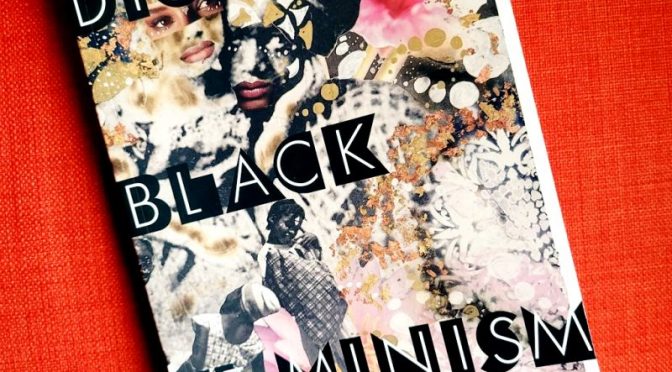
Digital Black Feminism: Media, Embodiment & Resistance

Introduction

Catherine Steele’s book, Digital Black Feminism, is an exploration of critical issues surrounding race and media in modern media theory. It was published in October 2021, at the height of the #BlackLivesMatter movement. The book highlights Steele’s expertise as a scholar of race, gender, and media. Steele is an Associate Professor of Communication at the University of Maryland, where she runs the Black Communication and Technology (BCaT) lab. Her scholarship focuses on how marginalized communities have resisted oppression through digital technologies. Her book came at a crucial time, in a moment in which social media activism was at its peak, renewing attention to racial justice and the politics of technology. 

Steele’s book reframes how scholars understand the intersection between race, media, and politics. It highlights the essential contributions of Black women to the media landscape while acknowledging the lack of recognition of their revolutionary innovations due to their positionality. Steele analyzes Black women’s use of the internet as a tool of recognition, activism, and survival. This work reminds us that the media is never neutral; it’s inherently political, often working to silence already marginalized voices. A central theme is acknowledging how Black women have been fighting against these political systems that surveil and constrain users due to racial and gender bias. Steele argues that Digital Black feminism works to repurpose these systems that have historically marginalized them. She states that Black women have long used media as spaces of community, extending a lineage of traditional Black feminism that predates the internet as a way to remain visible and represented in a world that wants to do the opposite.

This book report examines how Black Digital Feminism works to redefine media theory through connections to representation, politics, embodiment. By drawing on theories introduced by Grant Bollmer’s Materialist Media Theory, Simone Browne’s work Dark Matters: On Surveillance of Blackness, Safiya Noble’s Algorithms of Oppression, and Mark Hansen’s Bodies in Code. This work acts as a bridge to connecting themes raised in Steele’s work and broader media studies theories. As Media Studies students, Steele’s book reminds us to analyze systems of power and oppression. She invites the reader to take a look at who is seen, who is silenced, and how marginalized communities reimagine the world of technology.

Overview of the Book

Steele’s Digital Black Feminism explores how Black feminist thought intersects with digital technology. Steele centers Black women’s voices and highlights how their use of technology is rooted in a long history of resisting oppression. In the first chapter, she discusses how technology shaped Black women’s lives during slavery, touching on oral culture, forced labor, and communication between worlds. Steele argues that Digital Black Feminism is a “political choice that bolsters the claim that feminism practiced without adherence to racial practices is not feminism at all”(18). She warns against analyzing technology through a “colorblind” lens, as that perpetuates more oppression, ignoring the harassment Black women face online. Steele emphasizes the need to recognize Black women’s foundational roles in feminist and civil rights movements, and urges readers to approach Digital Black Feminism with awareness of its historical and political context.

In the next chapter, Steele introduces the “virtual beauty shop” as a metaphor for Black feminism in digital spaces. She describes the virtual beauty shop as a constructed space for Black women. As beauty salons have been safe havens for the Black community, Steele shows how Black women are extending these safe spaces online through conversations about hair care. In the next three chapters, she connects this idea to the work of historic Black feminist icons and argues that social media has become a powerful tool for continuing their legacy. Steele challenges stereotypes that erase Black women from technology, showing how activities like blogging, hair tutorials, and Black Twitter contribute to knowledge, resistance, and academic discourse. She argues that Digital Black Feminism broadens the idea of scholarship, making theory more accessible. This book reframes the media not as a neutral technology but as a political space that is tied to history, empowerment and resistance. 

Media and Representation

Catherine Steele’s arguments in this book bring forward key ideas about media and power, and representations that align with the central themes of our course. Steele reminds the audience of the importance of Black women creators in the digital landscape, highlighting them as voices for their community and figures of representation. This resonates with Grant Bollmer’s discussion in Materialist Media Theory, where he argues that representation is essential to the politics of media, since it works to determine whose voices are heard and whose are erased. He highlights that the silencing of marginalized people is not simply an oversight but a tactic of political erasure. As representation in the media is a symbol of power, lack of visibility works to restrict political action. Steele’s analysis grounds this theory, as the harassment of Black women online, censorship, and algorithmic bias demonstrate how digital platforms function to discipline and silence marginalized users, limiting their participation in public discourse.

However, through Steele’s work, she demonstrates how Black feminists are actively defying these systems of power. The Digital Black Feminist movement emerges as a countermeasure to this silencing, transforming exclusion into a space for community. Through social media, digital storytelling, and activism, Black women are creating a space of affirmation and political critique that challenges the social hierarchies embedded in the media. This movement correlates with Bollmer’s ideas that the politics of representation lies not only in obtaining visibility but having control within these systems in order to change them. Steele reminds us that when Black women organize and create online, they are not simply using media but remaking it, pushing back against the very systems that aim to silence them. 

Media Politics & Surveillance

Steele’s discussions on representation and empowerment directly connect to ideas on media politics and surveillance explored in class and broader media scholarship. In discussions on mass media, it was emphasized that the media is centered around and controlled by institutions of power. Steele’s Digital Black Feminism, alongside theories by Simone Browne and Safiya Noble, exposes how media is inherently political, reproducing racial hierarchies through surveillance and algorithmic bias. Browne’s Dark Matters: On the Surveillance of Blackness traces how the system of racialized surveillance is rooted in slavery and colonialism. She argues that racialized surveillance is “a technology of social control where surveillance practices, policies, and performances concern the production of norms pertaining to race and a power to define what is in or out of place” (Browne 77). These practices are reproduced in digital forms through tracking, data collection, and targeted harassment. These systems of power aim to control Black voices by supervising their interactions with the media. 

This is prevalent in Steele’s work as she discusses how targeted harassment and “algorithms of oppression,” a concept introduced by Noble, work to push Black women off digital platforms. Safiya Noble’s Algorithms of Oppression highlights how search engines and digital infrastructures are encoded with racial bias that pushes anti-Black rhetoric. She provides an example of how Google’s photo application automatically “tagged African Americans as “apes” and “animals” (Noble 6). This is just one example of the hundreds of “accidental” algorithmic incidents of racism. These algorithms aim to control and discourage Black users rather than allowing them to speak their truths. Steele extends this analysis by discussing how this surveillance works to hide Black presence, allowing their scholarship to be drowned out by harassment or go unnoticed. It’s important to acknowledge that race impacts a person’s experience on the internet and that colorblind view on media politics does more harm than good. 

Critical Reflection & Possibilities

Steele’s work highlights the blind spots that theorists often overlook when discussing race and technology. It offers more than a case study; it introduces a movement.  Theory is often influenced by embodied experiences. As introduced by Mark Hansen in Bodies in Code, media is an extension of the body that shapes perception and experiences. Hansen suggests that digital media makes the body the site of mediation, closing the distinction between human and technological experience. This reminds us that Digital Black Feminism is more than just a theoretical framework; it’s a lived experience. For Black women, embodiment in digital spaces is not evenly distributed. It’s important we acknowledge that the Black body is both hypervisible and surveilled.

However, after reading Steele’s argument, I was left with questions about Digital Black  Feminism and the limitations of her discussions. As an Afro-Latina media scholar, I noticed that Steele’s argument was largely grounded in a U.S. context. This focus allows her to speak on her positionality and the rich history between the African American slave experience and modern media practices. However, it is also a limitation. It left me wondering about the exploration of African, Caribbean, and Black diasporic lenses. Black Feminist media practices are at play globally, often interacting with colonial legacies and political oppression. A diasporic lens would work to extend ideas of surveillance, representation, and algorithmic bias. With the current state of the political world, I feel like analyzing the power of Digital Black Feminism and media politics in places like Sudan and Congo, which are suffering from extreme oppression and humanitarian crises, would provide another larger, inclusive perspective. Looking at Digital Black Feminism from a global lens would help root her claims as a universal Black experience rather than just through an American context, since it is bigger than just the USA. Given this, I would be interested in further analyzing Grant Bollmer’s ideas on geopolitics and colonial power influencing the media. 

Conclusion

Catherine Steele’s Digital Black Feminism transforms how we understand media, politics, and representation. By connecting digital culture with the long history of Black feminist communication, Steele demonstrates that media is both an agent of control and a tool for resistance. When read alongside Bollmer’s ideas on representation, Browne’s theory of surveillance, Noble’s work on algorithmic bias, and Hansen’s discussions on embodiment, it is evident that the media is deeply political and a lived experience. For Media Studies students, Steele’s book challenges us to reevaluate our ideas on media by making the reality of Black women media users present and visible. It warns us that the media is tied to systems of power that often work to hinder marginalized voices. Steele does suggest that if used with intention, it can work to create a safe haven of community and creativity. Ultimately, Steele’s work insists that the study of Black Digital Feminism should be seen as a study of liberation (as with her example of the virtual beauty salon), showing how marginalized communities can not only survive within the political systems but transform them into a space of joy and resistance. 

Written by: Aminata Chipembere

Works Cited

Bollmer, Grant. Materialist Media Theory: An Introduction. Bloomsbury Academic, 2019. 

Browne, Simone. Dark Matters: On the Surveillance of Blackness. Duke University Press, 2015. JSTOR, https://doi.org/10.2307/j.ctv11cw89p. Accessed 10 Nov. 2025.

Hansen, M. B. N. Bodies in Code: Interfaces with New Media. Routledge, 2006.

Noble, Safiya Umoja. Algorithms of Oppression: How Search Engines Reinforce Racism. NYU Press, 2018. JSTOR, https://doi.org/10.2307/j.ctt1pwt9w5. Accessed 9 Nov. 2025.
Steele, Catherine Knight. Digital Black Feminism. New York University Press, 2021.

The realities of being a Media studies student

Understanding Identity Through Media: Reflections on Identity and Digital Communication by Rob Cover

Recently, I’ve been watching a lot of reality television due to my attention span being short and reality television has become my go to form of background entertainment that is easy to consume. However, beyond its surface-level drama and bad acting. I have realized that reality T.V can also act as a lens into the current anthropological state of society. It reflects how people communicate, form identity and authenticity in a digital age. Before taking an anthropology course on media I never truly recognized the depth this type of content holds over our culture and social lives. Through several other media related classes my understanding of how media operates has evolved. It’s no longer just entertainment, it’s a mirror for how it impacts our identity. 

Introduction

As a Media Studies student this awareness has deeply affected how I engage with content. It’s difficult now to simply watch or scroll without analyzing what I’m consuming. Media analysis has become a part of my daily thought process, even my identity. Rob Cover’s book Identity and Digital Communication confirmed many of my observations about how media shapes selfhood while also challenging me to think about the deeper relationships between digital communication, technology, and identity. Reading his work expanded my understanding of media as not just a cultural product but as a social force that continuously influences who we are and how we interact with others. 

Who is Rob Cover?

Rob Cover is a social theorist and media scholar whose research focuses on digital harms, youth well-being and gender and sexuality diversity within media context (Wikipedia Contributors, 2025). His book Identity and Digital Communication explores how identity and technology intersect in modern life (Rob Cover, 2015). Cover’s work helps readers understand that technology is not just a neutral tool but a space where identity is reconstructed. Through his ethnographic approach Cover examines the social process behind digital behavior, looking beyond the surface-level assumptions about media addiction or influence. Instead he explores the deeper questions of how our engagement with media platforms both express and transform our sense of self. 

Analysis of Identity and Digital Communication

In the introduction, Cover states that ’’Much of our everyday lives involves having to undertake activities that relate to a sense of self-identity’’ (Cover, 2023, p. 1). As a full-time student I find this statement relatable. Every decision I make whether it’s starting a new hobby, applying for a job, or planning a trip must be considered in relation to my identity as a student. This role defines not only my schedule but also how I perceive myself and how others perceive me. Cover’s point illustrates how identity is not fixed but constantly constructed through the decisions we make within the social systems we inhabit. Media and digital communication now play a major role in this construction.

Cover identifies three core principles of identity: that “true identity” does not exist, that identity is always changing, and that identity is at the center of our everyday lives(Cover, 2023, p. 2) . To illustrate this, he references the 2020 attempt to ban TikTok in the United States, a moment that reemerged again when Donald Trump, reelected in 2025 (Cover, 2023, p. 155) . Although the ban lasted only about seventy-two hours, it sparked widespread panic and discussion online (Restrictions on Tiktok in the United States, 2023) . Many creators shared intimate details about their lives or broke down publicly over losing their platforms. Watching these reactions unfold was interesting but also deeply telling. For many influencers, TikTok had become intertwined with their sense of purpose, income, and identity. Losing access to the app felt like losing a part of themselves.

This situation perfectly demonstrates Cover’s argument that digital communication platforms shape our sense of self. Our identities are now closely tied to the spaces where we share, express and validate them. When a platform like TikTok disappears, it doesn’t just disrupt communication but it disrupts people’s identities. Creators had to confront who they were without their audience, their algorithmic visibility, or their digital communities. This example shows how identity in the digital age is not just expressed online but built through constant interaction with these technologies.

Is Media really addictive or are we the problem?

The debate over whether media is “good” or “bad” for society often oversimplifies this complexity. As a Media Studies student, I tend to view media positively, not because it’s inherently good, but because it is an essential part of human communication and creativity. However, it’s undeniable that certain design choices, like algorithmic targeting or endless scrolling, can encourage compulsive behaviors. Cover writes that this is achieved through “persistent adjustments… ensuring the ‘right’ advertisements are going to the ‘right’ user based on identity assumptions gathered from viewing habits” (p. 143). He clarifies that technology itself is not addictive. Instead, “compulsive behaviors in relation to digital technologies” are the result of broader social processes and learned behaviors. In other words, it’s not the phone or app that creates addiction, but how society, culture, and individuals use and integrate it into their lives.

This distinction reframes the entire “addiction” narrative around technology. Instead of blaming devices, we must examine our relationship with them. Why do we turn to our phones when we’re anxious or bored? Why does validation through likes or views feel so rewarding? These habits reflect social and emotional processes tied to identity formation. For media students, this raises an even more difficult question: how can we analyze and engage with media critically without letting it consume or define who we are?

This idea connects directly to our class discussions on evocative objects. Sherry Turkle argues that “objects help us make our minds, reaching out to us to form active partnerships” ((2011, Turkle, p. 2). We form emotional and psychological attachments to the media and technologies we use every day. Cover expands on this by showing how social norms and bodily behaviors emerge around these digital objects. For example, he notes that touching someone else’s phone is considered an invasion of privacy or a “breach” that provokes discomfort or even fear (Cover, 2023, p. 68). This small social boundary reveals how deeply personal our digital devices have become. They are not just tools but extensions of our identities.

These bodily and emotional responses illustrate how media objects evoke specific feelings that shape social interaction. The same principle applies to our digital relationships: following a classmate on social media can create an unspoken expectation to engage with their posts, transforming a casual acquaintance into a performative connection. Over time, these micro habits shape not only our emotions and feelings but also our identities. The media we consume and the norms we internalize become intertwined with who we believe ourselves to be.

Individual Reflection?

Reading Identity and Digital Communication has made me more aware of these subtle dynamics. It has pushed me to examine my own behaviors and my dependence on digital communication for social validation. While Cover doesn’t offer a direct solution for how to detach from these patterns, his analysis encourages reflection. He reminds us that technology is not inherently harmful; rather, it is the meanings and attachments we create that make it feel inescapable.

In the context of studying media, this realization is both challenging and liberating. It’s challenging because it means that detaching from the media is nearly impossible when it forms the foundation of our academic and personal lives. But it’s liberating because it shifts the focus from guilt and self-blame to awareness and understanding. Instead of rejecting technology, we can aim to use it with intention and recognize how it shapes us while still maintaining agency over how we engage with it.

Overall, Cover’s book invites media students, scholars, and everyday users to ask more critical questions: How do our digital practices shape our sense of self? What emotional and social patterns are reinforced through our use of technology? And most importantly, how can we engage with digital communication responsibly without losing sight of who we are outside of it?

Conclusion

This analysis has made me more mindful of my own identity as both a media consumer and creator. It has also deepened my understanding of the complex relationship between media and identity. The media we engage with does more than entertain and it structures how we think, feel, and exist. Identity and Digital Communication encourages us to confront these realities, not with fear, but with curiosity and critical awareness. As Media Studies students, our challenge is not to separate ourselves from the media, but to engage with it consciously and recognize that understanding media ultimately means understanding ourselves.

Bibliography

Sources: 

Rob Cover. (2015). Rmit.edu.au. https://www.rmit.edu.au/profiles/c/rob-cover

Wikipedia Contributors. (2025, May 27). Rob cover. Wikipedia; Wikimedia Foundation. https://en.wikipedia.org/wiki/Rob_Cover

Restrictions on tiktok in the united states. (2023, April 25). Wikipedia. https://en.wikipedia.org/wiki/Restrictions_on_TikTok_in_the_United_States

Cover, R. (2023, January 1). Identity and digital communication : Concepts, theories, practices. Routledge. https://go.exlibris.link/8tBDJxXSTurkle, S. (2007). WHAT MAKES AN OBJECT EVOCATIVE? In S. Turkle (Ed.), Evocative Objects: Things We Think With (pp. 307–327). The MIT Press. http://www.jstor.org/stable/j.ctt5hhg8p.39

Images:

(2025b). Pexels.com. https://images.pexels.com/photos/267350/pexels-photo-267350.jpeg


Content creation is not a linear process

Making as a Source of Media-Theoretical Tools

Introduction

Throughout this class, we have explored many topics, but one area we have not yet deeply examined is social media, something that has had a tremendous influence on our everyday lives. After reading Tim Ingold’s Making: Anthropology, Archaeology, Art and Architecture, I began to see common parallels between his theories and the work of content creators. Ingold’s exploration of anthropology, ethnography, and the process of “thinking through making” can be directly applied to the practice of digital creation in the media. As a content creator myself, I found that many of Ingold’s concepts mirror the creative processes, challenges, and inspirations that shape content production for social media platforms.

The process of content creation

One of Ingold’s main arguments is that making is not a linear process, but rather an evolving relationship between the maker and the materials they work with. He writes that “making creates knowledge, builds environments and transforms lives” (Ingold, 2013, p.1). This perspective resonates strongly with the world of content creation. Many assume that creating online content is as simple as coming up with an idea and executing it, but in reality, it is a continuous process of experimentation and adaptation. A content creator may start with a basic idea, but as they film, edit, and engage with feedback the idea evolves. The “materials” of content creation are not just physical tools like cameras and editing software; they also include trends, cultural conversations, algorithms, and the audiences themselves. In this sense, social media creation is an ongoing dialogue between creator, material, and environment, much like Ingold’s conception of making.

Ingold’s example of the mason further illustrates this point. He explains that traditional masons learned their craft through practice and mentorship rather than formal education (Ingold, 2013, p.52). Their knowledge came from direct engagement with materials like “trowel, plumb line and string” (Ingold, 2013, p52) which guided their learning and skill development. This process closely parallels how many content creators work today. Few creators attend formal training programs in content creation; instead, they learn through trial and error, observing others, and experimenting with new techniques. For instance, when I first started creating videos, I did not have access to professional equipment. I used natural lighting, basic editing apps, and my phone to bring my ideas to life. Over time, I learned how different materials, for instance light, sound, and even social media algorithms shaped my work. Like the masons, creators learn by doing.

Anthropology and Ethnograpy relationship with content creation

Another key concept Ingold explores is that creativity is inherently relational; it develops through connections with people and materials. He writes, “We go to study with people, and we hope to learn from them” (Ingold, 2013, p.2). This anthropological approach aligns with how many creators learn and grow today. Being part of a creative community is important for inspiration and growth. Personally, I feel most motivated when surrounded by other creators because brainstorming new ideas, assisting on shoots, and watching others work spark my creativity and help me think differently about my own projects. Many creators also rely on their audiences for this same kind of learning. Asking questions like “What do you want to see next?” allows creators to engage in a dialogue that both inspires and informs their process. This is why anthropology in the making process is important as Ingold mentions. 

Ingold’s concept that “materials think in us, as we think through them” (Ingold, 2013, p.2) further deepens this connection. For content creators, the “materials” might include digital tools like editing software or even the social platforms themselves. When creators work with these tools, they are not just manipulating them, instead they are also shaped by the tools’ affordances and limitations. The platform’s design, algorithm, and audience behavior all influence how creators think and what they produce. This two-way relationship highlights Ingold’s notion that thinking and making are inseparable; our thoughts are formed through the process of working with materials.

While anthropology emphasizes learning through relationships, ethnography focuses on observing and documenting human experiences. In the context of social media, ethnography can be compared to how creators use data and analytics to understand their audiences. Engagement metrics, user-generated content, and algorithm trends all act as forms of documentation that inform creators’ strategies. Ingold, however, cautions against relying too heavily on documentation and accuracy, noting that “the speculative, experimental and open-ended character of arts practice is bound to compromise ethnography’s commitment to descriptive accuracy” (Ingold, 2013, p.8). This means that strict adherence to data or predetermined formulas can hinder creativity. The same applies to content creation while analytics can provide useful guidance, they should not dictate every decision. Even if a creator uses the information from the analytics for success, there is no guarantee that their content will resonate. Creativity thrives on uncertainty and risk-taking, not just replication.

The Art of inquiry


I also found Ingold’s discussion of the “art of inquiry” particularly insightful. He describes anthropology as an “‘’indispensable to the practice of anthropology as an art of inquiry’’” (Ingold, 2013, p.2). This suggests that makers, through their curiosity and exploration, embody the same investigative spark as anthropologists. Many content creators express a similar mindset that they constantly observe, experiment, and learn from the world around them. Interestingly, this also raises questions about influence and intention. Many creators resist the label of “influencer” because they associate it with inauthenticity or a label that they will have to rely on. However, Ingold’s theory suggests that all makers inevitably influence others through their work. Whether they intend to or not, content creators shape public conversations, trends, and perceptions. Recognizing this influence can empower creators to approach their work more thoughtfully, considering how their content might impact their audiences.

Concluding thoughts

The connection between Ingold’s theories and social media becomes even clearer when we consider the concept of evocative objects. Social media platforms themselves can be seen as evocative objects, tools that evoke emotions and dependencies. For many creators, these platforms are more than just spaces for sharing work; they become extensions of identity and creativity. However, this connection can also become overwhelming. For instance, if a creator stops posting for several months, they often see a drop in engagement, followers, and even income opportunities. I’ve experienced this myself feeling pressured to post regularly, not because I was inspired, but because I feared losing visibility. Over time, this reliance on social media can blur the line between passion and obligation. Ingold’s reminder that materials should support thinking, not control it. Creators need to maintain a healthy relationship with their platforms and use them as tools for creative exploration rather than letting them dictate their worth or direction.

Reflecting on Ingold’s ideas through the lens of social media has given me a deeper understanding of my own creative process. I’ve learned that making is not about perfection or linear progress, it’s about engaging with materials, environments, and people in ways that generate knowledge and growth. Anthropology and ethnography offer valuable frameworks for understanding how creators learn and evolve within communities. They remind us that creativity is not isolated; it is social, collaborative, and constantly changing. Ingold’s theories encourage creators to think critically about their tools and to embrace the process of making as a form of inquiry. Social media should serve as a space for exploration, not a trap of comparison or pressure. By thinking through making rather than simply producing algorithms or trends creators can rediscover the joy and curiosity that fuel genuine creativity.Ingold’s Making ultimately challenges us to rethink what it means to create in the modern media.

Bibliography

Making. (n.d.). http://ndl.ethernet.edu.et/bitstream/123456789/8315/1/179.pdf

Images are all mine.