All posts by AnatiManzoul

The realities of being a Media studies student

Understanding Identity Through Media: Reflections on Identity and Digital Communication by Rob Cover

Recently, I’ve been watching a lot of reality television due to my attention span being short and reality television has become my go to form of background entertainment that is easy to consume. However, beyond its surface-level drama and bad acting. I have realized that reality T.V can also act as a lens into the current anthropological state of society. It reflects how people communicate, form identity and authenticity in a digital age. Before taking an anthropology course on media I never truly recognized the depth this type of content holds over our culture and social lives. Through several other media related classes my understanding of how media operates has evolved. It’s no longer just entertainment, it’s a mirror for how it impacts our identity. 

Introduction

As a Media Studies student this awareness has deeply affected how I engage with content. It’s difficult now to simply watch or scroll without analyzing what I’m consuming. Media analysis has become a part of my daily thought process, even my identity. Rob Cover’s book Identity and Digital Communication confirmed many of my observations about how media shapes selfhood while also challenging me to think about the deeper relationships between digital communication, technology, and identity. Reading his work expanded my understanding of media as not just a cultural product but as a social force that continuously influences who we are and how we interact with others. 

Who is Rob Cover?

Rob Cover is a social theorist and media scholar whose research focuses on digital harms, youth well-being and gender and sexuality diversity within media context (Wikipedia Contributors, 2025). His book Identity and Digital Communication explores how identity and technology intersect in modern life (Rob Cover, 2015). Cover’s work helps readers understand that technology is not just a neutral tool but a space where identity is reconstructed. Through his ethnographic approach Cover examines the social process behind digital behavior, looking beyond the surface-level assumptions about media addiction or influence. Instead he explores the deeper questions of how our engagement with media platforms both express and transform our sense of self. 

Analysis of Identity and Digital Communication

In the introduction, Cover states that ’’Much of our everyday lives involves having to undertake activities that relate to a sense of self-identity’’ (Cover, 2023, p. 1). As a full-time student I find this statement relatable. Every decision I make whether it’s starting a new hobby, applying for a job, or planning a trip must be considered in relation to my identity as a student. This role defines not only my schedule but also how I perceive myself and how others perceive me. Cover’s point illustrates how identity is not fixed but constantly constructed through the decisions we make within the social systems we inhabit. Media and digital communication now play a major role in this construction.

Cover identifies three core principles of identity: that “true identity” does not exist, that identity is always changing, and that identity is at the center of our everyday lives(Cover, 2023, p. 2) . To illustrate this, he references the 2020 attempt to ban TikTok in the United States, a moment that reemerged again when Donald Trump, reelected in 2025 (Cover, 2023, p. 155) . Although the ban lasted only about seventy-two hours, it sparked widespread panic and discussion online (Restrictions on Tiktok in the United States, 2023) . Many creators shared intimate details about their lives or broke down publicly over losing their platforms. Watching these reactions unfold was interesting but also deeply telling. For many influencers, TikTok had become intertwined with their sense of purpose, income, and identity. Losing access to the app felt like losing a part of themselves.

This situation perfectly demonstrates Cover’s argument that digital communication platforms shape our sense of self. Our identities are now closely tied to the spaces where we share, express and validate them. When a platform like TikTok disappears, it doesn’t just disrupt communication but it disrupts people’s identities. Creators had to confront who they were without their audience, their algorithmic visibility, or their digital communities. This example shows how identity in the digital age is not just expressed online but built through constant interaction with these technologies.

Is Media really addictive or are we the problem?

The debate over whether media is “good” or “bad” for society often oversimplifies this complexity. As a Media Studies student, I tend to view media positively, not because it’s inherently good, but because it is an essential part of human communication and creativity. However, it’s undeniable that certain design choices, like algorithmic targeting or endless scrolling, can encourage compulsive behaviors. Cover writes that this is achieved through “persistent adjustments… ensuring the ‘right’ advertisements are going to the ‘right’ user based on identity assumptions gathered from viewing habits” (p. 143). He clarifies that technology itself is not addictive. Instead, “compulsive behaviors in relation to digital technologies” are the result of broader social processes and learned behaviors. In other words, it’s not the phone or app that creates addiction, but how society, culture, and individuals use and integrate it into their lives.

This distinction reframes the entire “addiction” narrative around technology. Instead of blaming devices, we must examine our relationship with them. Why do we turn to our phones when we’re anxious or bored? Why does validation through likes or views feel so rewarding? These habits reflect social and emotional processes tied to identity formation. For media students, this raises an even more difficult question: how can we analyze and engage with media critically without letting it consume or define who we are?

This idea connects directly to our class discussions on evocative objects. Sherry Turkle argues that “objects help us make our minds, reaching out to us to form active partnerships” ((2011, Turkle, p. 2). We form emotional and psychological attachments to the media and technologies we use every day. Cover expands on this by showing how social norms and bodily behaviors emerge around these digital objects. For example, he notes that touching someone else’s phone is considered an invasion of privacy or a “breach” that provokes discomfort or even fear (Cover, 2023, p. 68). This small social boundary reveals how deeply personal our digital devices have become. They are not just tools but extensions of our identities.

These bodily and emotional responses illustrate how media objects evoke specific feelings that shape social interaction. The same principle applies to our digital relationships: following a classmate on social media can create an unspoken expectation to engage with their posts, transforming a casual acquaintance into a performative connection. Over time, these micro habits shape not only our emotions and feelings but also our identities. The media we consume and the norms we internalize become intertwined with who we believe ourselves to be.

Individual Reflection?

Reading Identity and Digital Communication has made me more aware of these subtle dynamics. It has pushed me to examine my own behaviors and my dependence on digital communication for social validation. While Cover doesn’t offer a direct solution for how to detach from these patterns, his analysis encourages reflection. He reminds us that technology is not inherently harmful; rather, it is the meanings and attachments we create that make it feel inescapable.

In the context of studying media, this realization is both challenging and liberating. It’s challenging because it means that detaching from the media is nearly impossible when it forms the foundation of our academic and personal lives. But it’s liberating because it shifts the focus from guilt and self-blame to awareness and understanding. Instead of rejecting technology, we can aim to use it with intention and recognize how it shapes us while still maintaining agency over how we engage with it.

Overall, Cover’s book invites media students, scholars, and everyday users to ask more critical questions: How do our digital practices shape our sense of self? What emotional and social patterns are reinforced through our use of technology? And most importantly, how can we engage with digital communication responsibly without losing sight of who we are outside of it?

Conclusion

This analysis has made me more mindful of my own identity as both a media consumer and creator. It has also deepened my understanding of the complex relationship between media and identity. The media we engage with does more than entertain and it structures how we think, feel, and exist. Identity and Digital Communication encourages us to confront these realities, not with fear, but with curiosity and critical awareness. As Media Studies students, our challenge is not to separate ourselves from the media, but to engage with it consciously and recognize that understanding media ultimately means understanding ourselves.

Bibliography

Sources: 

Rob Cover. (2015). Rmit.edu.au. https://www.rmit.edu.au/profiles/c/rob-cover

Wikipedia Contributors. (2025, May 27). Rob cover. Wikipedia; Wikimedia Foundation. https://en.wikipedia.org/wiki/Rob_Cover

Restrictions on tiktok in the united states. (2023, April 25). Wikipedia. https://en.wikipedia.org/wiki/Restrictions_on_TikTok_in_the_United_States

Cover, R. (2023, January 1). Identity and digital communication : Concepts, theories, practices. Routledge. https://go.exlibris.link/8tBDJxXSTurkle, S. (2007). WHAT MAKES AN OBJECT EVOCATIVE? In S. Turkle (Ed.), Evocative Objects: Things We Think With (pp. 307–327). The MIT Press. http://www.jstor.org/stable/j.ctt5hhg8p.39

Images:

(2025b). Pexels.com. https://images.pexels.com/photos/267350/pexels-photo-267350.jpeg


Content creation is not a linear process

Making as a Source of Media-Theoretical Tools

Introduction

Throughout this class, we have explored many topics, but one area we have not yet deeply examined is social media, something that has had a tremendous influence on our everyday lives. After reading Tim Ingold’s Making: Anthropology, Archaeology, Art and Architecture, I began to see common parallels between his theories and the work of content creators. Ingold’s exploration of anthropology, ethnography, and the process of “thinking through making” can be directly applied to the practice of digital creation in the media. As a content creator myself, I found that many of Ingold’s concepts mirror the creative processes, challenges, and inspirations that shape content production for social media platforms.

The process of content creation

One of Ingold’s main arguments is that making is not a linear process, but rather an evolving relationship between the maker and the materials they work with. He writes that “making creates knowledge, builds environments and transforms lives” (Ingold, 2013, p.1). This perspective resonates strongly with the world of content creation. Many assume that creating online content is as simple as coming up with an idea and executing it, but in reality, it is a continuous process of experimentation and adaptation. A content creator may start with a basic idea, but as they film, edit, and engage with feedback the idea evolves. The “materials” of content creation are not just physical tools like cameras and editing software; they also include trends, cultural conversations, algorithms, and the audiences themselves. In this sense, social media creation is an ongoing dialogue between creator, material, and environment, much like Ingold’s conception of making.

Ingold’s example of the mason further illustrates this point. He explains that traditional masons learned their craft through practice and mentorship rather than formal education (Ingold, 2013, p.52). Their knowledge came from direct engagement with materials like “trowel, plumb line and string” (Ingold, 2013, p52) which guided their learning and skill development. This process closely parallels how many content creators work today. Few creators attend formal training programs in content creation; instead, they learn through trial and error, observing others, and experimenting with new techniques. For instance, when I first started creating videos, I did not have access to professional equipment. I used natural lighting, basic editing apps, and my phone to bring my ideas to life. Over time, I learned how different materials, for instance light, sound, and even social media algorithms shaped my work. Like the masons, creators learn by doing.

Anthropology and Ethnograpy relationship with content creation

Another key concept Ingold explores is that creativity is inherently relational; it develops through connections with people and materials. He writes, “We go to study with people, and we hope to learn from them” (Ingold, 2013, p.2). This anthropological approach aligns with how many creators learn and grow today. Being part of a creative community is important for inspiration and growth. Personally, I feel most motivated when surrounded by other creators because brainstorming new ideas, assisting on shoots, and watching others work spark my creativity and help me think differently about my own projects. Many creators also rely on their audiences for this same kind of learning. Asking questions like “What do you want to see next?” allows creators to engage in a dialogue that both inspires and informs their process. This is why anthropology in the making process is important as Ingold mentions. 

Ingold’s concept that “materials think in us, as we think through them” (Ingold, 2013, p.2) further deepens this connection. For content creators, the “materials” might include digital tools like editing software or even the social platforms themselves. When creators work with these tools, they are not just manipulating them, instead they are also shaped by the tools’ affordances and limitations. The platform’s design, algorithm, and audience behavior all influence how creators think and what they produce. This two-way relationship highlights Ingold’s notion that thinking and making are inseparable; our thoughts are formed through the process of working with materials.

While anthropology emphasizes learning through relationships, ethnography focuses on observing and documenting human experiences. In the context of social media, ethnography can be compared to how creators use data and analytics to understand their audiences. Engagement metrics, user-generated content, and algorithm trends all act as forms of documentation that inform creators’ strategies. Ingold, however, cautions against relying too heavily on documentation and accuracy, noting that “the speculative, experimental and open-ended character of arts practice is bound to compromise ethnography’s commitment to descriptive accuracy” (Ingold, 2013, p.8). This means that strict adherence to data or predetermined formulas can hinder creativity. The same applies to content creation while analytics can provide useful guidance, they should not dictate every decision. Even if a creator uses the information from the analytics for success, there is no guarantee that their content will resonate. Creativity thrives on uncertainty and risk-taking, not just replication.

The Art of inquiry


I also found Ingold’s discussion of the “art of inquiry” particularly insightful. He describes anthropology as an “‘’indispensable to the practice of anthropology as an art of inquiry’’” (Ingold, 2013, p.2). This suggests that makers, through their curiosity and exploration, embody the same investigative spark as anthropologists. Many content creators express a similar mindset that they constantly observe, experiment, and learn from the world around them. Interestingly, this also raises questions about influence and intention. Many creators resist the label of “influencer” because they associate it with inauthenticity or a label that they will have to rely on. However, Ingold’s theory suggests that all makers inevitably influence others through their work. Whether they intend to or not, content creators shape public conversations, trends, and perceptions. Recognizing this influence can empower creators to approach their work more thoughtfully, considering how their content might impact their audiences.

Concluding thoughts

The connection between Ingold’s theories and social media becomes even clearer when we consider the concept of evocative objects. Social media platforms themselves can be seen as evocative objects, tools that evoke emotions and dependencies. For many creators, these platforms are more than just spaces for sharing work; they become extensions of identity and creativity. However, this connection can also become overwhelming. For instance, if a creator stops posting for several months, they often see a drop in engagement, followers, and even income opportunities. I’ve experienced this myself feeling pressured to post regularly, not because I was inspired, but because I feared losing visibility. Over time, this reliance on social media can blur the line between passion and obligation. Ingold’s reminder that materials should support thinking, not control it. Creators need to maintain a healthy relationship with their platforms and use them as tools for creative exploration rather than letting them dictate their worth or direction.

Reflecting on Ingold’s ideas through the lens of social media has given me a deeper understanding of my own creative process. I’ve learned that making is not about perfection or linear progress, it’s about engaging with materials, environments, and people in ways that generate knowledge and growth. Anthropology and ethnography offer valuable frameworks for understanding how creators learn and evolve within communities. They remind us that creativity is not isolated; it is social, collaborative, and constantly changing. Ingold’s theories encourage creators to think critically about their tools and to embrace the process of making as a form of inquiry. Social media should serve as a space for exploration, not a trap of comparison or pressure. By thinking through making rather than simply producing algorithms or trends creators can rediscover the joy and curiosity that fuel genuine creativity.Ingold’s Making ultimately challenges us to rethink what it means to create in the modern media.

Bibliography

Making. (n.d.). http://ndl.ethernet.edu.et/bitstream/123456789/8315/1/179.pdf

Images are all mine.

My Evocative Object: What is life without my phone.

Introduction

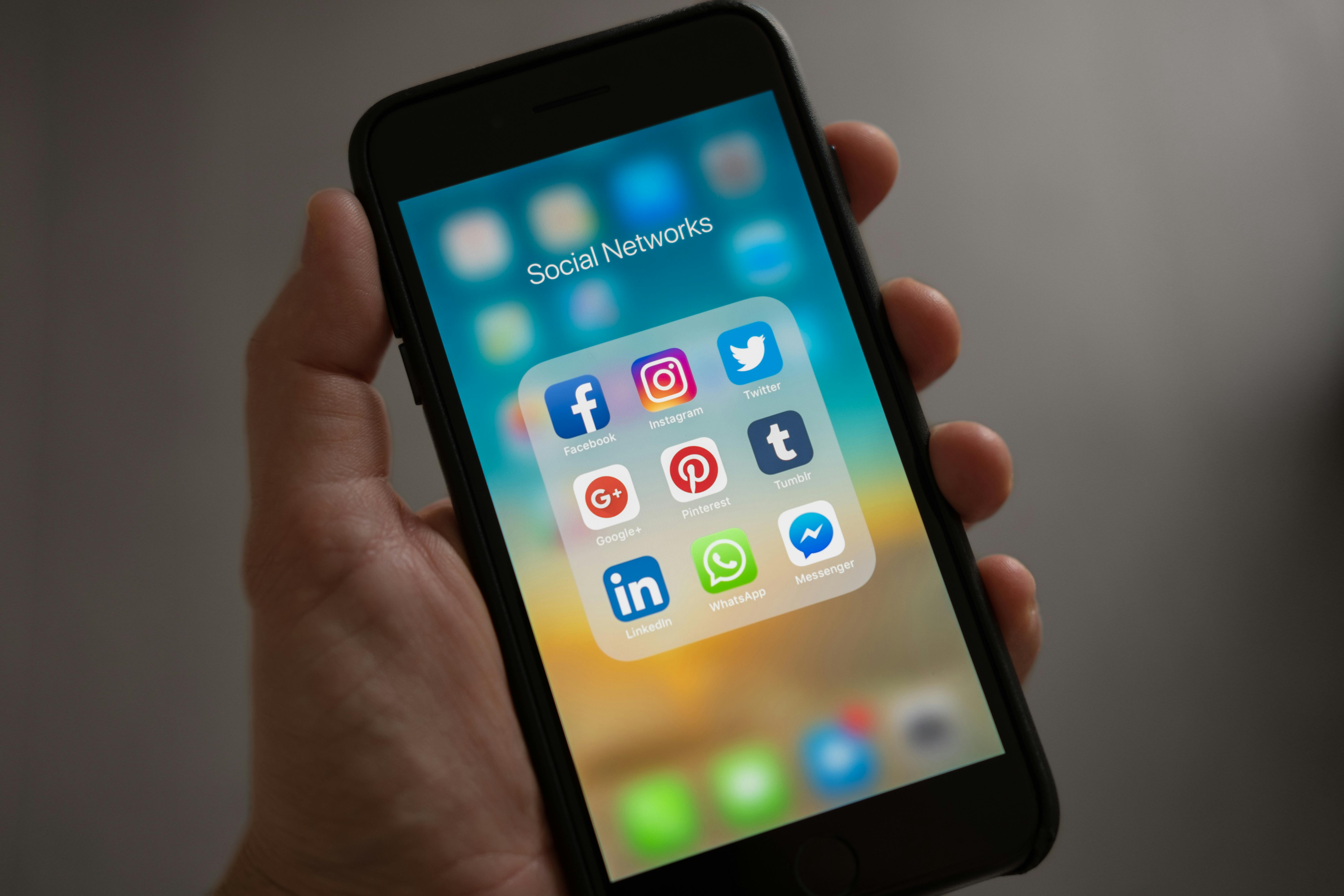
I decided to focus my evocative object project on my phone. It’s something people use everyday some more than others and I definitely fall into the everyday category. I’ve had either an iPhone or iPod since I was ten, and the moment I got it, my life changed forever. When I was younger I didn’t rely on my device as much. I would mostly use it to contact my friends, listen to music or take photos and it was what introduced me to photography. But with the rise of short-form content, I’ve become even more connected to my phone because it allows me to enter a new space or world. Social media apps for instance Tiktok or Instagram help me create a new identity online as a person who is more reserved. However my attention span has significantly gone down and it has made it hard to focus on any content or conversation lasting more than 5 minutes. Whether I am eating, cleaning or working out, I constantly feel the need to check my phone. It’s the dopamine rush from the content, and the emotions tied to the information stored within it. Even if I don’t want to use it, whether I want  to contact someone or see what’s happening in the world, I will eventually need my phone.

I remember my anthropology teacher once asked the class why so many students always have AirPods in their ears. I didn’t raise my hand to answer, but I realized that like my phone and my AirPods have a similar effect. It’s not a coincidence these technologies are designed to capture our attention and keep us hooked, which is the scary part but it all relates to our conversation about semiotics. Even though I am aware of this it’s a habit I can’t seem to break. Instead of waking up craving breakfast I crave the instant feeling of gratification that this piece of technology releases.

Connection to Turkle

My evocative object reading ” My laptop” also highlights my relationship with my phone. The protagonist describes unable to ‘’complete a thought without cracking it open and accessing a file of old notes, or hopping online and Googling a fact or two’’(Turkle, 2007) Ironically, I was on TikTok when I saw someone mention that she needed to stop using autocorrect because she had become so dependent on it that she struggled to spell words on her own. It’s small features like autocorrect, Grammarly and others that keep me tied to my phone. Without them I sometimes feel uncertain about my ability to form correct sentences or spell familiar words. I don’t think technology should replace our human abilities but rather support them. Unfortunately, for myself and many others that balance has been lost. 

Connecting back to the meaning of evocative, Turkle, in her essay ’’What Makes an Object Evocative?’’ explains how everyday objects become part of our ‘’inner life’’ (Turkle, 2007) and ‘’help us make our minds, reaching out to us to form active partnerships’’(Turkle, 2007). Though my phone isn’t human it still has an emotional impact on me as if it were. This connects to our in-class discussion about signs, semiotics and meaning. For example, if someone texts me, ‘’I need to tell you something!’’ my reaction changes depending on that single exclamation mark it signals urgency and triggers an emotional response. Similarly, emojis on our phone can have multiple interpretations and digital communication can easily be misunderstood. 

However I don’t think technology is inherently bad as Turkle also notes when discussing the invention of the clock and how it changed how people viewed time. I believe my phone can support me rather than control me but that requires effort. I can set limits on my apps, put my phone away during smaller tasks, and focus on connecting with people in person rather than scrolling through social media.

The discussion around technology ‘’taking over our lives’’ is important because it raises questions about the future, what direction society is healing in and how we can ensure technology supports rather than dominates us. There’s no easy solution since people use devices for different purposes. For instance, schools use technology for research, libraries use it to preserve historical archives and corporations rely on it for data storage and communication. As individuals, we must learn how to use technology in ways that enhance our daily lives instead of replacing essential human experiences. 

Conclusion

In conclusion, I enjoy my phone and sometimes feel I can’t function without it, but I’m learning to find balance. I want my phone to support me, not control me. Turkle’s collection of readings highlights the emotional and psychological connections we form with these evocative objects and how they can influence us. Learning about Ferdinand de Saussure and Charles Sanders Peirce has deepened my understanding of how technology can effect us emotionally through language, signs and symbols. Overall, phones are great tools but we need to learn how to use them without letting them control our emotions and actions.

Biblography

Turkle, S. (2007). Things we think with. The MIT Press; JSTOR. https://doi.org/10.2307/j.ctt5hhg8p

Turkle, S. (2007). WHAT MAKES AN OBJECT EVOCATIVE? In S. Turkle (Ed.), Evocative Objects: Things We Think With (pp. 307–327). The MIT Press. http://www.jstor.org/stable/j.ctt5hhg8p.39

Newitz, A. (2007). MY LAPTOP. In S. Turkle (Ed.), Evocative Objects: Things We Think With (pp. 86–91). The MIT Press. http://www.jstor.org/stable/j.ctt5hhg8p.14

Images

https://images.pexels.com/photos/607812/pexels-photo-607812.jpeg

https://images.pexels.com/photos/2312369/pexels-photo-2312369.jpeg

https://images.pexels.com/photos/1181675/pexels-photo-1181675.jpeg