

Introduction
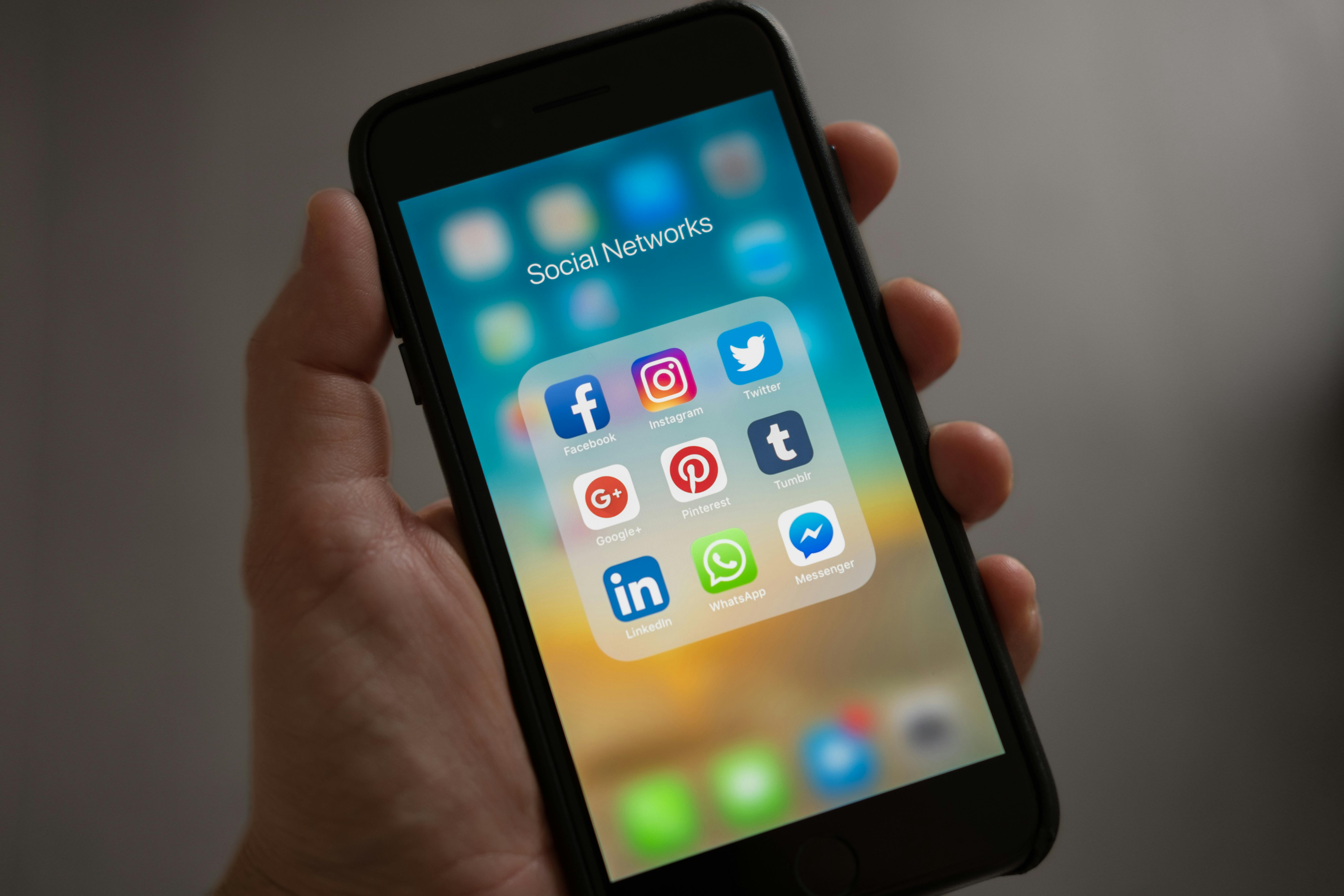
I decided to focus my evocative object project on my phone. It’s something people use everyday some more than others and I definitely fall into the everyday category. I’ve had either an iPhone or iPod since I was ten, and the moment I got it, my life changed forever. When I was younger I didn’t rely on my device as much. I would mostly use it to contact my friends, listen to music or take photos and it was what introduced me to photography. But with the rise of short-form content, I’ve become even more connected to my phone because it allows me to enter a new space or world. Social media apps for instance Tiktok or Instagram help me create a new identity online as a person who is more reserved. However my attention span has significantly gone down and it has made it hard to focus on any content or conversation lasting more than 5 minutes. Whether I am eating, cleaning or working out, I constantly feel the need to check my phone. It’s the dopamine rush from the content, and the emotions tied to the information stored within it. Even if I don’t want to use it, whether I want to contact someone or see what’s happening in the world, I will eventually need my phone.
I remember my anthropology teacher once asked the class why so many students always have AirPods in their ears. I didn’t raise my hand to answer, but I realized that like my phone and my AirPods have a similar effect. It’s not a coincidence these technologies are designed to capture our attention and keep us hooked, which is the scary part but it all relates to our conversation about semiotics. Even though I am aware of this it’s a habit I can’t seem to break. Instead of waking up craving breakfast I crave the instant feeling of gratification that this piece of technology releases.

Connection to Turkle
My evocative object reading ” My laptop” also highlights my relationship with my phone. The protagonist describes unable to ‘’complete a thought without cracking it open and accessing a file of old notes, or hopping online and Googling a fact or two’’(Turkle, 2007) Ironically, I was on TikTok when I saw someone mention that she needed to stop using autocorrect because she had become so dependent on it that she struggled to spell words on her own. It’s small features like autocorrect, Grammarly and others that keep me tied to my phone. Without them I sometimes feel uncertain about my ability to form correct sentences or spell familiar words. I don’t think technology should replace our human abilities but rather support them. Unfortunately, for myself and many others that balance has been lost.
Connecting back to the meaning of evocative, Turkle, in her essay ’’What Makes an Object Evocative?’’ explains how everyday objects become part of our ‘’inner life’’ (Turkle, 2007) and ‘’help us make our minds, reaching out to us to form active partnerships’’(Turkle, 2007). Though my phone isn’t human it still has an emotional impact on me as if it were. This connects to our in-class discussion about signs, semiotics and meaning. For example, if someone texts me, ‘’I need to tell you something!’’ my reaction changes depending on that single exclamation mark it signals urgency and triggers an emotional response. Similarly, emojis on our phone can have multiple interpretations and digital communication can easily be misunderstood.
However I don’t think technology is inherently bad as Turkle also notes when discussing the invention of the clock and how it changed how people viewed time. I believe my phone can support me rather than control me but that requires effort. I can set limits on my apps, put my phone away during smaller tasks, and focus on connecting with people in person rather than scrolling through social media.

The discussion around technology ‘’taking over our lives’’ is important because it raises questions about the future, what direction society is healing in and how we can ensure technology supports rather than dominates us. There’s no easy solution since people use devices for different purposes. For instance, schools use technology for research, libraries use it to preserve historical archives and corporations rely on it for data storage and communication. As individuals, we must learn how to use technology in ways that enhance our daily lives instead of replacing essential human experiences.
Conclusion
In conclusion, I enjoy my phone and sometimes feel I can’t function without it, but I’m learning to find balance. I want my phone to support me, not control me. Turkle’s collection of readings highlights the emotional and psychological connections we form with these evocative objects and how they can influence us. Learning about Ferdinand de Saussure and Charles Sanders Peirce has deepened my understanding of how technology can effect us emotionally through language, signs and symbols. Overall, phones are great tools but we need to learn how to use them without letting them control our emotions and actions.
Biblography
Turkle, S. (2007). Things we think with. The MIT Press; JSTOR. https://doi.org/10.2307/j.ctt5hhg8p
Turkle, S. (2007). WHAT MAKES AN OBJECT EVOCATIVE? In S. Turkle (Ed.), Evocative Objects: Things We Think With (pp. 307–327). The MIT Press. http://www.jstor.org/stable/j.ctt5hhg8p.39
Newitz, A. (2007). MY LAPTOP. In S. Turkle (Ed.), Evocative Objects: Things We Think With (pp. 86–91). The MIT Press. http://www.jstor.org/stable/j.ctt5hhg8p.14
Images
https://images.pexels.com/photos/607812/pexels-photo-607812.jpeg
https://images.pexels.com/photos/2312369/pexels-photo-2312369.jpeg

https://images.pexels.com/photos/1181675/pexels-photo-1181675.jpeg
I really liked how you approached this topic, it’s something so relatable yet you’ve unpacked it with a lot of depth. The part that stood out most to me was when you mentioned craving the “instant feeling of gratification” your phone gives you instead of breakfast, that hit a little too close to home ???? and way too relatable for our generation. It’s interesting how you connected that everyday habit to Turkle’s ideas about objects shaping our inner lives.
I also liked your point about semiotics; the example of a text with “I need to tell you something!” really shows how tiny digital signs (like punctuation or emojis) can completely shift our emotional response from sad to happy to angry to etc. It’s crazy to think how much meaning and mood we attach to these small digital aspects.
What you said about wanting your phone to “support, not control” you really sums up the struggle most of us have. It’s not about reshaping technology, but learning to find that balance where we still feel human, not algorithm-driven. This post honestly made me reflect on my own screen habits and how dependent I’ve become without even realizing it. and also made me rethink whether it is a good habit or bad.
Hi Anati,
Great job on your post, I was totally waiting for someone to have a phone as their evocative object. It’s interesting how having a phone as your object allowed for making connections to other (evocative) objects like Airpods or headphones, that myself and others have covered as their own. This could even expand to the importance of chargers, phone cases, even social media, etc. — there are so many other avenues to explore through your object. I agree with your critique on Turkle’s point on technology as not that bad. Our phones afford us brain numbing content, yes, but its primary use is extremely valuable for our everyday lives now. It just requires balance.
Hey Anati!
I loved reading this and I completely get what you’re saying about not being able to let go of your phone even if you tried. The autocorrect example made me remember a time last semester when I didn’t have my phone for a weekend, and it made me realize how dependent I was on it for quite literally everything. I thought it would be a good digital detox, but I realized soon how helpless I was without my phone. I needed it to connect with my classmates, for checking bus schedules, checking the time, even paying for things (I use Apple Wallet for pretty much all my transactions). That weekend also made me realize how so many of our institutions and systems operate on the assumption that people have phones at hand at all times. Like restaurants with menus that can only be accessed through a QR code.
Also, the idea about wanting your phone to support you rather than letting it control you is something I have also been trying to incorporate into my daily life.
Hi Anati! I really liked how honest and self-reflective your post was. It is super relatable for me as well, and I feel like all of us can understand the attachment to our cellular devices. I thought it was really interesting how you connected everyday habits like checking TikTok or relying on autocorrect to Turkle’s idea of evocative objects. It made me think about how even “small” features, like you mentioned with spelling, can actually shape the way we think and interact.
I’m curious about your point on balance – do you think it’s realistic for us to fully separate our identity from our phones, or is it more about learning to redefine identity in tandem with technology? Thanks for sharing, this post definitely made me reflect on my own habits 🙂
Hi Anati!
I really like how reflective this post is! I completely relate to this post, as over the years I’ve become more dependent on my phone. One part that stood out to me is what you mentioned about autocorrect, as someone who’s been awful at spelling since I was young. I’ve become overwhelmingly reliant on autocorrect or Google for the simplest spelling mistakes. I often get anxiety thinking that I’ve misspelled the smallest thing, causing me to Google it to make sure. This connects back to your argument, are we too reliant on technology to the point we are losing human ability? Technology is meant to be a tool, something that works as an aid, but sadly, with AI, it’s starting to overtake human ability due to our need for efficiency. This post made me think about balance and how technology is actively mediating my emotions.
You make a great point about a phone’s system of signs. I often have a hard time understanding what a person is trying to get across due to grammar or exclamation points. Technology has given us another system of signs we must understand to fully communicate within its means. At what point is technology making communication more complicated, as we constantly need to be updated with these signs, emojis, slang, and more?
I truly appreciate this post as it makes me think about my own technology consummate and my over-reliance on my phone. It reminds me of a need for balance.