Tag Archives: turkle

McQueen: Evocation and the Fashion Madhouse

Image sourced from GATA Magazine

I will begin with the statement that fashion, as an umbrella term, is not an evocative object. In its modern form, fashion is too widespread, commercial, capitalized, and individual for all of it to be considered evocative. Fashion is viewed by the mass majority of people in the way Kopytoff defines commodities- being produced materially as something, but also being marked societally as such. It is a wonderful, divine medium, but it doesn’t have one singular meaning, as not all of them are exactly designed to shake a person’s worldview or way of thinking, nor act as a transitional object and a basis of emotional connection. What is infinitely more interesting, however, is when designers use the medium of fashion as an object through which they can proclaim their own evocations, as does the Spring 2001 collection entitled Voss by the late, great British designer Alexander McQueen.

There is an evocation of insanity throughout the collection- the models walk with jerky, unnerving, enigmatic movements and expressions. The makeup is pale and bilious, the hair is covered with wrappings and bandages as if they’ve just come out of surgery. The set is designed to look like a padded cell, and there are one-way mirrors inside offering a voyeuristic view into the encagement, a view that satirizes the way the fashion industry preys on designers and models, treats them as entertainment, discards them the moment their evocation has been ran dry.

There is an evocation, that of discipline, throughout the collection. It is often said that fashion is a discipline itself, a code, a simultaneous desire and denial of values, be it aesthetic, functional, or emotional. The showpieces are uncomfortable, made of unconventional materials, both unorthodox in style and responsibility. A bodice of blood-red venetian glass, a breastplate of spiked silver and black pearls- a dress of ostrich feathers and microscope slides, a periwinkle straightjacket frilled with amaranth. It is all a discipline, a discipline of lunacy that is par for fashion’s course.

Furthermore, the evocation of transition and reinvention manifests with intrigue and aplomb. Many pieces are distinctly androgynous- menswear staples such as the pantsuit are deconstructed into gauzy and feminine silks and chiffons. Comedic surrealism is also used- a necktie becomes a makeshift halter, an unfinished puzzle is now a chestplate, a model castle perches itself on a model’s shoulder, weighing her down with the burden of being just that, a model. It’s a very liminal form, a form that tiptoes between expectation and self, the cultural and the natural, the rigidity of grounded society and the freedom of surreal insanity.

And another evocation begins to reveal itself, that of meditation and vision. Natural materials feature throughout- seashells fresh from the British coast, various explosions of feathers, the fearsome stillness of taxidermied birds. They are indeed familiar, but they are manifested uncannily, disorientingly unfamiliar. They infuse the collection with a contemplation of sorts, a contemplation on how these objects have both been made and found, found to be made into its own reflection on the hauntings and perils of modern fashion.

Indeed, at this point in his life, McQueen, who was 31, had grown tired of the insatiable thirst of the fashion elite. He was in the process of leaving his position as the head of Givenchy, a storied Parisian couture house, and he had always struggled with the press’s framing of him as a rebellious, working-class outsider in the upper-class society of luxury fashion. He was heavily smoking and using drugs, and had grown weary of the immense pressure put on him, especially regarding rumours surrounding his work at Givenchy.

So when one analyzes this show retrospectively, it becomes clear that this collection is, by both definition and practice, a quintessential example of what Turkle considers to be an evocative object. The whole show is a double-entendre, showing the fashion elite what they want to see by way of “wearable” clothing and commercialized androgyny, but also laughing in their face, satirizing their seriousness and forcing them to commit their own sins, viewing the clothes and models as scrutinized lab rats for experimentation. It is an object of discipline and desire, controlling his deranged fantasies within the constraints of traditional fashion. It is an object of transition and passage, allowing the concepts in his mind to be transported into reality, traversing the line between the constructed and the abstract, the self and its surroundings. It’s a liminal collection, an intermediate space between fashion’s expectation and McQueen’s heedlessness.

And, most obviously, it is an object of meditation and new vision, giving old objects a new meaning and purpose through a new medium or way of thinking. A dress of razor clam shells is most likely the most obvious reference to this logic, with McQueen even referencing it in a 2000 Women’s Wear Daily interview, saying “The shells had outlived their usefulness on the beach, so we put them to another use on a dress. Then Erin [O’Connor] came out and trashed the dress, so their usefulness was over once again. Kind of like fashion, really.” (Fallon)

It’s all a phantasmagoric display, escalating into a final display of writer Michelle Olley, fat, nude, and covered in moths, a direct contrast to the sanitized, tall sylphs floating through the show. And yet, the collection is its own evocative object for McQueen, in its existence as a provocation to thought, a companion to his emotional life, an undying legacy in the face of modern fashion’s tendency to steal, beg, barter, copy, backstab, and ignore. It’s pure, unbridled, raw, hopelessly realistic fashion that is simultaneous in its purpose as a commodity and its evocation as a manic transcendence.

Objects, as per Turkle, shift their meanings with time, place, and individuals. Fashionable objects go in and out of style. But just like the amaranth, the unfading bloom, a designer’s evocation never dies.

Works Referenced:

Turkle, S. (Ed.). (2007). Evocative Objects: Things We Think With. The MIT Press. http://www.jstor.org/stable/j.ctt5hhg8p

Fallon, J. (2020, April 23). The McQueen Chronicles. Women’s Wear Daily. https://web.archive.org/web/20240807033219/https://wwd.com/feature/article-1201126-1706647/

Kopytoff, I. (1988). The cultural biography of things: commoditization as process. The social life of things (pp. 64–91). Cambridge University Press. https://doi.org/10.1017/CBO9780511819582

understitch,. (2024, March 2). The Life and Death of Alexander McQueen. YouTube. https://www.youtube.com/watch?v=5CY1fkAWprE

All photographs sourced from firstVIEW unless otherwise stated

Written by Rosetta Jones

Landsberg, Van Den Eede, and Extension through Media

Where the Body Ends

It is widely accepted today that technology has become an extension of the human body and mind. We scroll, track, record, respond, and refresh as automatically as breathing. Devices do not feel like external objects we pick up; they function as parts of our perception, our attention, our memory.

Sherry Turkle argues that we have become “tethered selves”(Turkle, Alone Together 152), living in constant connection to our devices in ways that dissolve the boundary between where our inner life ends and technology begins. We remain perpetually connected, not because we consciously choose to, but because connection has become a condition of contemporary life. Turkle’s point is not just that we depend on our devices, but that they weave themselves into our emotional and cognitive routines so seamlessly that we start to experience their presence as ordinary, even necessary. Her work opens up a larger question that runs through this week’s readings: what happens when technologies stop feeling external and instead operate as part of our inner life?

The well-known concept of the phantom limb—where an amputee still senses a missing arm or hand—suggests that the human body doesn’t simply end at its physical limits. It remembers what used to be there and, sometimes, even imagines what could be. In a similar way, memory \and technology are our phantom limbs–a lingering bodily existence without being physically there. Alison Landsberg, in her theory of prosthetic memory, shows how mass media can implant experiences that feel personally felt even when we never lived them. In contrast, Yoni Van Den Eede turns to the notion of extension, asking not only how technologies become part of us, but how they quietly reshape the boundaries through which we know ourselves and the world.

In that sense, both thinkers are interested in what happens when something non-human becomes internalized. While Landsberg explores outwards asking how memories borrowed elsewhere become part of who we are, Van Den Eede looks inward and asks how our bodies morph around the technologies we adopt.  We already know, from the phantom limb, that the body can extend beyond itself. But extension asks a different question: what happens when that extension becomes so ordinary that we no longer notice it?

Landsberg: Prosthetic Memory

In Prosthetic Memory: Total Recall and Blade Runner, Alison Landsberg argues that modern mass media—especially cinema—creates “prosthetic memories”, which she defines as “memories which do not come from a person’s lived experience in any strict sense” and which may nevertheless “motivate his actions” and shape identity (Landsberg 175). Landsberg begins with the 1908 Edison film The Thieving Hand, where a prosthetic arm “has memories of its own” and turns an innocent beggar into a thief because the arm’s memories “prescribe actions in the present”(175). This example establishes her central claim of how memory has always been mediated, and cinema makes visible how memories not grounded in lived experience still “construct an identity.”

In Total Recall, she demonstrates how implanted memories undermine the necessity that identity must be rooted in the “real”. Douglas Quade learns that his entire life is just a memory implant though the film says authenticity is irrelevant: “Is realer necessarily better?” she asks, noting that Quade’s simulated identity is ultimately “more responsible, compassionate and productive than the ‘real’ one” (183). Landsberg uses this film to show how memories, regardless of origin, become “public” through media, and that the distinction between lived and prosthetic memories is often indiscernible. 

In Blade Runner, Landsberg argues that replicants’ humanity hinges not on biology but memory. The Voight–Kampff test exposes replicants not because they lack empathy but because they lack “a past, the absence of memories” (184). In other words, although Rachel’s photographic evidence of her childhood fails to prove anything, her implanted memories nevertheless allow her to feel, to choose, and to love. Even Deckard may be a replicant; the unicorn dream sequence suggests that his memories are equally prosthetic, and the dividing line between the human and the machine has disappeared. Ultimately, Landsberg’s instances convey one central message: that humans continually construct themselves through narratives, many of which come from cinema. And that narrative is empathetic rather than authentic.

Van Den Eede: Extending Extension

In Extending “Extension” (2014), Yoni Van Den Eede revisits the familiar claim that technologies act as “extensions” of the human body, a phrase that has often been repeated so casually that its conceptual weight gets lost. His starting point is Marshall McLuhan’s observation that we routinely misrecognize our own technological creations as if they were external, foreign objects. This misrecognition is not accidental but the result of what McLuhan calls the Narcissus narcosis: a numbness that prevents us from seeing media as “highly identifiable objects made by our own bodies” (158) . Like Narcissus failing to recognize his own reflection, we cannot perceive that technologies originate from us, nor do we notice the slow, creeping ways they gradually act upon us in return.

Van Den Eede explains that media emerge because older technologies create “irritations” that need to be relieved. When a new medium arrives to counter these pressures, it amplifies certain human capacities, what McLuhan calls “enhancement” but this amplification disrupts the balance among the senses, producing strain and, eventually, numbness (158–159).

To clarify what extension entails, Van Den Eede turns to McLuhan’s well-known “tetrad,” the framework that proposes that every medium “enhances something, obsolesces something, retrieves something previously lost, and, when pushed far enough, reverses into its opposite” (160). In thinking about self-tracking devices, Van Den Eede frames them as extensions of a specific human ability: the basic capacity to sense what is going on inside our own bodies. Tools like FitBits or sleep monitors don’t invent new forms of awareness so much as magnify the ones we already have, making patterns of fatigue, movement, or rest suddenly measurable and visible (162). The more we depend on quantified readings to tell us how we feel, the easier it becomes to discount forms of embodied knowledge that can’t be turned into step counts or sleep graphs. In this sense, extension and diminishment happen simultaneously: self-tracking heightens one mode of perception while quietly dulling another (165–66).

Seeing and Not Seeing

Although Landsberg and Van Den Eede both begin from the idea that media penetrate the boundaries of the human, the direction and implications of their arguments diverge sharply. What becomes clear, when placing them side by side, is that each identifies a distinct “blind spot” in contemporary mediated life, and reading them together reveals what we cannot see when considering either text alone.

For Van Den Eede, our primary blindness stems from not recognizing the true origin of media. Technologies emerge from us, as extensions of our senses and cognitive capacities, yet the moment they begin to shape us, “we lose sight of their origin” (Van Den Eede 158). This produces the Narcissus narcosis, a dulling of our ability to perceive the “why” and “how” of technological influence. As media amplify certain functions, they “put a strain on our sensory balance,” producing the discomfort and eventual numbness that lead to auto-amputation (158–159). His concern is epistemological: technologies blind us through familiarity. The concept of extension, he argues, is valuable precisely because it offers “an exercise of critical awareness,” training us to expect unknown effects rather than assuming media will be transparent or harmless (168). He urges us to remain suspended between reliance and skepticism.

Landsberg identifies nearly the opposite problem. The blindness she describes is not the result of the media being “too familiar” but of their ability to create experiences that feel authentic without truly being one’s history. Cinema becomes “a special site for the production and dissemination of prosthetic memories,” enabling individuals to internalize memories “not from one’s lived experience in any strict sense” (Landsberg 176). This is not numbness but absorption: viewers identify so intensely with mediated narratives that they step outside habitual behavior and experience reality through borrowed memories. Memory becomes “less about verifying the past and more about generating possible action in the present” (183). Van Den Eede fears we will stop noticing technology; Landsberg fears we will stop noticing ourselves.

Set side by side, the two theorists reveal approaches to mediated life that diverge in emphasis yet intersect in revealing ways. Van Den Eede warns that technologies become invisible too quickly, encouraging passive, unexamined reliance. Landsberg suggests that the media makes experience too vivid, drawing us into emotional identifications that may feel more real than lived memory.

Seen alongside Sherry Turkle’s “tethered self,” the accounts of Van Den Eede and Landsberg suggest that extension is never just about seeing more, it slowly teaches us how to see, training us to read ourselves through data or mediated memories even when our bodies or lived histories might be telling us something else entirely.

Works Cited 

Landsberg, Alison. Prosthetic Memory: Total Recall and Blade Runner.” Cyberspace/Cyberbodies/Cyberpunk: Cultures of Technological Embodiment, edited by Mike Featherstone and Roger Burrows, Sage, 1995, pp. 175–192.

Turkle, Sherry. Alone Together: Why We Expect More from Technology and Less from Each Other. Basic Books, 2011.

Van Den Eede, Yoni. Extending ‘Extension.’” Design, Mediation, and the Posthuman, edited by K. Verbeek and C. Mitcham, Lexington Books, 2014, pp. 151–172.

Written by: Nicole Jiao and Gina Chang

Cover art: https://www.pinterest.com/pin/160300067977983085/

Return to Sender: On Friendlier Cups and the Rage They Evoke

The Friendlier cup program on campus presents itself as a reusable alternative to single-use plastics. With a $0.50–$1.00 deposit, a companion app, and a two-week refund window, Friendlier promises less waste and more responsibility. What it actually gave me was a latte I couldn’t finish and a new ritual of carrying an extra object that made my day worse. These cups are an evocative object: small, material, and infuriatingly demanding. The Friendlier cups evoke not just personal reflection, but genuine rage.

The Cup That Followed Me Home

I bought an iced latte one Thursday before a lecture. Instead of the disposable cold cup I expected, I was handed a reusable Friendlier cup meant for hot drinks. I agree that UBC goes through an excessive amount of disposable cups, and I welcomed Friendlier as a potential solution. But not only was my drink served in the wrong vessel—it was half full when class ended. My commute is over an hour and a half, and I carry a purse, not a backpack. That meant balancing a half-full drink on a rapid bus ripping through Vancouver while also trying to balance myself without a seat. And since I didn’t have class the next day, I kept it over the weekend until Monday to finally return it and see my $0.85 deposit again. When I got to campus, the café I’d bought it from didn’t have a Friendlier bin, so I had to track one down elsewhere. Once I found it, I stood there beside the bin creating a Friendlier account, an app I didn’t want, for at least a full minute before I could toss my cup in the bin. Two weeks later, the refund was still pending.

Getting a coffee is something I used to do almost every day. It was a small ritual that fit easily into my routine. Now, it feels like a chore. I’m not just annoyed, I’m enraged. This isn’t a personal failure to be eco-minded; it’s the result of a design that ignores real students and real routines. It assumes I can reshape my day around an object I never asked for. That friction is the point: these cups insert themselves into my everyday life, and they do it badly.

Rage, Routine, and the Objects That Shape Us

Sherry Turkle emphasizes that objects are “relational”: we form relationships with them much like we do with people, bringing expectations, attachments, and sometimes disappointments into these interactions. The Friendlier cup, intended as a reusable alternative to disposable coffee cups on campus, positions itself as a companion to daily routinesInstead, it has become a source of irritation. Rather than supporting my coffee habits, it mediates my interactions with campus life, sustainability practices, and even my own sense of efficiency in ways that frustrate me.

Turkle also notes that objects function as agents of reflection, prompting us to consider who we are, what we care about, and how we navigate the systems around us. The Friendlier cup forced me to confront the misalignment between the ideal of sustainability and the reality of campus infrastructure: missing bins, app registration delays, and pending refunds turned a daily ritual into a source of stress. What was meant to be a simple tool for environmental mindfulness became a reminder of friction in my already established routines, revealing how much our interactions with objects reflect broader social and institutional structures.

By framing the cup as both relational and reflective, we can see that its design is not neutral: it shapes behaviors, emotional experiences, and our relationship to sustainability, intentionally or not. I am passionate about sustainability, but my frustration with Friendlier has made me confront how a well-intentioned system can produce stress and resentment instead of care Rather than facilitating care and responsibility, it evokes rage, highlighting the tension between policy and lived experience.

Exchange, Deposits, and the Medium of Value

In David Graeber’s chapter “Exchange,” he helps explain the emotional politics underlying my frustration with Friendlier. A deposit is a token, a small piece of monetary media intended to guarantee return. Graeber argues that media of exchange can take on lives of their own: they may become detached from the social relations they were meant to mediate. The Friendlier cup’s $0.85 deposit is meant to be a simple economic nudge; in practice, it becomes a lingering IOU, processed by a corporate app, delayed, and sometimes never returned. This system transforms a socially oriented sustainability gesture into a market, in which the campus may even monetarily gain from unreturned deposits.

Reddit users on the r/UBC subreddit echo this logic. One commenter observes that the cups are “theoretically nice, but in reality […] stupid,” expressing concern that someone could snatch a cup from the bin and the original returner would never receive the refund. Others note that slow or unreliable processing could turn the deposit into a revenue stream. Another user flagged data privacy concerns: to get refunded, students must download an app and create an account, surrendering personal information to a private company for a campus sustainability initiative. These complaints are not trivial; they illuminate how the cup functions as a media of exchange that reconfigures obligations, trust, and data flows.

Viewed through Turkle’s lens, this is more than just a transactional failure: it is a relational failure. Turkle emphasizes that objects are companions to our emotional lives, carrying histories, expectations, and feelings into everyday routines. The Friendlier cup, rather than supporting sustainable habits, has become a companion of frustration, a persistent reminder of misaligned systems. Graeber helps explain why: when the cup’s deposit detaches from its intended social logic, it erodes trust and amplifies irritation, making me experience sustainability not as a shared ethical practice but as a set of obligations. In this sense, the Friendlier cup mediates campus life emotionally and materially, exposing the tensions between policy intentions and lived realities, and highlighting how even well-meaning objects can evoke rage when design and routine collide.

Affordances and Friction

From an affordances perspective, the Friendlier cup offers: reuse, reduced disposables, and potential normalization of a circular system. What it lacks is matched affordance for everyday bodies and schedules. A commuter with a purse, someone with irregular on-campus hours, or a person who has to wait days to return a cup are all disadvantaged by the program’s assumptions. The cup mediates access to a convenient beverage experience by adding layers of time, technology, and logistics. Instead of reducing friction, it slides friction into other parts of students’ lives.

Turkle’s point about objects catalyzing self-creation is helpful here: we do change around our objects when they become meaningful companions. But that process requires careful attention to how people actually live. A well-designed evocative object ought to invite incorporation; a poorly designed one forces compliance.

Sources:
Turkle, Sherry. Evocative Objects: Things We Think With. MIT Press, 2007. 

Mitchell, W. J. T., and Mark B. N. Hansen, editors. Critical Terms for Media Studies. University of Chicago Press, 2010.

https://www.reddit.com/r/UBC/comments/1mqewj0/thoughts_on_friendlier_resuable_containers_in_the

Photos:

“UBC Launches Reusable Packaging with Friendlier.” Food at UBC, University of British Columbia, https://food.ubc.ca/ubc-launches-reusable-packaging-with-friendlier/.

Header made on Canva by Sam Garcea

Blueberries, Body, and More

I have always been attracted to fruit – as a girl with a sweet tooth, I resonate with their endearing size, flavour profiles, and delicate ties to femininity. During reflection on which one in particular I wanted to write about, I cycled through my favourites; mangoes, apples, grapes … they were all meaningful to me, but what came to the forefront of my mind and stayed there wasn’t remarkable at all. 

I don’t often have blueberries. It’s only when the circumstances perfectly align that they end up in my fridge and subsequently in my mouth – if there’s a sale I can’t ignore, a recipe I’m determined to follow, or a family member who made them appear in front of me. I specifically recall a recent memory where I was sitting at the kitchen table of my childhood home eating blueberries alone. I picked my way through the small blue fruits in the contrasting red bowl, rifling through to find the biggest, firmest, and most promising candidates. I remember seeing it as a gamble of flavours, a psychology experiment on associations between size and taste. If I felt particularly reckless, I would scoop up a handful and feel all the different flavours combine in my mouth. I was so inspired, in fact, that I took it upon myself to write my thoughts down in the form of a Notes app poem. Working a 9-5 internship made me feel uncreative and nostalgic of my more creative middle school times, so this is the product of such feelings:

if i was blueberry

i wonder if i’d still be small

i wonder if people would avoid me in the crowd, opting to pick my bigger counterpart

i wonder if finally, at the end, they would take the risk and spear through my soft skin

or if they would throw me away

i wonder if when they break through my flesh with their teeth

they would be pleasantly surprised by my sweetness

or if they would cringe from the tartness, and live the rest of their life avoiding other small blueberries

if i was a blueberry i wonder if you would still choose me first

Although this piece is unsophisticated and unnecessarily romantic, I learned that blueberries truly do evoke much from me. Blueberries afford me imperfection. Among a world of perfectly GMO’d fruits and perfectly edited lives, blueberries connect me to nature in a way that Susannah’s Apples did for her. They provide me with variety and natural bursts of joy that still manage to reach my overloaded dopamine receptors. They are a constant in my life, regardless of if I realize it or not. They top my yogurt, colour my smoothies, and are a delightful contrast in desserts. They are not my favourite, and they are not always the tastiest. Even among the cartons labeled Jumbo XL Sweet Blueberries, at least a few are bound to disappoint. Nonetheless, their flaws are exactly what makes them blueberries, and without the ones left squished at the bottom of the carton and the risk that comes with each bite, there is no experience being evoked – it all becomes quite boring.

The blueberry mediates my view on life and how life views me. In my tumultuous age within our current world, I find myself, more often than not, unconfident. Unsure about my place in my life, the workplace, and the world. In these times, it brings me comfort to consider the similarities between me and a little blue fruit. The blueberry also has a body, and moves through its life based on, and through, its body. Unfortunately, it also gets judged on its appearance, and predetermined stereotypes determine its fate. Despite all this, it thrives! And it does this without all the unique capabilities that we have as humans. The blueberry is its own medium and the final product. It does not have the privilege of embodiment, the dynamic living experience of being a blueberry – it simply is. Wegenstein notes in her chapter on Body that online personas, cosmetic surgery, fashion and architecture as mediums demonstrate that “current trends of thinking” about the body aim to nullify the rise of disembodiment in modern culture. Through the way we edit and adjust our own body and what it produces, we are able to control our experiences and design our life. This is how we end up with human experiences, rather than blueberry experiences. 

In this sense, blueberries afford me gratitude – appreciation of my uniquely human features, the dexterity of my fingers to create art, the earlobes that I intentionally pierced to make space for dangly jewelry, the still-developing brain that I fill with knowledge and skills. Wegenstein writes that our bodies, now mediated through technology, fashion, and self-representation, are not fixed but dynamic sites of creation – tools through which we experience, express, and even redesign life. Yet, as Mandel and Cézanne suggest, there is beauty in remaining tethered to the soil, in recognizing that even the most mediated body is still material. In the same way that Susannah’s apples ground her in a sensual awareness of being “part fruit, part earth,” my blueberries remind me that embodiment is a continuous act of negotiation between nature, self, and medium. The blueberry, then, becomes my counterpoint to digital disembodiment: a reminder of imperfection, decay, and the sweetness or tartness that cannot be filtered or replicated. Now when I encounter one, I feel my own presence with the world – how I consume it, and how it, in turn, shapes me. In this quiet exchange between fruit and flesh, I find an embodied media experience: a small affirmation that I am still here, still part of the earth, still alive.

Turkle, Sherry. “WHAT MAKES AN OBJECT EVOCATIVE? .” pp. 307–326.

Wegenstein, Bernadette. “Body.” Critical Terms for Media Studies, pp. 19–34.

Ordinary Old Rock—My Evocative Object

I have this rock I picked up at a national park in Mumbai. A light-coloured, perfectly round rock with spiral lineation running along its surface. It may be an odd hobby, but I have always liked collecting rocks. However, I usually end up throwing them away within a couple day because pretty as they might be, there’s not much you can really do with a rock. I thought this would be the case for this rock to but surprisingly enough, even after all these years and a trip across the globe, I still have it with me.

At first I just didn’t have the heart to throw it away. It was too perfect a rock, almost circular with a completely smooth surface . So I just kept it on my desk and eventually forgot about it. It lay there catching dust until I was packing to leave for university. On an impulse, for some inexplicable reason, I decided to pack this rock to take it with me to Canada. I thought I could use it as paperweight, but that was just an excuse (after all, who even uses paperweight in this day and age?). 

I had never lived away from home. In all my eighteen years of existence, I had never faced a situation where I had to pack my entire life into a suitcase to move to a place entirely foreign to me. Even after cramming most of my belongings into a suitcase, there was still an entire house worth of my cherished items that I had to leave behind. My belongings have always been sacred to me. I did not even have the heart to throw away my elementary school textbooks but here I was, abandoning almost everything that I held close to my heart. My favourite books, my childhood photo albums, the old wooden box filled with random knick knacks that I had collected over the years; I had to leave almost all of it behind. I stuffed this tiny rock in between my clothes, a desperate attempt to lay claim to anything I could get my hands on. Though I could not take everything with me, I would do my best to take anything I could, even this tiny inconsequential rock.

Now, I have been living in Canada for almost four years. I have painstakingly built a whole new ecosystem of objects of my own. Books, clothes, shoes, and other random paraphernalia. Almost everything I brought over from India has either been discarded or replaced, and the few things I have left have melded into my  new life so well that I can hardly distinguish between my old belongings and the ones I acquired here. Everything changed, but that rock still remains. I have moved thrice, and every single time I have made sure to take the rock with me. A lot of people have asked about its significance and I never really know what to say in response to that. It seems a bit strange and even a little foolish to tell people that I brought this plain-looking rock from India. This is in line with Turkle’s statement that we are more comfortable with objects that have a specific use rather than considering objects as something with an emotional connection (5). Perhaps the rock’s lack of purpose is precisely why it has stood the test of time. If it truly had some use, it would have been abandoned once it stopped serving that purpose. 

The Rock as an Object of Transition and Passage

Of course, the rock is not the only object from India I have with me. But the rock has assumed a special place in my life, as an active reminder of home. Turkle claims that such periods of transition make a person vulnerable to the objects and experiences from that period of transition. She draws on Victor Turner’s idea of liminality, emphasising how times of transition are an important site for the creation of new symbols. Drawing from these ideas, I believe this period of transition granted this otherwise innocuous object the affordance of being a symbolic representation of home and my life at the time. A freeze frame, capturing a very specific moment in time.

During that transitional period, when I was thrust into a completely new environment, this rock served as a comforting reminder of home. A real, tangible proof that I was once familiar with the land that now feels so foreign to me. This lines up with Turkle’s observation that during traditional rites of passage, when person is forced to part with all that they consider to be familiar, they are more susceptible to objects and experiences of that time. At a time my life was in constant flux, this rock was the only constant. Not only does the rock embody a specific time and place, but it has also come to represent that version of myself—one who was so desperate to hold onto the past that she clung on to anything she could, even a tiny old rock. 

Since then, I’ve moved several times, and with each move, I’ve grown more comfortable with the idea of letting things go. Change no longer unsettles me the way it once did. So now, after all this time, the rock no longer serves solely as a reminder of home. Instead, I’ve come to see it as a thread linking together the different versions of myself that have emerged through each transition in my life.

Works Cited

  1. Turkle, Sherry. “WHAT MAKES AN OBJECT EVOCATIVE.” Evocative Objects: Objects We Think With, 307–326. 
  2. Turkle, Sherry. “INTRODUCTION: THE THINGS THAT MATTER.” Evocative Objects: Objects We Think With, 3–10. 

Mediating Childhood Memories and Identity Through Lunch Bags

Introduction

I was helping my parents move into their new house this summer when I found my favourite lunch bag from primary school. It was a small, green rectangular bag, patched with two cute cats playing the piano. Although the bag was covered with an unidentifiable stain, I refused to let my parents throw it out. The lunch bag reminds me of the best parts of my childhood with all the things it once held. I remember the sound of my Mother placing my lunchbox on the kitchen counter before the school bus arrived. I remember the soft clatter of glass containers and metal utensils as I walked down the school hallways. Finally, I distinctly remember unpacking my lunch as the bell rang. Every hearty meal leaving me full and content. To me, salvaging this stained artifact was not at all gross, but rather a symbol of surviving years warm home cooked meals. 

Mediation

For more than a decade, my childhood lunch bag was a significant part of a daily ritual of nourishment and affection. It is an object that mediates between the self and the social world, serving as a middle ground for the private space of my home and the public sphere of my school. To reflect on the words of Sherry Turkle, she writes that theory enables us to “explore how everyday objects become part of our inner life” (Turkle). By taking a moment to appreciate how we use these mundane objects, we extend the reach of our sympathies for the memories, the people around us, and the world within it. Moving to Canada alone from Vietnam marked the moment I began packing my own lunches for the first time. Although the food in my new glass container was edible, and occasionally tasty, it was never the same without my Mother’s special touch. I realized that it is more than just about sustenance. A meal is a medium through which care, culture, and identity are communicated. We associate food with different cultures, nutrition, health, community, human rights, and so much more. As someone who has migrated a lot, I have always struggled to fully identify with my Vietnamese culture and heritage. Hence, this lunch bag is a testament to my belonging in all the places I have lived in as a child, when I was completely clueless to the gravity of any societal pressures to fit in. The rediscovery of this beautiful object of great sentimental value reminds me of the intimacy of past homes, friendships, and worries that are no longer in my life. 

Media Theory

Looking at my lunch bag through a media theory lens, I find that it echoes Marshall McLuhan’s ideas about objects being more just a vessel but the message itself. I vividly recall being in middle school, waiting for my friends to pick up their lunch bags off the shelves at the cafeteria table. I watched the abundance of colorful lunch bags go by, each a unique pattern and shape with the familiar names of my pupils scribbled in ink. The lunch bags are full of personality, their visibility communicating care, tradition, continuity, but also internationality. As I look at my own lunch bag now, I realize just how much objects can communicate, not through words but through materials, textures, and smells. Beyond just communication, the lunch bag can also be linked to Michel Foucault’s theory of the disciplinary society, which discusses how ordinary objects have the power to inscribe social norms into our bodies. Additionally, Bernadette Wegenstein’s chapter explores how the body as a medium of expression, through practices like dieting, can also shape how culture is lived and performed (Wegenstein). The lunch bags in the school cafeteria disciplines appetite and behaviour, as it is where we all learned the socially acceptable ways of eating, making social interactions, and what to subconsciously mask or perform. 

Conclusion

To my peers reading this who may also be navigating hybrid identities, I hope my exploration of childhood lunch bags speaks to a shared experience of mediation. Objects from the past are evocative, and often serve as important reminders that making peace with our identity does not only happen through language or policy, but it can happen through small, material gestures. I do not need to know the root cause of the bag’s stains and loose threads to admire its ability to translate love into something edible, something visible. That visibility is doing what Turkle says evocative objects do, “bringing philosophy down to earth” (Turkle). As the lunch bag mediates between theory and lived experience, it becomes a marker of difference, my personal signal of foreignness, and ultimately embodies the distance between my Mother’s kitchen at home and my rental space in Vancouver.

How about you? What do you carry with you when you move between worlds?

References

Turkle, Sherry. “What Makes an Object Evocative?” Evocative Objects, by Sherry Turkle, The MIT Press, 2007, www.jstor.org/stable/j.ctt5hhg8p.39. Accessed 6 Oct. 2025.

Wegenstein, Bernadette. “Body.” Critical Terms for Media Studies, by W. J. T. Mitchell and Mark B. N. Hansen, University of Chicago Press, 2010, pp. 19–34.

My Evocative Object – An Obsession Over The Fantasy Of Perfection

In my reading of Turkle’s collection of evocative objects, I came across the very interesting chapter called “Ballet Slippers”. In which the author, Eden Medina, presented a story of passion and dedication of her own, from childhood to maturity, and for me, it is also one that rang rather close to home. As a child at the age of 4, she had started training in her first pair of ballet slippers, with its presence soon became symbolic in her mind. As her skills develop, so does the complexity of her ballet slippers, and soon, the object becomes a mediator for her ideal image of the professional ballerina. 

For me, my evocative object is somewhat similar to the author of my chapter, having been training in badminton competitively for most of my middle and high school life, I relate strongly to this theme of “desire and discipline”. Therefore, for me, the “badminton racquet” is an object that evokes memories of my whole youth and, of course, the metallic smell of graphite that came with each racquet still lingers in the back of my mind. As a beginner, I started with a cheap racquet, but as soon as my skills improved and I was able to convince my parents to get me the branded ones I’ve been seeing on TV. Throughout my career, I went through 8 different racquets, each representing a different era in my development as a player and also personally as my relationship with the sport changes. 

I still remember when I first got a branded Yonex racquet, thinking back, it was quite an overkill considering my skill levels at the time anyway. But just like how the author’s experience of the ballet shoes mediated her idea of an ideal physicality, that racquet – the Yonex Nanoray Z Speed made me feel one step closer to the professional players I see on TV. Thinking back, perhaps the mental confidence that it affords was worth more than any technological advancements that came with it. In my games, I had no excuses but to only blame myself, for in my mind, my equipment is no longer the limiting factor for my performance, having this great a racquet in my hand. I realise that the mediation that the racket provides has allowed me to be immersed in a reality that I’ve yet to actually reach, and as such, acts as a device for my fantasies of perfection in my sport of badminton.

As such, in relation to Turkle’s theory, what makes this object evocative for me is exactly this connection that it currently mediates for me, between myself and the ideal image of badminton perfection. As Eden Medina has experienced, her ballet slippers have “helped [her] identify with the image of the professional ballerina that [she] upheld as [her] physical ideal.” Even more than that, for me, the badminton racquet is, in essence, also affording me my sense of identity, rather than being just an extension of my physical self. It has become part of who I am in my mind, “reaching out to me to form active partnerships,” as Turkle would say. The badminton racquet derives its meaning from its belonging to me, and I derive my identity as a player from having that specific racquet in my hand.

Yet, my dependency on this object to mediate my reality has its limitations; the more I am immersed in this somewhat fantastical identity of a professional player, the more I am disconnected from my real self. I soon find myself in a state of apathy toward the sport I once loved with all my heart, as I am caught in an infatuation with this fantasy that the racquet made possible. This would get worse as I grew to blame my bad performances on my racquets, thinking that they didn’t cater to my evolving play style. For a few years, I drifted away from the essence of the sport into the gimmicky world of its marketing. 

Now looking back, I realise that it is altogether wrong to depend so strongly on an external object to mediate something as important as my sense of self, let alone what I hold as my ideal. Perhaps, it would be healthier for me as an individual and beneficial for me as a player to be fixated on my game, with my racquet simply a bodily extension, than to obsess over an object of mere aesthetic value. As now somewhat reached maturity, my relationship to badminton has greatly improved, as I’ve rediscovered the joy in playing badminton for the game itself, and not for some fantastical ideal from childhood. As for any objects one may find to be evocative, perhaps, the fact that it appears to be so in the first place may be due to an imbalance in one’s relationship with oneself. Thus, an object appears as evocative due to its ability to fill in such gaps and inadvertently creates a dependency that appears obsessive, especially in this area of the passions of desire and discipline. 

Bibliography

Medina, Eden. “BALLET SLIPPERS.” Evocative Objects: Things We Think With, edited by Sherry Turkle, The MIT Press, 2007, pp. 54–61. JSTOR, http://www.jstor.org/stable/j.ctt5hhg8p.10. Accessed 8 Oct. 2025.


Turkle, Sherry. “WHAT MAKES AN OBJECT EVOCATIVE?” Evocative Objects: Things We Think With, edited by Sherry Turkle, The MIT Press, 2007, pp. 307–27. JSTOR, http://www.jstor.org/stable/j.ctt5hhg8p.39. Accessed 8 Oct. 2025.

Image used:

https://i.ebayimg.com/images/g/Z~AAAOSwoV1lPMCO/s-l1200.png

My Evocative Object: What is life without my phone.

Introduction

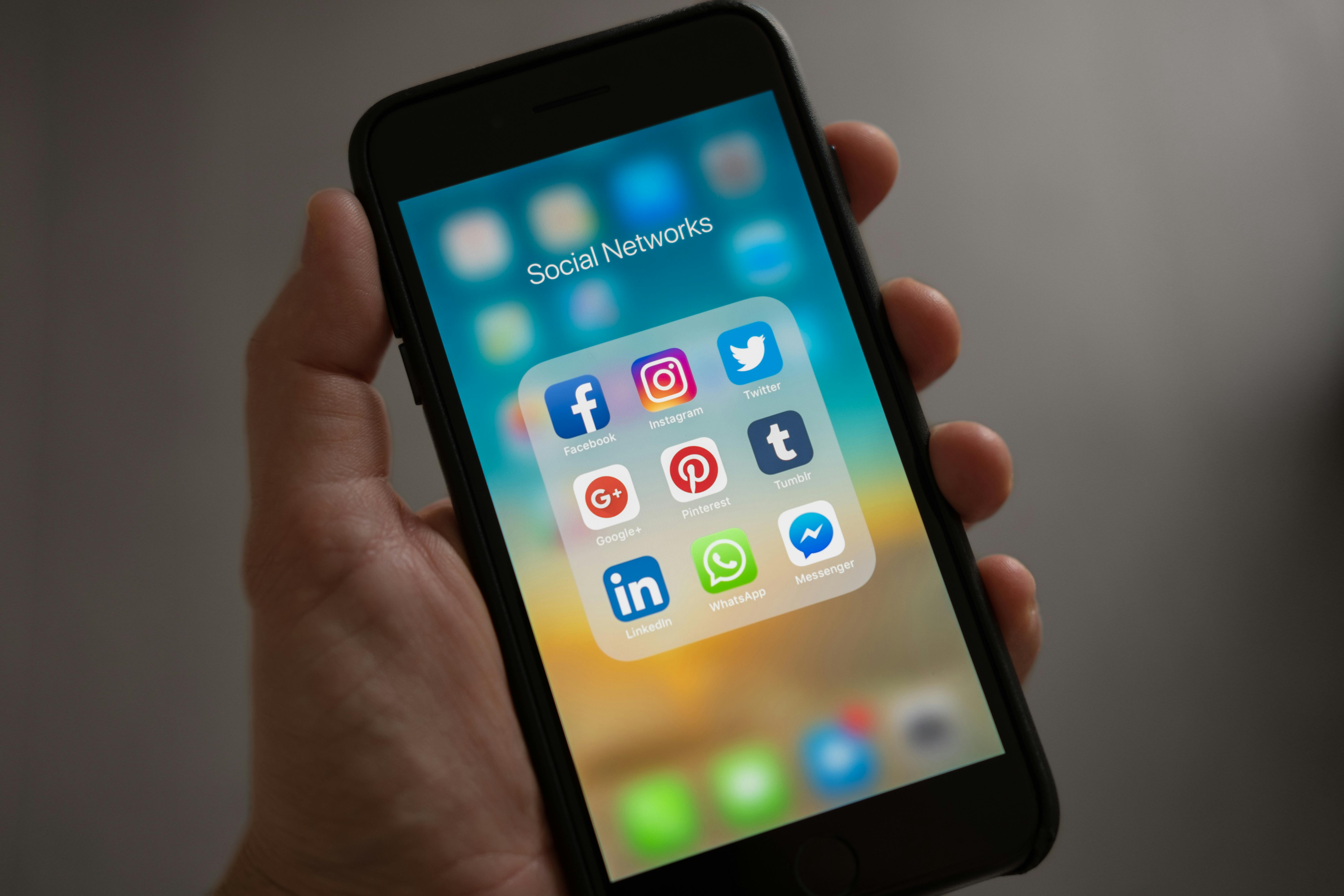
I decided to focus my evocative object project on my phone. It’s something people use everyday some more than others and I definitely fall into the everyday category. I’ve had either an iPhone or iPod since I was ten, and the moment I got it, my life changed forever. When I was younger I didn’t rely on my device as much. I would mostly use it to contact my friends, listen to music or take photos and it was what introduced me to photography. But with the rise of short-form content, I’ve become even more connected to my phone because it allows me to enter a new space or world. Social media apps for instance Tiktok or Instagram help me create a new identity online as a person who is more reserved. However my attention span has significantly gone down and it has made it hard to focus on any content or conversation lasting more than 5 minutes. Whether I am eating, cleaning or working out, I constantly feel the need to check my phone. It’s the dopamine rush from the content, and the emotions tied to the information stored within it. Even if I don’t want to use it, whether I want  to contact someone or see what’s happening in the world, I will eventually need my phone.

I remember my anthropology teacher once asked the class why so many students always have AirPods in their ears. I didn’t raise my hand to answer, but I realized that like my phone and my AirPods have a similar effect. It’s not a coincidence these technologies are designed to capture our attention and keep us hooked, which is the scary part but it all relates to our conversation about semiotics. Even though I am aware of this it’s a habit I can’t seem to break. Instead of waking up craving breakfast I crave the instant feeling of gratification that this piece of technology releases.

Connection to Turkle

My evocative object reading ” My laptop” also highlights my relationship with my phone. The protagonist describes unable to ‘’complete a thought without cracking it open and accessing a file of old notes, or hopping online and Googling a fact or two’’(Turkle, 2007) Ironically, I was on TikTok when I saw someone mention that she needed to stop using autocorrect because she had become so dependent on it that she struggled to spell words on her own. It’s small features like autocorrect, Grammarly and others that keep me tied to my phone. Without them I sometimes feel uncertain about my ability to form correct sentences or spell familiar words. I don’t think technology should replace our human abilities but rather support them. Unfortunately, for myself and many others that balance has been lost. 

Connecting back to the meaning of evocative, Turkle, in her essay ’’What Makes an Object Evocative?’’ explains how everyday objects become part of our ‘’inner life’’ (Turkle, 2007) and ‘’help us make our minds, reaching out to us to form active partnerships’’(Turkle, 2007). Though my phone isn’t human it still has an emotional impact on me as if it were. This connects to our in-class discussion about signs, semiotics and meaning. For example, if someone texts me, ‘’I need to tell you something!’’ my reaction changes depending on that single exclamation mark it signals urgency and triggers an emotional response. Similarly, emojis on our phone can have multiple interpretations and digital communication can easily be misunderstood. 

However I don’t think technology is inherently bad as Turkle also notes when discussing the invention of the clock and how it changed how people viewed time. I believe my phone can support me rather than control me but that requires effort. I can set limits on my apps, put my phone away during smaller tasks, and focus on connecting with people in person rather than scrolling through social media.

The discussion around technology ‘’taking over our lives’’ is important because it raises questions about the future, what direction society is healing in and how we can ensure technology supports rather than dominates us. There’s no easy solution since people use devices for different purposes. For instance, schools use technology for research, libraries use it to preserve historical archives and corporations rely on it for data storage and communication. As individuals, we must learn how to use technology in ways that enhance our daily lives instead of replacing essential human experiences. 

Conclusion

In conclusion, I enjoy my phone and sometimes feel I can’t function without it, but I’m learning to find balance. I want my phone to support me, not control me. Turkle’s collection of readings highlights the emotional and psychological connections we form with these evocative objects and how they can influence us. Learning about Ferdinand de Saussure and Charles Sanders Peirce has deepened my understanding of how technology can effect us emotionally through language, signs and symbols. Overall, phones are great tools but we need to learn how to use them without letting them control our emotions and actions.

Biblography

Turkle, S. (2007). Things we think with. The MIT Press; JSTOR. https://doi.org/10.2307/j.ctt5hhg8p

Turkle, S. (2007). WHAT MAKES AN OBJECT EVOCATIVE? In S. Turkle (Ed.), Evocative Objects: Things We Think With (pp. 307–327). The MIT Press. http://www.jstor.org/stable/j.ctt5hhg8p.39

Newitz, A. (2007). MY LAPTOP. In S. Turkle (Ed.), Evocative Objects: Things We Think With (pp. 86–91). The MIT Press. http://www.jstor.org/stable/j.ctt5hhg8p.14

Images

https://images.pexels.com/photos/607812/pexels-photo-607812.jpeg

https://images.pexels.com/photos/2312369/pexels-photo-2312369.jpeg

https://images.pexels.com/photos/1181675/pexels-photo-1181675.jpeg

Life Long Comforts: How Objects From Early Childhood Stay With Us For Life.

(The earliest photo I can find of the blanket, vs my blanket this week)

[Prefix: I am just a girl, and when writing this felt quite vulnerable with the idea that I would share it with you. My mom reminded me that while vulnerability feels like a weakness to ourselves, it looks like courage to others. So be nice!!]

When we’re babies, we’re given many toys, stuffies, and blankets, but many of us grow an attachment to just one particular thing. In my family, we refer to that one thing as a “Lovey”. Many children begin to lose their attachment to their lovey when they enter their teens, sometimes younger, sometimes older. Others hold onto that attachment for life. Clearly, there was a gene in my family that made us so attached to our Loveys; both my parents still have teddy bears that they were given as young children and held onto. For me, my object was my little pink blanket. 

The blanket itself is not impressive. I’ve been told and seen in photos that my blanket was soft and bright pink at first, but as far as I can remember, it’s been rough and white. It’s about 2ft by 3ft, and literally tearing at the seams. It’s worth nothing, but to me it is worth everything. To me, it’s worth going back to my house to grab it in an emergency, or pack fewer clothes than I need to bring it with me on trips; it’s even to come to friends’ houses with me. This blanket has moved houses with me eleven times and has spent the last 20 years with me. It is, without a doubt, 100% a security blanket. It is an analog of my emotional data. Each tear or stain is a sign, an index of past use and care. It bridges my past and present, mediating the “temporal aspects” of experience, as it literally allows me to relive or re-access memories and moments of safety and comfort from earlier stages in my life. In this way, it shows how media and memory are coextensive, and how even a humble object can serve as a living archive of feeling. 

But to me, it’s so much more than a blanket, and it offers me so many affordances. It allows me comforted sleep at night, it offers me warmth. The blanket acts as an anchor, a constant in my life, and stays with me every night when I am most vulnerable; when I’m asleep. The affordances of comfort aren’t inherent to my blanket alone, it emerged through embodiment, my lived experience and relationship with it over time. In McLuhan’s terms, “The medium is the message”, the way my blanket soothes and anchors me is inseparable from what it is, a soft, small, familiar object.

My blanket is a medium of experience, just like how our bodies are a medium of human experience. Like Turkle’s evocative objects, it’s both loved and thought with, my emotional companion and tool for reflection on things in my life. The blanket mediates my feelings on such a wide spectrum, in moments of joy and in moments of hardship, it is always waiting for me, wherever my “home” at the time has been. It is something that knows everything about me, and yet nothing at all (because it’s just a blanket, not a conscious thing). It acts as a technological medium in miniature, something that stands in the middle between my inner world and my external world, helping me process and feel my emotions and transitions. 

As we continue through time and advances in technology, I can’t help but think about how much media is experienced through their physical qualities, and how that meaning is threatened by the digital age as we become more abstracted from material experience in a digital world. My blanket is lived and tangible, and stands as an opposition to the transition into digital mediators. It reaffirms the importance of touch, texture, smell, and material presence in the making of meaning. Nothing digital could replace any aspect of my blanket, material or immaterial in meaning. It is also an active counter to dematerialized media: a reminder that mediation can be intimately physical and that memory is not just cognitive, but physical and textual. Would a carpet still feel the same on a phone screen? Would the Mona Lisa be as popular if it were only to be seen digitally? My blanket is also a great example of Eco’s “vegetal memory”- memory preserved in organic material. It stores my personal information and history in its fabric, colour, tears and frays

If we were to think about my blanket with some critical theoretical insight, it could teach us that media are not always obvious or high-tech, mediation begins with everyday objects that are transformed to have meaning. The comfort, touch, and emotional security are themselves mediated experiences that can change an object’s meaning. The memory is not abstract or purely cognitive but entangled with physical matter. The theories of media and mediation must include the affective and tactile, not just the visual or digital. 

In closing, my blanket shows how mediation begins with the material and personal, not just digital or technological media. It embodies the link between body, memory, and materiality, showing that meaning and comfort are felt through touch and texture. It illustrates Turkle’s idea of evocative objects as things that are both loved and thought with/through. It reflects Gibson and McLuhan’s affordances, as my blanket’s value comes from what it allows, which is warmth, safety, and reflection. Its value is not determined by what it physically is. It reminds me that media theory isn’t only about our devices or information, but also how objects can mediate our relationships with the world and ourselves. And ultimately, it teaches me that mediation is intimate and embodied, a process that connects mind, matter, and memory across time. 

Thanks for reading!

The Window as An Evocative Object

Introduction

The setting sun slowly hiding behind distant mountains, groups of students walking between classes, the whistle of wind and the rumble of thunder – these are all sights and sounds accessible through my bedroom window. An object integral to architectural design, windows are embedded within the walls of almost every building, bridging the gap between interior spaces and the outer world. They allow for both the acts of looking outwards and looking inwards, offering a view of reality that is separate from one’s current situation. 

Windows have always been a significant part of my life, taking up space on the walls of my bedrooms, from the one in which I spent my childhood, to the ones in my different living situations during university life. They offer a view into the natural world that lies beyond the internal space that exists physically within my room and cognitively within my mind. Despite the ever-changing scenery, my bedroom window remains still and unmoving, acting as a constant that is always there. 

To understand more about the affordances of windows and what they can mediate, I turn to some relevant media theorists who were discussed in class. 

Objects of transition and shifting meanings

Sherry Turkle describes how the meaning of evocative objects “shifts with time, place, and differences among individuals” – a sentiment I find particularly relevant to windows (307). Sunlight streaming through a window could make it an object associated with positivity, encouraging someone to go outside. Conversely, the scene of heavy rain gives the window a gloomy evocation that is in contrast with the safety and warmth within one’s home. These are associations that I personally make with such scenes, though someone with different experiences may perceive things differently. 

Despite not quite fitting Turkle’s discussion of transitional objects as small, handheld ones that remain the same over time and distance, I find that windows can be still considered an object of transition and passage. They stay with us as we grow into adulthood, always present regardless of location. The view from my childhood bedroom differs from my current one, but the window’s function of showing the outside world remains the same. Windows can also be transitional in how they are decorated and personalized. In my first year of university, I made a crochet garland for my dorm window and continued to hang it up on my new one after relocating. This item holds memories from the past, framing the outside world through a sentimental lens despite the view being different from before.     

Old dorm room window (left) and current dorm room window (right)

Objects of discipline

Turkle’s discussion of objects associated with discipline and desire also resonates with my experience with windows. Opening the blinds in the morning and closing them at night is a simple part of my daily routine that I pay no mind to, but can be considered an act of discipline that has ingrained itself within my life. Michelle Hlubinka expresses how her watch and datebook structure her life and keep her on schedule. These objects are described by Turkle as having the ability to take over one’s life and control their perceptions of time, and thus, actions (310). Indeed, my digital devices, and all their applications, perform functions like these, but my window always reaches me first. It acts as my primary indicator of time and weather before I check my phone. Windows engage my senses and tell me information about the world before I even consciously think about it. The pattering of rain on my windowsill enters my ears, so I pack an umbrella; the rays of morning sun hit my eyes as I lie in bed on my phone at 5AM, so I finally decide to go to sleep. Hence, the window subtly acts as an object of discipline that dictates daily actions.

Mediators of the senses 

Caroline Jones’s chapter on the senses brings up Plato’s allegory of the cave. It describes prisoners trapped within the depths of a dark cave, with their only perception of the world being through the sight of shadows instead of the real figures that cast them. The prisoners are victims of a “partial form of sight”, blinded to the true content of the media that the shadows mediate and only being able to derive individual interpretations about what they see (Jones 89).

Since windows allow light to shine into a room, informing its inhabitants of the outside world in a factual and realistic way, they can be seen as something opposite to the cave. However, I realised that windows also have their limitations, and the somewhat limited world that they depict could, conversely, be thought of as the deceptive shadows in Plato’s allegory. 

Windows, most of the time, only span certain parts of walls, each providing a specific view of the exterior. For instance, my room’s only window is west-facing, which allows me to see the sunset. However, this means I see sunlight later in the day than those with rooms opposite to mine since theirs face the sunrise, leading to me having a skewed perception of time when first waking up. I have also experienced hearing music from outside without being able to see its source, leading to me only being able to make assumptions about the source’s location and the people involved. Windows are like transparent barriers to the outside, letting us witness the world while physically isolating us from it. They allow us to see, hear and smell information, but not touch or taste anything; we cannot touch the grass we see from the view of a window, nor can we feel the rain on our skin.

Jones states that only by exiting the allegorical cave can one understand the full dimensions of things, “thereby also discovering what has been mediating reality”(89). Similarly, windows provide useful but limited views of the world, and only by going outside can one immerse themselves in the scene and find the sources that information is coming from. 

Conclusion

Drawing connections between windows and media theory made me realize just how significant of a role they play as mediators of senses, memories and so much more. They ground us in reality, tell us about the world and subtly guide our perceptions and actions. I have found that my time spent looking out of the window has gradually lessened as the time I spend looking at my digital devices has increased. Although these virtual screens act as windows into different worlds that bring new perspectives to my life, they can never act as a replacement for the physical, natural reality that I live in. Finally, we must be reminded that despite their affordances, the extent to which windows mediate information is limited, and gaining a deeper understanding of everything requires going outside to experience the world in its full scope. 


References

Caroline, Jones. “Senses.” Critical Terms for Media Studies, Edited by W. J. T. Mitchell and Mark B. N. Hansen, The University of Chicago Press, 2010, pp. 88–100. 

Turkle, Sherry. “WHAT MAKES AN OBJECT EVOCATIVE?” Evocative Objects: Things We Think With, edited by Sherry Turkle, The MIT Press, 2007, pp. 307–27. JSTOR, http://www.jstor.org/stable/j.ctt5hhg8p.39. Accessed 6 Oct. 2025.

Written by Adela Lynge

Images by Adela Lynge