All posts by adela

Landsberg to Lain: Power in Prosthetic Memories

Introduction

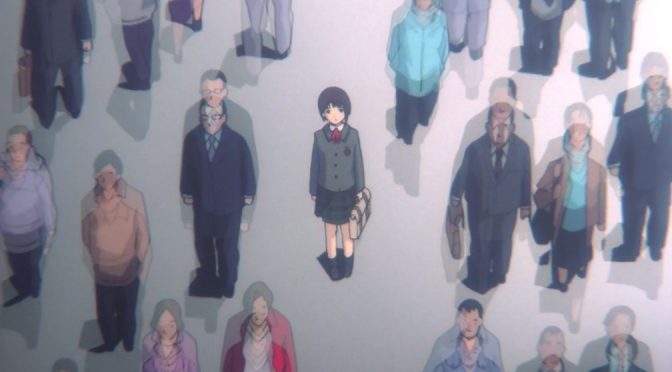
Serial Experiments Lain is a 1998 cyberpunk anime which follows a girl called Lain in a world where the boundary between the physical realm and the Wired – a fictionalized version of what we know as the Internet – progressively becomes more blurred. Lain grapples with confronting her digital alter egos and trying to make sense of her ever-shifting reality. While the series quickly spirals into surreality and confusion, the themes of memory, identity and mass media ring clear. The specific concept of prosthetic memories comes into view when it is revealed that the world’s chaos can be traced back to a digitally-omnipresent antagonist named Eiri, whose ability to manipulate collective memory can shape reality.  

Hence, I found that this series resonates heavily with Alison Landsberg’s 1995 paper Prosthetic Memories, in which she defines such memories as ones that are implanted instead of coming from lived experiences. While her discussion focuses on prosthetic memories as experienced through film and mass media, my blog post explores how Serial Experiments Lain extends her ideas to the modern age of the internet and social media. I go further to argue that the late-90s series prophetically illustrates how the internet is used as a powerful tool for systems of power to manipulate memory, alter reality and reshape history to the detriment of society. 

Prosthetic memories through social media

Landsberg explains that the mass media is a site for the production of prosthetic memories, with cinema in particular. As a medium that makes images available for mass consumption, it creates experiences and implants memories “which become experiences that film consumers both possess and feel possessed by” (176). Spectators witness memories depicted on screen that they have not actually lived through, prosthetically experiencing the histories of a collective past. Landsberg suggests that this complicates identity formation and results in the creation of “partial identities” (179).

Similarly, Lain is a figure whose identity is fragmented and shaped by prosthetic memories. Midway through the series, a mind-bending twist reveals that Lain is a digital entity entirely constructed by Eiri with the purpose of bridging the gap between the real world and the Wired. She grows to become a figure whose identity is shaped by the human collective unconscious present in the Wired, resulting in different “Lains” who are constructed by various people’s experiences and memories. While the Wired presents an exaggerated, more advanced version of how the Internet functions in real life, Lain’s experiences with partial identities is reflective of how our identities are shaped online. Beyond the images depicted in films as discussed by Landsberg, social media has made it so that users can easily upload documentations of their memories to the digital realm, readily accessible for others to prosthetically experience these histories and internalize them as their own.

Perception becomes reality

Landsberg explains that what is real and what is not becomes blurred when an individual’s identity is affected by prosthetic memories. She asks the question “What might it mean to say that those memories are ‘just’ from a movie?”, arguing against any attempt to distinguish between prosthetic memories and “real” ones, since anything that we experience to be real becomes our reality regardless of the source. Serial Experiments Lain echoes this point by positing that perception becomes reality, and extends this discussion to the realm of collective memories and the act of memory erasure.

“A memory is only a record. You just have to rewrite that record.” – Lain

While the series explores Landsberg’s ideas of experiencing additional memories outside of one’s own lived experience, it also explores what happens when memory is erased. As Lain becomes a powerful, God-like being that crosses between planes of reality, she grows to realize the detrimental impacts of her abilities, and uses memory manipulation as a positive force to remove herself from society’s collective memory. She continues to live on, but in a peaceful world where she was never remembered, and thus the impacts of her existence are no longer present. This bittersweet ending highlights a central idea that ripples throughout the episodes: that people only have substance within the memories of other people.

Memory as shaped by power

Following this idea that people only have substance within memories of others, could this also apply to global issues or events? Our collective memory and experience of reality is largely shaped by our engagement with social media and the images that we see online. If something is documented less or hidden from public view, society becomes prone to forgetting it, which essentially removes it from our perception, and thus our reality.

Adriaansen and Smit explain how platformization reshapes the act of remembering and forgetting through algorithmic curation. They define platformization as the way in which our pasts are actively and continuously reshaped by the infrastructures of digital platforms. They use the example of Facebook and Apple’s “Memory” features that algorithmically select old posts to surface as memories based on engagement metrics and positive content. These features strategically reconstructs individual’s memories into tailored narratives that highlight certain moments while erasing those deemed less desirable. Adriaansen and Smit also explain how, on a collective scale, algorithms aid in the dissemination of content throughout social networks, with algorithmic bias playing a part in determining which narratives gain visibility and credibility. This proliferates the spread of “fake news”, leading to collective yet false memories about public events that become part of our perceived reality and experiences (2).

Serial Experiments Lain extends Landsberg concept of prosthetic memories to the modern age of the Internet, and illustrates how social media is a prominent site for memory construction and the shaping of our collective reality. The power of memory manipulation that Eiri, and consequently Lain, hold, make them figures that are allegorical of these systems of power and regimes that enforce censorship in attempts to make us remember and forget. While there is no God-like entity that can literally extract and implant memories into the minds of individuals (hopefully), the erasure and fabrication of narratives happen all the time, subtly but surely. Hence, it remains important for us to look through the cracks and think critically about the information we engage with online so that we don’t fall into a perception of reality that blinds us from truth.

By: Adela Lynge


References

Adriaansen, Robbert-Jan, and Rik Smit. “Collective memory and social media.” Current Opinion in Psychology, vol. 65, Oct. 2025, pp. 1–4,

Landsberg, Alison. “Prosthetic Memory: Total Recall and Blade Runner.” Body & Society, 1995. pp. 175-189.


Learning to Learn: Bateson Through Ingold’s Making

Image of Gregory Bateson

Contributors: Adela Lynge, Eira Nguyen, Maryam Abusamak

Gregory Bateson: The Mind in Everything

If Tim Ingold’s Making is a conversation between hands, minds, and materials, then Gregory Bateson is one of the most intriguing voices echoing through it. Bateson (1904–1980) was a British anthropologist and systems theorist whose curiosity ranged from communication and psychology to dolphin research and cybernetics. His big question was simple but radical: how do living systems learn and know?

Bateson’s most influential work, Steps to an Ecology of Mind (1973), gathers essays that link culture, biology, and communication into one vision. He argued that the mind is not really locked inside a human skull but distributed across relationships between people, tools, and environments. This idea formed his “ecology of mind,” which essentially is a living system of thought that includes the world itself. 

One of his key concepts, deutero-learning or “learning to learn,” describes how organisms adapt not just by gaining information but by tuning into patterns of interaction. It’s the skill of learning from experience, of letting the world teach you. 

Bateson’s influence stretches far beyond anthropology; he inspired thinkers in systems theory, ecology, and even digital design. (Fun fact: he was once married to anthropologist Margaret Mead, and their joint fieldwork in Bali transformed how both understood culture and communication.) 

For Ingold, Bateson provides the perfect foundation. Making takes up Bateson’s call to think relationally: knowing and making are not separate from the world but arise within it. Bateson’s insight that “everything is connected” becomes Ingold’s guiding thread, the sense that to know is to correspond with the materials and forces that shape life itself.

Tim Ingold: Embodying the Ecology of Mind

We kept circling back to that opening scene in Making, where Ingold recalls the Saami people telling him, “Know for yourself!” (p. 1). At first, it sounds like tough love. But by the next page, it becomes the seed of his entire method. He realizes that “the only way one can really know things… is through a process of self-discovery” that knowing is movement (pp. 1–2). Bateson’s idea of learning within an ecology of mind (1973) suddenly becomes embodied. The world, Ingold says, “becomes a place of study… [we] learn from those with whom we study” (p. 2).

That insight, learning with rather than about, is the engine that drives the book — every chapter is a variation on it.

Bateson imagined learning as recursive feedback within an “ecology of mind” (1973): perception and action constantly reshape one another. Ingold keeps this loop but breathes life into it. He argues that anthropology itself must be a process of engagement rather than extraction. Participant observation, he insists, is “absolutely not a technique of data collection … it is enshrined in an ontological commitment … a way of knowing from the inside” (p. 5). To cut the loop into “data” is, he warns, to “turn the relation between knowing and being inside out” (p. 5).

Bateson’s deutero-learning describes how we acquire habits of response, learning to perceive and adjust to patterns across contexts. Ingold builds directly on this by introducing the concept of correspondence, which is essentially the mutual shaping that happens between the maker, the materials, and the environment. “The conduct of thought,” he writes, “goes along with the fluxes and flows of the materials with which we work. These materials think in us, as we think through them” (p. 6). To know from the inside is to inhabit that flux, to move and be moved, to think as life thinks.

Bateson’s theories become especially relevant in Making’s seventh chapter: Bodies on the Run. To Ingold, a body is alive when it leaks, exuding itself into its environment and engaging in a constant exchange of material between surroundings and self. Ingold once again relates this to the concept of correspondence, arguing that we are our bodies and experience ourselves moving in ongoing response to the materials surrounding us. Bateson’s concept of deutero-learning is referenced when Ingold expresses that the body, as a site of unfolding activity, is something to think from rather than about (p. 94). 

Bateson’s voice holds strong in Making when placed in conversation with other theorists. As Ingold ponders the mind’s role in the flow of materials, Bateson’s concept of the ecology of mind is used as an argument against Chris Gosden’s beliefs (p. 97). While Gosden is against studying the concept of the mind altogether, Bateson argues for our ability to retain an ecology of mind that complements an ecology of substance, the first dealing with information and the second with the exchange of energy and materials. Bateson’s legacy also ripples through later thinkers that Ingold references, such as Andy Clark, whose influential theory of the “extended mind” argues that cognition spreads across brain, body, and environment (p. 97).  

Tim Ingold, Lecture: “Telling by Hand: Weaving, Drawing, Writing Photography” at Text and Textiles Conference, University of Aberdeen, 2012. Photography by: Patricia Pires Boulhosa.

As a group, we were intrigued by how Ingold’s argument keeps circling back to the body in motion, particularly the hand. Ingold writes that, “Hands, in a word, can tell, both in their attentiveness to the conditions of a task as it unfolds, and in their gestural movements and the inscriptions they yield” (p. 116). Here, the hand becomes a site of knowing. He writes that its intelligence, “arises as an emergent property of the entire ‘form-creating system’… comprising the gestural synergy of human being, tool and material.” Ingold earlier in the book describes this as “a correspondence between mindful attention and lively materials conducted by skilled hands “at the trowel’s edge” (p. 11). 

This again echoes Bateson’s idea of learning as a continuous adjustment to patterns and relations, but Ingold grounds it in body practice. The hand learns by feeling its way forward, guided by touch, rhythm, and resistance. It knows through kinesthesia, the awareness of movements that connects body and world. In this way, Ingold transforms Bateson’s theoretical circuit of learning into a living, embodied correspondence, showing that knowing is not something the mind possesses but something the body performs in motion.

Ingold brings his argument full circle by linking the movement of the hand to that of the entire body, drawing a beautiful connection between dance, writing, and kinesthesia. The quality of movement when writing by hand shares the rhythm and tempo of one’s bodily gestures, and “extends into the lines that appear on the paper,” with these lines arising from experiences and in turn carrying us through life. Rejecting the idea of movement as the mere connection between points, Ingold argues that there is no singular end goal to learning as new opportunities are constantly emerging, and that one must wander the world at their own pace in a constant act of curious self-discovery (pp. 140, 141)

In this final sentiment that concludes Making, Ingold reiterates Bateson’s idea of learning as an ongoing process of adaptation within a living system, an ecology of mind where every gesture, like every thought, grows through its connections to what came before and what is yet to come.

Tracing the Source: Learning to Read Critically

As a group, we wanted to go beyond simply accepting Ingold’s use of Bateson at face value and instead ask: what happens when we go to Bateson himself? What steps does Steps to an Ecology of Mind actually give us that Ingold selectively uses for his own argument-making purpose? 

Ingold takes Bateson’s cybernetic loops and transforms them into lines of correspondence, which are less mechanical and simpler. Where Bateson spoke of systems and information exchange, Ingold speaks of walking, waving, and touching. As he says, “We owe our very being to the world we seek to know” (p. 5). So while Ingold emphasizes harmony through openness, Bateson was more cautious. Bateson’s notion of double bind also shows how communication can entrap rather than enlighten, which is something that Ingold barely acknowledges. 

We realized that maybe Ingold chooses the generative side of Bateson’s ideas, the more optimistic ones, sustaining growth. Still, this selective use of Bateson’s theory gives Ingold’s research a more distinctive perspective. He does not simply borrow Bateson’s idea, but as a companion to think with and bring his theory to life. 

This assignment really made us think about how theory travels, how one thinker borrows from another, reshapes their ideas, and sometimes leaves important pieces behind. Going back to Bateson’s theory helped us see that Ingold is rather reinterpreting it, molding it to fit his vision of anthropology as a living, embodied practice.

We learned that while authors may present strong and convincing arguments, the way theories are chosen, interpreted, and explained is often shaped by their own biases, purposes, and perspectives. This is natural. We are not neutral beings. It doesn’t mean that we should doubt everything we read, but we should stay aware of how knowledge is constructed and framed. 

As media studies students, we think maintaining a critical mindset allows us to engage more deeply with theory, to see not only what an author is saying, but also why and how they are saying it. It’s about reading with curiosity and care, recognizing that every interpretation is a creative act that both reveals and reshapes the ideas it draws from.


References

Ingold, Tim. Making: Anthropology, Archaeology, Art, and Architecture. Routledge, 2013. 

“Gregory Bateson.” Encyclopaedia Britannica, Encyclopaedia Britannica, Inc.,https://www.britannica.com/biography/Gregory-Bateson

Image credits: 

Haftner, Keeley. “Keeley Haftner.” Bad at Sports, 30 Jan. 2018, badatsports.com/2018/thinks-tim-ingold/

Vincent van, Vliet. “Gregory Bateson Biography, Quotes and Books.” Toolshero, 27 Aug. 2024, www.toolshero.com/toolsheroes/gregory-bateson


Contributors: Adela Lynge, Eira Nguyen, Maryam Abusamak

The Window as An Evocative Object

Introduction

The setting sun slowly hiding behind distant mountains, groups of students walking between classes, the whistle of wind and the rumble of thunder – these are all sights and sounds accessible through my bedroom window. An object integral to architectural design, windows are embedded within the walls of almost every building, bridging the gap between interior spaces and the outer world. They allow for both the acts of looking outwards and looking inwards, offering a view of reality that is separate from one’s current situation. 

Windows have always been a significant part of my life, taking up space on the walls of my bedrooms, from the one in which I spent my childhood, to the ones in my different living situations during university life. They offer a view into the natural world that lies beyond the internal space that exists physically within my room and cognitively within my mind. Despite the ever-changing scenery, my bedroom window remains still and unmoving, acting as a constant that is always there. 

To understand more about the affordances of windows and what they can mediate, I turn to some relevant media theorists who were discussed in class. 

Objects of transition and shifting meanings

Sherry Turkle describes how the meaning of evocative objects “shifts with time, place, and differences among individuals” – a sentiment I find particularly relevant to windows (307). Sunlight streaming through a window could make it an object associated with positivity, encouraging someone to go outside. Conversely, the scene of heavy rain gives the window a gloomy evocation that is in contrast with the safety and warmth within one’s home. These are associations that I personally make with such scenes, though someone with different experiences may perceive things differently. 

Despite not quite fitting Turkle’s discussion of transitional objects as small, handheld ones that remain the same over time and distance, I find that windows can be still considered an object of transition and passage. They stay with us as we grow into adulthood, always present regardless of location. The view from my childhood bedroom differs from my current one, but the window’s function of showing the outside world remains the same. Windows can also be transitional in how they are decorated and personalized. In my first year of university, I made a crochet garland for my dorm window and continued to hang it up on my new one after relocating. This item holds memories from the past, framing the outside world through a sentimental lens despite the view being different from before.     

Old dorm room window (left) and current dorm room window (right)

Objects of discipline

Turkle’s discussion of objects associated with discipline and desire also resonates with my experience with windows. Opening the blinds in the morning and closing them at night is a simple part of my daily routine that I pay no mind to, but can be considered an act of discipline that has ingrained itself within my life. Michelle Hlubinka expresses how her watch and datebook structure her life and keep her on schedule. These objects are described by Turkle as having the ability to take over one’s life and control their perceptions of time, and thus, actions (310). Indeed, my digital devices, and all their applications, perform functions like these, but my window always reaches me first. It acts as my primary indicator of time and weather before I check my phone. Windows engage my senses and tell me information about the world before I even consciously think about it. The pattering of rain on my windowsill enters my ears, so I pack an umbrella; the rays of morning sun hit my eyes as I lie in bed on my phone at 5AM, so I finally decide to go to sleep. Hence, the window subtly acts as an object of discipline that dictates daily actions.

Mediators of the senses 

Caroline Jones’s chapter on the senses brings up Plato’s allegory of the cave. It describes prisoners trapped within the depths of a dark cave, with their only perception of the world being through the sight of shadows instead of the real figures that cast them. The prisoners are victims of a “partial form of sight”, blinded to the true content of the media that the shadows mediate and only being able to derive individual interpretations about what they see (Jones 89).

Since windows allow light to shine into a room, informing its inhabitants of the outside world in a factual and realistic way, they can be seen as something opposite to the cave. However, I realised that windows also have their limitations, and the somewhat limited world that they depict could, conversely, be thought of as the deceptive shadows in Plato’s allegory. 

Windows, most of the time, only span certain parts of walls, each providing a specific view of the exterior. For instance, my room’s only window is west-facing, which allows me to see the sunset. However, this means I see sunlight later in the day than those with rooms opposite to mine since theirs face the sunrise, leading to me having a skewed perception of time when first waking up. I have also experienced hearing music from outside without being able to see its source, leading to me only being able to make assumptions about the source’s location and the people involved. Windows are like transparent barriers to the outside, letting us witness the world while physically isolating us from it. They allow us to see, hear and smell information, but not touch or taste anything; we cannot touch the grass we see from the view of a window, nor can we feel the rain on our skin.

Jones states that only by exiting the allegorical cave can one understand the full dimensions of things, “thereby also discovering what has been mediating reality”(89). Similarly, windows provide useful but limited views of the world, and only by going outside can one immerse themselves in the scene and find the sources that information is coming from. 

Conclusion

Drawing connections between windows and media theory made me realize just how significant of a role they play as mediators of senses, memories and so much more. They ground us in reality, tell us about the world and subtly guide our perceptions and actions. I have found that my time spent looking out of the window has gradually lessened as the time I spend looking at my digital devices has increased. Although these virtual screens act as windows into different worlds that bring new perspectives to my life, they can never act as a replacement for the physical, natural reality that I live in. Finally, we must be reminded that despite their affordances, the extent to which windows mediate information is limited, and gaining a deeper understanding of everything requires going outside to experience the world in its full scope. 


References

Caroline, Jones. “Senses.” Critical Terms for Media Studies, Edited by W. J. T. Mitchell and Mark B. N. Hansen, The University of Chicago Press, 2010, pp. 88–100. 

Turkle, Sherry. “WHAT MAKES AN OBJECT EVOCATIVE?” Evocative Objects: Things We Think With, edited by Sherry Turkle, The MIT Press, 2007, pp. 307–27. JSTOR, http://www.jstor.org/stable/j.ctt5hhg8p.39. Accessed 6 Oct. 2025.

Written by Adela Lynge

Images by Adela Lynge