Tag Archives: power and media

Landsberg to Lain: Power in Prosthetic Memories

Introduction

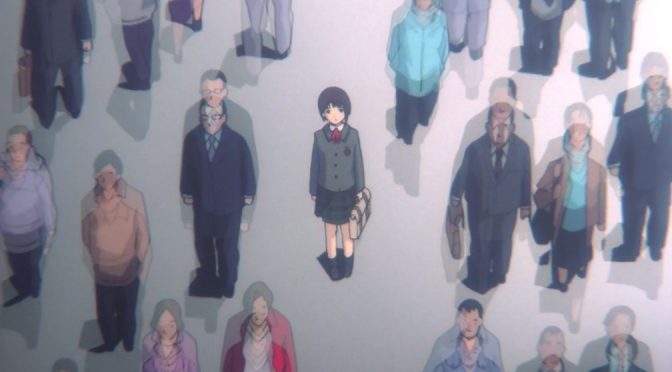
Serial Experiments Lain is a 1998 cyberpunk anime which follows a girl called Lain in a world where the boundary between the physical realm and the Wired – a fictionalized version of what we know as the Internet – progressively becomes more blurred. Lain grapples with confronting her digital alter egos and trying to make sense of her ever-shifting reality. While the series quickly spirals into surreality and confusion, the themes of memory, identity and mass media ring clear. The specific concept of prosthetic memories comes into view when it is revealed that the world’s chaos can be traced back to a digitally-omnipresent antagonist named Eiri, whose ability to manipulate collective memory can shape reality.  

Hence, I found that this series resonates heavily with Alison Landsberg’s 1995 paper Prosthetic Memories, in which she defines such memories as ones that are implanted instead of coming from lived experiences. While her discussion focuses on prosthetic memories as experienced through film and mass media, my blog post explores how Serial Experiments Lain extends her ideas to the modern age of the internet and social media. I go further to argue that the late-90s series prophetically illustrates how the internet is used as a powerful tool for systems of power to manipulate memory, alter reality and reshape history to the detriment of society. 

Prosthetic memories through social media

Landsberg explains that the mass media is a site for the production of prosthetic memories, with cinema in particular. As a medium that makes images available for mass consumption, it creates experiences and implants memories “which become experiences that film consumers both possess and feel possessed by” (176). Spectators witness memories depicted on screen that they have not actually lived through, prosthetically experiencing the histories of a collective past. Landsberg suggests that this complicates identity formation and results in the creation of “partial identities” (179).

Similarly, Lain is a figure whose identity is fragmented and shaped by prosthetic memories. Midway through the series, a mind-bending twist reveals that Lain is a digital entity entirely constructed by Eiri with the purpose of bridging the gap between the real world and the Wired. She grows to become a figure whose identity is shaped by the human collective unconscious present in the Wired, resulting in different “Lains” who are constructed by various people’s experiences and memories. While the Wired presents an exaggerated, more advanced version of how the Internet functions in real life, Lain’s experiences with partial identities is reflective of how our identities are shaped online. Beyond the images depicted in films as discussed by Landsberg, social media has made it so that users can easily upload documentations of their memories to the digital realm, readily accessible for others to prosthetically experience these histories and internalize them as their own.

Perception becomes reality

Landsberg explains that what is real and what is not becomes blurred when an individual’s identity is affected by prosthetic memories. She asks the question “What might it mean to say that those memories are ‘just’ from a movie?”, arguing against any attempt to distinguish between prosthetic memories and “real” ones, since anything that we experience to be real becomes our reality regardless of the source. Serial Experiments Lain echoes this point by positing that perception becomes reality, and extends this discussion to the realm of collective memories and the act of memory erasure.

“A memory is only a record. You just have to rewrite that record.” – Lain

While the series explores Landsberg’s ideas of experiencing additional memories outside of one’s own lived experience, it also explores what happens when memory is erased. As Lain becomes a powerful, God-like being that crosses between planes of reality, she grows to realize the detrimental impacts of her abilities, and uses memory manipulation as a positive force to remove herself from society’s collective memory. She continues to live on, but in a peaceful world where she was never remembered, and thus the impacts of her existence are no longer present. This bittersweet ending highlights a central idea that ripples throughout the episodes: that people only have substance within the memories of other people.

Memory as shaped by power

Following this idea that people only have substance within memories of others, could this also apply to global issues or events? Our collective memory and experience of reality is largely shaped by our engagement with social media and the images that we see online. If something is documented less or hidden from public view, society becomes prone to forgetting it, which essentially removes it from our perception, and thus our reality.

Adriaansen and Smit explain how platformization reshapes the act of remembering and forgetting through algorithmic curation. They define platformization as the way in which our pasts are actively and continuously reshaped by the infrastructures of digital platforms. They use the example of Facebook and Apple’s “Memory” features that algorithmically select old posts to surface as memories based on engagement metrics and positive content. These features strategically reconstructs individual’s memories into tailored narratives that highlight certain moments while erasing those deemed less desirable. Adriaansen and Smit also explain how, on a collective scale, algorithms aid in the dissemination of content throughout social networks, with algorithmic bias playing a part in determining which narratives gain visibility and credibility. This proliferates the spread of “fake news”, leading to collective yet false memories about public events that become part of our perceived reality and experiences (2).

Serial Experiments Lain extends Landsberg concept of prosthetic memories to the modern age of the Internet, and illustrates how social media is a prominent site for memory construction and the shaping of our collective reality. The power of memory manipulation that Eiri, and consequently Lain, hold, make them figures that are allegorical of these systems of power and regimes that enforce censorship in attempts to make us remember and forget. While there is no God-like entity that can literally extract and implant memories into the minds of individuals (hopefully), the erasure and fabrication of narratives happen all the time, subtly but surely. Hence, it remains important for us to look through the cracks and think critically about the information we engage with online so that we don’t fall into a perception of reality that blinds us from truth.

By: Adela Lynge


References

Adriaansen, Robbert-Jan, and Rik Smit. “Collective memory and social media.” Current Opinion in Psychology, vol. 65, Oct. 2025, pp. 1–4,

Landsberg, Alison. “Prosthetic Memory: Total Recall and Blade Runner.” Body & Society, 1995. pp. 175-189.


We Shape the Algorithm, and It Shapes Us

Contributors: Adela, Lorainne, Maryam

Social media is at the center of everyday life. We scroll through endless streams of content carefully curated to our tastes, shaped by algorithms that “learn” from our behaviour. In this digital landscape, anyone can create and share media about anything, while platforms personalize what we see based on our activity. This constant curation keeps us engaged, presenting an illusion of infinite choice while subtly guiding what gains visibility.

Both creators and consumers play active roles in the system. Creators learn to work with the algorithm: choosing specific sounds, hashtags, and editing styles that fit its rhythm, while consumers customize their feeds to match their interests, following or blocking certain tags, creators, and engaging with select content. Together, these behaviours teach the system what “works,” creating a feedback loop in which both the user and the algorithm continually adapt to one another. It’s through this ongoing exchange that trends emerge.

In this blog, we attempt to extend Tim Ingold’s notion of correspondence to digital contexts, suggesting that users and algorithms are engaged in an ongoing process of co-creation: a form of digital correspondence where each shapes the other through continuous interaction.

We argue that, through the lens of correspondence, social media algorithms can be understood as both a system of control and responsive materials that evolve with user activity, forming a digital environment where trends are “made” collaboratively through attention, resistance, and adaptation.

Making as Correspondence

To set the ground, Ingold defines correspondence as the relationship we form with the world when we think through doing. For him, genuine inquiry is not at all about standing apart from the world and describing it from a distance, as if we were detached observers. Instead, it involves, as he writes, “opening up our perception to what is going on there” (p. 7) and responding to the world’s movements, textures, and changes. Therefore, correspondence is an ongoing, two-way process of mutual responsiveness between ourselves and our surroundings: we attend to what the world is doing, and our actions, in turn, answer back to it.

Ingold compares interaction and correspondence to the act of walking with another person. When two people walk beside each other, they are engaged in a deeply companionable activity, despite not speaking directly to each other and rarely making eye contact. Instead, they coordinate their pace, rhythm, and direction through subtle bodily cues and peripheral vision, and their connection unfolds through movement itself, rather than through communication or representation. This is not a verbal or face-to-face exchange but a lived attunement. It’s rather a way of “growing older together” (p. 106) in shared time, making the nature of the relationship dynamic, ongoing, and co-creative. Walking together, therefore, reveals what Ingold calls correspondence: a mutual responsiveness that arises through motion, and never through detached interaction.

Ingold extends this idea to the act of making, describing it as a dialogue between the maker and the material. The maker does not really impose form but learns from the material’s resistance and possibilities, adjusting gestures in response. Through this ongoing exchange, both the maker and the material are transformed. Therefore, we think to correspond is not at all to represent reality from outside, but to join with it: to move, learn, and evolve alongside it. It’s a way of knowing with the world, rather than knowing about it.

Correspondence in the Digital Sphere

Viewing algorithms through the lens of Ingold makes it clear that the relationship between them and social media users is one of correspondence. The production of and interaction with content on a platform is processed as data that continuously shapes our digital experiences. Every user’s contribution to the algorithm, regardless of whether they post content, is significant but often overlooked. The very act of liking, saving, or even swiping after a certain amount of time signals one’s level of enjoyment of a specific kind of content. Such simple actions give rise to personalized feeds, such as TikTok’s famous “For You Page”, that grow in effectiveness the longer one stays on the app. 

Correspondence is not limited to just being between user and algorithm, but also among users themselves too. Ingold describes the scene of a string quartet: players do not interact nor move position, but create interwoven sounds that blend into one (p. 107). This music room, we think, can be seen as equivalent to the digital spaces of social media platforms, in which users continuously contribute to an ever-changing conversation that describes a song, however discordant, of collective consciousness. Only through the algorithms that push forth voices and encourage user responses can such dynamic conversations take place. TikTok’s “stitch” feature that allows a direct response to videos is one of many that illustrates how users engage in a mutual feedback loop of responsiveness, and hence correspondence – similar to a string quartet’s act of “listening as they play, and playing as they listen” (p. 106). 

This phenomena is largely seen through the prevalence of trends on social media. Thanks to the dynamic, ever-shifting nature of the algorithm, trends disappear just as quickly as they arise. When a post gains traction, the algorithm prioritizes it and pushes it out to users’ feeds, leading to further engagement and more user-generated content on that topic. And through the use of popular hashtags and sounds, and the continuous mutual responsiveness among users, trends proliferate, change and shift – then fall off just as easily. This way, we correspond with other users while also corresponding with the algorithm by answering to what it shows us, collectively contributing to a fluctuating digital landscape that shapes our perceptions of the world.

The ability of algorithms to tailor the content fed to users allows for the positive engagement with personal interest and the development of niche, creative communities. However, we think its detrimental impacts cannot go unmentioned. Algorithms are strong perpetrators of echo chambers, in which the development of “filter bubbles” limits exposure to opposing views and reaffirms users’ confirmation bias (Latimore).

Furthermore, we must realize the content filtered out by algorithms is not only derived from user interactions, but also from the biases ingrained within their very programming – biases that mirror existing hierarchies of visibility and power.

Power and Algorithmic Control

These built-in biases remind us that algorithms are never at all neutral, they are shaped by the same social, political, and economic forces that structure the world around us. What began as a relationship of mutual correspondence between users and platforms starts to reveal a deeper imbalance. The very systems that seem to “listen” and adapt to us are, in reality, governed by unseen mechanisms of power.

Through Ingold’s framework, when we think about how we interact with social media today, we see a similar kind of correspondence, but one that has been distorted by forces we cannot fully perceive. Every post, like, and comment feeds into the algorithm, which in turn “learns” our behaviour and shapes what we see, believe, and desire. It’s still a dialogue but one that has become asymmetrical, where one side listens with human curiosity, and the other responds through invisible forms of data-driven control.

The algorithm, through Ingold’s lens, starts to look like a “material” that has learned to push back. It resists our intentions, reshapes our sense of connection and perception of reality, and even determines what counts as “worthy” of attention. But this correspondence is never innocent, never neutral; it’s shaped by power. The algorithm actually amplifies certain voices while silencing others, rewarding what is profitable, making certain things visible and trending while burying what doesn’t serve power and its agendas – very often the stories and struggles that most urgently demand to be heard.

We see inevitable connections in Critical Terms for Media Studies, and we keep returning to the description of mass media as “the playthings of institutions… under the management of the palace, the market, or the temple” (p. 277). That feels truer than ever. What appears as a participatory and democratic space is, in fact, an infrastructure of control. Algorithms amplify what serves institutional power and suppress what threatens it.

We see this in real time as voices exposing genocide, colonial violence, and injustice are shadow-banned, flagged, and buried beneath layers of distraction and a public that has been numbed into passivity.

Reclaiming Media as Ethical Making

As media students, we have a responsibility to see through this illusion, to think critically, to question, and to resist. Ingold teaches us that making is an ethical act of correspondence, one rooted in care and attention. To “make” within algorithmic systems, then, must mean to intervene consciously and to create media that refuse erasure, that restore presence where silence has been systematically imposed. 

In resisting the algorithm’s pull, we think that our role cannot stop at consumption or critique, it must extend to re-making media itself. Re-making as a tool for truth-telling, for exposing injustice, and for reawakening correspondence as a living, ethical practice.

Contributors: Adela, Lorainne, Maryam

References
Latimore, E. (n.d.). The echo chamber of social media. Retrieved from https://edlatimore.com/echo-chamber-social-media/
Ingold, T. (2013). Making: Anthropology, Archaeology, Art and Architecture. Routledge.
Peters, J. D. (2010). Mass Media. In W. J. T. Mitchell & M. Hansen (Eds.), Critical Terms for Media Studies (pp. 261–276). University of Chicago Press.
Photo credit: Which? Trusted Trader, “How to use social media for your business”, June 1 2023. https://for-traders.which.co.uk/advice/how-to-use-social-media-for-your-business

Gaza and the Failure of Mass Media

Never before has a genocide been both the most documented in history and the first ever livestreamed in real time. And never before has the world scrolled past such unthinkable horror.

Carpet bombing entire residential neighbourhoods, erasing streets, homes, and entire families in seconds.
A boy screaming into the night after Israeli airstrikes wiped out his entire family.
A father collecting the scattered remains of his daughter in a plastic bag because there is no body left to bury.
Premature babies pulled from incubators after hospitals were bombed.
Doctors forced to operate on children without anesthesia, using vinegar and sewing needles because medicine has been cut off.
Hospitals, mosques, and churches bombed to rubble.
UN schools turned into mass graves.
People burning to death because bombs ignited their homes, trapping them under rubble and fire with no way out.
The deliberate murder of journalists, medics, doctors, nurses, UN staff, aid workers.
White phosphorus and other internationally banned chemical weapons raining down on crowded refugee camps.
Children starving to death, due to malnutrition and Israeli-made famine.

They are my family. Many of them have been murdered. Others are still buried under the rubble. And for nearly two years now, my people have been forced to livestream their own genocide to the world.

But this genocide did not begin in 2023. It’s actually the latest chapter in a 77-year Zionist settler-colonialism of Palestine. It’s a continuation of the Nakba of 1948, where 750,000 Palestinains were forcibly expelled and 500 villages destroyed to make way for the creation of the colony of “Israel.” It has carried on through decades of apartheid policies and military occupation of indigenous Palestinian lands.

A UN ambassador described Gaza as “the most documented genocide in history.” According to the latest UN OCHA update, Gaza’s Ministry of Health reports 65,419 Palestinians killed and 167,160 injured since October 2023. International law is shattered with impunity, and war crimes are committed in plain sight. A genocide carried out by a settler-colonial power, protected and armed by Western governments, and sanitized by Western media institutions. 

That is the contradiction I cannot shake. Billions see it but nothing changes. 

I think this paradox, of hyper-documentation alongside silence, denial, and complicity from institutions of power, is what makes Gaza one of the most urgent media events of our lifetime.

Messages, Means, and Agents Under Attack

To understand this paradox, I turn to John Durham Peters’ chapter on Mass Media in Critical Terms for Media Studies. The author explains that media always involve three things: a message, a means, and agents. The “what,” the “how,” and the “by/to whom” (p, 266)

In Gaza, all three are under attack.

The messages Palestinians send are live footage of their mass murder, but by the time they reach Western newsrooms, they are twisted into biased reporting that flattens, sanitizes, and outright misrepresents the truth. And this in turn, dehumanizes Palestinains to justify occupation and genocide. What is really the genocide of an indigenous population, carried out by a colonial state on illegally stolen land, occupied for 77 years, is reframed as a “conflict.”

The means are our devices and social media platforms. One would expect them to amplify oppressed voices, expose injustice, and make Palestinian suffering impossible to ignore. Yet these very platforms censor, shadowban Palestinian content and suspend accounts, silencing the very voices they should be carrying to the world. In fact, a 2025 report revealed that Meta, under an Israeli-led censorship campaign, complied with 94% of government takedown requests, removing or suppressing over 38 million posts about Palestine. At the same time, Israel has launched coordinated propaganda campaigns, paying influencers up to $7,000 per post to spread pro-Israel narratives.

And the agents, the local Palestinian journalists on the ground who risk everything to document the truth, are being targeted by the illegal Israeli occupation, murdered one after another. The occupation has deliberately murdered over 270 journalists and media workers during this genocide, an unprecedented number in history.

This is a systemic war on truth.

Power as the Ultimate Medium

“Power is perhaps the ultimate mass medium: it speaks to whom it will, multiplies symbols across space and time, and immobilizes audiences” (Peters, p. 278). The colonial state and its Western allies are not only waging war on an indigenous people and their land but also on the narrative itself. What the world sees, and what it is kept from seeing, is shaped by the machinery of power.

“Where mass media are, there is usually power” (p. 277). The myth of neutrality collapses when Western outlets uncritically reproduce and parrot the colonizer’s talking points, from the debunked “40 beheaded babies” claim to justifying the bombing of hospitals as “strikes on Hamas targets.” This is not journalism but propaganda laundering, justifying genocide and the 77-year-long illegal occupation and colonial oppression of Palestinians. Every accusation is a confession. Power multiplies these frames until they dominate the discourse, drowning out the voices of the oppressed.

Peters calls mass media “the playthings of institutions… under the management of the palace, the market, or the temple” (p. 277). In Gaza, the palace is the state power of the illegal Israeli occupation and its Western allies, which provide the political cover and billions of dollars in military aid (funded by our own tax dollars) that supply Israel with the most advanced weapons and military equipments in the world. The market is the military-industrial complex and corporate platforms, where profit is tied to both arms sales and digital control over information flows. The temple is the settler-colonial and ideological narratives that justify the occupation and genocide of Palestinians.

And when truth does break through, power immobilizes. Billions witness livestreamed massacres, children pulled from rubble, and entire neighbourhoods flattened yet visibility yields no action. Audiences are numbed, while those who resist and speak out are harassed, censored, fired, or cancelled. Cancel culture is weaponized against anyone who challenges these narratives, from journalists to students and professors, ensuring that speaking truth to power comes at the cost of their lives and careers.

Gaza exposes mass media as a battlefield where power itself is the ultimate medium, deciding what circulates, what is erased, and how the world responds—or fails to respond—to the most documented genocide in history.

Conclusion: Solidarity & Awareness as the Counter-Medium & Our Responsibility as Media Students

Gaza forces us to confront the failure and limits of the media. Never before has the world been so saturated with real-time evidence of genocide and war against humanity itself, and never before has that evidence been so easily dismissed, reframed, and silenced by those in power.

Yet despite censorship, despite propaganda, the truth is inevitable.

Citizen journalism in Gaza has created an indestructible archive that history will remember and hold power accountable. And global solidarity, from university encampments to mass protests and digital solidarity campaigns, shows that resistance and awareness are growing more than ever, worldwide. 

If mass media are the “playthings” of power, then solidarity and awareness are the counter-medium. It ensures that even when headlines distort and platforms censor, the truth still breaks through, carried by those who refuse silence and ignorance and choose to stand on the right side of history. Gaza teaches us that while mass media can immobilize, it can also mobilize when audiences choose to resist.

As Malcolm X said: “If you’re not careful, the newspapers will have you hating the people who are being oppressed, and loving the people who are doing the oppressing.” 

And as media students, that choice is ours. We are not passive observers. We are agents who can decide whether to reproduce power’s narratives or to challenge them. To study media critically is to recognize its dangers but also its possibilities. Our responsibility is agency, and we have the tools to question, to respond, to expose, to resist.

By Maryam Abusamak

Image Credits

  • Photo: AFP – A relative mourns Palestine TV journalist Mohamed Abu Hatab and 11 family members, the day after they were killed in Israel’s bombardment of Khan Younis, southern Gaza Strip, November 3, 2023.
  • Photo: Ireland Palestine Solidarity Campaign (IPSC) – Pro-Palestine protest in Dublin, Ireland.
  • Photo: Abdel Kareem Hana / Associated Press – Relatives and colleagues mourn over the bodies of Palestinian journalists killed in Gaza, 2024.
  • Photo: Majdi Fathi / NurPhoto via Getty Images – Palestinian children walk past the rubble of the al-Bukhari mosque in Deir al-Balah, central Gaza Strip, March 2, 2024, after an overnight Israeli airstrike.
  • Photo: Anas Baba / AFP via Getty Images – Smoke rises above buildings in Gaza City as Israeli warplanes drop bombs at night.
  • Photo: Ali Jadallah/Anadolu Agency (AA Images) – The body of a Palestinian child after an airstrike.
  • Photo: Ahmed Hasaballah / Getty Images – Palestinian children mourn during the funeral of relatives killed in Israeli airstrikes on Gaza.
  • Cover image: Ashraf Amra / Anadolu Agency via Getty Images – Funeral ceremony held for Palestinian journalists Saeed Al-Taweel and Mohammad Sobh, who were killed in Israeli airstrikes in Gaza on October 10, 2023, while filming the targeting of a residential building in the Rimal district, western Gaza.