
Tag Archives: educational theory

New issue of Critical Education (vol. 17 no. 1, 2026)

This issue of Critical Education includes the first of a two-part special section on Palestinian Liberation in Education: Solidarities and Activism for a Free Palestine, edited by H. Shatara.

In addition, there are articles that analyze LGBTQIA+ censorship debates in a public library; imagine critical pedagogies and ecological humanities from Global South perspectives; examine critical pedagogy in Liberian higher education; explore transformations of beliefs and identities of undergraduate students; present an abolitionist framework for study of police in schools; and an investigation of U.S. public loan forgiveness program.
—————————–
Articles
  • Discursive Placemaking Practices and White Christian Nationalism: Analyzing LGBTQIA+ Censorship Debates in a Southern, Small Town Library — Ryan Schey, Rebekah J. Adams
  • Imagining Critical Pedagogies and Ecological Humanities in the Pluriverse: Nomadic, Decolonial and Life-centered Environmental Education as a South-complex Environmental-desiring Machine — Jorge Garcia-Arias, Helen Moura Pessoa Brandão, Natalia Sánchez Gómez
  • Envisioning Critical Pedagogy in Liberian Higher Education: A Conceptual Framework for Civic and Democratic Engagement — Gabriel M. Kennedy
  • “A Game We All Play”: Identity, Epistemology, and Transformation in Undergraduate Psychology Students — James Y. Yuan, Romin W. Tafarodi


  • Research as Copaganda?: An Abolitionist Framework for the Study of Police in Schools — Hannah Baggett, Carey Andrzejewski, LaKendrick Richardson, Brucie Porter
  • The Public Service Loan Forgiveness Program and the Purpose of Higher Education — Saralyn McKinnon-Crowley, Sarah Harris
———————-
Palestinian Liberation in Education: Solidarities and Activism for a Free Palestine
  • Palestinian Liberation in Education: Solidarities and Activism for a Free Palestine — H. Shatara
  • Flowers for Palestine: From Holy City to Holy City — Tiffany O. Harris
  • Do Palestinian Lives Matter in Teacher Education? Centering an Anti-Zionist Commitment in (Early Childhood) Teacher Education — Lilly Padía
  • Educating for Unknowable Futures: The United Nation Relief and Works Agency-led Education for Palestinian Refugees in Jordan — Julie Alstadnes Malme
  • Confronting my Palestinianess in Writing Pedagogies: A Critical View from Lebanon — Amany Al-Sayyed
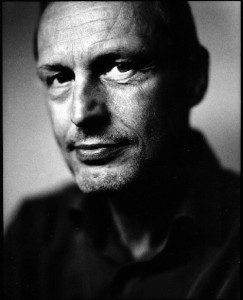
Public lecture by Jan Masschelein: Public Lecture ‘Reclaiming the School as Pedagogic Form’ Dr. Jan Masschelein

Institute for Critical Education Studies
Faculty of Education
University of British Columbia

Public Lecture
‘Reclaiming the School as Pedagogic Form’

Dr. Jan Masschelein
(Katholieke Universiteit Leuven)

May 12, 2015
12:00 – 2:00pm

Scarfe 1214
(Education Building, UBC Vancouver)

 In my contribution I will use the word ‘school’ to refer to a specific pedagogic form i.e. a concrete way (including architecture, practices, technologies, pedagogical figures) to gather people and things (arranging their company and presence) so that, on the one hand, it allows for people to experience themselves as being able to take care of things, and, at the same time and on the other hand, to be exposed to something outside of themselves (the common world). It is a very specific combination of taking distance and (allowing for) re-attachment. As a consequence, the term ‘school’ is not used (as is very often the case) for so-called normalizing institutions or machineries of reproduction in the hands of the cultural or economic elites. There is reproduction and normalizing, of course, but then the school does not (or does no longer) function as a pedagogic form.

Put differently: schools are particular ways to deal with the new generations and to take care of the common world that is disclosed for them. If education is the response of a society to the arrival of newcomers, as Hannah Arendt formulates it, and if schools are particular ways of doing this, ways that are different from initiation and socialization, ways that offer the new generations the possibility for renewal and the opportunity of making its own future, i.e. a future that is not imposed or defined (destined) by the older one, ways that imply to accept to be slowed down (in order to find, or even, make a destiny), ways that accept that education is about the common world (and not individual resources), then we could state that the actual ‘learning policies’ of the different nation states as well as of international bodies are in fact threatening the very existence of schools (including school teachers). 

To reclaim the school, then, is not simply about restoring classic or old techniques and practices, but about actually trying to develop or experiment with old and new techniques and practices in view of designing pedagogic forms that work under current conditions, that is, that actually slow down, and put society at a distance from itself.

Jan MasscheleinJan Masschelein is head of the Laboratory for Education and Society, and of the research group Education, Culture and Society at the Katholieke Universiteit Leuven (Belgium). His research concerns the public and societal role of education and schooling, the role of the university, the changing experiences of time and space in the age of the network, the educational meaning of cinema and camera, the architecture of schools and architecture of the learning environment, a pedagogy of attention, the notion of ‘pedagogy’, the pedagogical role of teachers and social workers. His book, In Defense of School (with Maarten Simons) is available at http://goo.gl/NN4XeD.