Category Archives: Other

Speed in Stillness: My LEGO Ferrari F1 Car as an Evocative Object – by Meha Gupta

On my desk sits a small, red LEGO Ferrari Formula 1 car. Perfectly assembled, it’s bold, glossy, and unmistakably fast, or at least it looks like it should be. The real Ferrari SF90 can hit 350 km/h, but this one hasn’t moved an inch since I built it two summers ago. It’s made of plastic, about the length of my hand, and technically useless. Yet every time I look at it, I feel something that’s hard to explain, a quiet rush, a sense of movement, a memory of motion. For me, this LEGO Ferrari is more than a collectible. It’s a reminder of how technology mediates our desire for speed, control, and perfection, and how even still objects can capture the affective charge of the digital and mechanical worlds we live in.

When I initially created this model, it was at a moment when my life seemed far from speedy. It was the height of lockdown, courses had transitioned to online formats, and each day seemed like a monotonous cycle of screens. I recall endlessly scrolling through YouTube, viewing F1 highlights, the roar of engines, the aerial footage, the precision of pit stops. It had a quality that stood in stark contrast to the unchanging environment surrounding me. Once I received this LEGO set, I assembled it throughout one weekend, connecting each piece until the red form was completed flawlessly. It felt strangely healing, as if I were piecing together a rhythm and vitality that the digital realm had siphoned from me.

The Object as Mediation

This toy car isn’t just an object; it’s a medium. Marshall McLuhan famously said that “the medium is the message”, meaning that the form of a medium, not just its content, shapes human experience. This LEGO Ferrari mediates speed not through movement, but through its design and material presence. It turns velocity into something visual and tactile. Every aerodynamic curve, every sponsor decal, and every wheel alignment works as a miniature interface that translates the cultural idea of “speed” into something I can hold.

In that sense, this car embodies the paradox of our media-saturated world: we crave the thrill of movement, but most of our experiences of it are mediated through screens, simulations, and symbols. Watching F1 on a screen, playing the F1 video game, or even scrolling through Instagram clips of races, each of these are examples of what Friedrich Kittler calls “technological mediation”, where our relationship with the world is shaped not directly, but through layers of machines. My LEGO Ferrari sits at the end of that chain, a still life representation of digital motion. It’s a physical freeze-frame of a hyper-mediated phenomenon.

Theorizing Speed and Stillness

The concept of speed in media theory isn’t just about motion; it’s about time and attention. Paul Virilio, a French theorist who wrote extensively on technology and velocity, argued that modern life is dominated by what he called dromology, the logic of speed. According to Virilio, every advance in technology accelerates not only movement, but also perception. The faster we can transmit information, the faster our sense of time collapses. In that light, my LEGO Ferrari is ironic. It’s a static embodiment of a hyper-speed culture. It’s the calm after acceleration, the physical residue of a world obsessed with going faster.

When I look at this model, I think about how much of our media consumption today is built around acceleration: 15-second TikToks, 2x playback speed on lectures, instant streaming, and even the constant pressure to “move forward” in life. The Ferrari, both real and miniature, symbolizes that desire for optimization, precision, and speed. Yet the LEGO version, by being immobile, resists that logic. Its speed turned into contemplation. It mediates not the rush of racing, but the human longing behind it: the need to feel in control, even in an age when our devices seem to control the pace for us.

Affordances of the Object

In media theory, the term affordance refers to what an object allows or enables us to do. My LEGO Ferrari doesn’t move, but it affords reflection, nostalgia, and imagination. It reminds me of weekends spent building LEGO as a kid, of tinkering with things just for the sake of curiosity. It also affords a certain kind of identity performance, displayed on my desk, it signals taste, fandom, and aesthetic precision. It’s part of what Sherry Turkle would call the “inner life of things,” where objects become extensions of our personal narratives and self-concepts.

When Turkle writes that evocative objects are “companions to our emotional lives,” she’s describing exactly this kind of relationship. The Ferrari’s bright red surface doesn’t just reflect light; it reflects my own attachment to what it represents, ambition, movement, design, and control. Yet as I grow older and busier, it also reflects the limits of those ideals. Like a real race car, it’s all about balance: knowing when to accelerate and when to brake.

What the Ferrari Teaches About Media and Mediation

This tiny car helps me understand something larger about media: how technology constantly translates human desire into mechanical or digital form. A Formula 1 car is a triumph of media systems, GPS telemetry, radio communication, live broadcast, aerodynamic simulation, and global branding all converge in a single race. My LEGO version compresses that entire media network into a palm-sized artifact. It’s a miniature media ecology, where engineering meets storytelling, and speed becomes a symbol.

For my generation, growing up in a world where digital media often replaces direct experience, the LEGO Ferrari also represents a yearning for tangibility. It reminds me that even in a digital age, we still crave physical mediation. Building it by hand felt different from clicking or scrolling; it was a slower kind of engagement. It brought back a sense of authorship, of literally constructing something piece by piece rather than consuming something pre-made. That slowness is something media theory rarely celebrates, but perhaps it should.

Conclusion: The Stillness of Speed

Now, the LEGO Ferrari sits quietly between my books and my keyboard. I rarely touch it, but it’s always in my line of sight, a bright red reminder of the way media, memory, and matter intertwine. Through McLuhan’s and Virilio’s lenses, I’ve come to see it not just as a toy, but as a symbolic interface between speed and stillness, past and present, analog and digital.

In a world where everything demands movement, scrolling, streaming, updating, this little car offers the opposite: a pause. It invites reflection on what speed means when the world refuses to slow down. Maybe that’s why it feels so evocative. It mediates not the race, but the moment after it, the breath between acceleration and rest.

And that, I think, is where its real power lies.

Ordinary Old Rock—My Evocative Object

I have this rock I picked up at a national park in Mumbai. A light-coloured, perfectly round rock with spiral lineation running along its surface. It may be an odd hobby, but I have always liked collecting rocks. However, I usually end up throwing them away within a couple day because pretty as they might be, there’s not much you can really do with a rock. I thought this would be the case for this rock to but surprisingly enough, even after all these years and a trip across the globe, I still have it with me.

At first I just didn’t have the heart to throw it away. It was too perfect a rock, almost circular with a completely smooth surface . So I just kept it on my desk and eventually forgot about it. It lay there catching dust until I was packing to leave for university. On an impulse, for some inexplicable reason, I decided to pack this rock to take it with me to Canada. I thought I could use it as paperweight, but that was just an excuse (after all, who even uses paperweight in this day and age?). 

I had never lived away from home. In all my eighteen years of existence, I had never faced a situation where I had to pack my entire life into a suitcase to move to a place entirely foreign to me. Even after cramming most of my belongings into a suitcase, there was still an entire house worth of my cherished items that I had to leave behind. My belongings have always been sacred to me. I did not even have the heart to throw away my elementary school textbooks but here I was, abandoning almost everything that I held close to my heart. My favourite books, my childhood photo albums, the old wooden box filled with random knick knacks that I had collected over the years; I had to leave almost all of it behind. I stuffed this tiny rock in between my clothes, a desperate attempt to lay claim to anything I could get my hands on. Though I could not take everything with me, I would do my best to take anything I could, even this tiny inconsequential rock.

Now, I have been living in Canada for almost four years. I have painstakingly built a whole new ecosystem of objects of my own. Books, clothes, shoes, and other random paraphernalia. Almost everything I brought over from India has either been discarded or replaced, and the few things I have left have melded into my  new life so well that I can hardly distinguish between my old belongings and the ones I acquired here. Everything changed, but that rock still remains. I have moved thrice, and every single time I have made sure to take the rock with me. A lot of people have asked about its significance and I never really know what to say in response to that. It seems a bit strange and even a little foolish to tell people that I brought this plain-looking rock from India. This is in line with Turkle’s statement that we are more comfortable with objects that have a specific use rather than considering objects as something with an emotional connection (5). Perhaps the rock’s lack of purpose is precisely why it has stood the test of time. If it truly had some use, it would have been abandoned once it stopped serving that purpose. 

The Rock as an Object of Transition and Passage

Of course, the rock is not the only object from India I have with me. But the rock has assumed a special place in my life, as an active reminder of home. Turkle claims that such periods of transition make a person vulnerable to the objects and experiences from that period of transition. She draws on Victor Turner’s idea of liminality, emphasising how times of transition are an important site for the creation of new symbols. Drawing from these ideas, I believe this period of transition granted this otherwise innocuous object the affordance of being a symbolic representation of home and my life at the time. A freeze frame, capturing a very specific moment in time.

During that transitional period, when I was thrust into a completely new environment, this rock served as a comforting reminder of home. A real, tangible proof that I was once familiar with the land that now feels so foreign to me. This lines up with Turkle’s observation that during traditional rites of passage, when person is forced to part with all that they consider to be familiar, they are more susceptible to objects and experiences of that time. At a time my life was in constant flux, this rock was the only constant. Not only does the rock embody a specific time and place, but it has also come to represent that version of myself—one who was so desperate to hold onto the past that she clung on to anything she could, even a tiny old rock. 

Since then, I’ve moved several times, and with each move, I’ve grown more comfortable with the idea of letting things go. Change no longer unsettles me the way it once did. So now, after all this time, the rock no longer serves solely as a reminder of home. Instead, I’ve come to see it as a thread linking together the different versions of myself that have emerged through each transition in my life.

Works Cited

  1. Turkle, Sherry. “WHAT MAKES AN OBJECT EVOCATIVE.” Evocative Objects: Objects We Think With, 307–326. 
  2. Turkle, Sherry. “INTRODUCTION: THE THINGS THAT MATTER.” Evocative Objects: Objects We Think With, 3–10. 

Mediating Childhood Memories and Identity Through Lunch Bags

Introduction

I was helping my parents move into their new house this summer when I found my favourite lunch bag from primary school. It was a small, green rectangular bag, patched with two cute cats playing the piano. Although the bag was covered with an unidentifiable stain, I refused to let my parents throw it out. The lunch bag reminds me of the best parts of my childhood with all the things it once held. I remember the sound of my Mother placing my lunchbox on the kitchen counter before the school bus arrived. I remember the soft clatter of glass containers and metal utensils as I walked down the school hallways. Finally, I distinctly remember unpacking my lunch as the bell rang. Every hearty meal leaving me full and content. To me, salvaging this stained artifact was not at all gross, but rather a symbol of surviving years warm home cooked meals. 

Mediation

For more than a decade, my childhood lunch bag was a significant part of a daily ritual of nourishment and affection. It is an object that mediates between the self and the social world, serving as a middle ground for the private space of my home and the public sphere of my school. To reflect on the words of Sherry Turkle, she writes that theory enables us to “explore how everyday objects become part of our inner life” (Turkle). By taking a moment to appreciate how we use these mundane objects, we extend the reach of our sympathies for the memories, the people around us, and the world within it. Moving to Canada alone from Vietnam marked the moment I began packing my own lunches for the first time. Although the food in my new glass container was edible, and occasionally tasty, it was never the same without my Mother’s special touch. I realized that it is more than just about sustenance. A meal is a medium through which care, culture, and identity are communicated. We associate food with different cultures, nutrition, health, community, human rights, and so much more. As someone who has migrated a lot, I have always struggled to fully identify with my Vietnamese culture and heritage. Hence, this lunch bag is a testament to my belonging in all the places I have lived in as a child, when I was completely clueless to the gravity of any societal pressures to fit in. The rediscovery of this beautiful object of great sentimental value reminds me of the intimacy of past homes, friendships, and worries that are no longer in my life. 

Media Theory

Looking at my lunch bag through a media theory lens, I find that it echoes Marshall McLuhan’s ideas about objects being more just a vessel but the message itself. I vividly recall being in middle school, waiting for my friends to pick up their lunch bags off the shelves at the cafeteria table. I watched the abundance of colorful lunch bags go by, each a unique pattern and shape with the familiar names of my pupils scribbled in ink. The lunch bags are full of personality, their visibility communicating care, tradition, continuity, but also internationality. As I look at my own lunch bag now, I realize just how much objects can communicate, not through words but through materials, textures, and smells. Beyond just communication, the lunch bag can also be linked to Michel Foucault’s theory of the disciplinary society, which discusses how ordinary objects have the power to inscribe social norms into our bodies. Additionally, Bernadette Wegenstein’s chapter explores how the body as a medium of expression, through practices like dieting, can also shape how culture is lived and performed (Wegenstein). The lunch bags in the school cafeteria disciplines appetite and behaviour, as it is where we all learned the socially acceptable ways of eating, making social interactions, and what to subconsciously mask or perform. 

Conclusion

To my peers reading this who may also be navigating hybrid identities, I hope my exploration of childhood lunch bags speaks to a shared experience of mediation. Objects from the past are evocative, and often serve as important reminders that making peace with our identity does not only happen through language or policy, but it can happen through small, material gestures. I do not need to know the root cause of the bag’s stains and loose threads to admire its ability to translate love into something edible, something visible. That visibility is doing what Turkle says evocative objects do, “bringing philosophy down to earth” (Turkle). As the lunch bag mediates between theory and lived experience, it becomes a marker of difference, my personal signal of foreignness, and ultimately embodies the distance between my Mother’s kitchen at home and my rental space in Vancouver.

How about you? What do you carry with you when you move between worlds?

References

Turkle, Sherry. “What Makes an Object Evocative?” Evocative Objects, by Sherry Turkle, The MIT Press, 2007, www.jstor.org/stable/j.ctt5hhg8p.39. Accessed 6 Oct. 2025.

Wegenstein, Bernadette. “Body.” Critical Terms for Media Studies, by W. J. T. Mitchell and Mark B. N. Hansen, University of Chicago Press, 2010, pp. 19–34.

My Evocative Object – An Obsession Over The Fantasy Of Perfection

In my reading of Turkle’s collection of evocative objects, I came across the very interesting chapter called “Ballet Slippers”. In which the author, Eden Medina, presented a story of passion and dedication of her own, from childhood to maturity, and for me, it is also one that rang rather close to home. As a child at the age of 4, she had started training in her first pair of ballet slippers, with its presence soon became symbolic in her mind. As her skills develop, so does the complexity of her ballet slippers, and soon, the object becomes a mediator for her ideal image of the professional ballerina. 

For me, my evocative object is somewhat similar to the author of my chapter, having been training in badminton competitively for most of my middle and high school life, I relate strongly to this theme of “desire and discipline”. Therefore, for me, the “badminton racquet” is an object that evokes memories of my whole youth and, of course, the metallic smell of graphite that came with each racquet still lingers in the back of my mind. As a beginner, I started with a cheap racquet, but as soon as my skills improved and I was able to convince my parents to get me the branded ones I’ve been seeing on TV. Throughout my career, I went through 8 different racquets, each representing a different era in my development as a player and also personally as my relationship with the sport changes. 

I still remember when I first got a branded Yonex racquet, thinking back, it was quite an overkill considering my skill levels at the time anyway. But just like how the author’s experience of the ballet shoes mediated her idea of an ideal physicality, that racquet – the Yonex Nanoray Z Speed made me feel one step closer to the professional players I see on TV. Thinking back, perhaps the mental confidence that it affords was worth more than any technological advancements that came with it. In my games, I had no excuses but to only blame myself, for in my mind, my equipment is no longer the limiting factor for my performance, having this great a racquet in my hand. I realise that the mediation that the racket provides has allowed me to be immersed in a reality that I’ve yet to actually reach, and as such, acts as a device for my fantasies of perfection in my sport of badminton.

As such, in relation to Turkle’s theory, what makes this object evocative for me is exactly this connection that it currently mediates for me, between myself and the ideal image of badminton perfection. As Eden Medina has experienced, her ballet slippers have “helped [her] identify with the image of the professional ballerina that [she] upheld as [her] physical ideal.” Even more than that, for me, the badminton racquet is, in essence, also affording me my sense of identity, rather than being just an extension of my physical self. It has become part of who I am in my mind, “reaching out to me to form active partnerships,” as Turkle would say. The badminton racquet derives its meaning from its belonging to me, and I derive my identity as a player from having that specific racquet in my hand.

Yet, my dependency on this object to mediate my reality has its limitations; the more I am immersed in this somewhat fantastical identity of a professional player, the more I am disconnected from my real self. I soon find myself in a state of apathy toward the sport I once loved with all my heart, as I am caught in an infatuation with this fantasy that the racquet made possible. This would get worse as I grew to blame my bad performances on my racquets, thinking that they didn’t cater to my evolving play style. For a few years, I drifted away from the essence of the sport into the gimmicky world of its marketing. 

Now looking back, I realise that it is altogether wrong to depend so strongly on an external object to mediate something as important as my sense of self, let alone what I hold as my ideal. Perhaps, it would be healthier for me as an individual and beneficial for me as a player to be fixated on my game, with my racquet simply a bodily extension, than to obsess over an object of mere aesthetic value. As now somewhat reached maturity, my relationship to badminton has greatly improved, as I’ve rediscovered the joy in playing badminton for the game itself, and not for some fantastical ideal from childhood. As for any objects one may find to be evocative, perhaps, the fact that it appears to be so in the first place may be due to an imbalance in one’s relationship with oneself. Thus, an object appears as evocative due to its ability to fill in such gaps and inadvertently creates a dependency that appears obsessive, especially in this area of the passions of desire and discipline. 

Bibliography

Medina, Eden. “BALLET SLIPPERS.” Evocative Objects: Things We Think With, edited by Sherry Turkle, The MIT Press, 2007, pp. 54–61. JSTOR, http://www.jstor.org/stable/j.ctt5hhg8p.10. Accessed 8 Oct. 2025.


Turkle, Sherry. “WHAT MAKES AN OBJECT EVOCATIVE?” Evocative Objects: Things We Think With, edited by Sherry Turkle, The MIT Press, 2007, pp. 307–27. JSTOR, http://www.jstor.org/stable/j.ctt5hhg8p.39. Accessed 8 Oct. 2025.

Image used:

https://i.ebayimg.com/images/g/Z~AAAOSwoV1lPMCO/s-l1200.png

My Evocative Object: What is life without my phone.

Introduction

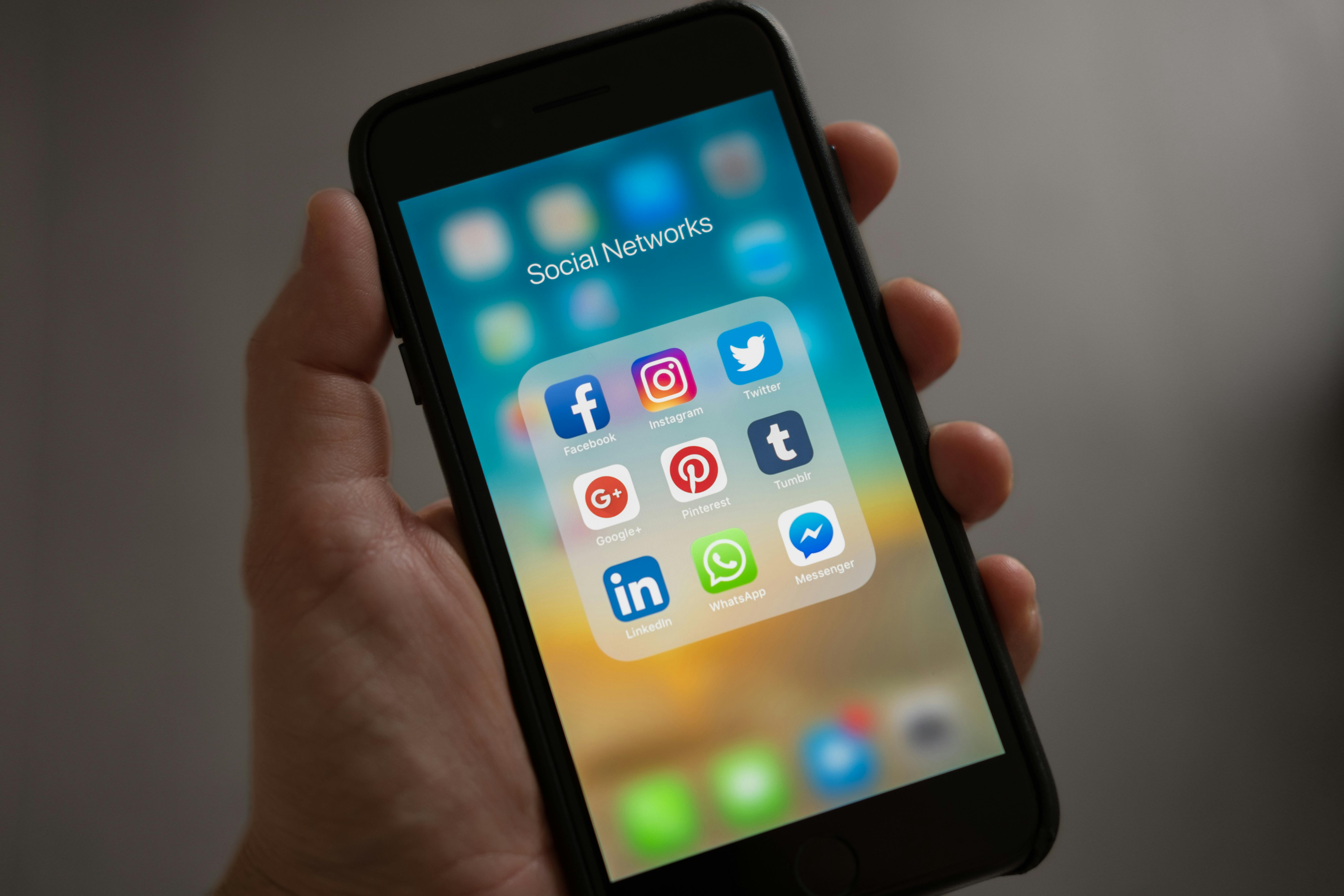
I decided to focus my evocative object project on my phone. It’s something people use everyday some more than others and I definitely fall into the everyday category. I’ve had either an iPhone or iPod since I was ten, and the moment I got it, my life changed forever. When I was younger I didn’t rely on my device as much. I would mostly use it to contact my friends, listen to music or take photos and it was what introduced me to photography. But with the rise of short-form content, I’ve become even more connected to my phone because it allows me to enter a new space or world. Social media apps for instance Tiktok or Instagram help me create a new identity online as a person who is more reserved. However my attention span has significantly gone down and it has made it hard to focus on any content or conversation lasting more than 5 minutes. Whether I am eating, cleaning or working out, I constantly feel the need to check my phone. It’s the dopamine rush from the content, and the emotions tied to the information stored within it. Even if I don’t want to use it, whether I want  to contact someone or see what’s happening in the world, I will eventually need my phone.

I remember my anthropology teacher once asked the class why so many students always have AirPods in their ears. I didn’t raise my hand to answer, but I realized that like my phone and my AirPods have a similar effect. It’s not a coincidence these technologies are designed to capture our attention and keep us hooked, which is the scary part but it all relates to our conversation about semiotics. Even though I am aware of this it’s a habit I can’t seem to break. Instead of waking up craving breakfast I crave the instant feeling of gratification that this piece of technology releases.

Connection to Turkle

My evocative object reading ” My laptop” also highlights my relationship with my phone. The protagonist describes unable to ‘’complete a thought without cracking it open and accessing a file of old notes, or hopping online and Googling a fact or two’’(Turkle, 2007) Ironically, I was on TikTok when I saw someone mention that she needed to stop using autocorrect because she had become so dependent on it that she struggled to spell words on her own. It’s small features like autocorrect, Grammarly and others that keep me tied to my phone. Without them I sometimes feel uncertain about my ability to form correct sentences or spell familiar words. I don’t think technology should replace our human abilities but rather support them. Unfortunately, for myself and many others that balance has been lost. 

Connecting back to the meaning of evocative, Turkle, in her essay ’’What Makes an Object Evocative?’’ explains how everyday objects become part of our ‘’inner life’’ (Turkle, 2007) and ‘’help us make our minds, reaching out to us to form active partnerships’’(Turkle, 2007). Though my phone isn’t human it still has an emotional impact on me as if it were. This connects to our in-class discussion about signs, semiotics and meaning. For example, if someone texts me, ‘’I need to tell you something!’’ my reaction changes depending on that single exclamation mark it signals urgency and triggers an emotional response. Similarly, emojis on our phone can have multiple interpretations and digital communication can easily be misunderstood. 

However I don’t think technology is inherently bad as Turkle also notes when discussing the invention of the clock and how it changed how people viewed time. I believe my phone can support me rather than control me but that requires effort. I can set limits on my apps, put my phone away during smaller tasks, and focus on connecting with people in person rather than scrolling through social media.

The discussion around technology ‘’taking over our lives’’ is important because it raises questions about the future, what direction society is healing in and how we can ensure technology supports rather than dominates us. There’s no easy solution since people use devices for different purposes. For instance, schools use technology for research, libraries use it to preserve historical archives and corporations rely on it for data storage and communication. As individuals, we must learn how to use technology in ways that enhance our daily lives instead of replacing essential human experiences. 

Conclusion

In conclusion, I enjoy my phone and sometimes feel I can’t function without it, but I’m learning to find balance. I want my phone to support me, not control me. Turkle’s collection of readings highlights the emotional and psychological connections we form with these evocative objects and how they can influence us. Learning about Ferdinand de Saussure and Charles Sanders Peirce has deepened my understanding of how technology can effect us emotionally through language, signs and symbols. Overall, phones are great tools but we need to learn how to use them without letting them control our emotions and actions.

Biblography

Turkle, S. (2007). Things we think with. The MIT Press; JSTOR. https://doi.org/10.2307/j.ctt5hhg8p

Turkle, S. (2007). WHAT MAKES AN OBJECT EVOCATIVE? In S. Turkle (Ed.), Evocative Objects: Things We Think With (pp. 307–327). The MIT Press. http://www.jstor.org/stable/j.ctt5hhg8p.39

Newitz, A. (2007). MY LAPTOP. In S. Turkle (Ed.), Evocative Objects: Things We Think With (pp. 86–91). The MIT Press. http://www.jstor.org/stable/j.ctt5hhg8p.14

Images

https://images.pexels.com/photos/607812/pexels-photo-607812.jpeg

https://images.pexels.com/photos/2312369/pexels-photo-2312369.jpeg

https://images.pexels.com/photos/1181675/pexels-photo-1181675.jpeg

To My Online Self — My Evocative Object(s)

I had countless nights seeing the clock going past 3:30 a.m.; dim lights emitted from my devices are invigorating yet soothing my nerves at the same time.

Upon reading the chapter "My Laptop" by Annalee Newitz, I instantly feel connected to the topic. Yet to describe it to the most accurate extent, it is better to say that my evocative object is not only limited to a single laptop, but all electronic devices I own.

Yes, all my devices — the omnipresent yet pathetic extensions of my existence.


Laptop is the object I feel the most connected to out of all the given chapter choices of the evocative objects, at least I can guarantee that to myself. Maybe I could even assume it to the entire Gen Z generation.

I was almost bred up by devices. I’m also lucky to say that I have responsible parents, and overflowing and chaotic internet memes and cultures didn’t get to slam an injuring crater on my brain.

But they mean something else when it ultimately comes down to socializing.

Growing up as a city boy, I didn’t get any chance to experience any kinds of "socializing" that I would perceive as "normal" in a common sense. Almost all my social activities have been moved online, whether it’s just asking a question or sending out hang-out requests to a classmate in middle and high school. I didn’t have any neighborhood friends that I can hang out with, nor any buddies or pals either; I didn’t have any classmates asking me to go get drinks with them after class; I didn’t have any moments as seen from books or TV shows that I thought I would have……All that’s left are encounters, whether with people online or online contents — the encounters as mediations of my hopes and dreams; the encounters that remind me of my reality ;the encounters that send out all the glow from my devices.

That inundating, clogging, torturing, soothing, colourful, plain, and infinite-to-nothing glow.

I can still remember the last time where the glow shines my tears.


"My laptop computer is irreplaceable, and not just for all the usual reasons. It’s practically a brain prosthesis. Sometimes I find myself unable to complete a thought without cracking it open and accessing a file of old notes, or hopping online and Googling a fact or two."

—— Annalee Newitz (page 88, "My Laptop")

Newitz’s words at the start of her chapter naturally presents a slice-of-life observation which bears resemblance to my socializing experiences. After having all my connections on my devices, my overthinking and anxious would sometimes presume that someone’s dead if they haven’t been active online; I often feel scared to imagine what would happen if I’m totally detached from internet while all the social presences are deeply tied to the online realms. However, her words still hit on points that connect back to another work by Sherry Turkle, the author of this chapter collection book. Her book Alone Together provides valuable insights on the interesting dynamic between technology and societal loneliness. In the Chapter 9 Growing Up Tethered1, Turkle discussed the effect of technology on loneliness through different interviews with high school students. The main idea behind the chapter is generally about explanations behind this influence through sociological knowledge. Although it would be immense to use the entire chapter to frame the entire idea for my evocative objects, it is a precious piece of material that you can’t ignore to understand the everlasting impact of social media on psychological development. As complex, high-dimensional real-life social interactions are constantly mediated into compressed, low-dimensional formats online, the study of social media and interpersonal connections should not be only limited as one of the fields in media studies, but rather to be regarded a pressing global issue.


Maybe I hope that this simple blog article could change something. Maybe it wouldn’t.

Or I hope that the glow could be less clogging perhaps.

Works Consulted

Newitz, Annalee. “MY LAPTOP.” Evocative Objects: Things We Think With, by Sherry Turkle, The MIT Press, 2007, www.jstor.org/stable/j.ctt5hhg8p.14.

Turkle, Sherry. Alone Together : Why We Expect More from Technology and Less from Each Other, Basic Books, 2011. ProQuest Ebook Central, https://ebookcentral.proquest.com/lib/ubc/detail.action?docID=684281.

Footnotes

  1. The Chapter 9 spans across pages 197-213.

Evocative Objects and Memory

My Evocative Object


Pink baby, and later to be known as Baby Jordan, was the first “friend” I ever had. It was a pink doll that I was given at birth, and I brought it everywhere with me from my first sleepover to blueberry picking with my family. It rarely left my side until I got older. As a kid, it was the perfect companion, played well with my other friends and was there with me through everything, nightmares, playdates, and listened to everything I had to say. The presence of this plastic pink doll kept the outgoing spark alive within me. 

Growing up, I gradually feared more and more about other people’s options and started fearing and learning the concept of social norms, and slowly became more embarrassed to keep this doll with me and would keep it hidden between my bed and wall so that my friends wouldnt know, and later it eventually moved to a dusty box in my basement, along with that extraverted self. Looking back, I am fond of my younger self and how outgoing she was. She took that doll everywhere with her, without a second thought, not caring what others may think. Baby Jordan was a comfort to my younger self, a friend who would do and go through everything with me. 

Connections to the Inner and Outer Self

From the perspective of Sherry Turkle, my doll Baby Jordan was more than just a toy. Turkles describes evocative objects as things that connect through feeling and thought, acting as companions through life. This doll is a transitional object, as described by D.W Winnicott, a theorist who believed that transitional objects “are destined to be abandoned. Yet they leave traces that will mark the rest of life. Specifically, they influence how easily an individual develops a capacity for joy, aesthetic experience, and creative playfulness”(Turkle 314). The transitional object of my doll, Turkle suggests, is a bridge between my inner world and the larger world surrounding me, marking my stages of growth. Constantly being with me, I created an environment where I felt unselfconsciousness and began to hide it once I learned about embarrassment, social rules and identity. Putting it in my basement, the doll now became a memory attached to an object that I no longer hold present in my daily life, but it shaped a part of me. 

Materiality of an Object

Bill Browns thoughts on materiality adds another layer of understanding that materiality is more than just the physical presence, but an object whose texture and use created an emotional connection. Brown said that “materiality thus glimmers as a new rapier, cutting two ways. On the one hand: Doesn’t the medium elide the materiality of the object it represents? On the other: Aren’t you ignoring the materiality of the medium itself, the material support, the medium’s embeddedness within particular material circumstances, its material ramifications?”(Brown 50), My doll worked in both these ways as I got older, I dismissed the presence of my doll, hiding it away as if it had no meaning. But my doll Baby Jordan carried both material and immaterial meaning suggested in the brown chapter; the soft texture of plastic was a familiar presence were not just the physical quality of my doll, but anchored my feeling of safety and belonging. Even after she was put away in a box, the doll holds traces of how carefree and confident my younger self was, and my confidence to express myself. The materiality extended beyond “just being a doll,” it transformed into an object holding memory, emotion, and growth. My old doll shows how objects can embody parts of ourselves, being both a companion in the moment and a lasting symbol of who I once was. 

Refection

Reflecting on Baby Jordan and seeing how such a simple object from my childhood can carry so much meaning, then its physical form allows it.  Being an evocative object, the doll carried joy, self expression and companionship. Through Turkle and Winnicott, we can understand how Baby Jordan bridged my inner and outer worlds around guiding me through learning stages of growth and awareness throughout my life. Brown’s insight into materiality and how it further highlights the doll’s physical presence through the texture, shape, and tactility, how it was inseparable from the emotional and symbolic presence it holds. Even now, being stored in a box, my doll Baby Jordain, though it is not an object used in my everyday life, holds meaning and memory that embodied my younger self, my fearlessness. It now reminds me that the objects we cherish are not just objects but symbolic identity, experience and transformation. In this way, my doll had taught me about how material and evocative objects shape who we are, in present and past moments following us throughout our lives. 

Work Cited

Brown, Bill. “Materiality.” Critical Terms for Media Studies, University of Chicago Press, Chicago, Illinois, 2010, pp. 49–63

Turkle, Sherry, ed. Evocative Objects: Things We Think With. MIT Press, 2007. Accessed 6 Oct. 2025

Life Long Comforts: How Objects From Early Childhood Stay With Us For Life.

(The earliest photo I can find of the blanket, vs my blanket this week)

[Prefix: I am just a girl, and when writing this felt quite vulnerable with the idea that I would share it with you. My mom reminded me that while vulnerability feels like a weakness to ourselves, it looks like courage to others. So be nice!!]

When we’re babies, we’re given many toys, stuffies, and blankets, but many of us grow an attachment to just one particular thing. In my family, we refer to that one thing as a “Lovey”. Many children begin to lose their attachment to their lovey when they enter their teens, sometimes younger, sometimes older. Others hold onto that attachment for life. Clearly, there was a gene in my family that made us so attached to our Loveys; both my parents still have teddy bears that they were given as young children and held onto. For me, my object was my little pink blanket. 

The blanket itself is not impressive. I’ve been told and seen in photos that my blanket was soft and bright pink at first, but as far as I can remember, it’s been rough and white. It’s about 2ft by 3ft, and literally tearing at the seams. It’s worth nothing, but to me it is worth everything. To me, it’s worth going back to my house to grab it in an emergency, or pack fewer clothes than I need to bring it with me on trips; it’s even to come to friends’ houses with me. This blanket has moved houses with me eleven times and has spent the last 20 years with me. It is, without a doubt, 100% a security blanket. It is an analog of my emotional data. Each tear or stain is a sign, an index of past use and care. It bridges my past and present, mediating the “temporal aspects” of experience, as it literally allows me to relive or re-access memories and moments of safety and comfort from earlier stages in my life. In this way, it shows how media and memory are coextensive, and how even a humble object can serve as a living archive of feeling. 

But to me, it’s so much more than a blanket, and it offers me so many affordances. It allows me comforted sleep at night, it offers me warmth. The blanket acts as an anchor, a constant in my life, and stays with me every night when I am most vulnerable; when I’m asleep. The affordances of comfort aren’t inherent to my blanket alone, it emerged through embodiment, my lived experience and relationship with it over time. In McLuhan’s terms, “The medium is the message”, the way my blanket soothes and anchors me is inseparable from what it is, a soft, small, familiar object.

My blanket is a medium of experience, just like how our bodies are a medium of human experience. Like Turkle’s evocative objects, it’s both loved and thought with, my emotional companion and tool for reflection on things in my life. The blanket mediates my feelings on such a wide spectrum, in moments of joy and in moments of hardship, it is always waiting for me, wherever my “home” at the time has been. It is something that knows everything about me, and yet nothing at all (because it’s just a blanket, not a conscious thing). It acts as a technological medium in miniature, something that stands in the middle between my inner world and my external world, helping me process and feel my emotions and transitions. 

As we continue through time and advances in technology, I can’t help but think about how much media is experienced through their physical qualities, and how that meaning is threatened by the digital age as we become more abstracted from material experience in a digital world. My blanket is lived and tangible, and stands as an opposition to the transition into digital mediators. It reaffirms the importance of touch, texture, smell, and material presence in the making of meaning. Nothing digital could replace any aspect of my blanket, material or immaterial in meaning. It is also an active counter to dematerialized media: a reminder that mediation can be intimately physical and that memory is not just cognitive, but physical and textual. Would a carpet still feel the same on a phone screen? Would the Mona Lisa be as popular if it were only to be seen digitally? My blanket is also a great example of Eco’s “vegetal memory”- memory preserved in organic material. It stores my personal information and history in its fabric, colour, tears and frays

If we were to think about my blanket with some critical theoretical insight, it could teach us that media are not always obvious or high-tech, mediation begins with everyday objects that are transformed to have meaning. The comfort, touch, and emotional security are themselves mediated experiences that can change an object’s meaning. The memory is not abstract or purely cognitive but entangled with physical matter. The theories of media and mediation must include the affective and tactile, not just the visual or digital. 

In closing, my blanket shows how mediation begins with the material and personal, not just digital or technological media. It embodies the link between body, memory, and materiality, showing that meaning and comfort are felt through touch and texture. It illustrates Turkle’s idea of evocative objects as things that are both loved and thought with/through. It reflects Gibson and McLuhan’s affordances, as my blanket’s value comes from what it allows, which is warmth, safety, and reflection. Its value is not determined by what it physically is. It reminds me that media theory isn’t only about our devices or information, but also how objects can mediate our relationships with the world and ourselves. And ultimately, it teaches me that mediation is intimate and embodied, a process that connects mind, matter, and memory across time. 

Thanks for reading!

The Hydrated Self: Care, Commodity, and Embodiment

My chosen object for this assignment is a water bottle. More specifically, it’s my large, 40-ounce insulated water bottle that I carry with me everywhere. I have always had these types of containers with me from middle school until now, and have only since retired one of them after it physically could not hold any more liquid. I noticed that I would finish at least 3 full containers of water daily – that’s over 3 litres of water a day. I found that I would sip on water when I have nothing to do, when I’m anxious and want a break, or, of course, when I feel tired and dehydrated. If I forget my bottle at home, sometimes I struggle to focus. Water and hydration was a constant thing I sought after, and my water bottle helped keep it by me at all times. Funnily enough, I would sleep with my water bottle by my side when I was younger, needing access to water as conveniently as possible at night. Ultimately, my water bottle is more than just a vessel for water. It is an object I interact with daily that affords me comfort and mediates the body with the rest of the environment through routine care. 

Similar to Marx’s table, my water bottle is an object that goes beyond materiality and the commodification of objects. Rather, it is a vessel for meaning and embodying the relationships with the self and the world around us. My personal interaction with my bottle is apparent through its appearance, with dents and scratches to reflect movement through space and time, and stickers that tell stories of who I am as an individual. The clear wear and tear of my bottle highlights how present the object has been in my lifestyle. The instances in which I use my water bottle the most emphasise how it has become a personal symbol of comfort and care, rather than a fetishised commodity. However, it is easy for capitalism to take over especially when consumer culture is as prevalent as ever and the idea of an ‘emotional support water bottle’ has become commodified, where brands such as Stanley or Owala have capitalised on lifestyle trends. Philosopher Jean Baudrillard best reflects this idea when describing a commodities’ ability to foster the desire that drives capitalism, ultimately making ideology invisible. Through this lens, a mass-produced, branded water bottle can easily disappear in the background of consumerism as just another everyday gadget. However, my bottle, with its scratches, dents, and stickers,  becomes Baudrillard’s wooden radio and resists object invisibility. It instead makes visible how objects can cease to be a fetishised commodity, and instead a personal archive of lived experiences and embodied routines.

Alongside its ability to reject fetishised commodification, my water bottle has mediated my embodiment and care for the self and body. Bernadette Wegenstein’s chapter on the body describes the body as the primordial medium, where experience is produced. My water bottle makes this concept visible. While consumer culture commercialises the need to stay hydrated, my bottle affords me more than functional utility; it mediates the act of pausing, routine, and caring for my body throughout the day. Taking a break to drink water amidst a transient lifestyle helps me reconnect with my body, framing hydration as a lived experience. Especially in contemporary life, Wegenstein claims the idea of ‘multiple selves’ where the digital age has fragmented the body and the self. The act of pausing, staying grounded, and keeping a routine through hydration and the constant of a water bottle with me mediates the idea of a single embodiment. It allows the self to return to being present and bodily care in a culture of distraction. In a way, the bottle rejects the idea of disembodiment, forcing awareness and mediation of Maurice Merleau-Ponty’s concept of the ‘flesh,’ where he claims that flesh is the bridge between the body and the world. Drinking water is not just a functional act but an embodied one. The taste and smell of the water and metal container, the sensation of swallowing, carrying the bottle, hearing the water move around the bottle. These tactile, sensory moments highlight how the body and the object are intertwined. It is through this entanglement that my water bottle evolves beyond being an object. It also mediates embodiment, highlighting how self-care is shaped through everyday practices of routine, identitiy, and relationality.

Ultimately, what first appears to be an everyday commodity can be transformed to mediate the self through personal sentiments and lived experiences. While there is no doubt that ideologies of capitalism and consumerism are present in branding and current online trends that turn insulated water bottles into a fad, my personal water bottle brings these once ‘invisible’ concepts in contemporary life to the forefront. In doing so, materiality is rejected, becoming instead a unique object that serves as a record of lived practises and routines.

Works Cited

Turkle, Sherry. “WHAT MAKES AN OBJECT EVOCATIVE? .” pp. 307–326.Wegenstein, Bernadette. “Body.” Critical Terms for Media Studies, pp. 19–34.

Algorithm in the Lungs

My lips purse around the little piece of plastic, and I take a deep breath—then there goes the throat hit, rush of dopamine releasing in my brain, leaving a sting of sweetness on my tongue. Followed by a cloud that vanishes almost as quickly as it appears, the vape is small enough to disappear in my hand, but its presence in my daily life is anything but invisible. I try to recall my incentive to start vaping, yet it is far from what I can remember. It might have been peer pressure from high school, or a rebellious mentality that emerged from being an obedient child. Every time I successfully take a break from vaping, I realize that I turn back to it when I face moments of stress, depression, or anger, and become more stressed from the potential harm that it creates for my body. Living in this cycle for three years, I realized that vaping mediates both personal comfort and social identity, forming a complexity that is beyond addiction.

The Vape

I remember the first vape that I owned back in high school, it was in the shape and color of a tiny, green boba tea bottle. Back then, that series of vapes were incredibly viral, but I was clueless about the authenticity of the product, and I neglected to consider what it might do to my body. Then, I owned one with a silver liquid metallic outer design, and stuck to that one single vape ever since by replacing it with vape pods. It is small and rechargeable, lasting even longer than a phone, which makes it portable and easy to use.

Trend or Need?

Vaping has a different meaning to me—unlike many who treat it as a social tool, I tend to avoid vaping in front of my friends and in places with many people. Instead, the emotional resonance came from sensory comfort when I am alone, as a way to pause and cope with hard times. Rather than saying it’s the nicotine, I’d rather say I force myself to believe that nicotine has an effect, in order to manage through times of fear and self-doubt.

The Uncanny

A strong connection was formed between my vape and Turkle’s concept of “the uncanny” in Evocative Objects: Things We Think With. Freud described the uncanny as a point in perception where the familiar meets the strange, simultaneously drawing us in and repelling us (8). I realized that the vape held power not because of its quality, but because it embodied the uncanny. Among all the types of digital devices we encounter daily, none of them is able to “digitize” scent—the vape’s vapor mimics smoke, but it is never actually lit. The sensory experience of smoking has been digitized and flavored in a way that makes the experience both intimate and strangely alien. In that sense, vaping turns one of the most important senses in ancient sensory rituals, scent, into a controlled, technologized performance. My sense of taste and smell are mediated by a sleek plastic stick, a miniature machine that reprograms how my body encounters air itself.

From Ritual to Algorithm

“If you want to find out what a new car or the inside of an Egyptian tomb smells like, “Google Nose”(Bradley, 1)” I frequently wonder what would happen if this were to turn out to be true, if scents could be experienced as easily as we do with visuals. In Bradley’s Smell and the Ancient Senses, scent in antiquity was never a secondary sense but a vital medium shaping how people experienced ritual, morality, and even social order. Smell offered both allure and danger. For instance, fragrant incense in temples could signal divine presence, while foul odors were thought to reveal corruption or moral decay. But when scent meets media, the transformation of sensory digitization alters the sense into something repeatable and methodoligcal, much like modern digital media. Each puff is standardized, each pod replaceable, and the whole cycle of intake becomes less about the unpredictability of the burning process and more about the precision of a portable device. Just as feeds and notifications organize how we see and hear the world, the vape organizes how I breathe and taste before I get to encounter it. It reduces the chances of spontaneity in the sensory world into neat, reproducible, predictable units of vapor.

Implications for Mediation

Seen this way, the vape illustrates a broader ideology about media technologies from Critical Terms for Media Studies: they do not simply extend our senses, as McLuhan might say, but actively reformat them. And what we experience is the very reformatted senses, simply from the most basic sensory human act of breathing. To vape is to experience a digitally mediated version of taste, touch, and smell, all in one, instant and artificial. It blurs the boundaries of how I am mediated, between what Plato determines as “remedy “ and “poison” in Hansen’s chapter on new media (Mitchell, 173). Inhaling vapor for me is always a painful dilemma between comfort and risk, and being normalized into an act that soothes while silently eroding. This duality reveals how technology becomes embedded in the most ordinary gestures, transforming even the breath into a site of mediation.

I remain stuck between remedy and poison, intimacy and artifice, comfort and unease. The struggle, then, is not simply to resist or to indulge, but to remain conscious of how these mediations shape us and to search for a balance in living with them. It is in that space of dilemma, between surrender and domination, that the human breath becomes both a challenge and a lesson.

Written by Gina Chang

Works Cited

Bradley, Mark. Smell and the Ancient Senses. Routledge, Taylor & Francis Group, 2015.

Mitchell, W. J. T., et al. Critical Terms for Media Studies. The University of Chicago Press, 2010.

Turkle, Sherry. Evocative Objects: Things We Think With. MIT Press, 2011.