Author Archives: E Wayne Ross

Race and Fear of the ‘Other’ in Common Sense Revolution Reforms (Critical Education 4.2)

Critical Education
Vol 4, No 2 (2013)

Table of Contents
Article

Race and Fear of the ‘Other’ in Common Sense Revolution Reforms
Laura Elizabeth Pinto
Niagara University

Abstract

During the 1990s, Ontario experienced significant social policy reform under the Progressive-Conservative government’s controversial, but straightforward, platform called the Common Sense Revolution (CSR), promising to solve Ontario’s economic problems with lower taxes, smaller government and pro-business policies intended to create jobs. The ideological framing led to policy direction which dismantled existing provincial policies and institutions designed to promote equity. This paper begins by providing evidence to support how the CSR functioned as racist across a broad swath of policy areas, through ideology and coded language, structure and program cuts, and processes. Based on interviews with sixteen policy actors, the paper reveals how the provincial curriculum policy formulation process overtly overlooked and dismantled anti-racism and social justice in curriculum policy.

Ross to discuss proposed 10 year pact for British Columbia Teachers’ Federation

This Sunday (January 27) ICES co-director E. Wayne Ross will be discussing the BC government’s proposed 10 year contract deal with the British Columbia Teachers’ Federation.

Tune into The World Today Weekend with Sean Leslie at 3:30pm PST on CKNW AM 980 radio.

B.C. need not rely on the much-maligned FSA tests to gauge students’ skills

It is testing season in British Columbia. As thousands of students are being subjected to the BC’s Foundation Skills Assessment, ICES co-director Sandra Mathison has offered up alternatives to the much-maligned test.

Vancouver Sun (January 16, 2013)
B.C. need not rely on the much-maligned FSA tests to gauge students’ skills

As schools prepare to give the Foundation Skills Assessment (FSA) tests next week, it may be the last time they are administered, at least in their current form.

The discussion about alternatives to the FSAs is a sign of a healthy education system, where its constituents continually consider how best to know how schools are doing.

This is an excellent opportunity to examine alternative means to getting the snapshot of students’ literacy and numeracy skills that the FSA provides, but at great expense and with negative consequences for schools, teachers and students.

There are two viable sources of data that provide such a snapshot with significantly less disruption to teaching and learning, and that use high-quality tests administered to samples of students. These are the Pan-Canadian Assessment Program (PCAP) and the Program of International Student Assessment (PISA).

The PCAP is administered by the Council of Ministers of Education, Canada (CMEC), an intergovernmental group formed in 1967 by the provincial ministers of education. This is an assessment of reading, mathematics and science achievement administered to eighth-graders every three years. All three areas are tested in each administration of the test, although during each test administration one subject is the primary focus.

The other large-scale assessment that provides a snapshot of student achievement in basic skills is the PISA, an international assessment instituted in 1997 by the Organization for Economic Cooperation and Development (OECD), to evaluate education systems worldwide by testing the skills and knowledge of 15-year-old students. Seventy countries, including Canada, participate in the PISA.

The test alternates its focus on reading, mathematics and science achievement on a three-year cycle. Both of these testing programs recognize that school programs and curriculum can vary considerably, both across Canada and around the world. Neither assessment is tied to a particular curriculum, and the tests focus on the skills that would be considered basic for students across educational jurisdictions.

Both the PCAP and PISA include data about the context of learning, through surveys of teachers and students. Both assessments have been developed to answer big questions we all have about the quality of schools and student achievement. For example: How well are young adults prepared to meet the challenges of the future? Are they able to analyze, reason and communicate their ideas effectively? Do they have the capacity to continue learning throughout life? Are some kinds of teaching and school organization more effective than others?

Both the PCAP and PISA achieve the goal of providing comprehensive and comparable results on student achievement through the use of sampling procedures — testing a carefully selected sub-group of all students.

In 2010, 32,000 Grade 8 students from 1,600 schools across Canada took the PCAP. In 2009, 23,000 students from 1,000 schools across Canada took the PISA.

This strategy provides trustworthy evidence of students’ basic skills, and does so with less burden to schools, teachers, students and taxpayers.

In the discussion of alternatives to or re-inventions of the FSA, careful consideration ought to be given to whether its primary intended purpose may already be met by other well-established, regularly administered assessment programs that allow us to understand student achievement in B.C. in relation to other provinces and countries.

It may be that much of what we wish to capture in the snapshot of how well B.C. students are learning foundational skills in reading, writing, and numeracy is already available.

If something other than a snapshot is the goal of a provincial student assessment program, then we need to think carefully about how to meet those other goals appropriately.

Sandra Mathison is a professor in the Faculty of Education at UBC. She is an expert on educational evaluation and her recently published book, The Nature and Limits of Standards Based Reform and Assessment, examines many issues related to government-mandated testing programs.

Read more: http://www.vancouversun.com/news/Opinion+need+rely+much+maligned+tests+gauge+students+skills/7824430/story.html#ixzz2IA8f5vo7

Inaugural issue revisited: Workplace: A Journal for Academic Labor

ICES is returning to the archive and rolling out back issues in OJS format! We begin with the inaugural issue and its core theme, “Organizing Our Asses Off.” Issue #2 will soon follow. We encourage readers and supporters of Workplace and Critical Education to revisit these now classic back issues for a sense of accomplishment and frustration over the past 15 years of academic labor. Please keep the ideas and manuscripts rolling in!

Thanks for the continuing interest in Workplace and Critical Education,

Stephen Petrina & E. Wayne Ross, co-Editors
Institute for Critical Education Studies (ICES)
University of British Columbia

Workplace: A Journal for Academic Labor
No 1 (1998): Organizing Our Asses Off
Table of Contents
http://ojs.library.ubc.ca/index.php/workplace/issue/view/182236

Articles

  • Foreword: The Institution as False Horizon
    • Marc Bousquet
  • What Hath English Wrought: The Corporate University’s Fast Food Discipline
    • Cary Nelson
  • Unionizing Against Cutbacks
    • Paul Lauter
  • What is an “Organization like the MLA”? From Gentleman’s Club to Professional Association
    • Stephen Watt
  • The Future of an Illusion
    • Christian Gregory
  • Resistance is Fruitful: Coalition-Building in Ontario
    • Vicky Smallman
  • This Old House: Renovating the House of Labor at City University of New York
    • Barbara Bowen
  • Jobless Higher Ed: An Interview with Stanley Aronowitz
    • Stanley Aronowitz, Andrew Long
  • Life of Labor: Personal Criticism
  • Looking Forward in Anger
    • Barbara White
  • Performing Shakespeare: Writing and Literacy on the Job
    • Leo Parascondola
  • The Good Professors of Szechuan
    • Gregory Meyerson
  • Forum: Organizing Our Asses Off
  • Cannibals, Star Trek, and Egg Timers: Ten Years of Student Employee Organizing at the University of California
    • Kate Burns, Anthony M. Navarrete
  • Critical Year
    • Edward Fox, Curtis Anderson
  • What’s Next? Organizing After the COGS Union Affiliation Vote
    • Julie Marie Schmid
  • 7,500 Down, 200,000 To Go: Organizing the City University of New York
    • Eric Marshall
  • Unions, Universities, and the State of Texas
    • Ray Watkins, Kirsten Christensen
  • Organizing Democracy: A Response
    • Karen Thompson
  • Beyond the Campus Gates: The Personal Is Still Political
    • Vincent Tirelli
  • Institutional Memory and Changing Membership: How Can We Learn from What We Don’t Recall?
    • Alan Kalish
  • Field Reports
  • Report on the 1997 MLA Convention
    • Mark Kelley
  • Report on the “Changing Graduate Education” Conference
    • Alan Kalish
  • Book Reviews
  • Review of Michael Denning’s The Cultural Front: The Laboring of American Culture in the Twentieth Century
    • Derek Nystrom
  • Review of Staughton Lynd’s Living Inside Our Hope
    • Paul Murphy

Against Obedience by Susan Ohanian

Critical Education has just published its latest issue at http://ojs.library.ubc.ca/index.php/criticaled. We invite you to review the
Table of Contents here and then visit our web site to review articles and items of interest.

Thanks for the continuing interest in our work,

Stephen Petrina
Sandra Mathison
E. Wayne Ross
Co-Editors, Critical Education
Institute for Critical Education Studies
University of British Columbia

Critical Education
Vol 3, No 9 (2012)
Table of Contents
http://ojs.library.ubc.ca/index.php/criticaled/issue/view/182380

Articles
——–
Against Obedience
Susan Ohanian

Abstract

This article was originally delivered as the Second Annual Adam Renner Education for Social Justice Lecture at the Rouge Forum’s Occupy Educaton! Class Conscious Pedagogies and Social Change Conference held at Miami University in Oxford, OH, June 22-24, 2012. Starting with a personal journey in learning that political activism isn’t as scary as many teachers believe, the article highlights the highly political nature of press coverage of Race to the Top and the Common Core State Standards initiative, zeroing in on the quisling nature of teacher union and professional organization antics to keep a seat at the political table. Questioning the silence on critical issues of higher education providers of educational products to consumers—aka professors—the author insists that whining isn’t the same as doing. The article concludes with several points on how educators can take action.

New issue of Critical Education launched: Embracing Change: Reflection on Practice in Immigrant Communities

Critical Education has just published its latest issue at http://ojs.library.ubc.ca/index.php/criticaled. We invite you to review the Table of Contents here and then visit our web site to read articles and items of interest.

Thanks for the continuing interest in our work,

Sandra Mathison
Stephen Petrina
E. Wayne Ross
Co-Editors, Critical Education
Institute for Critical Education Studies
University of British Columbia

Critical Education
Vol 3, No 7 (2012)
Table of Contents
http://ojs.library.ubc.ca/index.php/criticaled/issue/view/182260

Articles
——–
Embracing Change: Reflection on Practice in Immigrant Communities
Gresilda Anne Tilley-Lubbs, Jennifer McCloud

CFP: Critical Theories in the 21st Century

Call For Proposals
Critical Theories in the 21st Century

Due to the success of last years’ inaugural event, we are very excited about the upcoming Critical Theories in the Twenty-First Century conference at West Chester University. Due to the deepening crisis of global capital and the anti-capitalist movement in embryo (since last November), this year we added a special theme: Critical Education Against Capitalism. As many reactions to the ravages of capital are reformist in nature, failing to identify and target the true causes (i.e. private property as a complex historical process) of exploitation, injustices, war, educational expansion as well as educational budget cuts, ideological indoctrination, and so on, especially in critical pedagogy, this discussion targeting the root capitalist cause of life at the present moment is particularly relevant and needed.

Consequently, whereas last year “the call for proposals” was “general enough to be inclusive of many critical approaches to transformative or revolutionary pedagogies and theory,” this year we ask the critical pedagogy community to present their works in a way that demonstrates how it contributes to achieving a post-capitalist society. As such, we can suggest a few relevant themes for proposals: Marxist educational theory, Anarchist pedagogies, austerity/educational budget cuts, ignoring poverty, racialization and hegemony, (anti)settler-colonialism/imperialism, indigenous critical theory/autonomous governance, anti-capitalist eco-pedagogy, atheism and education, queer theory against capital, etc.

While this conference will include important presentations and debates between key figures in critical pedagogy, it will not be limited to this focus. In other words, as critical theory becomes more inclusive, global, and all encompassing, this conference welcomes more than just academics as important contributors. That is, we recognize students and youth groups as possessing authentic voices based on their unique relationship to capitalism and will therefore be open to them as presenters and discussion leaders (as was done in 2011). While this inclusivity is obviously designed to challenge traditional distributions of social power in capitalist societies, it will not be done romantically where participants’ internalized hegemonies are not challenged. Put another way, while students will be included as having something valuable to contribute, they will both be subjected to the same scrutiny as established academics, as well as invited to share their own critiques. All participants will therefore be included in the discussions of why and how to achieve a post-capitalist society.

when:

November 16th and 17th 2012

duration:

Friday evening and all day Saturday

where:

West Chester University, West Chester, PA

purpose:

To contribute to the wide and deep network of critical educators throughout the world working with students and workers building a vast coalition of critical thinkers who know that a meaningful life after capitalism is possible.

More info here.

CFP: “Teach for America and the Future of Education in the US”

Call for Submissions
Critical Education Special Series

“Teach for America and the Future of Education in the US”
Guest Editor: Philip E. Kovacs, University of Alabama, Huntsville

Founded in 1990 by Princeton graduate Wendy Kopp, Teach for America (TFA) has grown from a tiny organization with limited impact to what some supporters call the most significant force in educational reform today. Indeed the organization has recently been embraced by both the president of the National Educational Association and U.S. Secretary of Education Arnie Duncan as a force for tremendous good.

Critics argue otherwise, pointing to data that is mixed at best while questioning the almost $500 million annual operating budget of the non-profit, a significant portion of which comes from U.S. taxpayers. In light of questionable results and practices (such as using non-certified TFA recruits to work with special education students in direct violation of the Individuals with Disabilities Education Act) organizations are working to end TFA’s “highly qualified teacher” provision in 2013, an effort TFA is aggressively trying to thwart.

In an effort to provide assistance to those organizations working to maintain the integrity of the teaching profession, the Critical Education seeks research on TFA’s practices, procedures, outcomes, and impacts. We are looking for empirical and theoretical pieces written in a style that congressional staffers can easily access and understand. We are not interested in pieces that sacrifice intellectual rigor for ease of reading, but we are also wary of overly theorized pieces that alienate readers outside of the academy.

In addition to full-length manuscripts (5,000-8,000 words), we are also soliciting short accounts of TFA’s impact in specific cities to be presented as “field reports.”

Proposals of no more than 200 words due by September 15, 2012.

Notice of acceptance of proposal by October 1, 2012

Final Submission due by February 1, 2013.

For more information on submission contact Philip Kovacs at: pk0001@uah.edu

Critical Education is an international peer-reviewed journal, which seeks manuscripts that critically examine contemporary education contexts and practices. Critical Education is interested in theoretical and empirical research as well as articles that advance educational practices that challenge the existing state of affairs in society, schools, and informal education.

CFP: Liberalism in Educational Policy, Practice, and Discourse

Call for Papers

Special Theme Issue of Critical Education
Theme: Liberalism in Educational Policy, Practice, and Discourse

Guest Editors:
Angelina E. Castagno & Sabina Vaught

Despite current scholarly attention to the ways neoliberalism characterizes much of our contemporary socio-political context, liberalism still profoundly informs power dynamics within schools, community organizations, and other educational contexts. While neoliberalism focuses on markets, choice, and efficiency, classical liberalism centers notions of the individual, equality, democracy, and meritocracy. These are enduring notions with significant ideological attachments, as well as institutional and policy-based manifestations within school settings. Although the concept of liberalism has somewhat shifting boundaries in response to larger social, political, and economic changes, there remain these powerful central elements (see, for example, Cochran, 1999; Dawson, 2003; Locke, 1690; Mill, 1869; Olson, 2004; Starr, 2008). This special issue seeks to examine how these liberal tenets shape power dynamics around race, gender, class, and sexuality in school policy, practice, and law.

We suggest that liberalism’s power in schooling operates from its axis of individualism. At the heart of liberalism is the notion of the individual and individual rights. In liberal thought, individuals provide the foundation for laws and societal norms, and institutions exist primarily to further the goals, desires, and needs of individuals. An individual’s rights are of utmost importance under a liberal framework, so rights such as freedom of speech, thought, conscience, and lifestyle are viewed as fundamental and worth protecting at almost any cost. Equality of opportunity is another liberal mainstay. Value is placed on ensuring that individuals have equal access to various opportunities in society. However, liberalism is not concerned with ensuring equality of outcome since it is assumed that individuals can reasonably decide if and how to capitalize on opportunities presented to them. Moreover, liberalism generally opposes too much government regulation, but this can be a point of contention since government involvement is sometimes required to ensure the stability of other core liberal values. These tenets allow liberalism to both mask and reproduce power imbalances. As such, liberalism informs power mechanisms by which educational policies, practices, and discourses are shaped.

With liberalism as an analytic construct through which to view schooling, we seek papers for this special issue that might address the following broad questions:

  • How is liberalism taken up, engaged, and employed in various educational contexts to reproduce power along axes of race, gender, sexuality, and class?
  • To what extent does the liberal identity and agenda drive educational efforts and movements, and to what effect?
  • What are the implications of liberalism on schools? On youth? On policy? On curriculum? On pedagogy? On activism? On reform efforts?

Through these analyses, we hope to map the multiple ways liberalism impacts schooling in order to disrupt power inequities that remain pervasive and elusive when viewed strictly through a neoliberal framework. Drawing on critical theory, Critical Race Theory, Tribal Critical Theory, Red Pedagogies, gender and feminist studies, and other related theoretical traditions, this special issue will bring together articles that advance a critical conversation about liberalism, individualism, and power within U.S. schools.

To submit a manuscript for consideration in this special issue of Critical Education, and for author submission guidelines, please visit (www.criticaleducation.org). For any inquiries related to this special issue, please e-mail the guest editors at liberalismineducation@gmail.com. For full consideration, complete manuscripts of no more than 5,000 words, including references, should be submitted by January 15, 2013. We strongly encourage submissions from advanced doctoral students and junior scholars.

How Class Works 2012 – Conference Videos

Via Michael Zweig at SUNY Stony Brook:

Dear Friends and Colleagues

The How Class Works – 2012 conference, held at Stony Brook University June 6-9, was by all reports a success. There were over 180 presentations in 50 sessions, with 240 people attending. The conference welcomed presentations from across the United States and fifteen other countries – graduate students and senior scholars in many fields of study; labor and community activists; independent scholars, artists, and poets–all exploring one or another aspect of working class studies.

A number of papers presented at the conference are now available on the conference Website. Go to:

http://www.stonybrook.edu/workingclass/conference/2012/papers.shtml

We will add more papers as we receive them and post audio recordings of many sessions this coming fall.

Meanwhile, I am happy to report that the University has posted to YouTube videos for four of the plenary sessions at the conference, listed below with the link for each (the number corresponds to the session number on the conference program). These are each important documents with significant content and I invite you to view them.

4.0 Corporations Are Not People: Responding to the Supreme Court in Citizens United
Jeffrey Clements
How Class Works – 2012 conference opening plenary session and Stony Brook University Provost Lecture, Thursday evening, June 7, 2012
http://youtu.be/Lyvlh4q8htw

5.0 May Day in New York City: Occupy, Labor, and Community
with Penny Lewis, Teresa Gutierrez, Thisanjali Gangoda, and Amy Muldoon
How Class Works – 2012 conference plenary session, Friday morning June 8, 2012
http://youtu.be/FpEFw3DRTS4

9.0 Awards at Conference Banquet
Working Class Studies Association – to Franco Barchiesi (best book), Steven Brier (best article), and Jamie McCallum (best dissertation) in 2011
Center for Study of Working Class Life – Award for Lifetime Contributions to Social Justice for Working People, to Stanley Aronowitz and Dennis Serrette
Friday evening June 8, 2012
http://youtu.be/D6hZ-RcIQMA

11.0 The U.S. in 2012: What’s Class Got to Do with It? A Roundtable Discussion
with Bill Fletcher, Jr., Juan Gonzalez, Bob Herbert, Frances Fox Piven, and Michael Zweig
How Class Works – 2012 conference plenary session, Saturday morning June 9, 2012
http://youtu.be/TpFHqMYOTZQ

We have reserved space at Stony Brook for the How Class Works – 2014 conference, June 4-7, 2014. The first call for presentations will go out in the spring of 2013.

with best wishes

Mike

Michael Zweig
Director, Center for Study of Working Class Life
Department of Economics
State University of New York

Consumers or Critical Citizens? Financial Literacy Education and Freedom–New Issue of Critical Education

Critical Education
Vol 3 No 6
http://ojs.library.ubc.ca/index.php/criticaled/article/view/182350

Consumers or Critical Citizens? Financial Literacy Education and Freedom
Chris Arthur
Toronto District School Board
Ontario Institute for Studies in Education, University of Toronto

Abstract

Given the recent and ongoing economic crisis and high levels of consumer debt, the teaching of financial literacy in elementary and secondary schools has received widespread support. Too often, however, financial literacy education policy documents promote the individualization of economic risk and privilege the autonomy of the consumer or consumer-citizen over that of the critical citizen. This article argues for the necessity of a critical financial literacy education aimed at supporting critical citizens by providing a Marxist critique of the dominant liberal and neoliberal notions of freedom and responsibility reproduced in financial literacy education policy documents. The choice highlighted here is not between financial illiteracy and financial literacy but between accommodating oneself to neoliberal capitalism’s needs so as to remain in perpetual competition with others or understanding and collectively altering an economic system that promotes alienation, insecurity and exploitation.

Critical Education Vol 3, No 5: ‘Critical Thinking’ And State Mandated Testing: The Collision Of State Rhetoric And Teacher Beliefs

Critical Education has just published its latest issue at http://ojs.library.ubc.ca/index.php/criticaled.

We invite you to review the Table of Contents below and then visit our web site to read articles and items of interest.

Critical Education
Vol 3, No 5 (2012)
Table of Contents
http://ojs.library.ubc.ca/index.php/criticaled/issue/view/182244

Articles
——–
‘Critical Thinking’ And State Mandated Testing: The Collision Of State Rhetoric And Teacher Beliefs
Melissa Freeman, University of Georgia
Sandra Mathison, University of British Columbia
Kristen Wilcox, University at Albany, SUNY

Abstract

Based on case studies of two school districts in New York State, the authors analyze the contradictory and hegemonic discourse of critical thinking proffered in State curriculum standards and as manifest in state mandated student assessments. Using Gramsci’s (1971) notion of hegemony, the analysis illustrates that dominant groups (such as state administrators or federal policy makers) gain and maintain dominance by projecting their own way of seeing the world so that those who are subordinated by it (such as teachers) accept it as ‘common sense’ and ‘natural.’ The ways in which this hegemonic relationship is created and sustained, and it’s consequences, are illustrated in the way teachers make sense of fundamentally contradictory rhetoric and lived practice.

Keywords
Hegemony; Accountability; Critical Thinking

Critical Education partners with VI Congress of the Mediterranean Society of Comparative Education

Critical Education will be a partner journal with the VI Congress of the Mediterranean Society of Comparative Education, which will be held Hammame, Tunisia October 1-3, 2012.

For more information about the conference visit the website or contact:

Jelmam Yassine Ph.D
Assistant Professor
National Engineering School of Tunis
GSM : 00 216 98202093
Skype : jelmam.yassine
Mail : yassine.jelmam@yahoo.fr

Hrairi Sameh – GSM : 00 216 98656444

COCAL X Conference in Mexico City

COCAL X Conference in Mexico City

August 9-12, 2012

The tenth annual COCAL Conference will be held in Mexico City, on the campus of the National Autonomous University of Mexico from Thursday, August 9 through Sunday, August 12, 2010.

The host for COCAL X is the Sindicato de Trabajadores de la Universidad Nacional Autónoma de México (STUNAM). Contingent faculty activists and representatives from North America will participate in the conference. Presentations and plenaries will be translated into English, French, and Spanish.

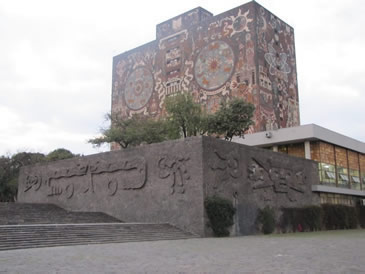
unam01

UNAM

(Photo by David Milroy)

Mexico City is about a five hour flight from Washington, D.C.; four hours from Chicago, and three and a half hours from Los Angeles. The conference arrangements include a group hotel and bus transportation to and from sessions.

  • Call for papers

We are requesting submissions for presentations at the COCAL X Conference. The deadline is June 15, 2012. Click here for guidelines for submissions.

  • Conference Registration
  • Early Registration by June 15, 2012: $225
  • Registration after June 15, 2012: $250

Click here for online registration


Click here for a mail-in registration form


Below is information about registration and accommodations for planning purposes:

Conference registration fee includes:

  • All workshops, plenaries & materials
  • 5 meals (lunches on Friday, Saturday and Sunday; dinner Friday and Saturday)
  • 2 cultural shows during Friday and Saturday dinners.
  • Visit to two museums on Sunday (Anthropology Museum and Chapultepec Castle)
  • Transfers on buses.

Optional tour: Thursday, August 9th visit to Pyramids of Teotihuacan, $50

  • Scholarship Fund
    A COCAL Scholarship can support attendees who may otherwise not be able to attend. Donations to the scholarship fund can be made on the registration form. Scholarship funds will be disbursed to recipients at the conference.
    Scholarships will be awarded in two rounds; the first from a modest pool of existing funds, the second from any leftover funds or additional funds received. For the best chance of receiving a scholarship, apply by the first deadline.
    May 31: first round scholarship applications due
    June 30: second round scholarship applications due

Click here for an application to the scholarship fund

Plenaries and workshop topics

cocal ix plenary

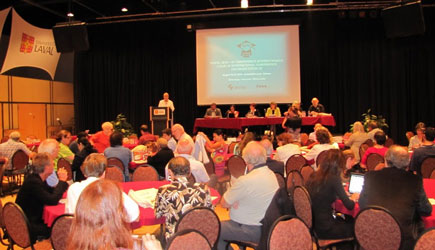
Plenary at COCAL IX

(Photo by David Milroy)

Plenary 1: Changes in academic work in the context of neoliberal globalization
1. Teaching, researching, and disseminating knowledge to the larger community, including academic management of e-learning
2. Gaining and maintaining health, unemployment, and retirement benefits
3. Supporting academic improvement, evaluation processes, and recognition

Plenary 2: Organization and new forms of struggle by academic workers; challenges and strategies for the 21st century
4. Forming and building unions, associations, federations, networks and coalitions
5. Expanding employment rights: hiring, retention, tenure, wages, health benefits, and safety
6. Strengthening union rights: institutional recognition, alliances and federations, collective bargaining rights, and labor laws and regulations
7. Supporting political rights, cultural rights, and academic freedom
8. Exploring forms of struggle and achievements: campaigns, negotiations, demonstrations, work stoppages, strikes, and use of new technologies and social media

Plenary 3: Culture and identity of the new academic citizens in North America and the world
9. Creating a sense of academic culture and university identity: freeway flyers and working with multiple assignments and institutions
10. New forms of academic citizenship, new work and the changing university community: finding spaces of resistance to the corporate model of higher education
11. Fighting discrimination and inequality: multicultural identity, race, ethnicity, gender, sexuality, and different capabilities
12. Building connections between the contingent academic worker and the university community: tenure-track faculty, research faculty, students, staff, and administrators

Planned Social/Cultural Events

pyramid1

Teotihuacan Pyramids

(Photo by David Milroy)

    • Visit to the castle of Chapultepec and the National Museum of anthropology
    • Tour of Ciudad Universitaria facilities (UNESCO-World Heritage Site)
    • Friday and Saturday dinners organized by Mexican university unions with music and dance

Optional preconference excursion day ($50 extra):

    • Visit to the pyramids of Teotihuacan


Accommodations

Hotel Radisson Paraíso Perisur
Cuspide 53, Col. Parque del Pedregal, 14020 Mexico D.F.
$82 US, taxes included, each night for a single-bed or double-bed room.  Additional persons in room are $10 per person, up to 4 persons total per room.

  • Services included with this rate: Single or double room with free high-speed wireless internet for COCAL attendees.
  • This hotel is the closest to the university.
  • In rooms: a work desk with lamp, cable TV, mini bar and iron/ironing board.
  • At hotel: wireless Internet access, a fitness center, cell phone rentals, an American Airlines ticket office, and on-site car rentals.
  • Breakfast is not included in the room rate.  There is a hotel buffet from 7:00 AM to 12:00 noon which costs $15 US (taxes are included). There is also a big shopping center and a variety of inexpensive places to eat very near the hotel.
  • Suggested tips: bellboys $1.50 US and housekeepers $1 US.
  • To make reservations, call (011) + 52 55 59 27 59 59 extension 1286, and mention “COCAL UNAM” to get the special price. You can pay by credit card.
    You may also pay by interbank transfer to BBVA Bancomer 0164753755 (Standardized Bank Code 012180001647537555).  Be aware of extra fees for international bank transfers.
    If you have questions, please contact the Sales Manager, Mrs. Rocio Guzmán
    Telephone (011) +52 (55) 56 06 42 11, fax 55 28 16 33.
  • For photos of the hotel, click here: http://www.radisson.com/mexico-city-hotel-df-14020/mexicoci/locations

Hotel Royal Pedregal
Periférico Sur 4363, México, D. F.
$82 US, taxes included, each night for a single-bed or double-bed room.

  • In rooms: air-conditioning, satellite TV, telephone, mini-bar, tea/coffee and internet access
  • At hotel: arcade, children’s club, car rent, fitness center and full health spa offering a variety of beauty and massage treatments, sauna, steam room and spa tub.
  • Breakfast is not included in the room rate.  There is a hotel buffet from 7:00 AM to 12:00 noon which costs $13 US (taxes are included). There is also a big shopping center and a variety of inexpensive places to eat very near the hotel.
  • To make reservations call 1-866-332-3590 and ask for either Reservation Manager, Erika Ruiz or Nancy Carrillo
    They are available 9:00 AM-6:00 PM, Monday to Friday, and 9:00 AM-1:00 PM Saturday and Sunday
    Mention “COCALV” to get the special price (make sure you say it exactly like this: C-O-C-A-L-V).  You can pay by credit card.
    Special price for COCAL attendees is good only through August 3rd, 2012.
  • For photos of the hotel, click here: http://royal-pedregal.hotel-rn.com/?lbl=ggl

Conference: Doing and Undoing Academic Labour

‘Doing and Undoing Academic Labour’

7 June 2012, 9:30 a.m. – 5:00 p.m.

University of Lincoln (UK)

In recent decades, a wealth of information has been produced about academic labour: the financialisation of knowledge, diminution of professional autonomy and collegiality through managerialism and audit cultures; the subsumption of higher education into circulations of capital, proletarianisation of intellectual work, shift from dreams of enlightenment and emancipation to imperatives of ‘employability’, and experiences of alienation and anger amongst educators across the world.

This has also been a period of intensifying awareness about the significance of these processes, not only for teachers and students in universities, but for all labour and intellectual, social and political life as well. And now we watch the growth of a transnational movement that is inventing new ways of knowing and producing knowledge, new forms of education, and new possibilities for pedagogy to play a progressive role in struggles for alterantives within the academy and beyond.

Yet within the academy, the proliferation of critical work on these issues is not always accompanied by qualitative changes in everyday practice. The conditions of academic labour for many in the UK are indeed becoming more precarious and repressive – and in unequal measure across institutions and disciplines, and in patterns that retrench existing inequalities of gender, physical ability, class, race and sexuality. The critical analysis of academic labour promises much, but often remains disconnected from the ways we work in practice with others.

This conference brings together scholars and activists from a range of disciplines to discuss these problems, and to consider how critical knowledge about new forms of academic labour can be linked to struggles to humanise labour and knowledge production within and beyond the university.

Contributors

  • Mette Louise Berg – ‘Situated reflections: on gender and becoming an academic’
  • Anna Curcio – ‘Race and Gender in the Edu-Factory’
  • Richard Hall – ‘Educational technology and the war on public education’
  • Maria Do Mar Pereira – ‘(Im)Possible Labour? Critical Education in “Performative” Universities’
  • Dean Lockwood, Rob Coley and Adam O’Meara – ‘What a relief to have nothing to say…Academic labour and language in the rhizome’
  • Andrew McGettigan – ‘Value for money: degree awarding powers, standards and academic labour’
  • Justine Mercer and Howard Stevenson – ‘The frontier of control revisited: managerial authority and academic labour revisited’
  • Sara Motta – ‘The messiness of motherhood in the neoliberal university’
  • Gigi Roggero – ‘Occupy Knowledge’

Public / Free / Open
This conference is public, free and open to everyone; we warmly invite you to attend. Please register via the website so we know how many people will be attending. If you have any questions about the event, please contact Dr. Sarah Amsler at samsler@lincoln.ac.uk.

Getting here
Doing and Undoing Academic Labour will be held in Learning Landscapes, MB1019, the University of Lincoln. Click here for a map of the campus.

We hope to see you here!

Best wishes,

Dr. Sarah Amsler
Sr. Lecturer in Education
Centre for Educational Research and Development
University of Lincoln
Lincoln LN6 7TS

Mapping desire and power within the field of education policy in British Columbia

BCTF’s Teacher Newsmagazine just published an essay by UBC graduate student Tobey Steeves that aims to “map the winners and losers within BC’s education policy-making arena.”

Teacher Newsmagazine (May/June 2012)

Mapping desire and power within the field of education policy in BC

By Tobey Steeves

In their overview of qualitative interviewing (QI) as research methodology, Kvale & Brinkmann (2009) insist “…knowledge is power. The social practice of research interviewing may become a form of democratic practice that can be used to help create a free democratic society.” With this generalized goal in mind, I initiated an interview-based research inquiry into education policy in British Columbia. Beginning with the question: What desires are privileged by education policy in BC?, I solicited the participation of a well-established policy maker/ analyst and organized a series of questions that were designed to elicit a rudimentary outline of education policy in BC as a field of power. Phrased more succinctly, I used targeted questions to map the winners and losers within BC’s education policy-making arena. …

Read the full article here.

How did Quebec Students Mobilize Hundreds of Thousands for Strike?

StatsCan: Female university professors make less money than male

Female university professors make less money than males

University faculties have become more inclusive of women in recent decades, though their salaries still trail those of their male counterparts, new data shows.

Figures from Statistics Canada show the average salary of full-time faculty at Canadian universities was $115,513 in the 2010-11 school year. That was up 2.8 per cent from the previous year.

Among male teaching staff, the average pay was $120,378, and among females, $106,970 Ñ or 88.9 per cent of males’ pay.

COCAL Updates

COCAL updates in brief and links from Joe Berry:

1. Faculty at U of OR get agreement on mixed bargaining unit recognition (it includes ALL contingents) joint AFT/AAUP affiliate
http://www.aaup.org/AAUP/newsroom/2012PRs/UOAgree.htm

2. Yet another article supports what most of us in the union movement have long said, as wealth goes up, empathy declines [or “the rich are different from you and me, they have more money…” and less empathy for others.]
http://www.scientificamerican.com/article.cfm?id=how-wealth-reduces-compassion

3. Ad for adjunct job specifies that the person not be teaching anywhere else and reactions.
http://www.insidehighered.com/news/2012/04/25/usc-job-ad-rankles-adjuncts
and http://www.nationalreview.com/phi-beta-cons/296957/adjuncts-alarmed-over-usc-job-posting-nathan-harden
and http://www.insidehighered.com/blogs/confessions-community-college-dean/mandatory-monogamy-adjuncts

4. More on union recognition at U of OR
http://www.insidehighered.com/quicktakes/2012/04/25/faculty-union-advances-u-oregon

5. Very interesting contrast in US press coverage between French and US elections. Are there lessons here for how the press frames our issues in higher ed? (such as making the extreme privatization and casualization trends of US seem normal here, but covering them differently, if at all, overseas.) The question, of course, is how to change or challenge this press frame.
http://www.beyondchron.org/news/index.php?itemid=10095

6. Student veterans group revokes charters of locals at over 20 for-profit colleges
http://www.insidehighered.com/quicktakes/2012/04/26/veterans-group-lists-profits-where-it-revoked-charters

7. Capella U (a for profit) to offer college credit (classes) online to higher school students for a fee. [Is there anything not for sale if one has enough money? Didn’t Marx say something about “All that is solid melts into the air?”]
http://www.insidehighered.com/quicktakes/2012/04/26/capella-posts-25000-free-tutorials-through-sophia

8. The for-profits’ war on philanthropy
http://www.insidehighered.com/views/2012/04/26/essay-profit-colleges-undermine-traditional-role-philanthropy
http://www.insidehighered.com/quicktakes/2012/04/26/capella-posts-25000-free-tutorials-through-sophia

9. Ten Ways for a non-tenure track faculty to get fired [some of these are good, some obvious and some just plain wrong IMHO, especially the one about not trusting (some) “help” (clerical staff). They can be our best allies, individually and collectively.]
http://chronicle.com/article/10-Ways-to-Get-Yourself-Fired/131630/

10. New memo reveals union suppression at Kaplan U in NYC
http://www.dailykos.com/story/2012/04/19/1084585/-BREAKING-Kaplan-University-Suppressing-Union-Organizing-In-NYC

11. Blog from union organizer at East-West U in Chicago
http://academeblog.org/2012/03/21/shooting-itself-in-the-foot-east-west-universitys-anti-union-campaign/

12. More on new play about for-profits
http://www.campusprogress.com/articles/theatre_of_the_absurd_former_for-profit_college_advisor_takes_his_stor/

13. Update on massive Quebec student strike agains huge tuition increases
http://www.marxist.com/quebec-revolt-analysis-april-2012.htm

14. Kaplan and other for-profits were part of ALEC and their ED task force
http://truth-out.org/news/item/8766-washington-posts-kaplan-and-other-for-profit-colleges-joined-alec

15. AAUP summer institute http://www.aaup.org/AAUP/about/events/si2012.htm

16. More on Gren River CC (WA) adjunct apartheid event and disposable teachers
http://dissidentvoice.org/2012/04/disposable-teachers/

The Biggest Student Uprising You’ve Never Heard Of

The Chronicle of Higher Education: The Biggest Student Uprising You’ve Never Heard Of
April 23, 2012, 5:32 am

By Marc Bousquet

250,000 students pack the streets in largest demo in Quebec history

A guest post by Lilian Radovac. (BTW, SoCal readers may want to know that Marc is speaking at UC-Irvine a 4 p.m. 4/23 on New Media/New Protests.)

On an unseasonably warm day in late March, aquarter of a million postsecondary students and their supporters gathered in the streets of Montreal to protest against the Liberal government’s plan to raise tuition fees by 75% over five years.  As the crowd marched in seemingly endless waves from Place du Canada, dotted with the carrés rouges, or red squares, that have become the symbol of the Quebec student movement, it was plainly obvious that this demonstration was the largest in Quebec’s, and perhaps Canadian, history.

The March 22nd Manifestation nationale was not the culmination but the midpoint of a 10-week-long student uprising that has seen, at its height, over 300,000 college and university students join an unlimited and superbly coordinated general strike.  As of today, almost 180,000 students remain on picket lines in departments and faculties that have been shuttered since February, not only in university-dense Montreal but also insmaller communities throughout Quebec.
Aerial news footage of the March 22nd Manifestation nationale