Class size and composition is arguably the single most important public policy issue in the current dispute between BC teachers and government.
The educational and economic implications of class size and composition policies are huge, but in the context of collective bargaining and related court cases public discussion of the costs and benefits of class size reduction has been cut short.
Class size is one of the most rigorously studied issues in education. Educational researchers and economists have produced a vast amount of research and policy studies examining the effects of class size reduction (CSR).
What is the research evidence on CSR?
Since the late 1970s, the empirical evidence shows that students in early grades perform better in small classes and these effects are magnified for low-income and disadvantaged students. Most studies have focused on primary grades, but the relatively small number of studies of later grades also shows positive results of CSR.
Randomized experiments are the “gold standard” in social science research. One such study, known as Project STAR, involved 11,500 students and 1,300 teachers in 79 Tennessee schools produced unequivocal results that CSR significantly increased student achievement in math and reading.
A CSR experiment in Wisconsin illustrated student gains in math, reading, and language arts. In Israel, which has high, but strict maximum class size rules, a rigorous study of CSR produced results nearly identical to Project STAR. Studies in Sweden, Denmark, and Bolivia find similar results.
Do all studies of CSR produce unequivocal positive results? No, but the vast majority of research, including the most rigorous studies, leave no doubt about the positive effects of CSR.
The research evidence on CSR led to class-size caps in California, Texas, Florida, and British Columbia, before the BC government stripped them from the teachers’ contract in 2002.
Why are smaller classes better?
Observational research in reduced size classes finds that students are more highly engaged with what they are learning. That is, students have higher participation rates, spend more time on task, and demonstrate more initiative.
In turn, teachers in smaller classes spend more time on instruction and less time managing misbehavior. They also have more time to reteach lessons when necessary and to adapt their teaching to the individual needs of the students.
One, perhaps counter-intuitive, finding from the research is experienced teachers are better able to capitalize on the advantages of smaller classes than more novice teachers.
How small is small enough?
Project STAR reduced class size from an average of 22 students to 15. Previous research found significant positive effects of CSR at below 20.
Based on these findings some have argued that CSR is not effective unless these levels are attainable. But, the broad pattern of evidence indicates a positive impact of CSR across a range of class sizes.
What about the costs?
There are demonstrable costs involved in reducing class size. As with all public policy questions both benefits and costs must be considered. The potential future costs of not creating smaller classes in public schools also must be taken into account.
Reduced class size boosts not only educational achievement, but has a positive impact on variety of life outcomes after students leave school.
Results from a number of studies show that students assigned to small classes have more positive educational outcomes than their peers in regular-sized classes including rates of high school graduation, post-secondary enrolment and completion, and quality of post-secondary institution attended.
Additionally, students from small classes have lower rates of juvenile criminal behavior and teen pregnancy; and better savings behavior and higher rates of homeownership than peers from regular-size classes.
What are the policy implications of CSR research?
Class size in an important determinant of a broad range of educational and life outcomes, which means policy decisions in this area will have a significant impact on future quality of life in the province.
The money saved today by not reducing class size will be offset by more substantial social and educational costs in the future, making class size reduction the most cost-effective policy.
Sample of CSR Research Articles:
Angrist, J.D., & Lavy, V. (1999). Using Maimonides’ rule to estimate the effect of class size on scholastic achievement. Quarterly Journal of Economics, 114(2), 533-575.
Browning, M., & Heinesen, E. (2007). Class Size, teacher hours and educational attainment. The Scandinavian Journal of Economics, 109(2), 415-438.
Chetty, R., Friedman, J.N., Hilger, N., Saez, E., Schanzenbach, D.W., & Yagan D. (2011). How does your kindergarten classroom affect your earnings? Evidence from Project STAR. Quarterly Journal of Economics, 126(4), 1593-1660.
Dynarski, S., Hyman, J., & Schanzenbach, D.W. (2013). Experimental evidence on the effect of childhood investments on postsecondary attainment and degree completion. Journal of Policy Analysis and Management, 32(4), 692-717.
Finn, J., Gerber, S., & Boyd-Zaharias, J. (2005). Small classes in the early grades, academic achievement, and graduating from high school. Journal of Educational Psychology, 97(2), 214-223.
Fredriksson, P., Öckert, B., & Oosterbeek, H. (2013). Long-term effects of class size. The Quarterly Journal of Economics, 128(1), 249-285.
Krueger, A.B. (1999). Experimental estimates of education production functions. Quarterly Journal of Economics, 115(2), 497-532.
Krueger, A.B., & Whitmore, D. (2001). The effect of attending a small class in the early grades on college test taking and middle school test results: Evidence from Project STAR. Economic Journal, 111, 1-28.
Krueger, A.B., & Whitmore, D. (2002). Would smaller classes help close the black-white achievement gap? In J.Chubb & T. Loveless (Eds.), Bridging the Achievement Gap (pp. 11-46). Washington, DC: Brookings Institution Press.
Molnar, A., Smith, P., Zahorik, J., Palmer, A., Halbach, A., & Ehrle, K. (1999). Evaluating the SAGE program: A pilot program in targeted pupil-teacher reduction in Wisconsin. Educational Evaluation and Policy Analysis, 21(2), 165-77.
Word, E., Johnston, J., Bain, H.P., et al. (1990). Student/Teacher Achievement Ratio (STAR): Tennessee’s K-3 class size study. Final summary report 1985-1990. Nashville: Tennessee State Department of Education.
Urquiola, M. (2006). Identifying class size effects in developing countries: Evidence from rural Bolivia. Review of Economics and Statistics, 88(1), 171-177.












Sandra Mathison: Privatizing private schools should top list of funding changes
Published in The Province (Vancouver, BC)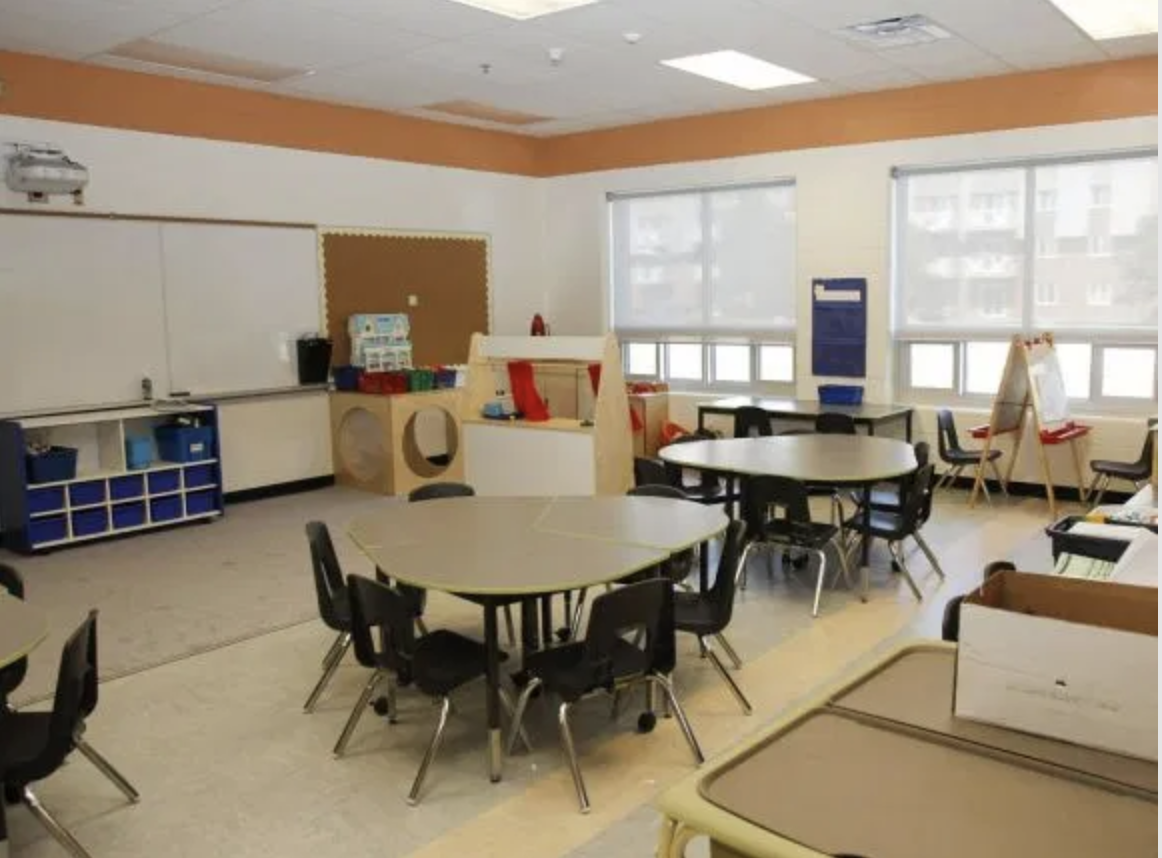
October 9, 2019
Since 2013, the province has subsidized private schools to the tune of $2.6 billion. The subsidies for 2018-19 alone were $426 million, and projections for this school year are $436 million. Julia McKay / The Whig-Standard
Privatizing private schools should top list of funding changes
By Sandra Mathison
Opinion: With a public system still reeling from more than 15 years of cuts by the previous government, there is no excuse for funnelling billions of dollars to private schools.
As the B.C. education ministry rethinks how to fully and adequately fund the province’s schools, at the top of their list should be privatizing private schools by discontinuing public subsidies to independent schools.
Since 2013, the province has subsidized private schools to the tune of $2.6 billion. The subsidies for 2018-19 alone were $426 million, and projections for this school year are $436 million.
These subsidies to private schools have increased at an astronomical rate: funding increases (adjusted for inflation) to private schools have increased by 122.8 per cent since 2000-01, compared to a 15.9-per-cent increase in funding to public schools during this same period.
According to recent surveys by the Institute for Public Education, CUPE B.C. and the B.C. Humanist Association, most British Columbians believe public funding of private schools needs to end. In a poll that Insights West conducted for us in May, four in five British Columbians (78 per cent) oppose providing taxpayer funds for elite private schools. Sixty-nine per cent of British Columbians oppose funding to faith-based schools.
Let private schools be private, and let them deserve the label “independent schools.”
Private schools cost taxpayers by direct taxpayer-supported subsidies, but also by exemptions from paying property taxes, numerous personal tax benefits for individuals, and collecting large sums of tax-deductible donations.
Private schools also cost B.C. in non-economic ways. Faith-based schools are allowed to ignore human-rights laws and discriminate against employees based on marital status or sexual orientation. Our poll shows that few British Columbians are aware that faith-based schools are exempted from the B.C. Human Rights Code, but once they were aware of this, 81 per cent of respondents did not believe they should be allowed this exemption.
Private school admission processes segregate students by class and/or beliefs, rejecting students who don’t “fit” their values. These schools are therefore isolating students from peers who are not like them. Many B.C. taxpayers’ children would not be admitted to these private schools — because they can’t afford them, do not have academic credentials, or they are not suitable given the school’s philosophy.
Private schools reject the idea that schools ought to be about equity, about providing an education for all students regardless of their individual attributes.
If the education ministry needs a plan, they could immediately end subsidies to elite “Group 2” schools, those spending more per student than public schools and charging significant tuition fees. These are schools such as St. George’s in Vancouver and Shawnigan Lake on Vancouver Island.
Then they could phase out subsidies to faith-based schools over a short period of time, say two to three years.
The ministry should review private schools that serve needs not currently well met by the public schools (possibly, Indigenous schools and programs for students with special needs) and work toward integrating those schools/programs into the public education system. They should ensure there is sufficient funding provided to public schools to meet those needs.
And at the same time, tax exemptions that diminish revenue that could support public education need to change.
With a public school system still reeling from more than 15 years of cuts by the previous government, and students with special needs bearing the brunt of the underfunding, there is no excuse for funnelling billions of dollars to private schools. That money should be allocated to the public school system where it can help every child achieve their fullest potential.
Sandra Mathison is the executive director of the Institute for Public Education B.C., a professor of education at the University of B.C., and co-director of the Institute for Critical Education.
Leave a comment
Posted in BC Education, Budgets & Funding, Children & Youth, Commentary, Government
Tagged BCEd, BCPoli, British Columbia, Government, government budgets, ICES, independent schools, IPEBC, private schools, Privatization, public school funding, public schools, UBC