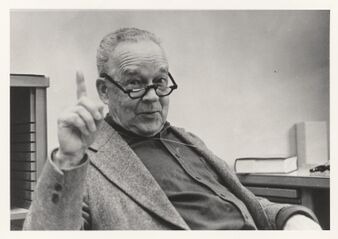
Making as Thinking: Why Media Theory Feels Like Craft

When Tim Ingold describes making as a process of correspondence rather than control, I started to realise that much of what we call “media theory” feels like a craft itself. In the lecture, Dr Schandorf said that theory is “something we do,” not something we memorise, and that has stayed with me.

The more I engage with these ideas, the more I see parallels between theorising and making: both involve learning through doing, responding, and revising. This post explores media theory as a craft-based practice, a form of making knowledge rather than just writing about it.

1. Media Theory as Process, Not Product

Ingold’s Making reminds us that to understand how something comes into being, we must attend to the process rather than the finished object. That idea reshapes how I read theory, not as a list of answers but as a movement of thought.

Each reading, discussion, or post in MDIA 300 feels like a thread woven into a collective fabric. You can’t test theory the way you test memory; you can only practice it, by writing, dialoguing, and iterating through others’ ideas.

This helps explain why there are no exams in this class: the learning happens through the act of doing media theory, not memorizing it.

2. Mediation as Relation, Not Object

The recurring concept of mediation, from McLuhan to Bolter & Grusin, now feels less like a property of technology and more like a way of relating.

Media aren’t just tools or devices; they’re relationships that shape meaning. Whether it’s a TikTok feed or a physical book, each mediates the world differently.

When Bolter and Grusin talk about remediation, new media refashioning old forms, they echo Ingold’s notion of correspondence. Mediation, then, is a conversation, not a command. This class’s use of blogs, wikis, and Teams channels mirrors that idea: each tool mediates how we learn and think together.

3. Writing as Material Practice

Dr. Schandorf often says that writing is thinking, and I’m finally starting to see why. Writing theory isn’t about polishing conclusions, it’s about shaping ideas in real time.

Like clay, words have texture they resist, reshape, and sometimes collapse before reforming into coherence. The process of writing itself becomes a site of discovery.

So perhaps clarity in this course doesn’t mean perfection, it means honesty. It’s the moment when your readers can see you working through the material, thinking aloud on the page.

4. Collaboration as Media Ecology

Another revelation in MDIA 300 is how inherently collaborative theory is. Blog comments, shared lecture notes, and collaborative presentations aren’t side work, they are the work.

Each contribution is a form of mediation within a living media ecology. McLuhans idea that “the medium is the message” feels newly relevant here: our medium (Teams, Blogs, Wiki) is the structure of our collective knowledge-making.

Ingold’s craftsman doesn’t work alone, and neither do we. Each comment or co-authored post is part of an ecosystem where ideas grow through interaction, not isolation.

5. Theoretical Clarity as Ethical Practice

Schandorf’s idea that clarity is not about correctness but about communication struck me hard. To be clear is to be responsible, it’s about writing in a way that invites others in rather than keeping them out.

If theory is a social practice, clarity becomes an ethical one. It’s a gesture of care toward your audience, recognizing that your words can either connect or exclude. Just as Ingold’s maker listens to their materials, a good theorist listens to their readers.

6. So what?

I’m offering a simple argument: media theory is a craft. It’s not just a way to describe media, it is a form of mediation itself.

By treating theory as something we make together, we can appreciate it not as abstract jargon but as a living, evolving practice that connects people, tools, and ideas. That’s why MDIA 300 doesn’t feel like a typical class; it feels like an ongoing studio where thinking is material and meaning is handmade.

Let’s Keep the Conversation Going

  • Does writing theory change how you understand creativity?
  • When do you feel in control of your ideas versus in correspondence with them?
  • Can we treat digital media, like AI or wiki, as collaborators rather than tools?

Author: Meha Gupta
Tags: media theory, mediation, making, Ingold, collaboration, clarity, MDIA300

Heidegger and Humanity of the Hand: Smartphone Cynicism

In the chapter “Telling by hand”, we see Ingold proposing a very interesting concept that is the “humanity of the hand”. Where the author argues, with help from Heidegger’s philosophy, that it is in the hands that the essence of humanity lies. Other senses of perception, the eyes, the nose and the ears, do not afford us the ability to tell stories the way the hand does. It could very well be said that with our eyes, nose and ears, we perceive the world while through our hands, we shape it into form. With our hands – the supreme among the organs of touch, we write, we draw, we thread and as such, we are able to tell stories to the world. 

Humans and the Language of Hands

According to the famous German thinker – Martin Heidegger, the hand is no mere instrument, for only with it came the very possibility of instrumentality. Supported by anatomist Frank Wilson’s claim that the hand exists as an extension of the brain and not a separate device under its control. The brain reaches out into the hands and from there it reaches out into the world. The hand is what separates us from mere animals, but it is not because we have opposable thumbs, nor the fact that we have flexible fingers that move independently, equipped with nails instead of claws. For Heidegger, it is language that holds the hand, which in turn is what holds man. For him, words as the essential realm of the hand provides the stable base in which humanity is grounded. 

For this exact reason, animals are considered by Heidegger to be “poor-in-the-world”, for they lack the essence of “world-forming” that characterizes man, an essence afforded to man by the hand. “Humanity” thus, challenges man by opening up for man a world that is not simply given, but one that must be unraveled to be properly understood. The task of the hand as follows is to tell, one must write, one must draw, only then may one’s world be properly formed.

As such, for the German philosopher, writings only truly tell (a story) when it is written by hand, as opposed to text produced through a typewriter. He argues that the human eye’s script is interpreted as the form of writing that tells and through holding the pen, the hand expresses our humanity. A humanity that starts with the essential “being” which then allows us to “feel”, and it is through that feeling that we start to “tell”. This is exactly what the typewriter has taken away from us – our humanity, for to type is not to write at all, and the typewriter paradoxically stops us from writing, an act that inevitably silences us from telling. 

Stories of Screens, Scrolling, and Smartphones

Ingold’s concept of the “humanity of the hand” can be further extended to the contemporary act of typing on our smartphones. This specific process of mediation reveals how our hands continue to mediate thought and feeling, even in a digital context removed from the material intimacy of pen and paper. While Heidegger mourned the typewriter’s detachment of writing from the hand, the way we send texts today further complicates this separation and disconnect. It can be argued that touchscreens still demand the tactility of our fingers, but the gestures we make with every tap, swipe, and scroll, completely transform writing into a choreography of minimal movements. Hence, the new generation is being taught both this choreography alongside writing by hand simultaneously, resulting in a generational difference and new ways of perceiving and telling stories. 

In handwriting, the thumb is peripheral and supports the pen that is the main object of mediation, whereas in texting, the thumb becomes the primary storyteller. Every new development to our smartphones reduces the thickness of our screens and consequently the distance between our fingertips and the world within our devices. The thin glass screen acts as an invisible barrier, creating the illusion that all forms of mediation are coming directly and instantaneously from our fingertips, almost as if we have become one with our devices.

Today’s digital age creates endless possibilities for our bodies to craft messages, emotions, and relationships. With every communication platform competing for users’ attention, people are always building connections through new innovative ways. Whether that is through texting, calling, reposting, sending stickers, or even Instagram reels, the overstimulating combination of text, audio, and visuals convey more than words simply could. The rise of meme culture on the internet invented a new way to express oneself, which is to make references to other preexisting media. This way, our internal thoughts and feelings, even those that we are unable to fully express, can be mediated with massive external reach, all from the from our fingertips. 

Through these rapidly changing technologies, our bodies constantly translate feelings into digital traces. Instead of leaving fingerprints on tangible objects we touch, we leave digital footprints after every interaction. Furthermore, this enables your smartphone to then reconfigure its role in mediation. Regardless of its convenience and innovation, nothing can compare to the feeling of holding a physical handwritten letter. There is power in the warmth of touch that is now reduced to the cold surface of glass. Ultimately, our fingers’ ability to edit before sending and our habitual scrolling creates a new expression of the hand’s humanity, emphasizing the negotiations between intimacy and distance in the mediated fabric of modern communication.

The Typewriter Returns

Comparing this with Heidegger’s pessimistic opinion of technology, and specifically the typewriter, we can imagine his stance on the disconnect between the hand and smartphone. Through a handwritten letter, we receive more than the words on the page. We see the erased or crossed-out attempts, the personality in the way each “i” is dotted, or even an ink smudge from writing too fast. As we adapted to using typewriters, we lost the sense of humanity and personality in handwriting. However, through the typewriter, we still see a lingering sense of intention beyond the words, we can see the “x”-ed out phrases, creased paper corners, or even a coffee stain on a message written late at night. Evolving into the smartphone, we lose more of these unintentional material stories that linger in each message. With the ability to unsend, edit, and pre-send our messages, we so ingenuinely mediate our communication to a point where we have lost our humanity.

In distinguishing ourselves from other animals, Heidegger emphasizes the strength of the hand in the realm of communication, or more importantly, storytelling. Despite the capabilities of this dexterity, we find our communication regressing to selections of premade facial expressions–emojis. When considering interpersonal communication, we see this grasp of personalisation among the monotonous, identical fonts in messaging systems. In place of personalised handwriting styles, some find ways to change their typing font. In place of crossed-out phrases and typos, some retype their messages rather than editing or deleting . As such, with the dramatic development from the typewriter to today’s smartphone, the typewriter maintains more personalised humanity in comparison to the smartphone. Perhaps if Heidegger could re-evaluate, his interpretation would cut the typewriter some slack. 

Courtesy of Kim Chi Tran, Maxine Gray, Nam Pham

Content creation is not a linear process

Making as a Source of Media-Theoretical Tools

Introduction

Throughout this class, we have explored many topics, but one area we have not yet deeply examined is social media, something that has had a tremendous influence on our everyday lives. After reading Tim Ingold’s Making: Anthropology, Archaeology, Art and Architecture, I began to see common parallels between his theories and the work of content creators. Ingold’s exploration of anthropology, ethnography, and the process of “thinking through making” can be directly applied to the practice of digital creation in the media. As a content creator myself, I found that many of Ingold’s concepts mirror the creative processes, challenges, and inspirations that shape content production for social media platforms.

The process of content creation

One of Ingold’s main arguments is that making is not a linear process, but rather an evolving relationship between the maker and the materials they work with. He writes that “making creates knowledge, builds environments and transforms lives” (Ingold, 2013, p.1). This perspective resonates strongly with the world of content creation. Many assume that creating online content is as simple as coming up with an idea and executing it, but in reality, it is a continuous process of experimentation and adaptation. A content creator may start with a basic idea, but as they film, edit, and engage with feedback the idea evolves. The “materials” of content creation are not just physical tools like cameras and editing software; they also include trends, cultural conversations, algorithms, and the audiences themselves. In this sense, social media creation is an ongoing dialogue between creator, material, and environment, much like Ingold’s conception of making.

Ingold’s example of the mason further illustrates this point. He explains that traditional masons learned their craft through practice and mentorship rather than formal education (Ingold, 2013, p.52). Their knowledge came from direct engagement with materials like “trowel, plumb line and string” (Ingold, 2013, p52) which guided their learning and skill development. This process closely parallels how many content creators work today. Few creators attend formal training programs in content creation; instead, they learn through trial and error, observing others, and experimenting with new techniques. For instance, when I first started creating videos, I did not have access to professional equipment. I used natural lighting, basic editing apps, and my phone to bring my ideas to life. Over time, I learned how different materials, for instance light, sound, and even social media algorithms shaped my work. Like the masons, creators learn by doing.

Anthropology and Ethnograpy relationship with content creation

Another key concept Ingold explores is that creativity is inherently relational; it develops through connections with people and materials. He writes, “We go to study with people, and we hope to learn from them” (Ingold, 2013, p.2). This anthropological approach aligns with how many creators learn and grow today. Being part of a creative community is important for inspiration and growth. Personally, I feel most motivated when surrounded by other creators because brainstorming new ideas, assisting on shoots, and watching others work spark my creativity and help me think differently about my own projects. Many creators also rely on their audiences for this same kind of learning. Asking questions like “What do you want to see next?” allows creators to engage in a dialogue that both inspires and informs their process. This is why anthropology in the making process is important as Ingold mentions. 

Ingold’s concept that “materials think in us, as we think through them” (Ingold, 2013, p.2) further deepens this connection. For content creators, the “materials” might include digital tools like editing software or even the social platforms themselves. When creators work with these tools, they are not just manipulating them, instead they are also shaped by the tools’ affordances and limitations. The platform’s design, algorithm, and audience behavior all influence how creators think and what they produce. This two-way relationship highlights Ingold’s notion that thinking and making are inseparable; our thoughts are formed through the process of working with materials.

While anthropology emphasizes learning through relationships, ethnography focuses on observing and documenting human experiences. In the context of social media, ethnography can be compared to how creators use data and analytics to understand their audiences. Engagement metrics, user-generated content, and algorithm trends all act as forms of documentation that inform creators’ strategies. Ingold, however, cautions against relying too heavily on documentation and accuracy, noting that “the speculative, experimental and open-ended character of arts practice is bound to compromise ethnography’s commitment to descriptive accuracy” (Ingold, 2013, p.8). This means that strict adherence to data or predetermined formulas can hinder creativity. The same applies to content creation while analytics can provide useful guidance, they should not dictate every decision. Even if a creator uses the information from the analytics for success, there is no guarantee that their content will resonate. Creativity thrives on uncertainty and risk-taking, not just replication.

The Art of inquiry


I also found Ingold’s discussion of the “art of inquiry” particularly insightful. He describes anthropology as an “‘’indispensable to the practice of anthropology as an art of inquiry’’” (Ingold, 2013, p.2). This suggests that makers, through their curiosity and exploration, embody the same investigative spark as anthropologists. Many content creators express a similar mindset that they constantly observe, experiment, and learn from the world around them. Interestingly, this also raises questions about influence and intention. Many creators resist the label of “influencer” because they associate it with inauthenticity or a label that they will have to rely on. However, Ingold’s theory suggests that all makers inevitably influence others through their work. Whether they intend to or not, content creators shape public conversations, trends, and perceptions. Recognizing this influence can empower creators to approach their work more thoughtfully, considering how their content might impact their audiences.

Concluding thoughts

The connection between Ingold’s theories and social media becomes even clearer when we consider the concept of evocative objects. Social media platforms themselves can be seen as evocative objects, tools that evoke emotions and dependencies. For many creators, these platforms are more than just spaces for sharing work; they become extensions of identity and creativity. However, this connection can also become overwhelming. For instance, if a creator stops posting for several months, they often see a drop in engagement, followers, and even income opportunities. I’ve experienced this myself feeling pressured to post regularly, not because I was inspired, but because I feared losing visibility. Over time, this reliance on social media can blur the line between passion and obligation. Ingold’s reminder that materials should support thinking, not control it. Creators need to maintain a healthy relationship with their platforms and use them as tools for creative exploration rather than letting them dictate their worth or direction.

Reflecting on Ingold’s ideas through the lens of social media has given me a deeper understanding of my own creative process. I’ve learned that making is not about perfection or linear progress, it’s about engaging with materials, environments, and people in ways that generate knowledge and growth. Anthropology and ethnography offer valuable frameworks for understanding how creators learn and evolve within communities. They remind us that creativity is not isolated; it is social, collaborative, and constantly changing. Ingold’s theories encourage creators to think critically about their tools and to embrace the process of making as a form of inquiry. Social media should serve as a space for exploration, not a trap of comparison or pressure. By thinking through making rather than simply producing algorithms or trends creators can rediscover the joy and curiosity that fuel genuine creativity.Ingold’s Making ultimately challenges us to rethink what it means to create in the modern media.

Bibliography

Making. (n.d.). http://ndl.ethernet.edu.et/bitstream/123456789/8315/1/179.pdf

Images are all mine.

Silence in the Age of Noise: Eco’s Library of Meaning 

“The Internet gives us everything and forces us to filter it not by the workings of culture, but with our own brains. This risks creating six billion separate encyclopedias, which would prevent any common understanding whatsoever.”
– Umberto Eco

Umberto Eco was many things, an Italian medievalist, philosopher, novelist, semiotician, cultural critic, and above all, a lifelong lover of knowledge. In Umberto Eco: La biblioteca del mondo film, we see him as a scholar surrounded by books, someone whose entire being seems shaped by them. From the outside, Eco appears calm, curious, and quietly humorous, and a man who treats his library as if it were a living mind.

As a cultural critic, Eco spent his life examining how meaning is made, distorted, and forgotten in the age of mass media. Long before the rise of social networks and the internet, he warned about the danger of information overload, of a world where knowledge could be reduced to noise. The film captures that concern through the physicality of his library, where every book is resistance against digital amnesia. Unlike the virtual world, Eco’s shelves preserve the weight of memory and resist the illusion that everything should be fast, accessible, and infinite.

A central theme that emerges from the film, and that we try to explicate here, is media and memory.

The Living Library: Memory as Being & the Foundation of Knowledge

Eco describes his library as a living organism. It is more than just a collection of written archives. Rather, the library is a being that holds memory and transforms as collections are added or moved around. The film opens with Eco speaking about memory, referring to the library as a “symbol and reality of universal memory” (2:01). He categorizes memory into three forms: vegetal, organic, and mineral. The library represents vegetal memory, full of physical books that originate from trees, knowledge rooted in nature. Organic memory lives within us; it is the memory we carry in our minds. When humans say “I,” Eco explains, it is our memory speaking. Stories that are written or passed forward, imagination, fiction, all of that is memory taking the shape of culture, entertainment, conversation, etc. Finally, mineral memory is what the digital world represents, vast collections of knowledge stored as data on the silicon of computer chips. Eco emphasizes that memory is imperative to building a future. Having knowledge about what came before us and reflecting on the past, is what gives us enough insight to build a future that is worthwhile. 

“We are beings living in time. Without memory, it’s impossible to build a future.” (11:08).

In Critical Terms for Media Studies, Bernard Stiegler discusses how humans have always relied on external tools to anchor memory or “exteriorize” it through language, writing, and technology. With the digital age we currently live in, and the extensive reach of information through the internet, this only gets amplified to an unfathomable magnitude, where millions of people have the ability to not only consume, but also to produce content abundantly. Stiegler elaborates on how humans have a retentional finitude. “It is because our memories are finite that we require artificial memory aids” (p.65).

These ideas align closely with Eco’s reflections in the film. He talks about how, though it is important to preserve knowledge, one needs to be selective about what they consume in order to make sense of it. An example he shares is that of a character who has the ability to remember all that he sees, and yet he is an “idiot” because all of that input is too much for a mind to conceive. Such is the state of the internet. The vastness of it is overwhelming and is, in fact, counterproductive to gaining knowledge. Eco says,

“The moment we think we have limitless knowledge, we lose it.” (26:40)

Individual organic memory, on the other hand, is selective. It acts as a limiter and rejects what is unnecessary or too complicated to perceive. This is favourable as it separates value from noise.

Knowledge, Noise, and the Loss of Meaning

We noticed that, for Eco, knowledge is not something that can be separated from the medium that holds it. He resists the idea that information should be instantly accessible, clickable, and endlessly reproduced. In the film, he says,

“Information can damage knowledge, like nowadays, with mass media and internet, because it’s too much. Too many things together produce noise, and noise is not a tool of knowledge.”(31:30)

We thought this reflects Bill Brown’s idea of the dematerialization hypothesis, the fear that digital media, by turning everything into data, threatens our “engagement with the material world” where physical objects once held meaning (p. 51). Eco resists this by grounding knowledge in material form, books that can be touched, smelled, and remembered. His library shows that thought itself has a materiality, what Brown calls “the process of thinking as having a materiality of its own” (p. 49). 

It caught our attention that Eco uses the term noise to describe how the overflow of digital information harms knowledge. Bruce Clarke, in his chapter on Information, uses the very same word to describe the way excess information disrupts meaning. “Information theory translates the ratios or improbable order to probable disorder in physical systems into a distinction between signal and noise, or ‘useful’ and ‘waste’ information, in communication systems” (p. 162). He explains that information and knowledge are not the same. Information is “a virtual structure dependent upon distributed coding and decoding regimes” and can exist only when interpreted by a mind (p. 157).

Like Eco, Clarke shows that while the digital world allows infinite copies and speed, it also breeds instability and forgetfulness: “what the virtuality of information loses in place and permanence, it gains in velocity and transformativity” (p. 158). In this sense, Eco’s silence-filled library resists the entropy of digital culture. Where Clarke sees noise as both inevitable and revealing, Eco insists that too much of it actually corrupts knowledge. We think that both of them agree that without slowness, form, and material grounding, meaning dissolves into static. Noise. Meaningless.

Authenticity in the Age of Digital Reproduction

Eco’s phone is always off, and that’s exactly the point.

“It’s always out. People believe they can reach me and they cannot… I don’t want to receive messages and I don’t want to send messages!” (21:59)

He might seem quirky, but this is resistance. He’s resisting a world flooded with messages that “each of them says nothing” (22:37). It’s a world overloaded with information where meaning gets drowned in noise, a point he also makes when warning that “the risk is losing our memory on account of an overload of artificial memory.” Instead of reading and remembering, we click a button and generate a list of tens of thousands of sources we’ll never look at. “A bibliography like that is worthless,” he warns, “you can just throw it away” (26:10).

John Durham Peters, in the Mass Media chapter, critiques this same media logic. He describes mass media as a system of “one-way traffic” where the sender and receiver are separated and messages become generic and impersonal (p. 273). In contrast, Eco really values slowness, intentionality, and presence. He seems to refuse to play along with a digital, information-saturated world obsessed with sending and reacting. In that refusal, we feel he makes a statement that not replying can be its own form of meaning. 

Connecting this to Walter Benjamin, we see a shared concern with how technological ease erodes authenticity. Benjamin warns that “that which withers in the age of mechanical reproduction is the aura of the work of art” (Section II/p. 221). The aura, for Benjamin, is about presence, time, and uniqueness, which are all qualities destroyed by endless replication. Eco’s fear of artificial memory speaks to this same loss. When we can generate a list of 10,000 sources in a second, the search itself becomes meaningless. Nothing is earned, and so nothing is remembered. Meaningless.

Both thinkers push back against the fantasy of instant access. The idea that more access equals more knowledge is an illusion. They urge us to resist, to slow down, and to remember that real meaning is not something you download or scroll through, it’s something you cultivate.

Reclaiming Presence & Silence in the Age of Noise

In today’s digital world, we’re constantly connected yet barely present. We scroll, click, react, and call it communication. But Eco reminds us that just because something is sent doesn’t mean it’s meaningful. All the things that he warned about, the web being an unnecessarily huge record that “causes memory to blackout,” are even more true in today’s world, where social media is an endless scroll full of options and irrelevant information, accessible at any place, right in the palm of your hands.

Eco’s refusal to be always reachable, his love for slow reading, and his quiet library all push against a world obsessed with speed and saturation. We’re taught that more information is better, but at what cost? Eco shows us the cost is lost memory, lost presence, lost meaning.

Maybe the lesson here isn’t how to keep up but how to pause. How to be intentional. How to let silence speak louder than noise. If we want to hold onto meaning in a world that drowns us in messages, maybe it’s time to stop replying and start actually listening.

Written by Kenisha Sukhwal & Maryam Abusamak

Works Cited

Benjamin, Walter. The Work of Art in the Age of Mechanical Reproduction. Translated by Harry Zohn, edited by Hannah Arendt, Schocken Books, 1969.

Brown, Bill. “Materiality.” In Critical Terms for Media Studies, edited by W. J. T. Mitchell and Mark B. N. Hansen, University of Chicago Press, 2010, pp. 49–54.

Clarke, Bruce. “Information.” In Critical Terms for Media Studies, edited by W. J. T. Mitchell and Mark B. N. Hansen, University of Chicago Press, 2010, pp. 155–170.

Peters, John Durham. “Mass Media.” In Critical Terms for Media Studies, edited by W. J. T. Mitchell and Mark B. N. Hansen, University of Chicago Press, 2010, pp. 263–276.

Umberto Eco: La biblioteca del mondo. Directed by Davide Ferrario, produced by Rosamont and Rai Cinema, 2021.

Screenshot from the film (31:51).

Cover image by Kenisha Sukhwal.

Whose Land, Whose Image? Peasant Visibility in the Philippine Media Landscape

Every October, Filipino media celebrate Peasant Month by turning rice fields rich with harvests into a spectacle. Tourism to the Philippines heavily relies on natural wonders such as mountains, beaches, and, most importantly, rice fields, as attractions and must-see spectacles for the West. Yet behind these pastoral images, the real struggles of farmers, primarily landlessness, displacement, and state violence,  remain largely unseen. For context, the Philippines is the result of joint forces of colonialism, feudalism, and imperialism, and more often than not, the land we live on is either owned by these colonial forces or national figures who are infamously puppets to these higher powers. These forces have most impacted peasants, who make up over 75% of the population in the Philippines and constitute the poorest class in the nation (Canada-Philippines Solidarity Organization). Peasants include those in the agricultural sector, such as farmers and fisherfolk, and are widely regarded as the backbone of the agricultural and archipelagic country (Dela Pena). However, they have continuously struggled to reclaim this land, as they are currently only tenants of the land and farms they handle. A bigger surprise as well is that the Philippines is one of the world’s largest rice importers, importing rice from Thailand and Vietnam, rather than taking advantage of the rich agriculture internally (Lagare). Despite the efforts of peasants, they are not rewarded or aided by the government; rather, they are redtagged, refused their right to their land, and denied basic human rights (ICHRP). Therefore, I want to use the concept of media and making as a dynamic process in Tim Ingold’s book, Making, to explain how rice, and the process of making rice by peasant farmers in the Philippines, have played an active role in shaping the lives, movements, and knowledge systems of Filipinos.

Despite it being a staple in every meal, the majority of Filipino dishes are served and eaten with imported rice. Households make an effort to continue to buy these imported rice crops, even holding a stigma around locally produced rice by conspiring that the crops are combined with plastic grains, or that the taste is off or panis (spoiled). This exact perception of local grain is why our farmers are unable to sustain themselves with the cheaper rice imports and lack of attention to their livelihoods. While it may seem like a minuscule problem for those at home who are able to cook an abundance of fluffy rice easily, many overlook the cultural, historical, and economic impact rice has had on Filipinos and the country as a whole. Looking at rice through Ingold’s metaphysical framework, as a thing rather than an object, rice has been a vessel that holds other markers of Filipino culture through food and nature. Ingold adopts French philosopher Gilbert Simondon’s understanding of things being made as a dynamic process, where form and matter co-emerge (Ingold, 25). Through this framework of thinking of objects as things that we exist with and record their own process of formation (Ingold, 81), it is clear that rice has afforded Filipinos more than sustenance. I also want to refer to Ingold’s model corresponding to the person with air and kite to better explain the affordances and correspondences of rice. In my own diagram, I place rice as a central item that mediates a Filipino person (farmer or consumer) to the Filipino land and the Filipino culture. Firstly, rice has mediated the body with the land, where rice farmers directly engage with the soil, crops, and the surrounding environment. Eating the rice continues this correspondence; the grain grown by their labour becomes part of their bodies and the bodies of other Filipinos. The body, then, becomes a mirror of the landscape. However, because consumers often eat imported rice, this cycle often breaks after Filipino rice farmers produce local grain. Consumers of imported rice, therefore, lack awareness and understanding of the persistence and hard work that goes into agricultural production. 

While there is an aspect that lacks affordance in rice, it has also mediated Filipinos with their culture, as it was previously barely eaten in diets, and rather primarily used for spiritual rituals and cultural practises, as it often represents prosperity and good luck (National Nutrition Council). Every New Year’s, my family would display a large bowl of bigas, or milled rice, with coins placed on top of the rice to symbolise bringing in good luck and fortune. Besides eating it at meals, rice has evolved in Filipino culture to represent more than just a staple on the dining table. Rice has further mediated the Filipino identity through language, where there are over 10 different ways to refer to rice in Tagalog based on context and type of rice, such as palay (rice with husk), bigas (rice without the husk), and kanin (cooked rice). The word kanin can also be found at the root of the term to eat, kain. Tagalog, therefore, strengthens the relationship between rice and cultural identity, where its many versions to refer to it and the placement of rice as an origin in the term ‘to eat,’ reflect how deeply intertwined rice is with Filipino identity outside of its physical presence. Yet, in the media presenting the celebration of Peasants Month, this correspondence is often severed. Mainstream images view rice as an object, packed and ready for consumption, where the labour gone into its production is commodified and reduced to a mere spectacle and beautiful nature views. Ingold’s notion of making asks us to reject this way of thinking, offering us to follow the line of correspondences that tie rice, land, farmers, and what it means to be Filipino, and to see visibility as something made through these dynamic material relations.

Similarly to how Ingold discusses how mounds are living, shaped forms, rice paddies have long served the same purpose in the Philippines. To Ingold, the mounds we see today are ‘the cumulative by-product of all kinds of activities, carried on over long periods of time and not only by human beings.” (Ingold, 78) By continuing Simondon’s theoretical view of metaphysical ‘things,’ Ingold claims that mounds are growing and becoming earth, rather than existing on it (Ingold, 77) and are temporal in nature. Rice paddies in the Philippines especially embody this principle, as they are constantly changing due to human and non-human forces. These landforms are continually constructed and remade, and hold history and memory from each process. Ingold uses historian Mary Carruthers’ term ‘memory-work’ (Ingold, 80) to describe the traces of memory and history found at pilgrimage and event sites attributes the same characteristics to mounds. Through walking, cultivating rice, building nipa huts, and sustaining families on the land, rice fields store histories of agriculture, family, and ecology. Like the rice that is harvested from it, landscapes in the Philippines are cultivated with every gesture and care by their farmers and settlers. The lack of media visibility and acceptance for farmers’ struggles to reclaim their land resonates with Ingold’s reflection that “in the very process of trying to find things, or alternatively of trying to get rid of them, that mounds were formed.” (Ingold, 80) In the same way, Philippine rice fields are formed through many layers of cultivation and renewal; traces of lives that are continually refused and erased. Philippine landscapes become a mound of social, cultural, and historical memory, accumulating the unseen struggles of those who work the land yet remain invisible to the mainstream.

To see rice and the fields it grows in through Ingold’s framework of thinking, we can recognise that they are not merely backdrops and tourist destinations, but living gatherings of relations. Like Ingold’s mounds, rice paddies in the Philippines hold sediments of human interaction, representing and recording the past and present memories, histories that are consistently being erased by semi-feudalist and semi-imperialist powers. Bringing Ingold’s concept of making into dialogue with peasant visibility allows us to understand that visibility itself is a kind of making, since it is a growing process of attending to what has been buried, layered, or rendered unseen. To make peasants visible means engaging in the ongoing work of Ingold’s process of correspondence: to listen, to belong in, and to recognise the living mound of relations that sustains both body and nation. 

Works Cited

Canada-Philippines Solidarity Organization. “Commemorating Peasant Month.” CPSO, 20 Oct. 2023, cpso.pw/commemorating-peasant-month/. 

Dela Pena, Kurt. “When Those Who Feed the Nation Are the Poorest: Farmers, Fisherfolk in Deepest Poverty Pit | Inquirer News.” Inquirer, newsinfo.inquirer.net/1748786/when-those-who-feed-the-nation-are-the-poorest-farmers-fisherfolk-in-deepest-poverty-pit. Accessed 20 Oct. 2025. 

ICHRP Secretariat. “ICHRP Secretariat.” International Coalition for Human Rights in the Philippines, 20 Oct. 2024, ichrp.net/peasantprimer/. 

Ingold, T. (2013). Making: Anthropology, Archaeology, Art & Architecture. Routledge.

Lagare, Jordene  B. “When Those Who Feed the Nation Are the Poorest: Farmers, Fisherfolk in Deepest Poverty Pit | Inquirer News.” Inquirer, newsinfo.inquirer.net/1748786/when-those-who-feed-the-nation-are-the-poorest-farmers-fisherfolk-in-deepest-poverty-pit. Accessed 20 Oct. 2025.

The Importance of Rice to Filipinos’ Lives | National Nutrition Council (NNC), Republic of the Philippines, nnc.gov.ph/mindanao-region/the-importance-of-rice-to-filipinos-lives/. Accessed 20 Oct. 2025.

Cover image from https://philippinerevolution.nu/2023/10/21/peasant-month-commemorated/

Memory is Soul:

A Response to “Umberto Eco: A Library of the World” By Christine Choi and Aminata Chipembere

Introduction: 

In Davide Ferrario’s documentary Umberto Eco: A Library of the World, the viewers are given a tour of the inner workings of Umberto Eco’s mind. The audience has the chance to revisit many of his influential theories on materiality, memory, and knowledge. Early in the film, Eco asserts that “Memory is Soul,” setting up his reflections on the human need to preserve and seek out knowledge. Eco introduces an intersection between libraries and memory. For him, a library is more than just a collection of books; it is “mankind’s common memory”. It serves as a living embodiment and symbol of humanity’s collective effort to make sense of the world. 

The concept of the library being a vessel for memory connects to Eco’s broader reflections on archives and materiality. Eco’s attachment to physicality resonates with the knowledge introduced by Bill Brown in Materiality, which considers how physical objects reshape one’s lived experience. Eco’s theories warn about the dangers of the internet and overcomposition. These theories can be explored in relation to Annalee Newitz’s My Laptop, which describes how digital technologies have transformed our relationship with information. Eco’s work alongside these theories highlights the evolving relationship between memory, materiality, and media. Reminding audiences that the mediums in which we store knowledge reshape the way we remember and understand. 

Memory & Information: 

In the documentary, Umberto Eco introduces three types of memory: Organic, Vegetal, and Mineral. Organic memory resides in the brain, “made of flesh and bone” (Eco), and encompasses our ability to recall and forget. Vegetal memory refers to written media (books, papyrus) and represents memory in its physical form. Mineral memory, the newest form, is stored in silicon or digital technology. This form highlights technology’s ability to hold and collect knowledge. While each of these forms serves its own purpose and works to expand knowledge. Eco suggests that mineral memory introduces a paradox: an overload of information that could eventually overwhelm rather than benefit. 

Eco warns that human beings aren’t meant to know everything, stating that “if we knew all that is contained on the web, we’d go crazy.”(Eco). He points to the flood of digital content as the main reason behind what he calls information noise, the idea that so much information exists that it becomes impossible to distinguish meaning from distraction. He argues that the world is constantly overloaded with messages that often say nothing. He warns that this noise disrupts one of the core functions of memory: the ability to select, filter, and prioritize important information. In this era, dominated by mineral memory, this filtering process is breaking down. The internet, as Eco puts it, functions as “an encyclopedia where everything is potentially recorded, but without the tools to filter its content.” Eco highlights an important issue with the ability to filter information and organize its content; its usefulness diminishes. 

In discussing the overflow of digital content, Eco causes us to reconsider this dependence on mineral memory. Over time, humanity has become increasingly more reliant on technology and has slowly turned away from organic memory. This is evident in Annalee Newitz’s work, My Laptop, where she describes that she relies on digital tools to store and recall information. She writes, “It’s practically a brain prosthesis.”(Newitz 88), highlighting the extent to which her laptop has replaced her own cognitive abilities. This dependence serves as a real-world example of Eco’s fears coming true, that technology, instead of working alongside organic and vegetal memory, has begun to replace them entirely. As we continue to store our memories in technology, we risk weakening our own abilities to process and record information. This raises the question, what is the point of remembering, writing or archiving, if everything can be conserved online? The answer to this dilemma lies in Eco’s ideas on the importance of materiality. 

Memory & Materiality: 

It is no wonder, then, that Eco has a preference for physical books over digital files when it comes to reading, citing reasons such as how you are unable to underline passages, make dogears, nor smear the pages with a dirty thumb when reading on a digital interface. This, too, reveals a part of the memory that is held within the books themselves, giving them their own uniqueness and individuality. As Bill Brown quoted in the Materiality chapter of Critical Terms for Media Studies, “Information, delaminated from any specific material substrate, could circulate—could dematerialize and rematerialize—unchanged (55).” This unchanging and immaterial nature of digital media (or “new media”), would lead us to believe that it comes with immortality since it appears immune to the environmental changes and deterioration that physical media tend to be prone to—which is why we often see digitization of physical media as a form of preservation. However, Brown argues that “digital media are themselves subject to deterioration” since “they still require physical support”. This, too, highlights the threats that come with shifting towards depending on mineral memory more than vegetal memory as Brown also notes that “all media may eventually be homogenized within the hegemony of the digital” (53). 

Brown further asserts the threat that the digital landscape brings to materiality as more and more media get “dematerialized” (51). With the increase of communication occurring in our digital devices, it is also just as susceptible for it to vanish without the physical traces that take its form in our physical world, and with it, the memories of them would be forgotten to time. This sort of archaeological view of the media that we leave behind is, of course, great concern as media academics. As Eco stated, “we are beings living in time. Without memory, it’s impossible to build a future,” and without the vegetal memory that we can refer back to, it could end up compromising the very foundations and integrity that media studies is built upon. This is also the type of future that Brown is concerned with, as he states, “the homogenizing, dematerializing effects of digitization,” which would result in “the human body thus becom[ing] the source for “giv[ing] body to digital data” (58).” As a result, this affects the way we, as human subjects and media consumers, are mediated and facilitated by the information in our environment. 

Conclusion:

From Eco, Newitz, and Brown, we have seen how our modern-day society has a complicated dynamic when it comes to organic, vegetal, and mineral memory. We can also see why, then, libraries like Umberto Eco’s would be so significant in our current media landscape. From Eco’s teachings and theories brought attention to the pitfalls the over-reliance on technology and the mediation of mineral memory through them. This documentary serves as a reminder that too much information can ultimately cause harm rather than benefit us. It causes us to rethink the constant need to gain more knowledge, as we can easily drown in the noise rather than learn from it. We must distinguish what information is crucial for us to keep and what we can discard. As media theorists, it allows us to think more critically about the fallibilities that we have often overlooked as we continue to adapt and familiarize ourselves with mineral memory in favour of vegetal memory. Much like Eco continued to emphasize throughout the film, “sentimentally, you cannot replace books.”

Citations

Brown, Bill. “Materiality.” Critical Terms for Media Studies, University of Chicago Press, 2010, pp. 49–63. 

Ferrario, Davide, director. Umberto Eco: A Library of the World. Film Commission Torino-Piemonte, 2023. 

Larsen, Martin Grüner. Umberto Eco in front of the bookshelf in his library which contains books he has written and translations. 9 May 2011. Flickr, https://www.flickr.com/photos/mglarsen/5772998464/in/photolist-9N98jh-9N6bdM-9N69ti-9N95nS-9N93EQ-9N8SFU-9N8QWo-9N6g9a-9N8ZtJ-9N63Hg-9N62ya. Accessed 19 Oct. 2025. Newitz, Annalee. “MY LAPTOP.” Evocative Objects: Things We Think With, edited by Sherry Turkle, The MIT Press, 2007, pp. 86–91. JSTOR, http://www.jstor.org/stable/j.ctt5hhg8p.14. Accessed 20 Oct. 2025.

Tim Ingold: Making, Materiality & Media Studies

Introduction

In Tim Ingold’s book, Making: Anthropology, Archaeology, Art and Architecture, he rethinks what it means to create. He re-evaluates ideas around anthropology and ethnography, arguing against the idea that concepts can be theorized in isolation from the world around us. He states that we don’t obtain knowledge by being a bystander; we learn because we interact with the world we experience. Ingold points out that making is a process of correspondence between human beings and the materials they work with. To make is not to impose onto a subject but to join forces with things already at work. This shift from passive observation to participation has a major implication on how we understand knowledge, materiality and creation. Reading Ingold alongside our course discussion on Materiality by Bill Brown and ideas proposed by Sherry Turkle’s Evocative Objects, reveals to us that making is not just a practical activity but a way of knowing and learning about the world. 

Making

Ingold introduces the idea that materials are alive. He argues that they are not innate objects waiting for human design, but rather that they are active participants in the processes of creation. The material in use shapes the maker’s actions and the outcome of the piece. The maker does not simply use these raw substances but works with them to bring out their potential. Ingold calls this “thinking through making” (2), arguing that the hand and mind work together to create something new. Ingold connects his ideas to Derrida’s Memoirs of the Blind. He uses Derrida’s ideas to back up his claim that making is exploratory; it’s an act of discovery rather than something guided by preconceived images in the mind. 

This view contrasts with a concept Ingold introduces called the hylomorphic model, a long-standing Western idea that imposes form onto materials. This model assumes that the form of an object originates in the mind and then is transferred into the material. This theory is reliant on the concept that a maker designs an “outline” for a creation and then proceeds to mould the material to their liking. Ingold argues that this model forgets to acknowledge that the materials themselves impact the final product.

Materiality

This idea of a symbiotic relationship between maker and material heavily connects to ideas about materiality introduced by Bill Brown, which have been central in our course. Bill Brown states that materials go past physicality; they impact how we experience life and mediate our senses. This concept is reflected in Ingold’s work as he argues that the concept of materiality has become too detached from the actual substance. We often focus on the physicality of an object rather than how it engages and shapes our experiences. Ingold views materiality as an embodied, relational practice rather than just a theoretical term. This is important to media studies, as artists, we usually approach creation with a predetermined plan of how we want to manipulate the materials. We forget to learn from the process of making and that the outcomes will never fully go to plan. Ingold’s work reminds us to embrace the challenges and nuance that come with making, rather than being too consumed by the “design” we want to execute. 

Ingold’s perspective on materials being alive and impacting our experiences aligns with the ideas present in Sherry Turkle’s Evocative Objects. Turkle’s work teaches us that objects are not merely things but mediators of thoughts and feelings. This connects to Ingold’s idea that materials impact our process of creation. Materials are mediators, as we gain knowledge from interacting with them. Both Turkle and Ingold remind us of the power of materiality and how it shapes our knowledge. 

Knowledge & Learning

Tim Ingold’s emphasis on process and correspondence also provides us with a new perspective on knowledge and learning. In this class, we discussed how knowledge is stored and transmitted in different forms. This is especially seen in the documentary on Umberto Eco, A Library of the World. He describes the library as more than just a collection of books but as a living being that changes as humans grow and evolve. This idea ties into Ingold’s reflections that knowledge is gained by participating rather than watching from the sidelines. Umberto Eco’s ideas about engaging with physical materials, such as books, through writing and directly interacting with them, connect to Ingold’s arguments on how knowledge comes from engaging with materials. Both thinkers remind us that knowledge is often connected to the materials that sustain it. 

Ingold highlights that knowledge is an embodied skill that comes from paying attention. He reiterates that we learn in the process of doing. He states that knowledge is “a process of active following, of going along”(12). He reminds us that furthering our knowledge does not solely depend on documentation, but that we learn by watching and working alongside the subject. This idea directly connects to discussions we’ve had in class. In Media Studies, we are taught to further our knowledge through reading, documentation and creation. These various skills are what allow us to expand our perspectives as we can learn through consuming other works and through creating our own. Ingold’s work reminds us that being makers or artists is not simply repeating others’ ideas, but learning from those ideas and bettering ourselves through the process of making our own art. 

Conclusion

Ingold’s Making invites us to rethink what it means to know. He reminds us that knowledge is not simply something we gain but something we do. His theories teach us, as makers, that we can learn through the process of creation. This work serves as a lesson to us. In Media Studies, we are often more concerned about our designs or plans rather than truly enjoying the process of making. He reminds us that we don’t have complete power over the outcomes of a piece, so it’s better to embrace that uncertainty rather than fight it. As makers, we must create a relationship between ourselves and the materials, as they have agency in our work. Materials mediate our experiences, leaving traces that should not be forgotten but celebrated. This book reminds us that Media Studies is about more than theory; it’s about learning through the process of doing. 

Citations: 

Brown, Bill. “Materiality.” Critical Terms for Media Studies, University of Chicago Press, Chicago, Illinois, 2010. 

Derrida, Jacques. Memoirs of the Blind: The Self-Portrait and Other Ruins. University of Chicago Press, 1993.

Ingold, Tim. Making: Anthropology, Archaeology, Art and Architecture. Routledge, 2013. 

Turkle, Sherry. Evocative Objects: Things We Think With, MIT Press, 2007.

Umberto Eco: La biblioteca del mondo. Directed by Davide Ferrario, 2018.

By Aminata Chipembere

Leon Battista Alberti: A Case Against the Hylomorphic Model of Architecture

Introduction

In Making, Ingold emphasizes the importance of creation and our relationship with materials. This idea becomes clearer when he discusses the process of building in the chapter ‘On building a House’. By drawing on Leon Battista Alberti’s texts and theories, Ingold deepens our understanding of the process of building and what it really means to make something. Ingold uses Alberti’s work, primarily his text ‘On the Art of Building’ (1450) to support his central argument: that the process of making ought to be understood as a process of working with the materials for creation, rather than using them to create.

About Leon Battista Alberti

Leon Battista Alberti was a true Renaissance figure, humanist, theorist, and architect. In Ingold’s book, the focus is on Alberti’s architectural work and how it shapes our understanding of the creative process (Kelly-Gadol, 2019). Before connecting the two thinkers, however, it’s important to understand Alberti himself. He was known for his precision and for creating structures that stood apart for their balance, harmony, and attention to detail (Kelly-Gadol, 2019). This dedication to process and form is likely what drew Ingold to Alberti’s ideas, as they align with his own belief that making is a way of thinking and engaging with the world.

Ingold’s Case Against Hylomorphism

Across the length of the book, Ingold builds a case against the hylomorphic model of creation. The overarching argument across the text is to prove that designing and making is one and the same, or at the very least, should be considered as the same thing. This is exemplified in his analysis of Alberti’s writings on architecture. Based on a Vitruvian model, Alberti seeks to elevate the Renaissance architect to a higher standing than the carpenter-masons of the time (2013, 49). In a perfect illustration of the hylomorphic model, Alberti claims that the architect is the true mastermind who designs a building, while the carpenter is a mere ‘instrument’ who marries the preconceived form to the material (Ingold, 2013, 49). Though the carpenter is the one working with the materials, it is only by virtue of the architect’s design that the structure comes to life. Not only does this argument subordinate the carpenter-mason, but it also reduces the material to something that holds the form devised by the architect. This is in complete opposition to Ingold’s idea of creation, which places materials and creators on an equal standing and argues creation is a process of correspondence between the two, rather than an imposition of form on the materials. 

Alberti’s Model of Architecture—The perfection of the Hylomorphic model?

Traditionally, the study of architecture is considered to be concerned with designing blueprints which serve as the basis for building structures. The creativity rests on the shoulders of the architect, while the construction of the structure is nothing more than bringing the architect’s ideas to life. This is also reflected in the real world, seeing the vast economic and social disparity between architects and construction workers.  This is in line with what Ingold describes as the conventional idea of making, writing “…in the case of the artefact, to draw a line between making and using means marking a point in the career of a thing at which it can be said to be finished, and moreover that this point of completion can only be determined in relation to a totality that already exists.” (Ingold,  2013, 47). Alberti’s approach towards architecture follows this same idea, emphasizing the architect’s ability ‘to project whole forms in mind without any recourse to the material’. This is the traditional process of making, which takes place with the final form in mind. However, Ingold argues against it, claiming that the actual process of creation is just as important rather than only the finished result. 

Ingold describes hylomorphism as the imposition of a practitioner’s ideas on the materials extraneous to their body (2013, 21). Alberti’s writings on architecture seem to be based on the Vitruvian and Platonic ideals, which emphasize the need for an architect to be a learned scholar, and a ‘ruler’ who directs the workman (Ingold, 2013, 50). In similar fashion, Alberti seeks to raise the architect from the position of a mere craftsman, drawing a clear distinction between the two by describing the carpenter as an ‘instrument in the hands of the architect’ (Ingold, 2013, 49). Ingold also comments on the contradicting ideas expressed in Alberti’s treatise, in how he emphasizes the importance of gathering local and practical knowledge while also endorsing a hylomorphic model of creation, and how even though he acknowledges that the ‘hand of the skilled workman’ is indispensable in enjoining the form to the material, it is evident that he considers the architect’s design, informed by his intellect and scholarship, to be far more important in the hierarchy of the process of building.

Design and Geometry

Ingold also talks about design through an examination of geometry, particularly, Alberti’s lineaments. While Alberti’s lineaments are abstract, geometric projections on paper, the carpenter-mason’s geometry is informed through experience and is tactile (Ingold, 2013, 51). Alberti’s idea of geometry was shaped by Euclidean principles, whereas the carpenter’s geometry was learned ‘on the job’. The carpenter-mason’s lineaments emerge through correspondence with material, their drawings a ‘craft of weaving with lines ’ (Ingold, 2013, 55).

In ‘Drawing the Line’, Ingold further explores how Alberti’s idea of architectural drawings, meant to specify the form of a structure that is to be built, is a form of technical drawing (Ingold, 2013, 125). He also comments on how the architect’s drawings can become an end in themselves, to the point where builders find it difficult to implement these designs in the actual materials (2013, 126). Here, we can clearly see the effects of architecture as a practice being divorced from the process of creation. The architect’s drawings become designs for the sake of designing, as they are unable to imagine the practical realities their designs must contend with.

This is exemplified in how architectural designs deal with rainwater. Most architects do not design with rainwater in mind, which often ends up resulting in leaks (Ingold, 2013, 48). Interestingly, Alberti himself emphasizes the importance of accounting for rainwater when designing roofs, introducing another contradiction in his ideas (Ingold, 2013, 49). The recurring theme of incongruent ideas of creation in Alberti’s ‘On the Art of Building in Ten Books’ is suggestive of the fact that perhaps Alberti had not anticipated how this split between architect and material realities of building would evolve, to the point where what was considered to be basic knowledge for an architect back then is now often overlooked.

Conclusion

Thus, by examining Alberti’s theories, Ingold challenges the separation between designing and making. During Alberti’s time, most craftsmen were not formally educated, yet this allowed them to think beyond established norms (Ingold,  2013, 52). Their creativity relied on practical knowledge passed down through generations, as well as a deep, hands-on relationship with their tools axes, chisels, trowels, plumb lines, strings, and especially templates, straight edges, and squares (Ingold,  2013, 52). This connection between maker and material supports Ingold’s argument that creativity and understanding emerge when the creator considers themselves and the materials to be an equal participant in the process of creation. 

Ingold, T. (2013). Making: Anthropology, Archaeology, Art and Architecture (1st ed.). Routledge. https://doi.org/10.4324/9780203559055

Kelly-Gadol, Joan. “Leon Battista Alberti Paintings, Bio, Ideas.” The Art Story. Accessed October 19, 2025. https://www.theartstory.org/artist/alberti-leon-battista/. 

Insha and Anati

Shaping the World & Letting It Shape Us

Shaping the World & Letting It Shape Us

In the Making

Oftentimes, we may think that making starts with an idea in our head that turns into a physical form in the real world. However, every time we make something, sketch an idea, or fix something broken, we are also learning along the way. Tim Ingold’s Making: Anthropology, Archaeology, Art and Architecture (2013) reconsiders what it means to create. Instead of viewing the act of making as simply turning concepts into objects, Ingold describes it as a process of growth and interaction with materials. Amongst many theorists and scholars, his thinking builds on the psychologist James Jerome Gibson, who argued that we experience the world through an “education of attention,” gaining knowledge by simply noticing the environment around us. As we live and learn amid the world around us, we continuously pick up creativity through exploring and responding to the interactions that shape our experiences.

About James Jerome Gibson

James Jerome Gibson was an American psychologist known for his influence in the field of ecological psychology, the study of the relationship between organisms and their environments, where an organism’s behaviour is shaped by “affordances”. Born in McConnelsville, Ohio, in 1904, Gibson earned his Ph.D. in psychology from Princeton University in 1928 then taught at Smith College and Cornell University, where he began his pioneering research. 

https://monoskop.org/James_J._Gibson

Gibson explains in his most influential work, The Ecological Approach to Visual Perception (1979), that affordances are the possibilities for specific actions that the environment provides and the perceiver’s abilities. (Gibson 119). For instance, how a chair invites us to sit and a path invites us to walk on it .

Gibson’s theory rejects the notion that the mind and body are independent from one another and emphasizes that our perception and actions work hand in hand to understand our world through our bodies as we move and interact with it. This is what Gibson refers to as the “education of attention,” which is the process of learning by noticing information through participating experience and movement, rather than by solely passive observation (Ingold 2).

The Art of Paying Attention

Ingold draws from James Gibson’s concept of the education of attention to explain how people learn by doing. Through every move we make in our bodies, we learn to perceive by being active participants in our environment. Ingold draws Gibson’s concept of the education of attention to argue that making works the same way, as the maker learns through attentive participation while being attentive to materials, developing sensitivity to their textures, resistance, and potential.

In Making, Ingold writes that learning occurs through “what the ecological psychologist James Gibson calls an education of attention” (Ingold 3). The maker learns by feeling, sensing, and responding to the materials, not just by following a set plan in their head. Ingold also says that we “learn by doing, in the course of carrying out the tasks of life” (Ingold, 13), explaining that creativity is an ongoing journey between the maker, their bdy, and then the materials that they interact with.

Affordance in Materials

Ingold provides an example in chapter 3 of Making, “On Making a Handaxe”Ingold describes the Acheulean handaxe, which was made from flint over more than a million years ago. The origin of this axe came about when knappers paid attention to how the stone reacted when struck, noticing how the sharp edge and shape of the axe formed naturally (Ingold 34–38). This example proves that  Ingold extends this idea into materials themselves when making, where they also “join forces” in possibilities for action (Ingold 21). For example, clay affords shaping, wood affords carving, and yarn affords knitting. Thus, the maker’s creative process is shaped by both their intention and by the affordances that materials and tools display through use.

I want to think of making, instead, as a process of growth. This is to place the maker from the outset as a participant in amongst a world of active materials. These materials are what he has to work with, and in the process of making he ‘joins forces’ with them, bringing them together or splitting them apart, synthesising and distilling, in anticipation of what might emerge.” (Ingold 21)

Ingold’s approach to affordances indicates that materials and textures are not just passive tools because they indirectly participate in the creative process. Our duty is to respond to these affordances through attention so that making becomes a partnership between us and the world, rather than a one-sided action of control by humans.

Applying Gibson and Ingold to Our Media Environment

In terms of media studies, Gibson’s theory about affordances as well as the notion of “education of attention,” are relevant. Though Gibson’s ideas are connected to ecological affordances, we can use them to discuss media landscapes and what they provide us with. Ingold and Gibson’s theories surrounding anthropology, ecology, and psychology, when translated to understanding digital media, provide valuable insight about how we interact with, and use technology. 

A current example of Ingold’s application of Gibson’s theory can be seen in our digital habits, where we feel confused and overwhelmed with the features of emerging technologies. However, through continuous engagement, experimenting with new technological tools rather than repressing them, we slowly develop a system’s flow. Understanding the environment remains relevant now, beyond building axes and houses, as we are now experiencing a new type of environment, the media environment. Our perception and creative abilities evolve faster as media itself becomes a space of exploration between human attention and technological affordance.

By drawing on Gibson’s concept of “the education of attention,” Ingold shows that learning, creating, and perceiving all arrive from active engagement and participation with the environment. Though Gibson was mentioned only once throughout the entire book, the concept of the education of attention helps lay the groundwork for his later arguments on correspondence and material growth, where Ingold explains that perception, movement, and creation are all essential and related processes. Hereafter, making is a way of paying closer attention to the environment and being in touch with the world as it takes shape through our hands.

Contributors:

Kenisha Sukhwal, Aubrey Ventura

References:

Gibson, James J. The Ecological Approach to Visual Perception. Houghton Mifflin, 1979.

Ingold, Tim. Making: Anthropology, Archaeology, Art and Architecture. Routledge, 2013.

“James J. Gibson.” Monoskop, https://monoskop.org/James_J._Gibson. Accessed 18 Oct. 2025.

Paley: Natural Theology in Ingold’s Making

Who is Paley?

William Paley was an 18th century British philosopher and Anglican priest. A former student and professor at Cambridge University, his works on natural theology and utilitarianism made him well known within the scholarly community in Europe at the time. In his last book before his death in 1805, entitled Natural Theology: Evidences of the Existence and Attributes of the Deity, Collected from the Appearances of Nature, Paley constructed the teleological argument for which he is most famous today. 

Preview to The Watchmaker Argument

As we will explore in depth later on, Paley’s argument for the existence of God uses analogies and inductive reasoning to support a primary claim that there is a divine designer who created all living things. According to Paley, contrivances of the world (such as the complex machinery of eyes and ears) were purposely developed in order to teach intelligence and complex reasoning to humanity. People, made in God’s image, could then carry on the process of design with which they were gifted. Influenced heavily by Paley’s work was the young Charles Darwin, whose studies on the Galapagos Islands ended up leading him to develop his theory of natural selection. This work– the keystone for our modern theory of evolution– tore big holes into Paley’s argument from Natural Theology; and yet the work remains remarkably relevant to scholars and theorists of today.

On Natural Theology 

In Making, Tim Ingold cites natural theologist William Paley’s work many times throughout chapter five, entitled The Sighted Watchmaker. Paley’s book, Natural Theology for short, is famous for its arguments which attempt to prove that, by design, living beings were created by a god to move and reproduce– and to the select few, to think and create. 

Paley begins his book, Natural Theology, with his state of the argument: 

“In crossing a heath, suppose I pitched my foot against a stone, and were asked how the stone came to be there: I might possibly answer, that, for any thing I knew to the contrary, it had lain there forever: nor would it perhaps be very easy to show the absurdity of this answer. But suppose I had found a watch upon the ground, and it should be inquired how the watch happened to be in that place, I should hardly think of the answer which I had before given, that, for anything I knew, the watch might have always been there […]. This mechanism being observed, the inference, we think, is inevitable; that the watch must have had a maker.” (Paley, 1-3). 

Paley explains that the watch has many parts (cogs, gears, springs), each arranged particularly for the purpose of keeping time. All these parts work together in coordination, therefore proving that the watch could not have just appeared as a rock had. From this concept Paley infers that just as a watch implies the existence of a watchmaker, the complex, orderly world implies the existence of a world maker– God.

Continuing the explanation of Paley’s argument, Ingold cites extensions made by Paley which ask the audience to imagine a watch that can self replicate. Upon first thought, one might think that this implies no need for a designer/watchmaker, as the watch can now make itself. Paley believes the opposite: “There cannot be a design without a designer; contrivance without a contriver; order without choice; arrangement without anything capable of arranging…” (Paley, 12). For Paley, each generation of watches is made by its predecessor, but the first watch, ‘Watch Zero’, must have been designed. The whole chain of replication ultimately depends on an original, intelligent design. 

Take special consideration too of things that can reproduce themselves; despite the continuity of living things, the capacity to reproduce must have been integrated into the original design, and the structure, order, and purpose of nature is therefore evidence of divine intelligence. The first watch was “made” in an entirely different way from that in which the first watch “makes” the second, third, etc. The former is intelligent design, and the latter is mechanical execution. Humans in the “image of God”, may only replicate that which God has ultimately designed first.

Ingold’s usage of Natural Theology 

The next natural question to ask now is “so what?”. Why should we care about a long-debunked paper on how God is real because our eyes are weird? And what is it doing in the book about weaving baskets? Ingold suggests that while the religious aspects of Natural Theology have been refuted, Paley’s assumptions about the nature of design and designer that underwrite these arguments have not. His arguments about function, design, and intent are still relevant, and we can apply them critically in our modern lives regardless of our faith. Whether the responsibility for the design is attributed to God or natural selection does not affect the logic of Paley’s “there is no design without a designer”, argues Ingold. 

Paley’s arguments also allow us to think about where design is. First, Ingold argues the answer will differ depending on whether the designed is an artifact (e.g. a watch) or a living being (e.g. a bat). If you happen to see a bat, you are not looking at a design for a bat, but the bat itself, right? An artifact’s design tends to be in the mind of the creator who, looking forward, thought thoroughly about said design. Working off what Paley argued and how other scholars like Dawkins responded, Ingold then suggests that our understanding of a bat’s design is dependent on the eyes of those observing it, and in the bat’s own behaviours:  


“Without design engineers, there would certainly be no missiles. Bats, on the other hand, would be around and would have evolved, without any scientists to observe them. Designs for bats, however, would not.” (Ingold, 67)

Ingold encourages us to re-invent our understanding of what a designer’s task is yet again; a designer is not only a trickster, but also an assembler. A watchmaker designing a clock to tell time, in a way, is the same as a bird designing a nest to lay their eggs, bringing pieces together to make them correspond to one another purposefully in a single creation. Next time you design a Canva website or an Insta photodump, you can relate yourself to a bird carefully assembling their nest– each decision is vitally different.

In conclusion, Ingold mainly uses Paley’s original arguments about design to tie back to his ideas of transduction and perdurance: designers, just like any makers, interact with the material flow with the use of a transducer, be it a pottery wheel or a set of watchmaker’s lenses and tweezers. These interactions shape us and our environments – a cycle of evolution, in a way. Whether Paley intended it or not, his paper on the naturalistic view of theology would be used to support Ingold’s argument almost two hundred years after it was written, and it won’t have to do anything with God, but everything to do with the act of Making. 

“It is precisely where the reach of the imagination meets the friction of materials, or where the forces of ambition rub up against the rough edges of the world, that human life is lived.” (Ingold, 73)

Works Cited

Ingold, Tim. Making. Routledge, 2013. 

Moore, Randy. “William Paley, 1743-1805.” NCSE (National Center for Science Education), 2009, ncse.ngo/william-paley-1743-1805. 

Paley, William. Natural Theology; or, Evidences of the Existence and Attributes of the Deity. Cambridge University Press, 2009. Digital scan of first-edition, published in 1805 by R. Faulder in London

Written by Allie, Bara, Celeste, and Naomi

Cover art by Celeste