Category Archives: Miscellaneous
CFP: AVPC 2016: Visual Pedagogies and Digital Cultures
Call for Papers AVPC 2016
We are pleased to announce the Second Call for Papers for the first Association of Visual Pedagogies Conference AVPC 2016: Visual Pedagogies and Digital Cultures. The conference is hosted by the University of Applied Sciences in Zagreb, Croatia, on June 18-19 2016.
Peer reviewed conference articles will be published in The Video Journal of Education & Pedagogy (Springer) and a invited selection from the conference will be published as a special issue by conference organisers in consultation with the Editor-in-Chief, Michael A. Peters.
Please send an abstract of no more than 400 words to Petar Jandrić (pjandric@tvz.hr) by 15 February 2016.
Conference website: http://avpc.tvz.hr/
We look forward to meeting you in Zagreb!
Conference Committee:
Petar Jandrić, University of Applied Sciences, Croatia, Michael A. Peters, University of Waikato, New Zealand, Tina Besley, University of Waikato, New Zealand, Jayne White, University of Waikato, New Zealand, Kathrin Otrel-Cass, Aalborg University, Denmark, John O’Neill, Massey University, New Zeland, Milan Bajić, University of Applied Sciences, Croatia.
Teaching and the ideology of neutrality
This week, in my course on secondary social studies curriculum, we discussed various ideological stances toward curriculum. Predictably, the issue of “neutrality” in social studies teaching came up.
Indeed, my students reported that as part of their professional preparation in the UBC B.Ed. program they have been repeatedly told that teachers should always strive for neutrality in their classrooms, I disagree.
Teaching (and curriculum) cannot be separated from politics. And, adopting the ideology of neutrality is to surrender agency and professionalism as a classroom teacher.
The ideology of neutrality is based upon theories of knowledge and conceptions of democracy that constrain rather than widen civic participation and has consequences that include passive, rather than active, learning; representation of democratic citizenship as a spectator project; and ultimately the maintenance of status quo inequalities in society.
Below is an excerpt from a recent paper I wrote with Kevin D. Vinson that takes up the issue.
Ideology of Neutrality, or What Exactly Are We Protecting Students From?
… Educators often eschew openly political or ideological agendas for teaching and schools as inappropriate or “unprofessional.” The question, however, is not whether to allow political discourse in schools or to encourage particular social visions in the classroom, but rather what kind of social visions will be taught?
There is a misguided and unfortunate tendency in our society to believe that activities that strengthen or maintain the status quo are neutral or at least non-political, while activities that critique or challenge the status quo are “political” and inappropriate. For example, for a company to advertise its product as a good thing, something consumers should buy, is not viewed as a political act. But, if a consumer group takes out an advertisement charging that the company’s product is not good, perhaps even harmful, this is often understood as political action.
This type of thinking permeates our society, particularly when it comes to schooling and teaching. “Stick to the facts.” “Guard against bias.” “Maintain neutrality.” These are admonitions or goals expressed by some teachers when asked to identify the keys to successful teaching. Many of these same teachers (and teacher educators) conceive of their roles as designing and teaching courses to ensure that students are prepared to function non-disruptively in society as it exists. This is thought to be a desirable goal, in part, because it strengthens the status quo and is seen as being an “unbiased” or “neutral” position. Many of these same teachers view their work in school as apolitical, a matter of effectively covering the curriculum, imparting academic skills, and preparing students for whatever high-stakes tests they might face. Often these teachers have attended teacher education programs designed to ensure that they were prepared to adapt to the status quo in schools.
Anyone who has paid attention to the debates on curriculum and school reform knows that schooling is a decidedly political enterprise (DeLeon & Ross, 2010; Mathison & Ross, 2008a; Mathison & Ross, 2008b; Ross & Gibson, 2007; Ross & Marker, 2005a, 2005b, 2005c). The question in teaching (as well as teacher education and school reform) is not whether to allow political discourse in schools or whether to advocate or not, but the nature and extent of political discourse and advocacy. “The question is not whether to encourage a particular social vision in the classroom but what kind of social vision it will be” (Teitelbaum, 1998, p. 32).
It is widely believed that neutrality, objectivity, and unbiasedness are largely the same thing and always good when it comes to schools and teaching. But, consider the following. Neutrality is a political category—that is—not supporting any factions in a dispute. Holding a neutral stance in a conflict is no more likely to ensure rightness or objectivity than any other and may be a sign of ignorance of the issues. Michael Scriven (1991) puts it this way: “Being neutral is often a sign of error in a given dispute and can be a sign of bias; more often it is a sign of ignorance, sometimes of culpable or disabling ignorance” (p. 68). Demanding neutrality of schools and teachers comes at a cost. As Scriven points out there are “clearly situations in which one wants to say that being neutral is a sign of bias” (p. 67). For example, being neutral in the debate on the occurrence of the Holocaust; a debate on atomic theory with Christian Scientists; or a debate with fundamentalist Christians over the origins of life and evolution. To rephrase Scriven, it seems better not to require that schools include only neutral teachers at the cost of including ignoramuses or cowards and getting superficial teaching and curriculum.
Absence of bias is not absence of convictions in an area, thus neutrality is not objectivity. To be objective is to be unbiased or unprejudiced. People are often misled to think that anyone who comes into a discussion with strong views about an issue cannot be unprejudiced. The key question, however, is whether and how the views are justified (e.g., Scriven, 1994).
“A knowledge claim gains objectivity…to the degree that it is the product of exposure to the fullest range of criticisms and perspectives” (Anderson, 1995, p. 198). Or as John Dewey (1910) argued, thoughts and beliefs that depend upon authority (e.g., tradition, instruction, imitation) and are not based on a survey of evidence are prejudices, prejudgments. Thus, achieving objectivity in teaching and the curriculum requires that we take seriously alternative perspectives and criticisms of any particular knowledge claim. How is it possible to have or strive for objectivity in schools where political discourse is circumscribed and neutrality is demanded? Achieving pedagogical objectivity is no easy task. The objective teacher considers the most persuasive arguments for different points of view on a given issue; demonstrates evenhandedness; focuses on positions that are supported by evidence, etc.
This kind of approach is not easy, and often requires significant quantities of time, discipline, and imagination. In this light, it is not surprising that objectivity is sometimes regarded as impossible, particularly with contemporary social issues in which the subject matter is often controversial and seemingly more open to multiple perspectives than in the natural sciences. However, to borrow a phrase from Karl Popper, objectivity in teaching can be considered a “regulative principle,” something toward which one should strive but which one can never attain. (Corngold & Waddington, 2006, p. 6)
The “ideology of neutrality” that dominates current thought and practices in schools (and in teacher education) is sustained by theories of knowledge and conceptions of democracy that constrain rather than widen civic participation in our society and functions to obscure political and ideological consequences of so-called “neutral” schooling, teaching, and curriculum. These consequences include conceptions of the learner as passive; democratic citizenship as a spectator project; and ultimately the maintenance of status quo inequalities in society.
For more on this issue, you may want to read this piece: “Redrawing the Lines: The Case Against Traditional Social Studies Instruction.”
‘Reclaiming the School as Pedagogic Form’
Institute for Critical Education Studies
Faculty of Education
University of British Columbia
Public Lecture
‘Reclaiming the School as Pedagogic Form’
Dr. Jan Masschelein
(Katholieke Universiteit Leuven)
May 12, 2015
12:00 – 2:00pm
Scarfe 1214
(Education Building, UBC Vancouver)
In my contribution I will use the word ‘school’ to refer to a specific pedagogic form i.e. a concrete way (including architecture, practices, technologies, pedagogical figures) to gather people and things (arranging their company and presence) so that, on the one hand, it allows for people to experience themselves as being able to take care of things, and, at the same time and on the other hand, to be exposed to something outside of themselves (the common world). It is a very specific combination of taking distance and (allowing for) re-attachment. As a consequence, the term ‘school’ is not used (as is very often the case) for so-called normalizing institutions or machineries of reproduction in the hands of the cultural or economic elites. There is reproduction and normalizing, of course, but then the school does not (or does no longer) function as a pedagogic form.
Put differently: schools are particular ways to deal with the new generations and to take care of the common world that is disclosed for them. If education is the response of a society to the arrival of newcomers, as Hannah Arendt formulates it, and if schools are particular ways of doing this, ways that are different from initiation and socialization, ways that offer the new generations the possibility for renewal and the opportunity of making its own future, i.e. a future that is not imposed or defined (destined) by the older one, ways that imply to accept to be slowed down (in order to find, or even, make a destiny), ways that accept that education is about the common world (and not individual resources), then we could state that the actual ‘learning policies’ of the different nation states as well as of international bodies are in fact threatening the very existence of schools (including school teachers).
To reclaim the school, then, is not simply about restoring classic or old techniques and practices, but about actually trying to develop or experiment with old and new techniques and practices in view of designing pedagogic forms that work under current conditions, that is, that actually slow down, and put society at a distance from itself.
Jan Masschelein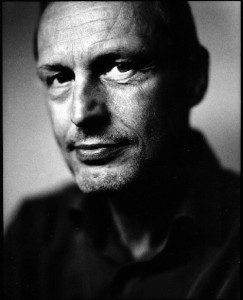 is head of the Laboratory for Education and Society, and of the research group Education, Culture and Society at the Katholieke Universiteit Leuven (Belgium). His research concerns the public and societal role of education and schooling, the role of the university, the changing experiences of time and space in the age of the network, the educational meaning of cinema and camera, the architecture of schools and architecture of the learning environment, a pedagogy of attention, the notion of ‘pedagogy’, the pedagogical role of teachers and social workers. His book, In Defense of School (with Maarten Simons) is available at http://goo.gl/NN4XeD.
CFP: Learning, technologies, and time in the age of global neoliberal capitalism
Call for Papers
SPECIAL ISSUE OF KNOWLEDGE CULTURES
Learning, Technologies, and Time in the Age of Global Neoliberal Capitalism
The study of time, technology and learning has preoccupied scholars across disciplines for decades. From the psychological impacts of networked gadgets to the nature of perception, attention, communication and social interaction, through the paradigm of 24/7 teacher/student availability, to the acceleration of study programs and research, these themes are dialectically intertwined with human learning in the age of global neoliberal capitalism.
However, the ‘social’ and the ‘technical’ are still frequently discussed as separate spheres in relation to human learning, rather than as mutually shaping of each other within capitalism. Using various critical approaches, this volume invites authors to ask diverse probing questions about the multi-dimensional, individual and social experience of time, by teachers and learners of all kinds, imbued in contemporary neoliberal technoscapes.
This Special Issue of Knowledge Cultures invites authors to explore these questions especially in relation to all kinds of human learning, including, but not limited to, the formal process of schooling. We are particularly interested in situating the relationships between human learning, social acceleration, and digital technologies in the context of global neoliberal capitalism – and in developing viable alternatives / seeds of resistance.
Working at the intersection of technology, psychology, sociology, history, politics, philosophy, arts, science fiction, and other related areas, we welcome contributions from a wide range of disciplines and inter-, trans- and anti-disciplinary research methodologies.
Submissions
All contributions should be original and should not be under consideration elsewhere. Authors should be aware that they are writing for an international audience and should use appropriate language. Manuscripts should not exceed 6000 words. For further information and authors’ guidelines please see
http://www.addletonacademicpublishers.com/images/Instructions_for_authors1.pdf.
All papers will be peer-reviewed, and evaluated according to their significance, originality, content, style, clarity and relevance to the journal.
Please submit your initial abstract (300-400 words) by email to the Guest Editors.
GUEST EDITORS
Sarah Hayes, Centre for Learning, Innovation and Professional Practice, Aston University, UK (s.hayes@aston.ac.uk)
Petar Jandrić, Department of Informatics & Computing, Polytechnic of Zagreb, Croatia (pjandric@tvz.hr)
IMPORTANT DATES
1 May 2015 – Deadline for abstracts to editors
1 June 2015 – Deadline for feedback from reviewers
1 November 2015 – Deadline for submissions/full papers
1 January 2016 – Deadline for feedback from reviewers
1 March 2016 – Final deadline for amended papers
Publication date – late 2016 / early 2017
Ursula K. Le Guin on art, freedom, and the dangers of capitalism
Ursula K. Le Guin’s acceptance speech at the National Book Foundation’s Medal for Distinguished Contribution to American Letters at the 65th National Book Awards on November 19, 2014 – simply, eloquently describes the commodification of art and the destructive effects of capitalism.
The parallels to the work of teachers is easy enough to see. Capitalism turns “writers into producers of market commodities rather than creators of art,” just as it turns teachers into producers of human capital rather than free human beings associated with one another on terms of equality.
“I think hard times are coming when we will be wanting the voices of writers who can see alternatives to how we live now and can see through our fear-stricken society and its obsessive technologies to other ways of being, and even imagine some real grounds for hope.”
Le Guin continued, “we will need writers who can remember freedom. Poets, visionaries—the realists of a larger reality.” We need those teachers too.
We live in capitalism. Its power seems inescapable. So did the divine right of kings. Any human power can be resisted and changed by human beings. Resistance and change often begin in art, and very often in our art—the art of words.”
New UBC graduate program in critical pedagogy & education activism
NEW MASTERS PROGRAM IN THE INSTITUTE FOR CRITICAL EDUCATION STUDIES
CRITICAL PEDAGOGY AND EDUCATION ACTIVISM
BEGINS JULY 2015
APPLY NOW!
The new UBC Masters Program in Critical Pedagogy and Education Activism (Curriculum Studies) has the goal of bringing about positive change in schools and education. This cohort addresses issues such as environmentalism, equity and social justice, and private versus public education funding debates and facilitates activism across curriculum and evaluation within the schools and critical analysis and activism in communities and the media. The cohort is organized around three core themes: solidarity, engagement, and critical analysis and research.
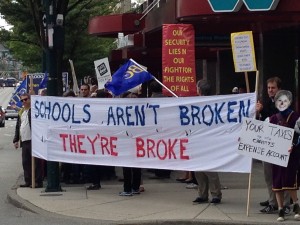
The new UBC M.Ed. in Critical Pedagogy and Education Activism (Curriculum Studies) is a cohort program in which participants attend courses together in a central location. It supports participation in face-to-face, hybrid (blended), and online activism and learning.
A Perfect Opportunity
- Earn your Master’s degree in 2 years (part-time)
- Enjoy the benefits of collaborative study and coalition building
- Channel your activism inside and outside school (K-12)
- Develop your knowledge of critical practices with media and technology
Cohort Advisors
Sandra Mathison, Professor, Department of Educational & Counselling Psychology & Special Education
Stephen Petrina, Professor, Department of Curriculum and Pedagogy
E. Wayne Ross, Professor, Department of Curriculum and Pedagogy
Cultural Logic Releases Three Volumes of Critical Scholarship In One Day
Cultural Logic has just announced an epic launch of three volumes of critical scholarship addressing a wide range of issues.
Cultural Logic, which has been on-line since 1997, is a open access, non-profit, peer-reviewed, interdisciplinary journal that publishes essays, interviews, poetry, reviews (books, films, other media), etc. by writers working within the Marxist tradition.
Volumes 2011 and 2012 were edited by David Siar.
Volume 2013 is the open access version the Education for Revolution issue that was published by Works & Days in December 2013, which I co-edited with Rich Gibson. Thanks to everyone for your contributions, to David Downing and his team for publishing the issue in Works & Days, to David Siar for his editorial and site management, and to Joe Ramsey for suggesting the WD/CL collaboration for the Education for Revolution issue.
Below are the Contents for Volumes 2011, 2012, and 2013
Cultural Logic, Volume 2011
Articles
Mathias Dapprich
“A Contribution Towards a Critical Theory of School Shootings”
Jerry Leonard
“Reading Notes on Sangeeta Ray’s Gayatri Chakravorty Spivak: Polemic with Digressions on a Theory of Irreducibility”
Ronald Paul
“The Politics of the Personal in Edward Upward’s The Spiral Ascent”
Spyros Sakellaropoulos
“On the Causes of the Civil War in Nepal and the Role of the Communist Party of Nepal (Maoist)”
Larry Schwartz
“Apocalypse Then: Philip Roth’s Indignation”
Daniel Silvermintz
“Enlightenment in the Shopping Mall”
Response and Counter-Response
Mike Jones
“Some Comments on Sven-Eric Holmström’s ‘New Evidence’ Concerning the Hotel Bristol in the First Moscow Trial of 1936”
Sven-Eric Holmström
“Reply to Mike Jones”
Poetry
Christopher Barnes
(From) The Electric Chair Poems
Cultural Logic, Volume 2012
Articles
Julianne Buchsbaum
“Alienation, Reification, and Narrativity in Russell Banks’ Affliction”
Alzo David-West
“North Korea and the Theory of the Deformed Workers’ State: Definitions and First Principles of a Fourth International Theory”
Haidar Eid
“White Noise: Representations of (Post)modern Intelligentsia”
Doug Enaa Greene
“Leninism and Blanquism”
Desmond Peeples
“Toward an Anarcho-Empiricism: Integrating Precedent, Theory, and Impetus in the Anarchist Project”
E. San Juan, Jr.
“In Lieu of Saussure: A Prologue to Charles Sanders Peirce’s Theory of Signs”
Huei-ju Wang
“Becoming ‘Migrant John’: John Steinbeck and His Migrants and His (Un)conscious turn to Marx”
Poetry
George Snedeker
Selected Poems
Cultural Logic, Education for Revolution, Volume 2013
Preface
E. Wayne Ross & Rich Gibson
“Education for Revolution”
Foreword
David B. Downing, Nicholas P. Katsiadas, Tracy J. Lassiter & Reza Parchizadeh
“Forward to the Revolution” (Forward to the Works & Days Edition)
Articles
Rich Gibson
“Barbarism Rising: Detroit, Michigan and the International War of the Rich on the Poor”
E. Wayne Ross & Kevin D. Vinson
“Resisting Neoliberal Education Reform: Insurrectionist Pedagogies and the Pursuit of Dangerous Citizenry”
Julie A. Gorlewski & Brad J. Porfilio
“Reimaging Solidarity: Hip-Hop as Revolutionary Pedagogy”
Timothy Patrick Shannon & Patrick Shannon
“Learning to Be Fast Capitalists on a Flat World”
Brian D. Lozenski, Zachary A. Casey & Shannon K. McManimon
“Contesting Production: Youth Participatory Action Research in the Struggle to Produce Knowledge”
Mike Cole
“Schooling for Capitalism or Education for Twenty-First Century Socialism?”
Curry Stephenson Malott
“Class Consciousness and Teacher Education: The Socialist Challenge and the Historical Context”
Deborah P. Kelsh
“The Pedagogy of Excess”
John Maerhofer
“Undermining Capitalist Pedagogy: Takiji Kobayashi’s Toseikatsusha and the Ideology of the World Literature Paradigm”
Grant Banfield
“Marxist Sociology of Education and the Problem of Naturalism: An Historical Sketch”
David J. Blacker
“The Illegitimacy of Student Debt”
Alan J. Singer
“Hacking Away at the Corporate Octopus”
Richard A. Brosio
“A Tale of Two Cities —— and States”
Alan Spector
“SDS, the 1960s, and Education for Revolution”
CFP Transformative Researchers & Educators for Democracy: “How public is public education?”
TRED Conference 2014
How Public is Public Education?
Call for Proposals
The Transformative Researchers and Educators for Democracy (TRED) will be holding its third Annual Conference, “How Public is Public Education?”, November 14 and 15, 2014, at the University of Massachusetts Dartmouth.
Founded in 2011, UMass Dartmouth’s Department of Educational Leadership and Policy Studies has grown to four cohorts of future transformative leaders. Ph.D. and Ed.D. candidates in the program have sought to provide a public space for educational researchers and practitioners to engage in critical and transformative dialogues. Through forums, presentation sessions, panel discussions, and informal gatherings, TRED continues its ambition to place the discussion of educational leadership and policy within the dynamics of ideological production that reflect existing power imbalances that perpetuate inequalities within society.
The theme of the 2014 conference, How Public is Public Education?, reflects the critical elements within and beyond the field of education that need to be discussed, heard, and analyzed as we search for solutions. Professors, students, educational leaders, and the public are all welcome to submit proposals and to attend the conference.
Submitting Proposals
Proposals can be submitted to TREDconf@umassd.edu
Like us on Facebook and look for any new information at Facebook.com/TRED.UMassD
ALL PROPOSALS MUST BE RECEIVED BY: Tuesday September 30th 2014.
Guidelines
TRED will be accepting presentation proposals for papers, symposiums, and research-in-progress roundtables. Upon submission of your proposal, please identify it to one of the following strands:
A. K-12; charter schools, innovation schools
B. Higher Education; adjunct faculty, campus based women’s, gender and cultural centers
C. Public Policy; Race to the Top, high-stakes standardized testing
PAPERS
Paper sessions provide individuals an opportunity to present a condensed version of their study. The research may focus on, but is not limited to, a question from an empirical or theoretical perspective. After all papers within a session have been presented, those in attendance will have the opportunity to dialogue with panelists.
RESEARCH IN PROGRESS ROUNDTABLE
Roundtable sessions are to open critical and insightful dialogue from colleagues familiar with a subject matter to support a developing study. Roundtables will be organized and led by a facilitator.
SYMPOSIUM
Symposiums consist of an integrated set of presentations with a similar topic as the focal point. This format of presenting will be limited to at least three, but no more than five, presentations. The proposal should identify who will be lead discussant or organizer, and, upon review, a TRED committee member may be named as the chair.
Proposal Requirements (For all submissions)
1. Cover Page
- Title
- Researcher(s)
- Contact Information
- Organization/University
- Panel Category
2. Abstract(300 word limit, not included in 1,000 word limit for proposal)
3. Individual Proposal (1,000 word limit)
- Presenters (Identify who is the main contact person)
- Theoretical Framework and Connections to Conference Theme;
- Purpose;
- Research Design/Methods;
- Conclusion/Findings;
- References
4. Symposium Group Proposal (1,500 word limit)
- A common objective or theme should be outlined, providing perspectives on the particular topic.
- 1-2 paragraphs in which the purpose of the symposium and connections among presenter paper’s is defined;
- Overview of each paper being presented including: methods, theoretical framework, research topic, and findings;
- Briefly describe the format and structure of the symposium
*If your symposium proposal is accepted, only the first author will be notified, and the first author is responsible for notifying all other co-authors*
For questions or comments, please contact: TREDconf@umassd.edu
CFP: SCHOLACTIVISM: Reflections on Transforming Praxis Inside and Outside the Classroom
A Call for Papers
Works and Days & Cultural Logic
SCHOLACTIVISM:
Reflections on Transforming Praxis Inside and Outside the Classroom
Edited by Joseph G. Ramsey
Proposal Deadline: August 30, 2014
Paper Submissions Deadline: Jan. 30, 2015
To appear in the Winter of 2015
Where do radical scholarship, teaching, and activism connect? Where should they? How do academics at present engage in activism? How ought we to? What are the strengths and weaknesses of prevailing modes of scholar-activist political praxis—from union efforts, to conference assemblies, from summer seminars, to party-building efforts, to various on and off-campus coalitions? What do scholars and teachers in particular have to contribute to activist campaigns beyond the classroom? How can the classroom itself be understood as a site of activism? In what ways do the “educators need to be educated” today?What should effective activism produce? What can we learn, both positively and negatively, from past attempts at transformative intellectual-political praxis?
What positive models, past or present, local or distant, can we point to in terms of scholar or teacher activism that have opened new radical possibilities? What pitfalls threaten such academic-activist interventions? In what sense does the intellectual, scholarly, or pedagogical production taking place on or around university, college, of K-12 campuses today become a “material force” in the world in which we live? To what extent does it enable or become an obstacle to genuine movement for radical social change?What opportunities for transformative praxis are being opened up in the current conjuncture of crisis-racked neoliberal capitalism? Which are being shut down?
How is the shifting terrain of the “post-welfare state university” –with its decreasing state support for the humanities and its increasing reliance on super-exploited “adjunct” faculty and high stakes testing—creating new chances and new dangers for radical praxis? Which avenues of activism hold the most promise for us in the present period? Which appear to foreclosed or blocked? Which appear to be fundamentally exhausted and why? What modes of activism today in fact play a negative role in dissipating, confusing, or ensnaring radical political energies, preventing them from pursuing more productive avenues? How should we to relate to the experiences, the legacies, and the cultural productions of previous eras of activism? To what extent do we see our present scholarly and activist, intellectual and political commitments as extensions of these prior efforts? To what extent do we see our own praxis as representing a rupture from these past moments’ work? What are the positive and what are the negative lessons that can be critically abstracted from these prior moments, and how are they of value for us today? For instance: What are the correct critical lessons to be derived from the rapid rise and fall of the Occupy Movement in the US? From recent labor movements on and off campus? From other mass mobilizations across the world since the Great Financial Crisis of 2007-2008? In our writing, our teaching, our conversations, and correspondence: how do we relate to the notion of ‘activism’ in theory and in practice?
What is the unconscious political content of the scholarly and pedagogical forms in which we are engaged? What is the message that our activism sends out, and to whom is it addressed? In recent years Slavoj Zizek has invoked the need for a kind of “Bartelby” politics—a preference for not acting—against a liberal blackmail to “act” in ways that are fundamentally inadequate to the systemic contradictions and crises of the present situation (understood as structurally embedded in contemporary capitalism). Sometimes, he has warned, the injunction to “do something”… anything, right now functions, deliberately or not, as a means of deferring the conversations and investigations that are necessary for a subject’s discovering the correct thing that in fact needs to be done. At the same time, there are plenty on the left who would chastise Zizek and company for theorizing in ways that perpetually defer the necessity for some sort of outward oriented radical action, action that transforms the conditions of conversation and analysis by engaging people who are not usually so engaged. In what ways are left public intellectuals such as Alain Badiou, Slavoj Zizek, David Graeber, or Arundhati Roy, making material contributions to movements for social liberation? What are the strengths and what are the weaknesses of these scholar activists’ theory and practice? We welcome contributions of any form or length that address any of the above questions or that contribute to any of the following tasks. In this 2015 special issue, help us to:
- Assess the role of scholars, teachers, and cultural specialists in activist communities, and social movements, past or present;
- Sum up the role played by academics, teachers, scholars, librarians and others in the Occupy Movement; from “Free University” efforts to “People’s Libraries” to attempts to bring Occupy discourse into classrooms (or union meetings);
- Engage the legacies, lessons, and limits of Labor Education in the United States;
- Sum up first-hand experiments with radical pedagogy, inside or outside the classroom; reflecting on attempts to expand or sustain student critique and community beyond the confines of the classroom, in time and/or space;
- Reflect on attempts (failed as well as successful, recent as well as more distant) to create new spaces for critique, new critical collectivities that transgress and transcend dominant divisions between “academia” and “activist,” from attempts to bring activist groups, methods, or perspectives onto campus or into classrooms, to efforts to bring academic work to the public, and to existing or emerging social movements and activist organizations;
- Critically analyze the role played by organic intellectuals in past struggles;
- Offer reports from the field of contemporary social struggles, including but limited to: Contingent Labor and Unionization efforts, Ecological Justice and Sustainability, Feminism, Prisoner and Immigrant Solidarity, and others.
- Reflect on the role of artistic production and its relationship to scholarship and/or activism. What productive examples of a mutual enrichment of radical politics and creative arts exist in the present? In the past? What are the lessons positive and negative to be grasped practically from a critical study of previous encounters of Art and Politics?
We welcome: Testimonials, Credos, Manifestos of Academic and/or Activist practices, and Reports from the Field, as well as more traditional essays and scholarly papers. We seek first-hand accounts of attempts to overcome particular obstacles to engaging social struggles and radical political issues in the classroom or in other academic contexts, in all their mix of positive and negative results. We also welcome personal accounts of struggles to overcome the various forms of alienation that characterize academic labor in the humanities today, and that confront academic activists in particular. How have you sought to reconcile your commitments as activist and as scholar and as teacher in the current environment? What insight or advice can you offer others facing similar struggles? We also welcome: Poetry as well as prose, photography, graphic art, and other creative forms, as well as reviews of recent critical or cultural production (books, films, blogs, etc) that thoughtfully engage any of the above topics. Please submit all proposals (250-500 words) by August 30 to: Joseph Ramsey at jgramsey@gmail.com . The print edition of the volume will appear in Works and Days in 2015. An expanded online open-access version will appear in Cultural Logic: An Electronic Journal of Marxist Theory and Practice www.clogic.eserver.org .