Categories
AMS Elections 2008 VP Admin

AMS Elections: The VP Admin Strikes Back

I’ve had a busy couple days with Ubyssey, work, school, and photoshoots, so I haven’t had much of a chance to post photos. Anyway, these are from Thursday’s debates.
The elections start tomorrow: be sure to get the word out and encourage your friends to get informed and get their vote on!
vpadmindebates2
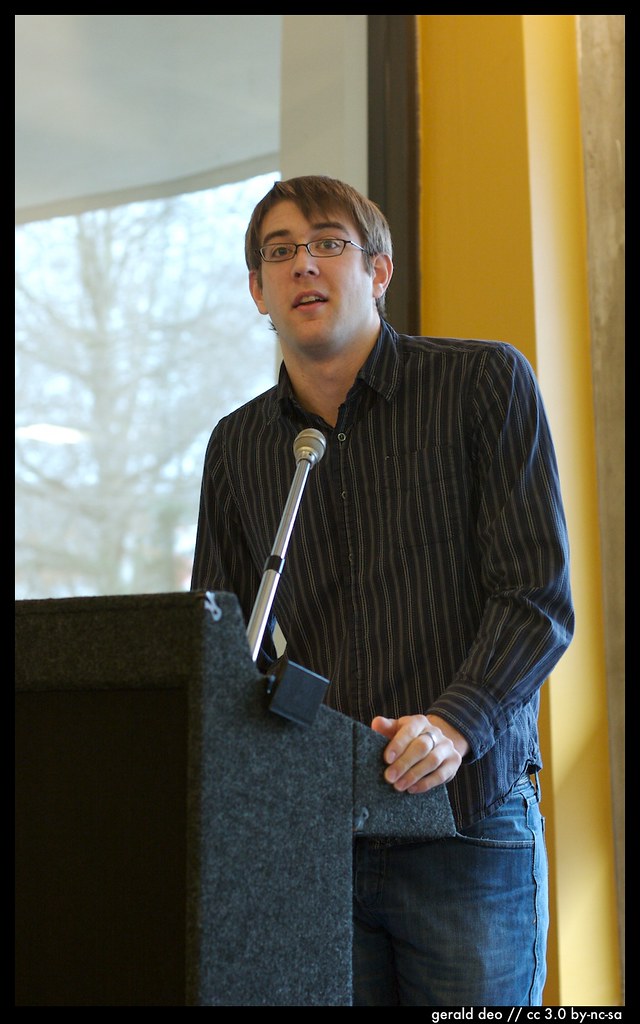
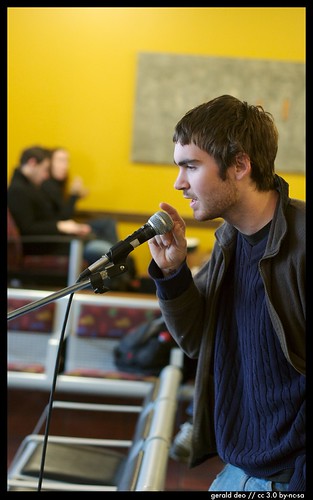
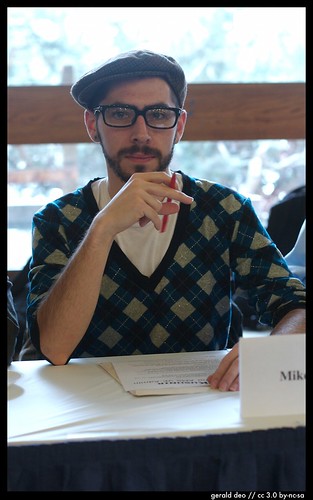
Mike Kushnir is now running seriously. Also, his glasses aren’t real. Mike is torn on a new SUB, because it means that an entire cohort of students will have to go without a SUB, but the current one is clearly inadequate.

vpadmindebates3
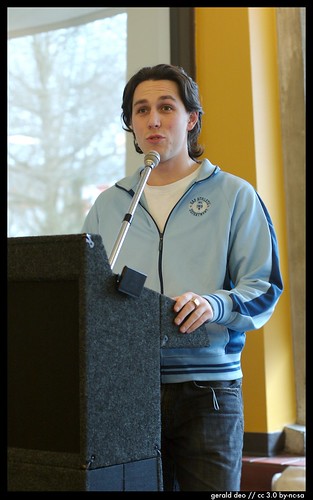
Tristan Markle and the Technicolor Pants. Tristan’s got bold plans for a Zero-Energy SUB.

vpadmindebates4
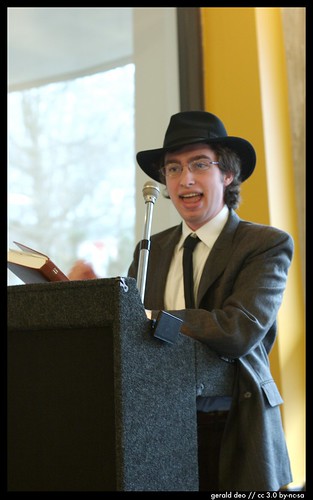
Aaron Palm, of the Devil’s Advocate, is running as a joke candidate. His shtick was to answer all questions by quoting the bible. Also, he wore an awesome suit.

vpadmindebates5
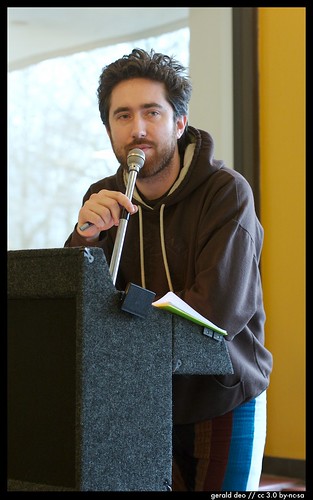
Honestly, I was expecting the President of UBC Debate to be a stronger speaker. Steve definitely hemmed his way through a few questions but when he hit his stride was able to detail a fairly club-focused platform.

vpadmindebates6
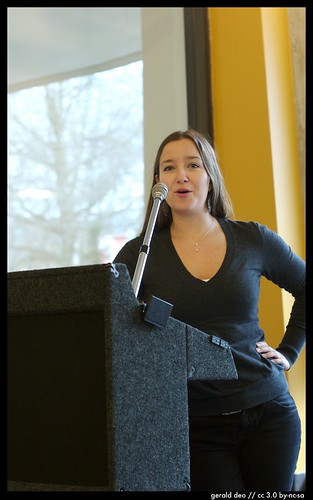
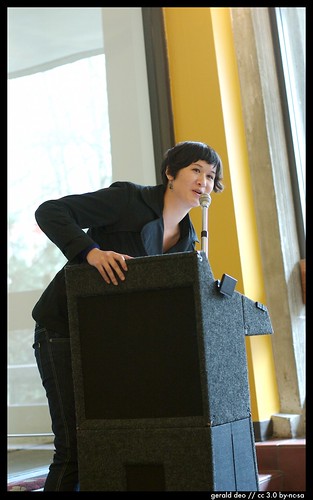
I’m not entirely sure why Steph Ryan is running; every answer was prefaced with “DON’T VOTE FOR ME.” and it seemed more like a chance for her to use the debates as a soapbox for personal views than anything else.
PS: slates only bring diversity if you consider tokenism to be diversity.

vpadmindebates8
Yian would stop talking, literally in the middle of a word, whenever I pointed a camera at him. The first time, I thought it was funny; the fourth time, I was (and am) firmly of the mind that this man should not be the VP Admin. Also, I fully admit that I pulled the worst photo of the bunch to include in this post.

vpadmindebates1
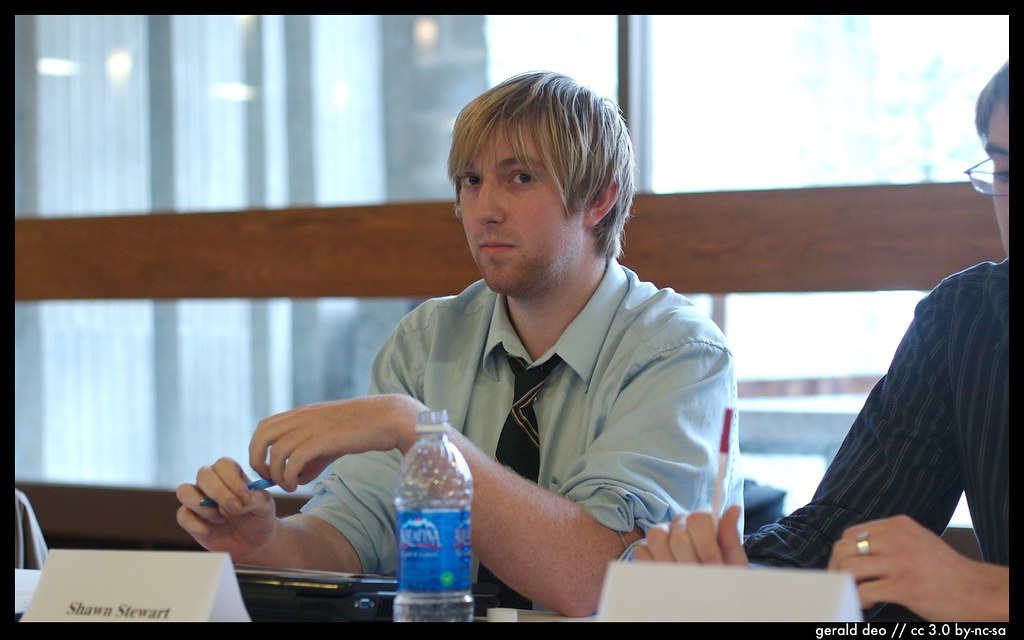
For some reason, I don’t have a picture of Shawn at the podium. He quoted his SAC experience and also presented several concrete plans to revitalize the portfolio, enhance club relations and generally springboard off his time in SAC.

vpadmindebates10
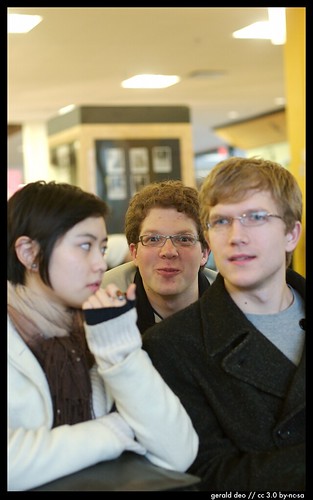
Mike Duncan caught me taking a photo of Alex and Lois, and decided to make a face in the background… so I made him the foreground.

vpadmindebates9
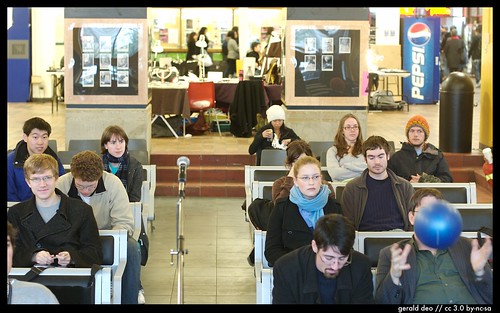
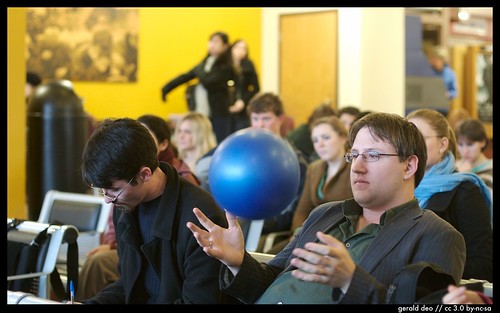
the crowd, mid-debate. Note Andrew Forshner not dropping the ball.

vpadmindebates11
Blake Frederick, current AVP Badass.

vpadmindebates12
Nate Crompton asking a question of the candidates.

vpadmindebates13
Riveting. Debate. Action.

vpadmindebates14
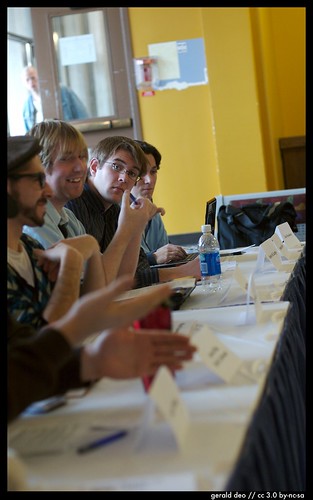
Just a quick profile shot of the candidates.

vpadmindebates15
Aaron Palm is not pleased

vpadmindebates17
Kasha Chang moderated the debates. It’s a thankless job.

vpadmindebates16
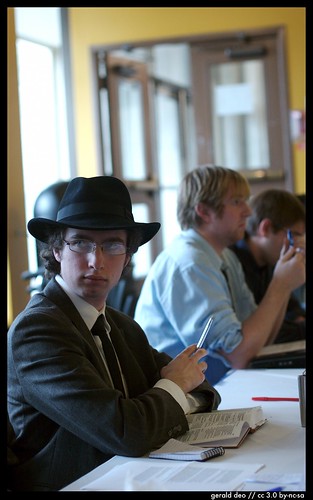
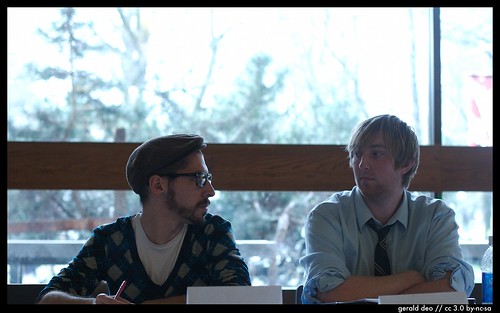
I sense a rivalry brewing.

vpadmindebates7
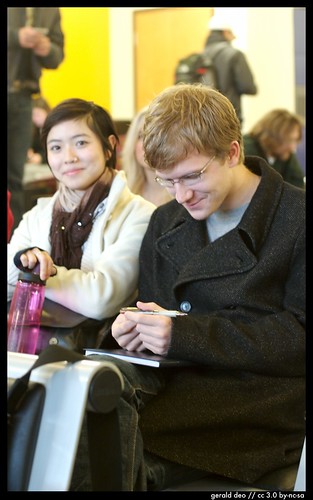
Alex Lougheed, checking out his potential co-executives with SUS D.Finance Lois Chan.

Categories
Academic Life Issues

Sterling example of effective advocacy – Universities Allied for Essential Medicines

Students spend alot of time agonizing over how to be effective advocates for change. Emma Preston, a founding member of UBC UAEM, and this year’s BC Rhodes Scholar, tells of how this group made the university fall head over heals for them.

Billions of people, primarily in poor countries, lack access to lifesaving medicines; millions more suffer from diseases for which no adequate treatment exists. Universities can change this. Universities Allied for Essential Medicines (UAEM) is a hands-on student organization that focuses on changing university policies in order to increase access to essential medicines in developing countries (http://www.essentialmedicine.org/). Our mission is two fold. Firstly, to urge universities to ensure that biomedical end products, such as drugs, developed in campus labs are accessible in developing countries, and secondly, to facilitate and promote research on neglected tropical diseases, or those diseases predominantly affecting people who are too poor to constitute a market attractive to private-sector research and development investment. University scientists are major contributors to the drug development pipeline. At the same time, universities have an avowed commitment to advancing the public good. As members of these universities, our fundamental goal is to hold them to this commitment. With a small but committed group of students, representative of the diverse student body at UBC and with some key supporters in the local and international community, we weren’t afraid to think big.

The UBC chapter of UAEM has been active for over two years and is part of a growing global movement of students dedicated to making research and science more globally responsible (http://ubcuaem.wordpress.com/). This past November, UBC announced it self as the first university in Canada to commit to providing people in poor countries with easier access to its innovations, stating that “ensuring global access to discoveries and technologies developed at UBC is an important element in achieving the TREK vision. UBC technologies have the potential to generate significant societal impacts, and our technologies relating to the advancement of health, the protection of the environment and the promotion of sustainability have the most obvious benefits for a global society.” The press release noted Universities Allied for Essential Medicines (UAEM) as “catalysts” for the decision (http://www.uilo.ubc.ca/global.asp).

The UBC Chapter of UAEM (pronounced “you-aim”) was founded in 2005 by Patricia Kretz, currently a fourth year UBC medical student. Initially, the group consisted of a small number of concerned students meeting at random locations about once a week. A mixed bag of grad students, law students, med students and undergrads, we met everywhere from coffee shops to basements to the west atrium of the Life Sciences Institute. It soon became clear that when it comes to understanding access to essential medicines there are many difficult concepts, jargon and acronyms to familiarize oneself with before anything starts to make sense. There is no doubt that there is a steep learning curve. To address this concern and reach out to the greater student body, UAEM UBC held its first “teach-in” in the fall of 2006 at UBC’s Medical Student Alumni Centre. The aim of this afternoon was to go over the basics of intellectual property, licensing and patent law, the neglected tropical disease research gap, metrics (a.k.a. how a university measures its success), and what university students can do to address these issues.

Another key element in achieving our goals was communicating with UBC faculty and administration. One aspect of this was collecting signatures for the Philadelphia Consensus Statement (PCS), a document that was drafted at the UAEM international meeting at the University of Pennsylvania in the fall of 2006. In a nutshell, the PCS is a document that outlines UAEM’s main goals and ‘signing on’ acts statement of support for these goals. In addition to a number of caring and dedicated faculty, UAEM was fortunate to gain the support of a number of big name global health/humanitarian ‘celebrities’ such as Paul Farmer, Jeffrey Sachs, James Orbinski and, a proud UAEM UBC signature, Stephen Lewis. In this regard it was very helpful to be a chapter of a larger international group and emphasized the benefits of being a multidisciplinary student group in which everyone could use their unique skills and contacts to their full potential.

With a member base and support from the local and international community, we received support from the Alma Mater Society (AMS) and eventually became an AMS club. We also established an advisory board consisting of a diverse array of individuals who had acted as mentors along the way including a journalist, physicians, a number of faculty members and representatives from the University Industry Liaison Office (UILO). With their support and the help of one of our more politically involved members, Gina Eom (of UBC Insider fame), we were able to arrange a series of meetings with President Stephen Toope, VP Research John Hepburn, University Industry Liaison Office (UILO) President Angus Livingstone and Technology Transfer Officer Barbara Campbell.

While we initially met with some valid resistance, the potential of what were proposing and its implications with regards to the Trek 2010 goals of global citizenship were hard to deny. Barbara Campbell emerged as our UILO champion and we were incredibly fortunate to have her dedicated support and commitment. We soon realized that you can’t use a one size fits all global access strategy for all technologies developed at UBC. Developing necessary guidelines and applying global access principles requires a lot of hard work and time on the part of the technology transfer officers at the UILO. As such we were very excited to find that the ideas behind these principles have already influenced the licensing of three new UBC technologies: a peer-to-peer software technology with applications in medical school curriculum delivery, an E. coli vaccine technology, and a new less-toxic formulation of antifungal and anti-Leishmania drug Amphotericin B.

While are starting to see the fruits of our labour in full ripeness, there is still a lot of work to be done. We are working towards developing undergraduate and medical school curriculum on neglected tropical diseases and starting a fund to finance research on these abandoned ailments. We are also in the process of starting chapters at other Canadian universities. As much as ever, we are welcome new members and support within the UBC community with open arms. If you are interested in attending our next meeting or in just finding out more information please don’t hestitate to contact us at: ubc.uaem@gmail.com
Categories
Uncategorized

Yet another threat


http://www.ubc.ca/bulletins/index.html

Vancouver Campus Advisory — New Threat Received
Tue. Feb. 5, 4:15 pm

Broadcast message to all UBC Vancouver Students, Faculty and Staff from President Stephen J. Toope

For the second time in a week, our Vancouver campus community has received a threatening message.

In this second case, an unspecific threat has been made for Wednesday. The threat does not specify a time, a location within the UBC Point Grey campus or the method of doing harm.

We must take such threats seriously, and we are working closely with senior RCMP personnel to address this new threat.

What can we all do when faced with such a threat? We are taking the advice of the RCMP to treat the non-specific nature of the threat with a higher level of community vigilance but to otherwise continue our normal activities.

However, because of the specific mention of the Biosciences building in the threatening message received last week, and the traumatic experience of the occupants who endured a full lockdown of the building at that time, classes will be cancelled tomorrow (Wednesday) in the Biosciences Building.

For details, see the RCMP news release at: www.rcmp-bcmedia.ca.

And please continue to look at www.ubc.ca for the latest information.

Categories
AMS Elections 2008 Media

Voter Funded Media results!

Due to a hole in WordPress, this post’s author is misattributed. The follow was written by former Insiders editor Maayan Kreitzman.

Well, here they are at long last!

The Knoll – $1600
UBC Insider – Election Edition – $1500
The Devils advocate – $1400
Cavalier – $900
Let Them Eat Cake – $725
UVote – $600
The Underground – $600
The 432 – $600
Plain title: Awesome Content – $75
The Radical Beer Tribune – $0
Maclean’s On Campus – $0

From the VFM administrator Paul Gibson-Tigh:

In the name of transparency, I am passing along the VFM results as they came to me, and then in the interpolated version (both in excel). The results were tricky to interpolate, as they made for a ‘case of discontinuity’ explained at the bottom of this page (http://www.votermedia.org/ubc/InterpolatedConsensus.html). It was all planned for in advance by Mark. I encourage you to fill in the spreadsheets and see the wonders of interpolated consensus yourselves! I could try to explain the case, but I had to have it explained to me, so keep that in mind.

A total of 249 people voted in the UBC Insiders option (ranging from $0 to $2000) – which was the highest number of votes of any media. There’s no real way of knowing how many people voted total – but lets say that 100 people voted, and didn’t vote in the UBC-i category, that’s still a pretty dire turnout for a contest that’s supposed to raise the profile of campus elecitons. The consensus percentile, p, was 61. It seems that (acording to the spreadsheet I’m looking at) the number of votes for each media were not normalized to the total number of voters, but rahter to the maximum number of voters in a particular media (249, in this case). This means that the rule in the VFM code that states that not voting is the same as voting zero wasn’t followed (I think, anyway. not sure). You can take a look at the Raw Votes spreadsheet, and the Interpolated Consensus spreadsheet for yourself – see if you can make head or tail of it!!

My major disspointment here is Plain Title: Awesome Content. I think Ian did a great job with the mini-paper. It was the one entry, to me, that actually reached out farther than the insular AMS in-croud, to target everyone else. And he did it with hilarity, opinion, and information. S0 boo-urns to that result. Also the 432 still sucks. Alot.

On a personal note, I just want to say a heartfelt thank you to all of you. It’s been a great ride, and that’s because of all the readers that have logged on, learned a bit, and maybe commented. The discourse generated here is really the thing that is wonderful to me. Pardon my moment of vanity, but it really is lovely to feel that our little blog is appreciated – so thank you!

Categories
AMS Elections 2008 VP Admin

VP Admininstration nominations – rumor mill

The race for the fifth AMS executive position, VP Administration, was cancelled in mid-campaign due to “campaigning irregularities.” While this cancellation was probably contrary to AMS code, and details were never confirmed by Elections Administrator Brendan Piovesan, a new race is soon to launch. And according to the rumor-mill, and the volume of nomination papers being passed around, it looks like this is going to be the most competitive race of the election. As you can see below, numerous serious, high profile contenders have stepped up:

Stephen McCarthy – Steve is the president of the UBC debate society, and the illustrious person behind “Serious Steve” on our colleagues’ blog over at the Devil’s Advocate.

Blake Frederick – Blake was VP Academic (and fellow blogger) Brendon Goodmurphy’s assistant this year, so he has experience working on issues in the executive structure of the AMS. He just got elected to Senate.

Tristan Markle – Tristan is a Science councilor and is also heavily involved in the AMS resource groups. He’s also an editor of the left-wing campus rag, The Knoll.

Mike Kushnir – Mike, who ran as a joke in the first iteration of this race as “Scary ” Mike “the rabbi”, is apparetnly running again as a serious candidate.

Shawn Stewart – Another VFM contestant. The mind behind the persona of “le grand gateau” over at Let Them Eat Cake. Shawn is also a SAC commisioner, so he’s got experience with some aspects of the Admin portfolio.

Patrick Meehan – Arts councilor, and politico.

Yian Messoloras – The apparent reason why the first VP Administration case was cancelled, and has to be run again, Yian wants to build a new SUB without increasing student fees by a penny.

All of the AUS – apparently a raft of AUSers want to run more jokes in this race than the rest of the elections put together. I sincerely hope they don’t. This elections doesn’t have much remaining credibility to lose, but any more jokes and screw-up could just scour whatever’s left away.

As soon as these are official, we’ll have some candidate questionnaires and analysis so that y’alls can make an informed decision.

Spam prevention powered by Akismet