Categories
French Inclusive Classroom Social Studies

Études sociales en français – French Social Studies

Listed below are selected resources for French learners relating to social studies.

Vous trouverez ci-dessous une sélection de ressources pour les apprenants de français dans le domaine des études sociales.

Les livres d’images (Picture Books)
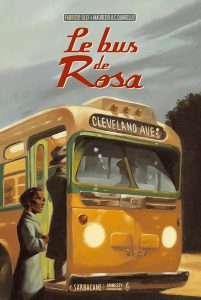
Le bus de Rosa

de Fabrizio Silei et Maurizio A.C. Quarello

Niveau scolaire (Grade level): 2 – 5

Assis dans un vieux bus, le grand-père de Ben lui raconte la ségrégation raciale dans l’Amérique de sa jeunesse : à l’école, dans les bars, dans le bus. Il lui raconte aussi comment, le 1er décembre 1955, une femme, Rosa Parks, refusa de céder sa place dans le bus à un Blanc, lançant le mouvement pour les droits civiques des Noirs aux États-Unis. Une histoire que le grand-père connaît bien : il se trouvait lui aussi dans le bus, ce jour-là. Assis à côté de Rosa. Mais il n’a pas eu son courage…
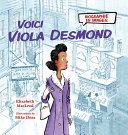
Voici Viola Desmond

de Elizabeth Mcleod

Niveau scolaire (Grade level): 3 – 6

Par un jour pluvieux de novembre 1946, Viola Davis, de passage à Glasgow en Nouvelle-Écosse, décide d’aller au cinéma. Elle s’installe dans la section officieusement réservée aux Blancs, mais l’ouvreuse lui demande de changer de place. Viola refuse, car elle sait que c’est à cause de la couleur de sa peau. La police l’emmène de force. Viola est emprisonnée, jugée et déclarée coupable. Cela ne l’empêche pas, avec l’aide de ses partisans, de continuer à se battre pour la justice sociale.
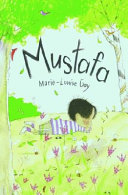
Mustafa

de Marie-Louise Gay

Niveau scolaire (Grade level): 2 – 5

Mustafa et sa famille ont voyagé très longtemps avant d’arriver dans leur nouveau pays. Certains soirs, Mustafa rêve du pays qu’il a quitté, le pays d’avant. Des rêves remplis de fumée, de feu et de grands bruits. Tous les jours, Mustafa se rend au parc. Il voit des fleurs pareilles à des langues de dragon, des insectes rouges à points noirs, un caillou moucheté. Et aussi des enfants qui ne lui prêtent pas attention. Est-il devenu invisible? Peut-être pas aux yeux de la fille-au-chat.
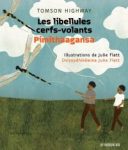
Pimithaagansa/Les libellules cerfs-volant,

Les langues(Languages):Cree and French

texte de Tomson Highway; illustrations de Julie Flett

Niveau scolaire (Grade level): 1 – 3

Taansi ka-itooteetay keespin iga meetawagaana kee-ayaa-in a-tie-igamigook oochi? Kapagawa-teetay naa? Maw weethawow Joe igwa ooseem’sa Cody. Maw m’tanaw-gaach. Ooseetaawuk taapoo-poogoo oomeetawaa-ganawaawa weethawow tipitoot, igwa kapee meetaweewuk, kapee m’choogee taawuk. Mamaskaach, chee-i?

Que ferais-tu n’avais aucun jouet, aucun jeu et aucun appareil electronique avec lesquels t’amuser? Est-ce que tu trouverais le temps long? Les freres Joe et Cody font tout sauf s’eenuyer. Ils inventent, creent et suivent leurs reves et ne s’ennuient jamais. Il suffit d’imaginer!
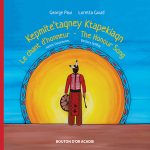
Kepmite’taqney Ktapekiaqn/Le chant d’honneur/The Honour Song,

Les langues(Languages):Mi’kmaq, French and English

texte de Gregory Paul; illustrations de Loretta Gould; traduction de Barbara Sylliboy & Hélène Devarennes

Niveau scolaire (Grade level): 3 – 8

Lors de nombreux évènements officiels ou cérémonies spirituelles chez les Premières Nations du pays, un chant est entonné par les participants. Ce chant a vu le jour dans le coeur et la tête de George Paul, un Mi’kmaw de Metepenagiag, après un parcours ardu. Cet album illustré raconte la naissance de ce chant et l’importance qu’il revêt pour les Premières Nations.
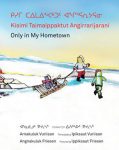
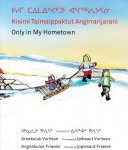
Kisimi Taimaippaktut Angirrarijarani/ᑭᓯᒥ ᑕᐃᒪᐃᑉᐸᒃᑐᑦ ᐊᖏᕐᕋᕆᔭᕋᓂ/Only in My Hometown,

Les langues(Languages):Inuktitut, Inuktitut Roman Orthography and English

titiraqtuq(writer) Ipiksaut Vuriisan(Arnakuluk Vuriisan);titiqtugaqtuq(illustrator) Ippiksaut Friesen(Angnakuluk Friesen)

Niveau scolaire (Grade level): Kindergarten – 2 (K-2)

Qanuippa piruqsabluni mikijumi nunalingmi ukiuqtaqtumi? Nukariik Arnakuluk Vuriisan ammalu Ipiksaut Vuriisan uqaqatigiiktuuk tagvuuna unipkaaliakkut nutaraublutik qanuiqattalaurmangaarmiik Inuit nunaqutingaani Nunavumi. Aqsarniquakkaujumi arnaillu katillutik mikigaqtuqpaklutik, ammalu Inuit tamarmik qatanngutigiigunnaqlutik.

Comment se passe l’enfance dans une petite ville du Nord ? Les sœurs Angnakuluk Friesen et Ippiksaut Friesen collaborent à ce récit de leur enfance dans une communauté inuite du Nunavut, où brillent les aurores boréales, où les femmes se réunissent pour manger de la viande de caribou crue et où tout le monde peut faire partie de la famille.
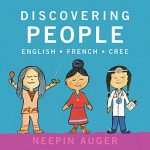
Discovering People,

Les langues(Languages):Cree, French and English

de Neepin Auger

Niveau scolaire (Grade level): Préscolaire – Kindergarten (PreK-K)

Le quatrième livre de la série À la découverte qui présente vingt-deux mots de base en anglais, en français et en cri qui se rapportent aux gens de la maison et à ceux qui existent dans la communauté autour de votre enfant.
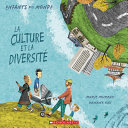
La culture et la diversité

de Marie Murray

Niveau scolaire (Grade level): 2 – 5

Votre maison… À quoi ressemble-t-elle? Avec quels matériaux a-t-elle été construite? Alors que votre aménagement intérieur peut vous sembler tout à fait normal, mais il ne l’est pas nécessairement pour une personne issue d’une culture différente. Ce splendide documentaire aidera les jeunes lecteurs à en savoir plus sur la diversité culturelle et ses richesses.
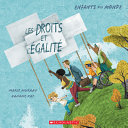
Les droits et l’égalité

de Marie Murray

Niveau scolaire (Grade level): 2 – 5

Comment s’assurer que chaque être humain est traité avec équité et qu’il possède tout ce dont il a besoin pour vivre? La réponse peut sembler difficile, mais si on prend le temps d’étudier les droits de la personne, cela devient plus facile! Chacun d’entre nous a le droit de vivre dans un environnement où ses droits sont honorés et respectés .Êtes-vous prêts à découvrir ce que cela implique? Cet album informatif et d’actualité explique les droits de la personne et tout ce qu’ils englobent de façon simple et claire. Il comprend également un glossaire ainsi que des recommandations de livres et de sites Web pour faire davantage de recherches sur ce sujet important.

Lecteurs faciles (Easy Readers)
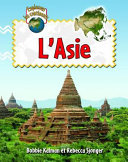
 L’Asie

de Bobbie Kalman

Niveau scolaire (Grade level): 1 – 3

Ce livre facile à lire présente aux enfants la diversité du continent asiatique, le plus grand continent de la Terre. Des photographies en couleurs et des cartes détaillées mettent en évidence les principales régions, les étendues d’eau, les reliefs, les forêts, les steppes et les déserts de l’Asie.


Trouver d’autres ressources

Voici quelques conseils pour trouver d’autres ressources dans ce domaine :

  • Sur la page principale du site de la bibliothèque de l’UBC, utilisez la boîte de recherche générale pour rechercher des matériaux à travers toutes les succursales de la bibliothèque de l’UBC.
  • Pour limiter vos résultats aux matériels disponibles à la Bibliothèque de l’éducation, visitez le site web de la Bibliothèque de l’éducation et effectuez une recherche à l’aide de la case “Search Education Resources” située dans la bande à gauche de l’écran.
  • Remarque : les ressources étant principalement cataloguées en anglais, les termes ci-dessous donnent généralement plus de résultats que les recherches effectuées en français. Vous pouvez filtrer votre liste de résultats par langue dans la barre latérale de gauche.
  • Utilisez des termes de recherche spécifiques, tels que
    • “media literacy”, “social studies–study and teaching”, “mapping”, “immigrant”, etc.
  • Pour trouver des plans de cours, incluez “lesson plans”, “lesson planning”, or “activity programs” dans vos termes de recherche.

Finding More Resources

To find more resources in this area, try the following:

  • Search using the General tab on the UBC Library website to look for material in all UBC Library branches.
  • Search using “Search Education Resources” box in the left hand bar on the Education Library website to limit your results to physical materials in the Education Library.
  • Use specific search terms, such as
    • “media literacy”, “social studies–study and teaching”, “mapping”, “immigrant”, etc.
  • To find lesson plans, include “lesson plans”, “lesson planning”, or “activity programs” in your search terms.
Categories
Accessibility Diversity and Diverse Learners Core Competencies Electronic Resources English Inclusive Classroom

Disabilities Representations in Picturebooks

Listed below are selected books and read aloud links of those materials, to give a variety of ways to experience stories of diverse representations of disabilities in children’s literature.

Vous trouverez ci-dessous une sélection de livres et de liens de lecture à haute voix de ces documents, afin de vous permettre de découvrir diverses représentations des handicaps dans la littérature pour enfants.

Picturebooks

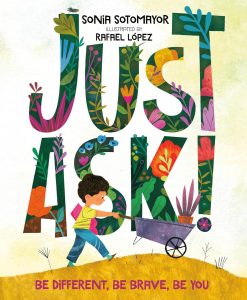
Just ask!: be different, be brave, be you,

by Sonia Sotomayor; illustrated by Rafael López

Niveau scolaire (Grade level): Préscolaire – 3 (PreK-3)

Using her own experience as a child who was diagnosed with diabetes, Justice Sotomayor writes about children with all sorts of challenges–and looks at the special powers those kids have as well. As the kids work together to build a community garden, asking questions of each other along the way, this book encourages readers to do the same: When we come across someone who is different from us but we’re not sure why, all we have to do is Just Ask.

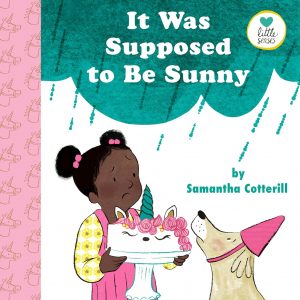
It was supposed to be sunny,

by Samantha Cotterill

Niveau scolaire (Grade level): Préscolaire – 2 (PreK-2)

Laila’s birthday party, perfectly planned with her autism in mind, goes awry due to a change in weather and an accident with her cake, but with the help of her mom and her service dog, Laila knows she can handle this

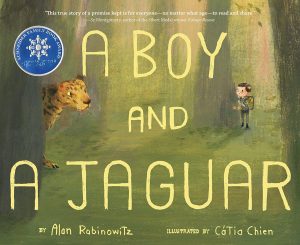
A boy and a jaguar,

by Alan Rabinowitz; illustrated by Cátia Chien

Niveau scolaire (Grade level): Préscolaire – 2 (PreK-2)

The renowned cat conservationist reflects on his early childhood struggles with a speech disorder, describing how he only spoke fluently when he was communicating with animals and how he resolved at a young age to find his voice to be their advocate.

Rescue & Jessica: a life-changing friendship,

by Jessica Kensky and Patrick Downes; illustrated by Scott Magoon

Niveau scolaire (Grade level): K – 4

Rescue thought he’d grow up to be a Seeing Eye dog — it’s the family business, after all. When he gets the news that he’s better suited to being a service dog, he’s worried that he’s not up to the task. Then he meets Jessica, a girl whose life is turning out differently than the way she’d imagined it, too.

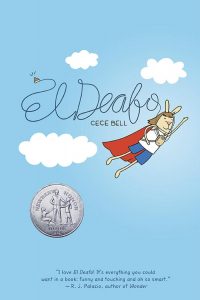
El Deafo,

by Cece Bell; colour by David Lasky

Niveau scolaire (Grade level): 2 – 7

Starting at a new school is scary, especially with a giant hearing aid strapped to your chest! At her old school, everyone in Cece’s class was deaf. Here, she’s different. She’s sure the kids are staring at the Phonic Ear, the powerful aid that will help her hear her teacher. Too bad it also seems certain to repel potential friends.

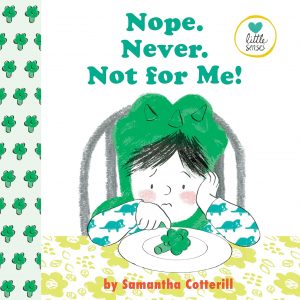
Nope. Never. Not for me!,

by Samantha Cotterill

Niveau scolaire (Grade level): Préscolaire – 2

A young child refuses to try a bite of broccoli–that is, until her mom guides her through a careful exploration of the new food. First she looks, then she sniffs, then touches, and finally takes one tiny bite. What do you know? Broccoli isn’t so overwhelming after all!

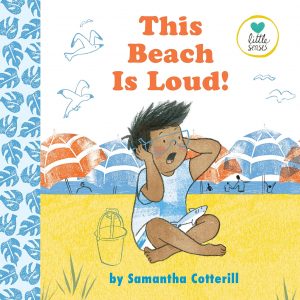
This Beach is Loud!,

by Samantha Cotterill

Niveau scolaire (Grade level): Préscolaire – 2

Going to the beach is exciting. But it can also be busy. And loud. Sand can feel hot or itchy or sticky…and it gets everywhere! A sensitive boy gets overwhelmed by all the sights, sounds, and sensations at the beach. Luckily, this kiddo’s dad has a trick up his sleeve to help his son face these unexpected obstacles.

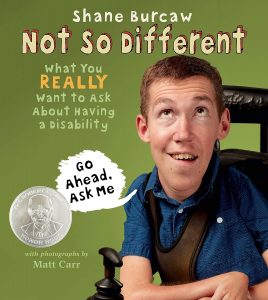
Not so different: what you really want to ask about having a disability,

by Shane Burcaw; with photographs by Matt Carr

Niveau scolaire (Grade level): K – 4

A picture book answering the questions young children ask Shane Burcaw about his wheelchair and life with Spinal Muscular Atrophy with equal parts optimism, humor, and empathy.

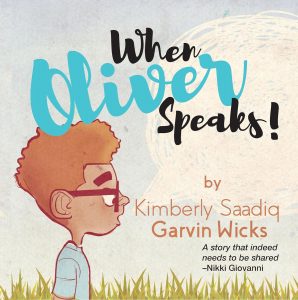
When Oliver Speaks,

by Kimberly Garvin, Saadiq Wicks; design and illustration by ATH Arts Worldwide; editor: Hamishe Randall; illustration & layout: Anthony Tyrone Howard

Niveau scolaire (Grade level): K – 3

A heartfelt story about a young boy who struggles to overcome his stutter while finding the courage to accept it, When Oliver Speaks is the story of an underdog who learns to rise. The story comes from a place of personal experience in that co-author Saadiq is a person who stutters and has done so for as long as he could speak.

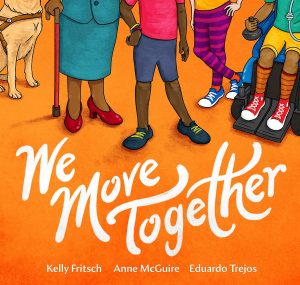
We move together,

by Kelly Fritsch, Anne McGuire; illustrated by Eduardo Trejos

Niveau scolaire (Grade level): K – 4

A bold and colorful exploration of all the ways that people navigate through the spaces around them, and a celebration of the relationships we build along the way. We Move Together follows a mixed-ability group of kids as they creatively negotiate everyday barriers, and find joy and connection in disability culture and community.

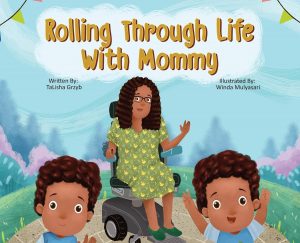
Rolling through life with Mommy,

by Talisha Grzyb; illustrated by Winda Mulyasari

Niveau scolaire (Grade level): Préscolaire – 1

There are millions of parents but not all of them have a story like Mommy TaLisha. Her three sons take us on an adventure of a day in the life of a wheelchair-bound mother. It shows a new perspective of a struggle many endure but now in the eyes of their children.

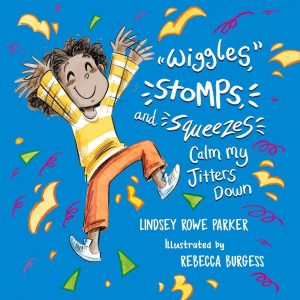
Wiggles, stomps, and squeezes calm my jitters down,

by Lindsey Rowe Parker; illustrated by Rebecca Burgess

Niveau scolaire (Grade level): K – 2

The vibration in her feet when she runs, the tap-tap-tap of her fork on the table at mealtime, the trickle of cool water running over her hands — these are the things that calm her jitters down. This book is for anyone who has ever felt the need for a wiggle, stomp, or squeeze!

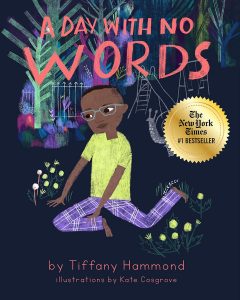
A day with no words,

by Tiffany Hammond; illustrations by Kate Cosgrove

Niveau scolaire (Grade level): K – 5

Young children will learn what life can look like for an autistic child who uses nonverbal communication by following a mother and child on a day where they use a tablet to communicate with others.


Trouver d’autres ressources

Voici quelques conseils pour trouver d’autres ressources dans ce domaine :

  • Sur la page principale du site de la bibliothèque de l’UBC, utilisez la boîte de recherche générale pour rechercher des matériaux à travers toutes les succursales de la bibliothèque de l’UBC.
  • Pour limiter vos résultats aux matériels disponibles à la Bibliothèque de l’éducation, visitez le site web de la Bibliothèque de l’éducation et effectuez une recherche à l’aide de la case “Search Education Resources” située dans la bande à gauche de l’écran.
  • Remarque : les ressources étant principalement cataloguées en anglais, les termes ci-dessous donnent généralement plus de résultats que les recherches effectuées en français. Vous pouvez filtrer votre liste de résultats par langue dans la barre latérale de gauche.
  • Utilisez des termes de recherche spécifiques, tels que
    • “people with disabilities”, “individual differences”, “senses and sensation”, “sensitivity” AND “picture books for children” AND “ emotions”, ou “children with disabilities”.
  • Pour trouver des plans de cours, incluez “lesson plans”, “lesson planning”, or “activity programs” dans vos termes de recherche.

Finding More Resources

To find more resources in this area, try the following:

  • Search using the General tab on the UBC Library website to look for material in all UBC Library branches.
  • Search using “Search Education Resources” box in the left hand bar on the Education Library website to limit your results to physical materials in the Education Library.
  • Use specific search terms, such as
    • “people with disabilities”, “individual differences”, “senses and sensation”, “sensitivity” AND “picture books for children” AND “ emotions”, and “children with disabilities”.
  • To find lesson plans, include “lesson plans”, “lesson planning”, or “activity programs” in your search terms.
Categories
Accessibility Diversity and Diverse Learners Community Celebrations English French Inclusive Classroom Indigenous Literature and Education Seasonal Seasonal Materials Seasons and Celebrations Uncategorized Winter Celebrations

Livres bilingues et multilingues français et autochtones – French & Indigenous Bilingual and Multilingual Books

Listed below are selected resources for bilingual and multilingual learners in French/English/Spanish/Halq’eméylem(Sts’ailes)/ᓀᐦᐃᔭᐍᐏᐣ-Plains Cree/Omaškêkowak-Swampy Cree/X̱aad Kil-Haida(Old Massett)/X̱aayda Kil-Haida(Skidegate)/Cree/Carrier(Athapascan)/Inuktitut/Inuktitut Syllabics/Mi’kmaq relating to Science and Social Studies subjects.

Vous trouverez ci-dessous une sélection de ressources pour les apprenants bilingues et multilingues en français/anglais/espagnol/halq’eméylem(sts’ailes)/ᓀᐦᐃᔭᐍᐏᐣ-plains cree/omaškêkowak-swampy cree/xaad kil-haida(old massett)/xaayda kil-haida(skidegate)/cree/carrier(athapascan)/inuktitut/inuktitut roman syllabics/mi’kmaq concernant les sciences et les études sociales.

Livre en carton (Board Books)

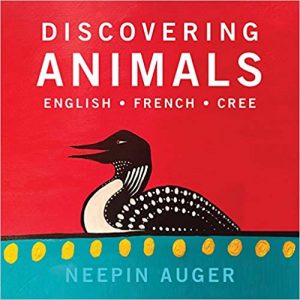
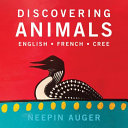
Discovering Animals

Les langues(Languages):Cree, French and English

de Neepin Auger

Niveau scolaire (Grade level): Préscolaire – Kindergarten (PreK-K)

The third book in the Discovering Series of books that uses colourful illustrations along with English, French and Cree translations to teach the basics of recognition and naming of animals.

Le troisième livre de la série Discovering utilise des illustrations colorées et des traductions en anglais, en français et en cri pour enseigner les bases de la reconnaissance et de la dénomination des animaux.

Discovering Words

Les langues(Languages):Cree, French and English

de Neepin Auger

Niveau scolaire (Grade level): Préscolaire – Kindergarten (PreK-K)

An updated edition in the Discovering Series that covers a variety of words and fun discovery for multilingual, bilingual and interested readers and learners. Accompanied by brightly coloured images and early education level concepts familiar to everyone.

Une édition mise à jour de la série Discovering qui couvre une variété de mots et de découvertes amusantes pour les lecteurs et apprenants multilingues, bilingues et intéressés. Accompagnée d’images aux couleurs vives et de concepts d’éducation précoce familiers à tous.

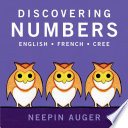
Discovering Numbers,

Les langues(Languages):Cree, French and English

de Neepin Auger

Niveau scolaire (Grade level): Préscolaire – Kindergarten (PreK-K)

An updated edition by Neepin Auger that includes more numbers and new illustrations that covers the basics of counting in English, French and Cree. A playful and bold series of books meant to educate and entertain preschoolers, parents, and teachers alike.

Une édition mise à jour par Neepin Auger qui comprend plus de chiffres et de nouvelles illustrations qui couvrent les bases du comptage en anglais, en français et en cri. Une série de livres ludiques et audacieux destinés à éduquer et à divertir les enfants d’âge préscolaire, les parents et les enseignants.

Lecteurs faciles (Easy Readers)

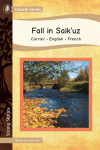
Strong Stories Dakelh: Fall in Saik’uz,

Les langues(Languages):Carrier (Athapascan), French and English

de Cecilia John

Niveau scolaire (Grade level): 1 – 3

Come north to Saik’uz (sigh-kuz) located within the Dakelh (dah-kay-lth) Territory and see the leaves turn colour in fall! What is something that you love about fall?

Venez au nord de Saik’uz (sigh-kuz), dans le territoire de Dakelh (dah-kay-lth), et voyez les feuilles se colorer à l’automne! Qu’est-ce que vous aimez dans l’automne?

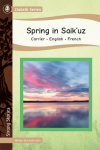
Strong Stories Dakelh: Spring in Saik’uz,

Les langues(Languages):Carrier (Athapascan), French and English

de Cecilia John

Niveau scolaire (Grade level): 1 – 3

Come north to Saik’uz (sigh-kuz) located within the Dakelh (dah-kay-lth) Territory and see the trees bud and the birds come back! What is something that you love about spring?

Venez au nord de Saik’uz (sigh-kuz), dans le territoire de Dakelh (dah-kay-lth), et voyez les arbres bourgeonner et les oiseaux revenir! Qu’est-ce que vous aimez dans le printemps?

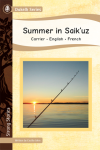
Strong Stories Dakelh: Summer in Saik’uz,

Les langues(Languages):Carrier (Athapascan), French and English

de Cecilia John

Niveau scolaire (Grade level): 1 – 3

Come north to Saik’uz (sigh-kuz) located within the Dakelh (dah-kay-lth) Territory and see the berries and animals! What is something that you love about summer?

Venez au nord à Saik’uz (sigh-kuz) situé dans le territoire Dakelh (dah-kay-lth) et voyez les baies et les animaux! Qu’est-ce que tu aimes dans l’été?

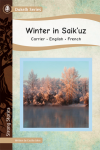
Strong Stories Dakelh: Winter in Saik’uz,

Les langues(Languages):Carrier (Athapascan), French and English

de Cecilia John

Niveau scolaire (Grade level): 1 – 3

What are some of the ways people in the North enjoy winter? This non-fiction book teaches children that even though the days are cold and dark in a Nunavut winter, there are a lot outdoor activities to enjoy, such as snowmobiling, ice fishing, and dogsledding. 

Comment les habitants du Nord profitent-ils de l’hiver? Ce livre de non-fiction apprend aux enfants que même si les journées sont froides et sombres pendant l’hiver au Nunavut, il y a beaucoup d’activités de plein air à pratiquer, comme la motoneige, la pêche sur glace et le traîneau à chiens.

Les livres d’images (Picture Books)

Indigenous Storybooks Canada,

Les langues(Languages):French, English, Spanish, Halq’eméylem(Sts’ailes), ᓀᐦᐃᔭᐍᐏᐣ-Plains Cree, Omaškêkowak-Swampy Cree, X̱aad Kil-Haida(Old Massett), and X̱aayda Kil-Haida(Skidegate)

Niveau scolaire (Grade level): Préscolaire – 6 (PreK-6)

Indigenous Storybooks is a resource designed specifically for children, families, community members, and educators. Inspired by the open-licensed stories from Little Cree Books, this project aims to make the text, images, and audio of stories available in Indigenous languages as well as English, French, and the most widely spoken immigrant and refugee languages of Canada.

Indigenous Storybooks est une ressource conçue spécifiquement pour les enfants, les familles, les membres de la communauté et les éducateurs. Inspiré par les histoires sous licence libre de Little Cree Books, ce projet vise à rendre le texte, les images et le son des histoires disponibles dans les langues autochtones ainsi qu’en anglais, en français et dans les langues d’immigrants et de réfugiés les plus parlées au Canada.

Comment la rivière Petitcodiac devint boueuse / Ta’n tel-kisi-siskuapua’qsepp Petikotiak sipu / How the Petitcodiac River became muddy

Les langues(Languages): French, Mi’kmaq, English

de Marguerite Maillet

Cette légende mi’kmaq explique à sa façon quelques-uns des mystères de la rivière Petitcodiac. Autrefois, la rivière était claire, limpide et regorgeait de poissons. Une Anguille géante, attirée par cette nourriture abondante, s’élança dans la rivière, détruisant tout sur son passage. Appelé à l’aide, Glooskap promit de donner des pouvoirs magiques à celui qui irait combattre le monstre. Seul un petit Homard se porta volontaire…

This Mi’kmaq legend explains in its own way some of the mysteries surrounding the Petitcodiac River. In the past, the river was crystal-clear and full of fish. A giant eel was attracted by such abundant food. She rushed into the river, causing rampage along its shores. Asked for help, Gloosecap offered to give great powers to anyone who would fight the monster. The only one who volunteered was a small lobster…

Tihtiyas et Jean / Tihtiyas naka Jean / Tihtiyas and Jean

Les langues(Languages): French, Passamaquoddy, English

de Nathalie Gagnon

Un jour, Tihtiyas, une jeune Passamaquoddy âgée de 12 ans, voit sur la mer un oiseau immense qui approche des côtes. Quelle n’est pas sa surprise de constater qu’il s’agit d’un bateau ! À travers le regard de Tihtiyas, on assiste à la grande aventure de l’arrivée, de l’installation et du premier hiver des Français à l’île Muttoneguis (Sainte-Croix). Parmi eux se trouve un jeune garçon âgé de 12 ans qui se liera d’amitié avec Tihtiyas.

One day, Tihtiyas, a twelve-year old Passamaquoddy girl, sees a huge bird approaching the shore. As the bird comes nearer, she realises it is a boat! Through Tihtiyas’s eyes, we take part in the great adventure of the French as they prepare for and spend their first winter on Muttoneguis Island (Saint Croix). Among them is a twelve-year-old boy, with whom Tihtiyas will make friends.

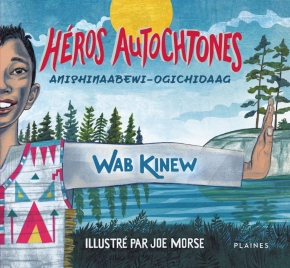
Héros autochtones/Anishinaabewi-Ogichidaag,

Les langues(Languages):Anishinaabe and French

texte de (writer) Wab Kinew; illustrations de (illustrator) Joe Morse

Niveau scolaire (Grade level): Kindergarten – 5

Souhaitant faire connaitre aux jeunes de tous les horizons ses héros autochtones, Wab Kinew a composé des textes inspirants mettant en vedette des héros autochtones du Canada et des États-Unis. Malgré leur expérience unique, tous ont ceci en commun : la confiance en soi et un lien avec le territoire.

Daa _Galang sding : _Xaayda_Ga Giiahl_Galang ga = The two brothers : a Haida story = Les deux frères : un récit haïda

Les langues(Languages): Haida, English and French

de Diane Brown: illustrations by Gwaii Edenshaw and Jaalen Edenshaw

The Two Brothers presents a wonderful opportunity for Canadian children of all ages to learn about Haida culture through colourful illustrations and text translated by a Haida author who has been instrumental in the protection of the Haida language. For almost a century, the world-famous Raven Totem Pole stood in downtown Jasper. After being repatriated to its original home on HaidaGwaii in 2010, it was replaced by the Two Brothers Totem Pole. Beautifully illustrated by Gwaai and Jaalen Edenshaw, the Haida artists who carved the new totem pole, this book tells the story of the Two Brothers, of a journey long ago from the west coast islands of HaidaGwaii to the Canadian Rockies, and of an unusual connection between two very different places.

L’écho du Nord / Listening North.

Les langues(Languages):Inuktitut & French

texte d’Emily Novalinga ; illustrations de Claude Thivierge

Cette histoire s’adresse aux enfants et aux adultes. Elle parle de l’importance de prendre soin de notre santé, de prendre le temps de bien entendre et de bien écouter : écouter les autres, écouter la nature, s’écouter soi-même. Quand nous sommes ouverts à toutes les choses merveilleuses qui nous entourent, nous nous sentons bien, nous prenons les bonnes décisions et notre vie est plus saine et plus heureuse. Plus que tout, notre vie est notre musique

Le cadeau de l’esturgeon

Les langues(Languages): French and Algonquin

texte de Stéphanie Déziel ; illustrations de Christine Sioui Wawanoloath

Album souple au cours duquel on narre comment Anwatan (16 ans) apprend à pêcher l’esturgeon au collet en compagnie de son grand-père, après avoir fait la rencontre magique d’un de ses énormes poissons d’eau douce qui l’emmène gentiment sur son dos pour lui faire découvrir, en un bref voyage dans le temps, les anciennes pratiques traditionnelles de son peuple entourant la pêche, la cuisson, la consommation et la célébration de ce cadeau de la nature dont il faut modérer la capture pour en protéger l’espèce.

Les families des Nunavik,

Les langues(Languages):Inuktitut and French

texte de(titiraqtuq/writer) France Paquin; illustrations de(titiqtugaqtuq/illustrator) Julie Rémillard-Bélanger; traduction en inuttitut de Sarah Beaulne.

Niveau scolaire (Grade level): Préscolaire – 6 (PreK-6)

Présentation élémentaire des principaux spécimens de la faune arctique, du lemming à l’homme, excluant la faune aquatique. — De gentilles aquarelles. Peu d’informations. Un point marquant, le texte dans les deux langues.

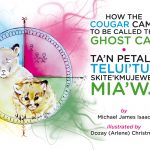
Comment le puma a fini par être appelé le chat fantôme,

Les langues(Languages):Mi’kmaq and French

texte de Michael James Isaac ; illustrations de Dozey (Arlene) Christmas ; traduction en mi’kmaq de Yolanda Denny ; traduction en français du ministère de l’Éducation et du Développement de la petite enfance de la Nouvelle-Écosse.

Niveau scolaire (Grade level): 1 – 6

Pris entre deux mondes, le puma a du mal à trouver un lieu où il est à sa place. En tant que chat fantôme, le puma vit comme il le devrait: dans la forêt, mais sans ses amis.

Misinsit miawe’k tapu’kl wskitqamu’kl, Ajik alme’si wejitoq ta’n tett tleyawit. Skite’kmujewey Mia’wj mimajit ta’n tel nenk — kisoqe’k pasik mu eymu’kk witapk.

Pimithaagansa/Les libellules cerfs-volant,

Les langues(Languages):Cree and French

texte de Tomson Highway; illustrations de Julie Flett

Niveau scolaire (Grade level): 1 – 3

Taansi ka-itooteetay keespin iga meetawagaana kee-ayaa-in a-tie-igamigook oochi? Kapagawa-teetay naa? Maw weethawow Joe igwa ooseem’sa Cody. Maw m’tanaw-gaach. Ooseetaawuk taapoo-poogoo oomeetawaa-ganawaawa weethawow tipitoot, igwa kapee meetaweewuk, kapee m’choogee taawuk. Mamaskaach, chee-i?

Que ferais-tu n’avais aucun jouet, aucun jeu et aucun appareil electronique avec lesquels t’amuser? Est-ce que tu trouverais le temps long? Les freres Joe et Cody font tout sauf s’eenuyer. Ils inventent, creent et suivent leurs reves et ne s’ennuient jamais. Il suffit d’imaginer!

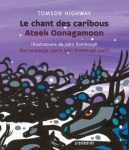
Ateek Oonagamoon/Caribou Song,

Les langues(Languages):Cree and English

texte de Tomson Highway; illustrations de John Rombough

Niveau scolaire (Grade level): 1 – 4

Joe and Cody are young Cree brothers who follow the caribou all year long, tucked into their dog sled with Mama and Papa. To entice the wandering herds, Joe plays his accordion and Cody dances, whirling like a young caribou. They are so busy playing and dancing, they don’t hear the rumble of the caribou. Bursting from the forest, ten thousand animals fill the meadow. Joe is engulfed; he can barely see Cody a few yards away. Their parents seem to have disappeared.

Joe et Cody suivent les caribous toute l’année en traîneau avec leurs parents. Joe joue de l’accordéon et Cody danse pour attirer les caribous errants. Mais lorsque des milliers de caribous répondent à leur appel, ce qui devrait être un moment de terreur se transforme en quelque chose de mystique et de magique quand les garçons ouvrent leurs bras et leur coeur pour embrasser l’esprit du caribou.

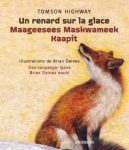
Maageesees Maskwameek/Un renard sur la glace,[Online Only]

Les langues(Languages):Cree and French

texte de Tomson Highway; illustrations de Brian Deines

Niveau scolaire (Grade level): 1 – 3

Joe et Cody pêchent sur la glace avec leurs parents par un après-midi d’hiver glacial. Cody aide Papa à pêcher, tandis que maman et Joe somnolent dans le traîneau. Soudain, les chiens repèrent un renard à la fourrure aussi brillante que des flammes et s’élancent à sa poursuite, entraînant maman et Joe dans une course folle.

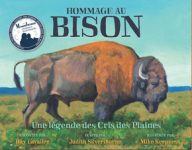
Hommage au Bison,

Les langues(Languages):Cree and French

texte de Judith Silverthorne; illustrations de Mike Keepness; traduction de Martine Noël-Maw; raconté par Ray Lavalee

Niveau scolaire (Grade level): 4 – 7

Cette légende ancestrale relate la façon dont le bison est devenu un animal sacré pour les Cris. Je vais m’offrir à eux, dit le Bison. Je vais leur permettre d’utiliser toutes les parties de mon corps, car elles se valent toutes. À travers le Créateur, le bison s’est offert en cadeau au peuple cri des Plaines pour lui procurer protection, nourriture, guérison et bien d’autres choses utiles à sa survie.

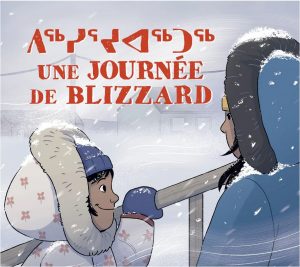
Une journeé de blizzard/ᐱᖅᓯᕐᔪᐊᖅᑐᖅ,

Les langues(Languages):Inuktitut and French

titiraqtuq(writer) Julia Ogina & Emily Jackson; titiqtugaqtuq(illustrator) Amiel Sandland

Niveau scolaire (Grade level): Préscolaire – Kindergarten (PreK-K)

Niaqualuk et Haugaaq vivent à Cambridge Bay, au Nunavut. Un gros blizzard s’annonce ! Haugaaq aimerait pouvoir jouer plus souvent à l’extérieur, mais Niaqualuk est excitée à l’idée de jouer à l’intérieur. Voyez ce que les sœurs font toute la journée pendant que le blizzard hurle à l’extérieur.

Niaqualuk and Haugaaq live in Cambridge Bay, Nunavut. There is a big blizzard coming! Haugaaq wishes she could play outside more, but Niaqualuk is excited about playing inside. See what fun things the sisters do all day as the blizzard howls outside.

Kepmite’taqney Ktapekiaqn/Le chant d’honneur/The Honour Song,

Les langues(Languages):Mi’kmaq, French and English

texte de Gregory Paul; illustrations de Loretta Gould; traduction de Barbara Sylliboy & Hélène Devarennes

Niveau scolaire (Grade level): 3 – 8

Lors de nombreux évènements officiels ou cérémonies spirituelles chez les Premières Nations du pays, un chant est entonné par les participants. Ce chant a vu le jour dans le coeur et la tête de George Paul, un Mi’kmaw de Metepenagiag, après un parcours ardu. Cet album illustré raconte la naissance de ce chant et l’importance qu’il revêt pour les Premières Nations.

At many official events or spiritual Ceremonies among First Nations across the country, a song is sung by the participants. This song was born in the heart and mind of George Paul, a Mi’kmaw from Metepenagiag, after an arduous journey. This illustrated album tells the story of the birth of this song and its importance to First Nations.


Trouver d’autres ressources

Voici quelques conseils pour trouver d’autres ressources dans ce domaine :

  • Sur la page principale du site de la bibliothèque de l’UBC, utilisez la boîte de recherche générale pour rechercher des matériaux à travers toutes les succursales de la bibliothèque de l’UBC.
  • Pour limiter vos résultats aux matériels disponibles à la Bibliothèque de l’éducation, visitez le site web de la Bibliothèque de l’éducation et effectuez une recherche à l’aide de la case “Search Education Resources” située dans la bande à gauche de l’écran.
  • Remarque : les ressources étant principalement cataloguées en anglais, les termes ci-dessous donnent généralement plus de résultats que les recherches effectuées en français. Vous pouvez filtrer votre liste de résultats par langue dans la barre latérale de gauche.
  • Utilisez des termes de recherche spécifiques, tels que
    • “bilingual”, “english and cree”, “mi’kmaq”, ou “inuktitut” AND “french and cree”
  • Pour trouver des plans de cours, incluez “lesson plans”, “lesson planning”, or “activity programs” dans vos termes de recherche.

Finding More Resources

To find more resources in this area, try the following:

  • Search using the General tab on the UBC Library website to look for material in all UBC Library branches.
  • Search using “Search Education Resources” box in the left hand bar on the Education Library website to limit your results to physical materials in the Education Library.
  • Use specific search terms, such as
    • “bilingual”, “english and cree”, “mi’kmaq”, or “inuktitut” AND “french and cree”
  • To find lesson plans, include “lesson plans”, “lesson planning”, or “activity programs” in your search terms.
Categories
Community Celebrations Inclusive Classroom Planning for Teaching and Learning Seasonal Seasonal Materials Seasons and Celebrations

Seeds and Gardening

Listed below are selected teacher resources, picture books, fiction, and non-fiction related to seeds and gardening.

Teacher Resources

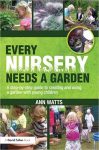
Every Nursery Needs a Garden

by Ann Watts

Grades: Preschool-6

A garden can be a magical place for young children and offers them rich and engaging learning experiences as they interact with a variety of plants and wildlife throughout the year. This book guides you through the process of creating a garden, however small, for young children. It looks at the impact a garden area can have on children’s overall development and the benefits of using natural materials as learning tools.

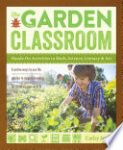
The Garden Classroom : Hands-on Activities in Math, Science, Literacy, and Art

by Cathy James

Grades: Preschool-6

Every garden offers children a rich, sensory playground, full of interesting things to discover and learn about. There’s a whole lot of science happening right before their eyes. The garden can also be a place to develop math and literacy skills, as the outdoors offers up plenty of invitations to weave learning into everyday gardening. The garden classroom is a place where plants grow, and where children grow too.

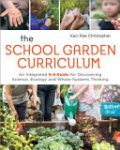
School Garden Curriculum: An Integrated K-8 Guide for Discovering Science, Ecology, and Whole-Systems Thinking

by Kaci Rae Christopher

Grades: K-8

The School Garden Curriculum offers a unique and comprehensive framework, enabling students to grow their knowledge throughout the school year and build on it from kindergarten to eighth grade. From seasonal garden activities to inquiry projects and science-skill building, children will develop organic gardening solutions, a positive land ethic, systems thinking, and instincts for ecological stewardship.

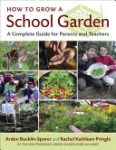
How to Grow a School Garden: A Complete Guide for Parents and Teachers

by Arden Bucklin-Sporer and Rachel Kathleen Pringle

Grades: K-8

Today both schools and parents have a unique opportunity—and an increasing responsibility—to cultivate an awareness of our finite resources, to reinforce values of environmental stewardship, to help students understand concepts of nutrition and health, and to connect children to the natural world.

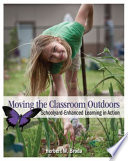
Moving the Classroom Outdoors: Schoolyard-enhanced Learning in Action

by Herbert W. Broda

Grades: K-8

Designed to provide teachers and administrators with a range of practical suggestions for making the schoolyard a varied and viable learning resource, Moving the Classroom Outdoors presents concrete examples of how urban, suburban, and rural schools have enhanced the school site as a teaching tool.

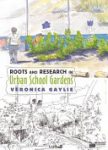
Roots and Research in Urban School Gardens

by Veronica Gaylie

Grades: K-12

Through a comprehensive history of school garden practice rooted in Eastern industrial cities, to case studies from four Pacific Rim regions, this book examines the practice and culture of the urban school garden as a central symbol for environmental learning. As poetically described by students, teachers, and community members in both historical and contemporary gardens, the story of the urban school garden inspires a new narrative in connecting learners to the land.

Learning Gardens and Sustainability Education: Bringing Life to Schools and Schools to Life

by Dilafruz R. Williams and Jonathan D. Brown

Offering a fresh approach to bringing life to schools and schools to life, this book goes beyond touting the benefits of learning gardens to survey them as a whole-systems design solution with potential to address myriad interrelated social, ecological, and educational issues.

Picture Books

My Baba’s Garden

by Jordan Scott & Sydney Smith

Grade Level: Preschool-2

A young boy spends his mornings with his beloved Baba, his grandmother. She doesn’t speak much English, but they connect through gestures, gardening, eating, and walking to school together. Marked by memories of wartime scarcity, Baba cherishes food, and the boy learns to do the same. Eventually, Baba needs to move in with the boy and his parents, and he has the chance to care for her as she’s always cared for him.

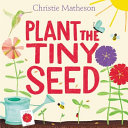
Plant the Tiny Seed

by Christie Matheson

Grade Level: Preschool-3

Beautiful collage-and-watercolor art follows the seed through its entire life cycle, as it grows into a zinnia in a garden full of buzzing bees, curious hummingbirds, and colourful butterflies. Children engage with the book as they wiggle their fingers to water the seeds, clap to make the sun shine after rain, and shoo away a hungry snail.

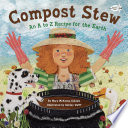
Compost Stew: An A to Z Recipe for the Earth

by Mary McKenna Siddals ; illustrated by Ashley Wolff

Grade Level: Preschool-3

Kids everywhere are seeking knowledge about the environment and climate change. Not only is composting becoming more common in households and residential gardens, but many school gardens feature compost piles, too. But how do you start a compost pile? What’s safe to include? Perfect for an Earth Day focus or year-round reference, this inviting book provides all the answers for kids and families looking for simple, child-friendly ways to help the planet.

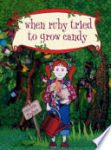
When Ruby Tried to Grow Candy

by Valorie Fisher

Grade Level: Preschool-3

Ruby Louise Hawthorne can’t believe her eyes. Right there, in Miss Wysterious’s garden, teacups are growing on trees, shoes are sprouting like weeds, and eggbeaters are jangling from branches. So maybe Ruby should listen when Miss Wysterious tells her all the important rules of gardening–like watering and weeding and labelling what you plant. That way, when Ruby plants her jellybeans, they really just might grow.

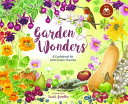
Garden Wonders: A Guidebook for Little Green Thumbs

by Sarah Grindler

Grade Level: K-2

Whether you have a big backyard or pots on a balcony, you can grow just about anything if you have healthy soil, plenty of water, and bright sunlight. The newest book in the Little Explorers series takes young readers through every step to creating their own garden: from collecting nutrient-rich soil and choosing the right time of day to water your plants, to identifying helpful critters from unwanted pests. Featuring new vocabulary words like “germinate,” “fertilizer,” and “pollinator,” and encouraging a microscopic look at nature, this is the perfect book for curious little gardeners.

One Little Lot: The 1-2-3s of an Urban Garden

by Diane C. Mullen; illustrated by Oriol Vidal

Grade Level: K-3

Count all the ways (one to ten) an urban community unites to clean up an abandoned lot. From building planter boxes to pulling weeds to planting seeds, everyone works together to transform the lot into a bountiful vegetable garden. As the garden grows, strangers become friends, eventually sharing in a special feast with the harvest they grew.

Jayden’s Impossible Garden

by Mélina Mangal; illustrated by Ken Daley

Grade Level: K-4

Amidst all the buildings, people, and traffic in his neighborhood, Jayden sees nature everywhere: the squirrels scrounging, the cardinals calling, and the dandelions growing. But Mama doesn’t believe there’s nature in the city. So Jayden sets out to help Mama see what he sees. With the help of his friend Mr. Curtis, Jayden plants the seeds of a community garden and brings together his neighbors–and Mama–to show them the magic of nature in the middle of the city.

Omar, the Bees and Me

by Helen Mortimer & Katie Cottle

After Omar shares his mum’s honey cake and stories of his grandpa’s beekeeping for show-and-tell, the class decides to support local bees by leading their community in planting wildflowers. As Maisie and Omar’s friendship grows, so too do the flowers. By summer, their neighbourhood has become a bee corridor and the class has honey to share. Teaching resources are available through Owlet Press.

Non-Fiction

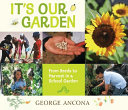
It’s Our Garden: From Seeds to Harvest in a School Garden

by George Ancona

Grades: Preschool-3

At an elementary school in Santa Fe, the bell rings for recess and kids fly out the door to check what’s happening in their garden. As the seasons turn, everyone has a part to play in making the garden flourish. From choosing and planting seeds in the spring to releasing butterflies in the summer to harvesting in the fall to protecting the beds for the winter.

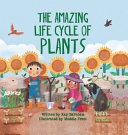
The Amazing Life Cycle of Plants

written by Kay Barnham; illustrated by Maddie Frost

Grades: Preschool-3

How do plants grow? Explore the journey from seed to sapling and beyond. Children have lots of questions about the world around them, and this book helps them discover many amazing and wonderful scientific facts about nature.

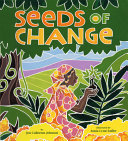
Seeds of Change: Planting a Path to Peace

written by Jen Cullerton Johnson; illustrated by Sonia Lynn Sadler

Grades: 1-6.

A biography of Kenyan Nobel Peace Prize winner and environmentalist Wangari Maathai, a female scientist who made a stand in the face of opposition to women’s rights and her own Greenbelt Movement, an effort to restore Kenya’s ecosystem by planting millions of trees.

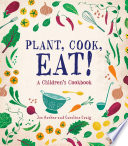
Plant, Cook, Eat!: A Children’s Cookbook

by Joe Archer and Caroline Craig

Grades: 2-5.

For beginners and green-thumbed foodies, this unusually all-inclusive garden-to-kitchen cookbook is part lesson in gardening and part collection of healthy, delicious, kid-friendly recipes.

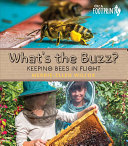
What’s the Buzz? Keeping Bees in Flight

by Marie-Ellen Wilcox

Grades: 5-7

What’s the Buzz? Celebrates bees and encourages readers to do their part to keep the hives alive. This book belongs to the Orca Footprints series for middle readers, which answers children’s questions about the state of the natural world, resource sustainability, and how to be global citizens. See also the Orca Footprints Guide, which includes ideas on how to present and use these books.


Finding More Resources

To find more resources in this area, try the following:

  • Search using the General tab on the UBC Library website to look for material in all UBC Library branches.
  • Search using “Search Education Resources” box in the left hand bar on the Education Library website to limit your results to materials in the Education Library.
  • Use specific search terms to narrow your results, such as “garden”, “seeds”, “plants”, or “school garden”.
  • To find lesson plans, include “lesson plans”, “lesson planning”, or “activity programs” in your search terms.

For more help with searching, please visit the Library Service Desk or e-mail ed.lib@ubc.ca.

Categories
Accessibility Diversity and Diverse Learners French Inclusive Classroom Physical and Health Education Planning for Teaching and Learning

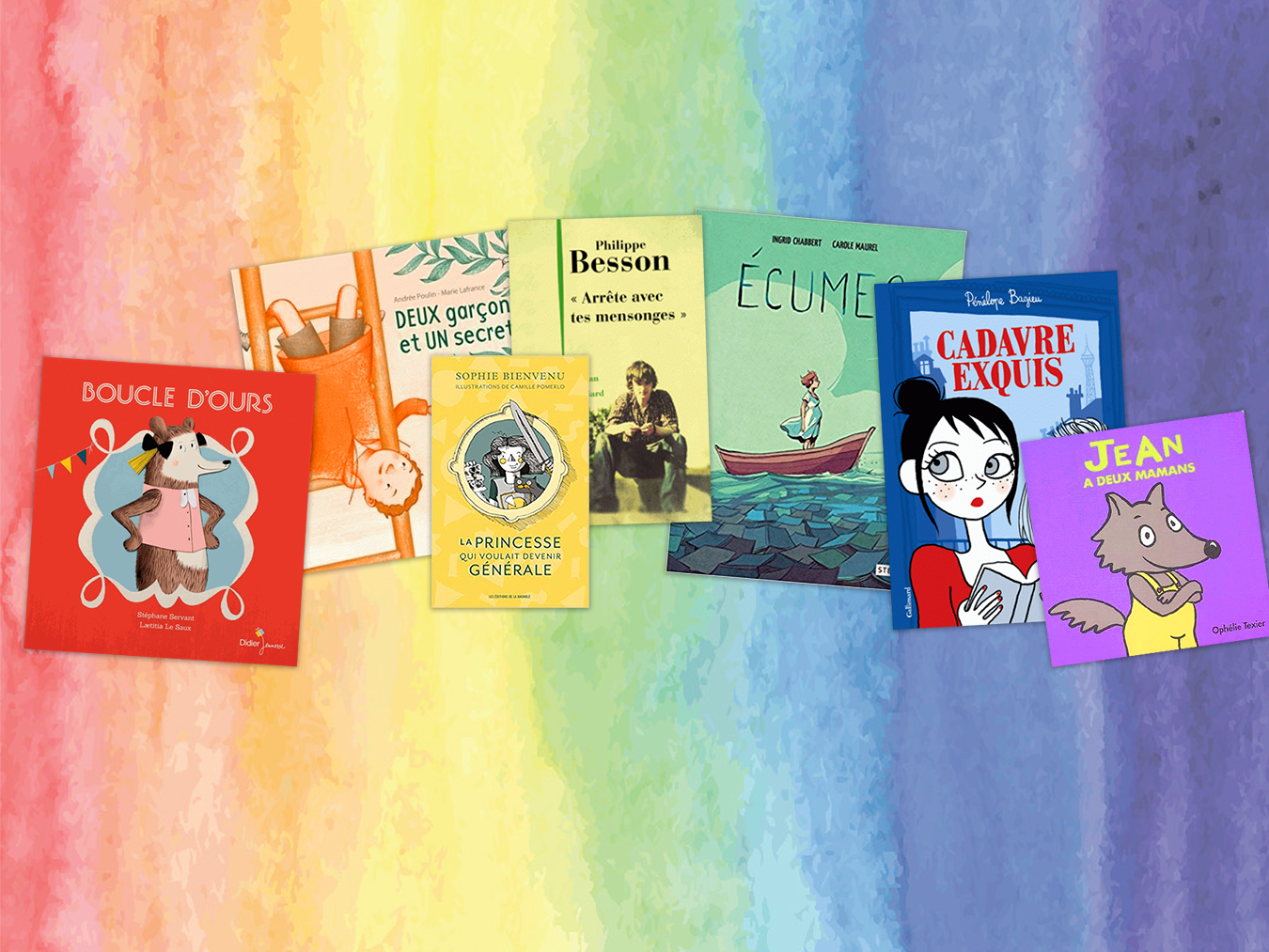
Livres français sur l’orientation sexuelle et à l’identité de genre – French SOGI Books

Vous trouverez ci-dessous une sélection de ressources pour les livres d’images et de fiction relatifs à l’orientation sexuelle et à l’identité de genre. (SOGI).

Listed below are selected resources for picture books and fiction related to Sexual Orientation and Gender Identity (SOGI).

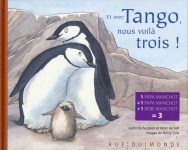
Et avec Tango, nous voilà trois!,

texte de Justin Richardson et Peter Parnell ; images de Henry Cole ; traduction de Laurana Serres-Giardi

Niveau scolaire (Grade level): Préscolaire – 3 (PreK-3)

Quelque chose d’exceptionnel est arrivé au zoo de Central Park. Un étonnant couple de manchots s’est formé dans l’enclos polaire. M. Gramzai, qui veille sur eux, a alors l’idée de leur fournir un oeuf fécondé qu’un autre couple de manchots ne pourront couver. Les deux mâles inséparables Roy et Silo, qui avaient déjà formé leur nid comme les autres, couvent alors ensemble cet oeuf abandonné. Se relayant et fournissant tout le nécessaire, l’oiseau naît et se développe normalement, et les deux papas assurent son bonheur avec autant de soin que leurs pairs hétérosexuels.

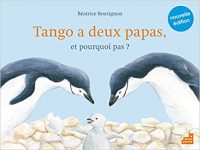
Tango a deux papas, et pourquoi pas?,

de Béatrice Boutignon

Niveau scolaire (Grade level): Préscolaire – 3 (PreK-3)

Marco aime observer les animaux du zoo de Central Park. Depuis quelque temps, un étonnant couple de manchots s’est formé dans l’enclos polaire. Deux mâles inséparables ont formé leur nid et couvent ensemble un oeuf abandonné. Se relayant et fournissant tout le nécessaire à l’oiseau, qui naît et se développe normalement, les deux papas assurent son bonheur avec autant de soin que leurs pairs.

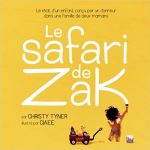
Le Safari de Zak : le récit d’un enfant conçu par un donneur dans une famille de deux mamans,

par Christy Tyner ; illustrations de Ciaee ; traduction de Nathalie Tremblay

Niveau scolaire (Grade level): Préscolaire – 1 (PreK-1)

Le safari de Zak est le récit d’un d’enfant conçu par un donneur dans une famille de deux mamans. Quand la pluie contrecarre le projet d’aventure en safari de Zak, celui-ci invite les lecteurs et lectrices à une visite très particulière de sa famille. Zak raconte comment ses parents se sont rencontrées et sont devenues amoureuses. Elles voulaient plus que tout avoir un enfant et ont décidé d’en concevoir un.

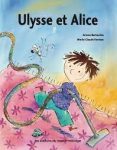
Ulysse et Alice,

texte de Ariane Bertouille ; illustrations de Marie-Claude Favreau

Niveau scolaire (Grade level): Préscolaire – 2 (PreK-2)

Lorsque son oncle lui offre une souris, Ulysse est fou de joie! Or, avant d’adopter de façon définitive ce rongeur doté d’une voix de ténor qui n’est jamais à court d’idées de jeux, il devra d’abord la présenter à son chat Capsule ainsi qu’à ses deux mamans, qu’il devra de surcroît convaincre qu’il est assez grand pour prendre ses responsabilités.

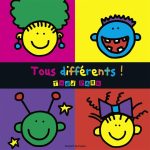
Tous différents!,

de Todd Parr

Niveau scolaire (Grade level): Préscolaire – 1 (PreK-1)

“Dans la vie, on peut être adopté, on peut avoir de grandes oreilles, on peut être de couleurs différentes, avoir un nez pas comme tout le monde, on peut se mettre en colère, on peut arriver le dernier, on peut dire non si on se sent en danger.” Grâce à un texte simple et des illustrations qui captent son attention, Todd Parr livre à l’enfant un message positif et chaleureux sur ce qu’il est, et comment on perçoit les autres. Sans pour autant lui faire la morale.

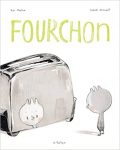
Fourchon,

de Kyo Maclear et Isabelle Arsenault ; traduction de Fanny Britt

Niveau scolaire (Grade level): Préscolaire – 2 (PreK-2)

“Sa maman est une cuillère. Son papa est une fourchette. Lui, il est un peu des deux. Voici Fourchon! Fourchon détonne. Dans sa cuisine, les cuillères sont des cuillères et les fourchettes sont des fourchettes. On ne se mêle pas aux autres. Il a beau tenter de passer pour une cuillère, puis pour une fourchette, Fourchon n’est jamais choisi lorsque vient le temps de se mettre à table. Il semble condamné à un destin de tiroir.

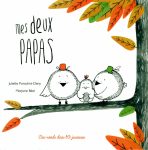
Mes deux papas,

de Juliette Parachini-Deny

Niveau scolaire (Grade level): Préscolaire – 2 (PreK-2)

Un petit oiseau est recueilli par un couple de papas. L’oisillon grandit entouré de tendresse et de bienveillance. Lorsqu’il est en âge de rentrer à l’école, ses petits copains lui demandent pourquoi il a 2 papas.

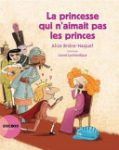
La princesse qui n’aimait pas les princes,

de Alice Brière-Haquet ; illustré par Lionel Larchevêque.

Niveau scolaire (Grade level): Préscolaire – 3 (PreK-3)

“Princes d’à côté, Venez! Accourez! Ma fille est à marier. Elle est jolie, douce et aimable et dort très bien sur des petits pois.” La princesse les vit donc arriver, ces princes d’à côté. En file sur le chemin, un à un, ils baisèrent sa main. Mais non, vraiment, merci bien, aucun d’entre eux ne lui disait rien!

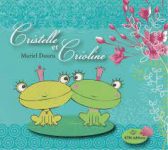
Cristelle et Crioline,

texte et illustrations, Muriel Douru

Niveau scolaire (Grade level): Préscolaire – 2 (PreK-2)

Au royaume du Nénuphar précieux, le peuple grenouille est en ébullition. La princesse Cristelle doit se marier ! Mais Crioline va bouleverser les plans du roi Cristo et de la reinette Cristina.

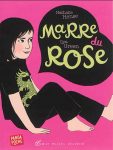
Marre du rose,

texte de Nathalie Hense ; illustrations de Ilya Green

Niveau scolaire (Grade level): Kindergarten – 4

Une petite fille en a plus qu’assez du rose et elle refuse d’être enfermée dans des goûts qui ne sont pas les siens. Elle se compare à Carl, un petit garçon sensible qui peint des fleurs sur ses voitures. Un récit illustré d’images aux couleurs explosives.

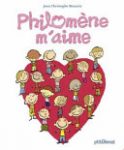
Philomène m’aime,

de Jean-Christophe Mazurie

Niveau scolaire (Grade level): Kindergarten – 4

Tout le monde aime Philomène, mais elle… qui aime-t-elle ? Quand Philomène se balade à vélo, tous les garçons qu’elle croise sont inéluctablement à côté de la plaque ! Les frères Lasserre, pourtant des bagarreurs de première, décrètent une trève, Prosper Laguigne oublie son bombardon et toute l’équipe de foot se désintéresse du ballon ! Mais le coeur de Philomène, lui, ne bat pour aucun garçon… Il bat pour… pour qui ?

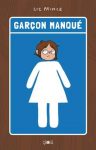
Garçon manqué,

de Liz Prince ; traduction de Philippe Touboul

Niveau scolaire (Grade level): 7 – 12

Roman graphique mettant en lumière une réflexion sur le genre et la perception de la féminité dans la société, à travers la propre enfance de l’auteure et l’image de garçon manqué que lui renvoyait son entourage. Elle évoque les difficultés d’être jugée et les étapes de sa construction identitaire, au fur et à mesure de ses rencontres.

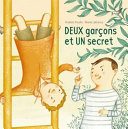
Deux garçons et un secret,

texte de Andrée Poulin ; illustrations de Marie Lafrance

Niveau scolaire (Grade level): Kindergarten – 3

Émile et Mathis sont les meilleurs amis du monde. Ils partagent leurs jeux. Leur collations. Et leurs secrets. Un beau matin, Émile fait une découverte dans le carré de sable. Ça lui donne une idée. La plus meilleure idée de toute sa vie. Sauf que certains trouvent que c’est plutôt la plus mauvaise idée de toute sa vie. Que fera Émile?

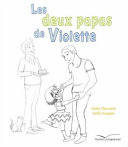
Les papas de Violette,

de Émilie Chazerand et Gaëlle Souppart

Niveau scolaire (Grade level): Préscolaire – 2 (PreK-2)

C’est une maladie d’avoir deux papas ?
N’importe quoi, dit Violette.
Mes papas, ils s’occupent trop bien de moi.
Je les aime tous les deux, et puis c’est tout.

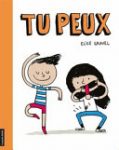
Tu peux,

de Elise Gravel

Niveau scolaire (Grade level): Kindergarten – 2

“À travers une amusante galerie de portraits d’enfants aux goûts, caractères, talents et ambitions variés, on interpelle le lecteur afin de lui montrer toute une série de façons de demeurer soi-même. Fille, ou garçon, il ou elle a tout à fait le droit d’être sensible, de faire du bruit, d’être un artiste, d’avoir peur, d’être en colère, de faire le ménage, d’être bizarre, d’être bon à l’école, etc. En fait, tout est permis… sauf bien sûr d’être méchant(e) ou malpoli(e)!”

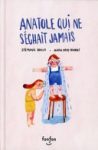
Anatole qui ne séchait jamais,

texte de Stéphanie Boulay ; illustrations de Agathe Bray-Bourret

Niveau scolaire (Grade level): Kindergarten – 4

“Anatole pleure constamment et, pour sa soeur Régine Bibeau, comme pour son père, la situation est devenue lourde au quotidien. Régine va commencer à utiliser toutes les ressources de son intelligence pour trouver l’origine des pleurs de son frère. Peu à peu, elle découvre que les stéréotypes sociaux de la masculinité font souffrir Anatole qui préférerait porter une jupe et s’amuser avec les pouliches de sa soeur.”

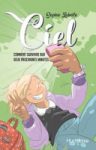
Ciel,

de Sophie Labelle

Niveau scolaire (Grade level): 3 – 7

C’est le premier jour du secondaire pour Ciel, jeune ado transgenre. Mais cette étape ne se fait pas sans heurt pour elle, surtout qu’Eiríkur, son amoureux, a dû retourner en Islande, et qu’ils sont désormais forcés de poursuivre leur relation à distance. Pour se changer les idées, Ciel concentre toute son énergie à économiser l’argent nécessaire pour acheter la caméra de ses rêves et parfaire sa chaîne Youtube amateur, Ciel s’ennuie. C’est sans compter l’arrivée de Liam, un nouvel élève plutôt mystérieux (et champion de natation !)

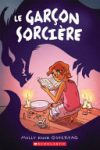
Garçon sorcière (Le),

de Molly Knox Ostertag

Niveau scolaire (Grade level): 3 – 7

Dans la culture du jeune Aster, treize ans, toutes les filles sont élevées pour devenir des sorcières et les garçons, des métamorphes. Toute personne qui ose contrevenir à cette tradition est exclue. Malheureusement pour Aster, il demeure incapable de se métamorphoser… et il est toujours aussi fasciné par la sorcellerie, bien qu’elle lui soit formellement interdite.

Lorsqu’un danger mystérieux menace les autres garçons, Aster sait qu’il peut aider… avec la sorcellerie. Avec les encouragements d’une nouvelle amie excentrique, Charlie, Aster se laisse enfin convaincre d’exercer ses talents de sorcière. Mais il aura besoin d’encore plus de courage pour sauver sa famille… et en réalité, se sauver lui-même.

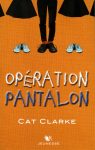
Opération Pantalon,

de Cat Clarke ; traduit de l’anglais (Royaume-Uni) par Cécile Ardilly

Niveau scolaire (Grade level): 4 – 9

L’uniforme, oui ! La jupe, non ! Liberté, égalité, pantalon ! Liv (ne l’appelez pas Olivia, il déteste ça) sait depuis toujours qu’il est un garçon et non une fille, mais le règlement très strict de son collège en matière d’uniforme lui interdit de porter un pantalon. Il lui faudra donc porter des jupes. Commence alors l’Opération Pantalon. La seule manière pour Liv d’obtenir ce qu’il veut, c’est de mener la bataille lui-même. Et il ne compte pas seulement changer les règles : il veut changer sa vie, un combat loin d’être gagné d’avance !

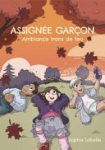
Assignée garçon: ambiance trans de feu,

de Sophie Labelle

Niveau scolaire (Grade level): Kindergarten – 6

Cette bande dessinée tirée du webcomic à succès Assignée garçon met en scène Stéphie, une jeune fille transgenre qui navigue à travers sa première histoire d’amour, ses querelles avec ses camarades d’école et sa relation avec son père. Heureusement, Ciel est là pour la suivre dans ses mésaventures. Le duo apprend à se découvrir et à se célébrer tout en nous offrant des réflexions sur les réalités des personnes trans et queer.

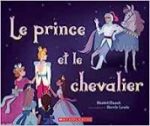
Le prince et le chevalier,

de Daniel Haack; illustrations de Stevie Lewis; texte français d’Isabelle Allard.

Niveau scolaire (Grade level): Préscolaire – 2 (PreK-2)

Dans un royaume lointain, un prince s’apprête à monter sur le trône. Sachant qu’il vaut mieux régner à deux, ses parents sont déterminés à lui trouver une épouse aimable. Ils partent donc tous les trois afin de trouver une femme digne du futur souverain. Le prince fait la rencontre de plusieurs demoiselles, mais aucune d’entre elles ne lui plaît… Toutefois, en l’absence de la famille royale, le royaume fait face à une terrible menace : un immense dragon cracheur de feu s’en prend aux habitants et aux soldats, et ceux-ci prennent la fuite! Quand il apprend la nouvelle, le prince retourne aussitôt protéger son royaume… En chemin, il rencontre un courageux chevalier couvert d’une armure étincelante. Ensemble, ils combattent le dragon… et découvrent du même coup le vrai amour!

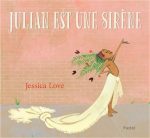
Julian est une sirène,

de Jessica Love; traduit de l’anglais par Sylvie Goyon

Niveau scolaire (Grade level): Préscolaire – 2 (PreK-2)

Le jour où Julian voit passer trois femmes magnifiques habillées en sirènes, sa vie change. Il ne rêve plus que d’une chose, devenir lui aussi une sirène. Mais que va penser sa Mamita?


Trouver d’autres ressources

Voici quelques conseils pour trouver d’autres ressources dans ce domaine :

  • Sur la page principale du site de la bibliothèque de l’UBC, utilisez la boîte de recherche générale pour rechercher des matériaux à travers toutes les succursales de la bibliothèque de l’UBC.
  • Pour limiter vos résultats aux matériels disponibles à la Bibliothèque de l’éducation, visitez le site web de la Bibliothèque de l’éducation et effectuez une recherche à l’aide de la case “Search Education Resources” située dans la bande à gauche de l’écran.
  • Remarque : les ressources étant principalement cataloguées en anglais, les termes ci-dessous donnent généralement plus de résultats que les recherches effectuées en français. Vous pouvez filtrer votre liste de résultats par langue dans la barre latérale de gauche.
  • Utilisez des termes de recherche spécifiques, tels que
    • “gender identity in education”, “homosexuality and education”, LGBT, “sexual orientation”, ou “gender identity” AND “study and teaching”
    • “sexual minorities” AND education
  • Pour trouver des plans de cours, incluez “lesson plans”, “lesson planning”, or “activity programs” dans vos termes de recherche.

Finding More Resources

To find more resources in this area, try the following:

  • Search using the General tab on the UBC Library website to look for material in all UBC Library branches.
  • Search using “Search Education Resources” box in the left hand bar on the Education Library website to limit your results to physical materials in the Education Library.
  • Use specific search terms, such as
    • “gender identity in education”, “homosexuality and education”, LGBT, “sexual orientation”, or “gender identity” AND “study and teaching”
    • “sexual minorities” AND education
  • To find lesson plans, include “lesson plans”, “lesson planning”, or “activity programs” in your search terms.
Categories
Accessibility Diversity and Diverse Learners Inclusive Classroom Language Arts

Bilingual and Multilingual Picture Books: Additional Languages

Listed below are dual language picture books in languages other than Indigenous, French, and Spanish.

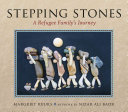
Stepping Stones: A Refugee Family’s Journey

by Margriet Ruurs; artwork by Nizar Ali Badr

In this picture book, a young girl and her family are forced to flee their village to escape the civil war that has engulfed Syria and make their way toward freedom in Europe. Text is in English and Arabic.

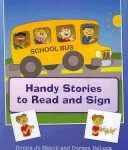
Handy Stories to Read and Sign

by Donna Jo Napoli and Doreen DeLuca; illustrated by Maureen Klusza

Handy Stories to Read and Sign takes a bilingual, fun approach to help beginning readers, deaf and hearing, improve their comprehension of both English and American Sign Language (ASL). Charmingly illustrated, the five stories presented here increase in complexity as the children’s vocabulary and reading skills increase during the school year.

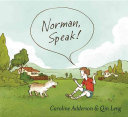
Norman, Speak!

by Caroline Adderson; pictures by Qin Leng

After a family adopts a dog from a local shelter, they cannot understand why he doesn’t respond to commands, until a chance encounter in the dog park reveals that their new dog only understands Chinese.

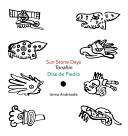
Sun Stone Says: Tonaltin: Días de Piedra

by  Ianna Andréadis; text by Elisa Amado; Sun Stone by Felipe Dávalos

The Aztecs’ apocalyptic beliefs about the end of time were depicted on the Sun Stone calendar found in 1790 in what is now Mexico City. In 20 exquisite black-and-white brush drawings by Ianna Andréadis and a full-color painting of the Sun Stone by Felipe Dávalos, the Aztec calendar comes to life. Each month appears in English, Spanish, and Nahuatl, and the text puts the images into context. This book is a wonderful introduction to the magic of Aztec cosmology, an engaging resource for children studying Meso-American cultures, and a fascinating gift book for anyone interested in the Aztecs and their interpretations of time. Text is in English, Nahuatl, and Spanish, with afterwards in English and Spanish.

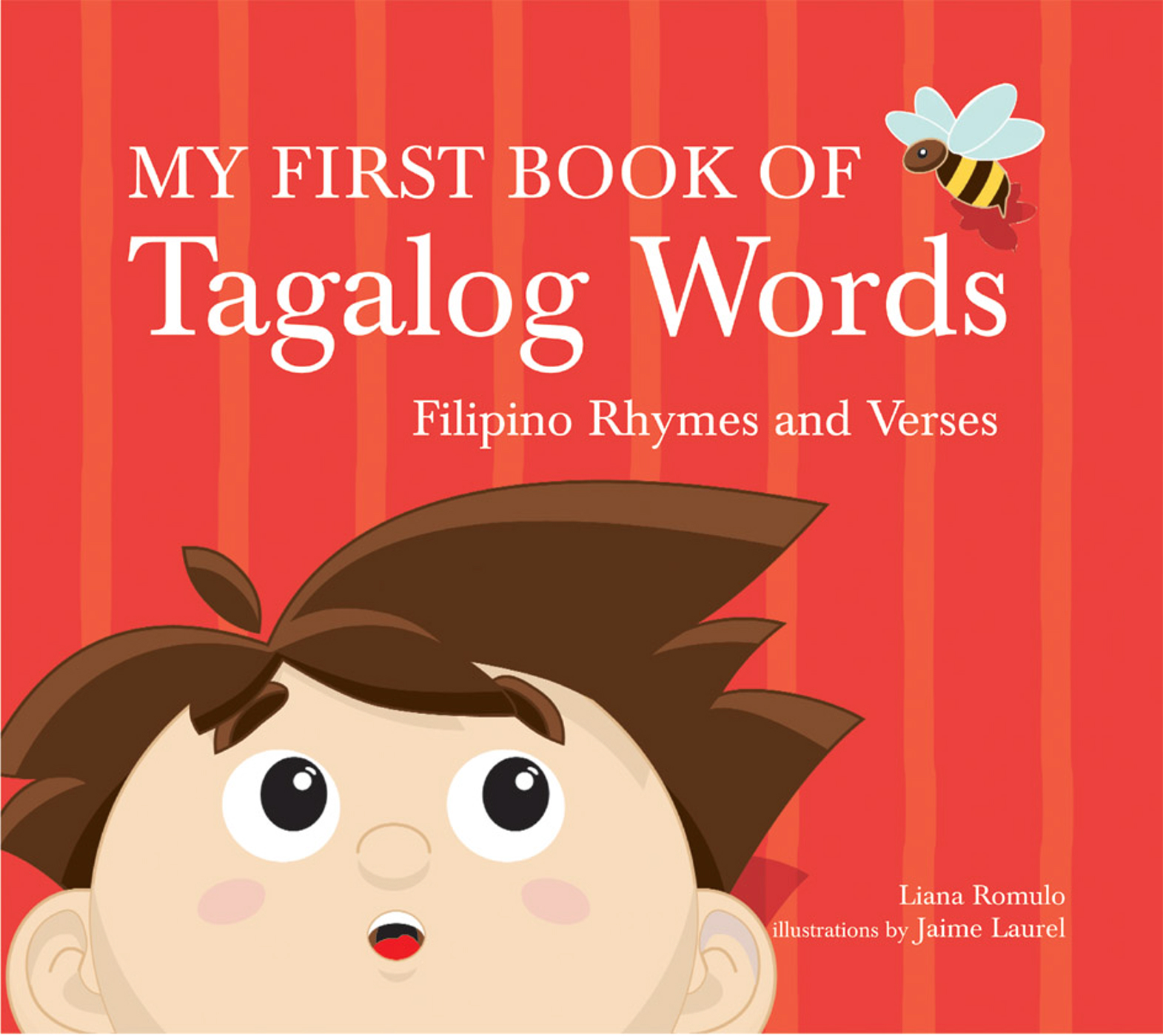
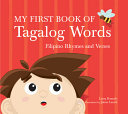
My First Book of Tagalog Words: Filipino Rhymes and Verses

by Liana Romulo; illustrations by Jaime Laurel

A series of rhymes and verses in English that introduce Philippine words and culture to preschool children, featuring one word for each letter of the alphabet. Text is in English with Tagalog vocabulary words

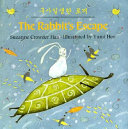
The Rabbit’s Escape: Kusa Ilsaenghan Tʻokki

by Suzanne Crowder Han; illustrated by Yumi Heo

Tricked into visiting the underwater kingdom where the Dragon King of the East Sea wants his liver, a clever rabbit uses his wits to escape. text is in English and Korean.

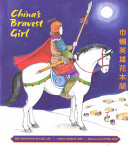
China’s Bravest Girl: the Legend of Hua Mu Lan: Jin Guo Ying Xiong Hua Mulan

by Charlie Chin; illustrated by Tomie Arai; Chinese translation by Wang Xing Chu

Legend of Hua Mu Lan who goes to war disguised as a man to save the family honor and becomes a great general. Text is in English and Chinese with parallel title in Chinese characters.

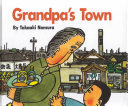
Grandpa’s Town

by Takaaki Nomura; translated by Amanda Mayer Stinchecum

A young Japanese boy, worried that his grandfather is lonely, accompanies him to the public bath. Text is in English and Japanese. Translation of: Ojīchan no machi. “A Cranky Nell book.”

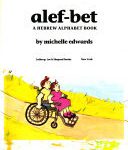
Alef-bet: A Hebrew Alphabet Book

by Michelle Edwards

This Hebrew alphabet book features three siblings and their parents in their everyday family life at home.

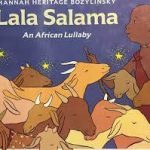
Lala Salama

by Hannah Heritage Bozylinsky

An African lullaby in Swahili and English in which a little boy says good night to all the animals and ends with his mother

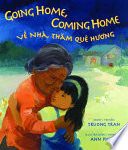
Going Home, Coming Home

by Truong Tran; illustrations, Ann Phong

A young girl visits her grandmother in Vietnam where her parents were born and learns that she can call two places home. Text is English and Vietnamese.

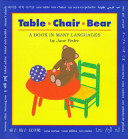
Table, Chair, Bear: A Book in Many Languages

by Jane Feder

Presents illustrations of objects found in a child’sroom, labeled in thirteen different languages, including Spanish, Vietnamese, Japanese, and French.

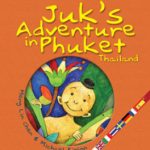
Juk’s Adventure in Bangkok Thailand

by Meng Lin Chen and Michael Kirjon

Juk, a Thai boy from Phuket, visits his friend in Bangkok, Thailand. Together they visit places of interest in Bangkok, including the King’s Palace, the Chao Praya River and the Floating Market. Children will enjoy the brilliant pictures and simple text. This story has been translated into nine languages.

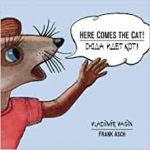
Here Comes the Cat!: Si︠u︡da Idet Kot!

by Frank Asch and Vladimir Vagin

A mouse rides a bicycle, boat, plane, and fish in order to elude the cat. Text is in both English and Russian.

Finding More Resources

To find more Dual-Language (Bilingual) Picture books, try the following:

  • Search using the General tab on the UBC Library website to look for material in all UBC Library branches.
  • Open Summon Advanced Search
  • Choose Subject Terms from the drop down menu and type “bilingual”
  • On the next line, choose AND and find Subject Terms from the drop down menu again and type “fiction”
  • Click Search
  • To limit your results to materials in the Education Library, use “Search Education Resources” box in the left hand bar on the Education Library website and search for “bilingual” AND “fiction”

For more help with searching, please visit the Library Service Desk or e-mail ed.lib@ubc.ca.

Categories
Accessibility Diversity and Diverse Learners Inclusive Classroom Language Arts Spanish

Bilingual and Multilingual Picture Books: Spanish

Listed below are bilingual language picture books in Spanish and English, and multilingual books which include Spanish.

Bilingual books

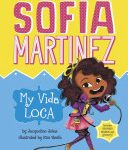
My Vida Loca

by Jacqueline Jules; illustrated by Kim Smith

Even the most basic chores can be fun when Sofia is involved! From washing a car to cooking with grandma, this smart and funny 7-year-old knows how to make every moment count. Follow Sofia through three every day adventures in this early chapter book and find out why Sofia has such a crazy life! Includes Spanish words and glossary.

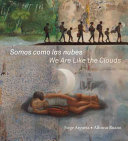
Somos Como las Nubes: We Are Like the Clouds

by Jorge Argueta; pictures by Alfonso Ruano; translated by Elisa Amado

Why are young people leaving their country to walk to the United States to seek a new, safe home? Over 100,000 such children have left Central America. This book of poetry helps us to understand why and what it is like to be them.

¿Por qué los jóvenes que salen de su país para caminar a los Estados Unidos para buscar un hogar nuevo y seguro? Más de 100.000 niños han salido de Centroamérica. Este libro de poesía nos ayuda a entender por qué y cómo es ser ellos.

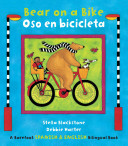
Bear on a Bike: Oso en Bicicleta

by Stella Blackstone and Debbie Harter; translated by Maria Pérez

Follows Bear as he rides a bicycle to the market, a wagon to the prairie, and even a carriage to a castle. Features various modes of transportation for kids who love things that go. Text is in English with parallel Spanish translation.

Migrant

by José Manuel Mateo and Javier Martínez Pedro; translated from Spanish into English by Emmy Smith Ready

A Mexican boy tells of his journey to the U.S. with his family. They must face many dangers to cross the border, only to experience the uncertainty felt by all undocumented immigrants. Originally published in Spanish  under the title Migrar.

An Illustrated Treasury of Latino Read-Aloud Stories: the World’s Best-Loved Stories for Parent and Child to Share

edited by Maite Suarez-Rivas; translated into Spanish by Alma Mora; illustrated by Ana López Escrivá and others

An Illustrated Treasury of Latino Read-Aloud Stories is a complete collection of time-honored tales from the Latino storytelling tradition. Included are 40 classic myths, legends, fables, and fairy tales, as well as riddles, history, biographies, and modern-day stories.

Featherless

by Juan Felipe Herrera; illustrations by Ernesto Cuevas

Although Tomasito’s spina bifida keeps him in a wheelchair, where he often feels as confined as his flightless and featherless pet bird, he discovers that he can feel free when he is on the soccer field.

Este hermoso libro bilingüe español/inglés tiene como protagonista a Tomasito, un niño con espina bífida y a su mascota, un ave que no tiene plumas. Cuando Tomasito ve por primera vez al pájaro desplumado siente mucho desprecio, pero es gracias a su padre y a su amiga Marlena que el niño aprende a quererlo tal cual es.

My Diary from Here to There

by Amada Irma Pérez; illustration by Maya Christina Gonzalez

One night young Amada overhears her parents whisper of moving from Mexico to Los Angeles where greater opportunity awaits. As she and her family journey north, Amada records in her diary her fears, hopes, and dreams for their lives in the United States. Amada learns that with her family’s love and a belief in herself, she can make any journey and triumph over any change — here, there, anywhere.

Oloyou

by Teresa Cárdenas; pictures by Margarita Sada; translated by Elisa Amado

Oloyou the Cat, the very first creature that the God-child creates, is also the very first friend. God-child and Oloyou play together for hours on end, until one day the cat falls into the void and lands in the dark, featureless, sea kingdom of ferocious Okún Aró. Oloyou is terribly lonely until he meets Aró’s mermaid daughter and falls madly in love. Infuriated, the father flings the pair into the heavens, where they become an everlasting part of the night sky.

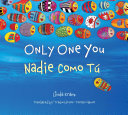
Only One You: Nadie Como Tú

by Linda Kranz

Little fish Adri promises to remember his parents’ words of wisdom about how to live his life, such as “Find your own way. You don’t have to follow the crowd” and “Make wishes on the stars in the nighttime sky.”

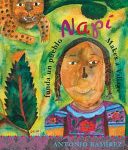
Napí Funda un Pueblo

by Antonio Ramírez; pictures by Domi; translated by Elisa Amado

The government is building a dam, forcing the Mazateca people to make a new village for themselves on inhospitable land. Nap recounts what she remembers of this time Ñ traveling upriver to the place where they will resettle, the frighteningly beautiful jaguar she sees by the spring, the fierce fires that clear the land for farming, how her father has to walk all day to a far-off town so that he can buy food for the family. But what stands out in her mind very strongly is the misfortune that occurs when her father is kicked by a horse, which she first envisions in a vivid dream. It is Nap who hastens back to the village to fetch her mother and uncles, her rapidity ensuring her father’s survival.

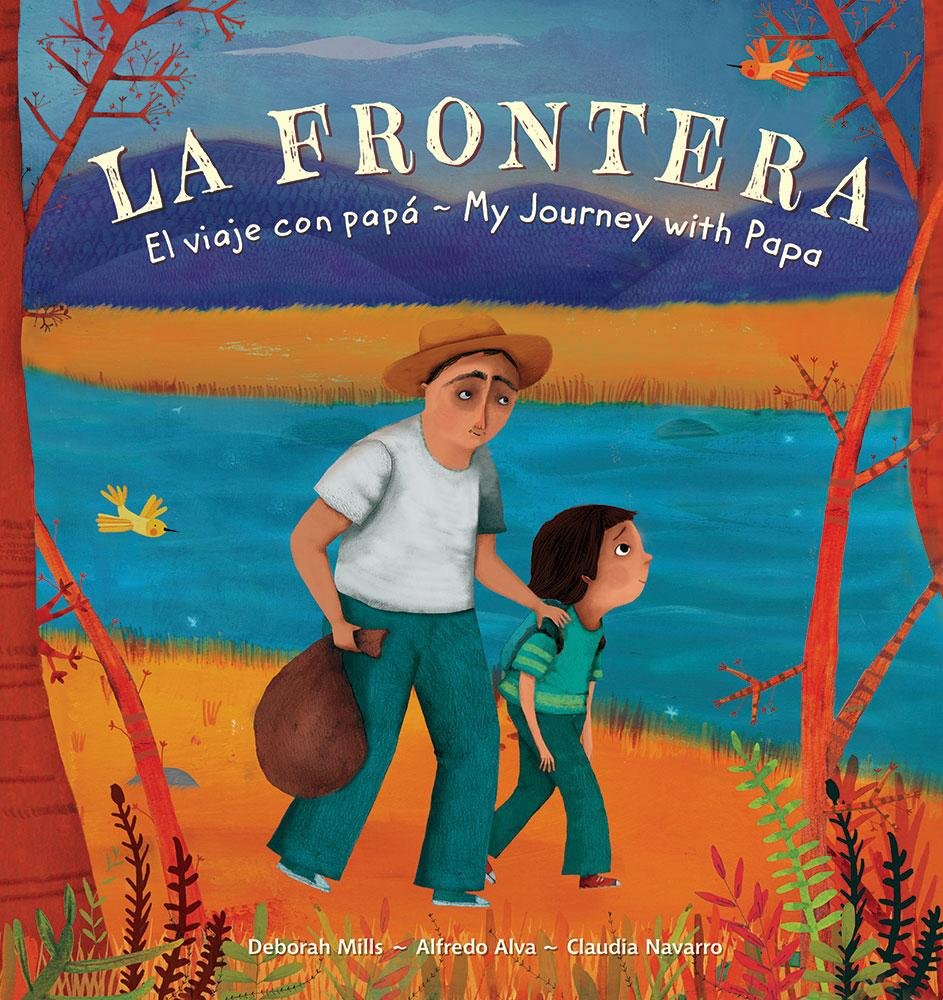
La Frontera: El Viaje Con Papa / My Journey with Papa : Mills, Deborah, Alva, Alfredo, Navarro, Claudia: Books - Amazon

La Frontera: El viaje con papá ~ My Journey with Papa

by Deborah Mills and Alfredo Alva; pictures by Claudia Navarro

Alfredo y su papá deben cruzar la frontera en un viaje difícil de México a los Estados Unidos. ¿Encontrarán el nuevo hogar que están buscando en el otro lado? Basándose en hechos reales, esta historia cobra vida gracias a la ilustradora Mexicana Claudia Navarro, y está repleta de notas al final del texto para iniciar conversaciones sobre inmigración.

Join a young boy and his father on a daring journey from Mexico to Texas to find a new life. They’ll need all the resilience and courage they can muster to safely cross the border – la frontera – and to make a home for themselves in a new land.

Multilingual Books

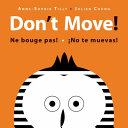
Don’t Move! = Ne bouge pas! = ¡No te muevas!

by Anne-Sophie Tilly; Julien Chung; traducido por Yanitzia Canetti

Don’t Move! is the companion book to Hurry Up, where simple one word pages and bold illustrations help multilingual and bilingual children learn common and uncommon animal names in English, French, and Spanish.

Hurry Up! = Dépêche-toi! = ¡Apúrate!

by Anne-Sophie Tilly; Julien Chung; traducido por Yanitzia Canetti

With only one word per page, simple, bold illustrations, and a surprise ending this book can be used to expose toddlers to the names of animals in English, French, and Spanish. Those featured include common ones like lion or monkey, but there are also ones that may be new to children, like iguana or pink flamingo.

Finding More Resources

To find more Dual-Language (Bilingual) Picture books, try the following:

  • Search using the General tab on the UBC Library website to look for material in all UBC Library branches.
  • Open Summon Advanced Search
  • Choose Subject Terms from the drop down menu and type “bilingual”
  • On the next line, choose AND and find Subject Terms from the drop down menu again and type “fiction”
  • Click Search
  • To limit your results to materials in the Education Library, use “Search Education Resources” box in the left hand bar on the Education Library website and search for “bilingual” AND “fiction”
  • For bilingual books in Spanish and English use the subject heading Spanish language materials–Bilingual.

For more help with searching, please visit the Library Service Desk or e-mail ed.lib@ubc.ca.

Categories
Accessibility Diversity and Diverse Learners Inclusive Classroom Indigenous Literature and Education Language Arts

Bilingual and Multilingual Picture Books: Indigenous Languages

Listed below are dual and multi-lingual picture books in Indigenous languages.

Bilingual and Multilingual books in Cree

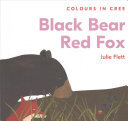
Black Bear Red Fox: Colours in Cree,

by Julie Flett

A book demonstrating colors in English as well as in Cree, along with the pronunciation. Julie Flett is a Cree-Metis author, illustrator, and artist. She has received many awards including the 2017 Governor General’s Award for Children’s Literature.

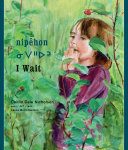
Nipêhon: I Wait

by Caitlin Dale Nicholson with Leona Morin-Neilson

A young child, her grandmother and mother are going out to pick wild yarrow. As Grandmother gets ready, the child and her mom wait. Grandmother leads the way to the field of blossoms, where they can finally start to pick … only now they have to wait for Mom! The simple story, written in Cree and English and accompanied by rich acrylic illustrations, shows the patience, love and humor involved as three generations accommodate one another on a family outing. Text is in Cree (Romanized and syllabic characters) and English.

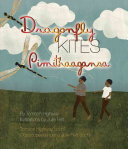
Dragonfly Kites

by Tomson Highway; illustrations by Julie Flett

Dragonfly Kites refers to “kites” made by tying a string around the middles of dragonflies. Two Cree brothers in northern Manitoba fly these kites during the day, but at night fly themselves in their dreams. This is the second book in the Magical Songs of the North Wind trilogy.

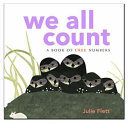
We All Count: A Book of Cree Numbers

by Julie Flett

A counting book demonstrating numbers in English as well as in Cree, along with the pronunciation. Whether in the country or the city, creature or insect, plant or animal, a part of a big family or a small family, we all live together and we all take care of one another. We all count. (from back cover) In this board book, Cree/Metis author Julie Flett beautifully illustrates simple English phrases demonstrating Cree Culture. Along the way, readers can practice counting using the Cree language.

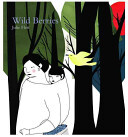
Wild Berries: Pikaci-Mīnisa

by Julie Flett; translated by Earl N. Cook

Spend the day picking wild blueberries with Clarence and his grandmother. Meet ant, spider, and fox in a beautiful woodland landscape, the ancestral home of author and illustrator Julie Flett. This book is written in both English and Cree, in particular the n-dialect, also known as Swampy Cree from the Cumberland House area. Wild Berries is also available in the n-dialect Cree, from the Cross Lake, Norway House area, published by Simply Read Books.

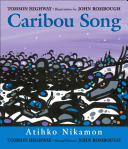
Caribou Song

by Tomson Highway; illustrations by John Rombough

Joe and Cody are young Cree brothers who follow the caribou all year long, tucked into their dog sled with Mama and Papa. To entice the wandering herds, Joe plays his accordion and Cody dances, whirling like a young caribou. They are so busy playing and dancing, they don’t hear the rumble of the caribou. Bursting from the forest, ten thousand animals fill the meadow. Joe is engulfed; he can barely see Cody a few yards away. Their parents seem to have disappeared. And yet what should be a moment of terror turns into something mystical and magical, as the boys open their arms and their hearts to embrace the caribou spirit.

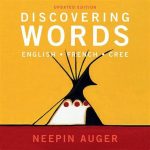
Discovering Words: English, French, Cree,

by Neepin Auger

Playful and bold, this dynamic series will educate and entertain preschoolers, parents, and teachers alike on the discover of words. In addition to the English words presented, the French and Cree equivalents are also given, making these some of the most dynamic and useful board books on the market, perfectly suitable for the classroom, library, and nursery.

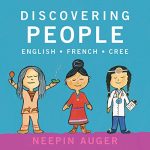
Discovering People: English, French, Cree,

by Neepin Auger

Part of the series of Neepin Auger’s board books focused on educating preschooler, parents, and teachers alike. Includes English words as well as French and Cree equivalents on the topic of people.

Discovering Animals: English, French, Cree

by Neepin Auger

The third book in this colourful and unique series introduces preschool and kindergarten classrooms interested in learning English, French or Cree as a second language to everyday words related to animals, by using original and vibrant illustrations.

Discovering Numbers: English, French, Cree

by Neepin Auger

Another book in Neepin Auger’s series steeped in multilingual and bilingual support. This board book details numbers in Arabic numerals alongside English, French, and Cree translations for ease of learning.

Bilingual books in other Indigenous languages and English

How the Cougar Came to Be Called the Ghost Cat: Ta’n petalu Telui’tut Skite’kmujewey Mia’wj

by Michael James Isaac; illustrated by Dozay Christmas; translated by Yolanda Denny

Caught between two worlds, Cougar struggles to find a place of belonging. As the Ghost Cat, Cougar lives as he must — in the forest but apart from his friends. Text is in English and Mi’kmaw.

Byron Through the Seasons: A Dene-English Story Book

by the children of La Loche and friends.

This book was created by the students, teachers, and elders of Ducharme Elementary School in La Loche, Saskatchewan. An excellent perspective on the continuity of native traditions and the possibilities available in school collaborations. Schools can use this as a guide for their own collaborative projects. Text is in English and Chipewyan.

Kisimi Taimaippaktut Angirrarijarani: Only in My Hometown,

by Angnakuluk Friesen; pictures by Ippiksaut Friesen; translated by Jean Kusugak

The northern lights shine, women gather to eat raw caribou meat and everyone could be family in this ode to small-town life in Nunavut, written in English and Inuktitut. Sisters Angnakuluk Friesen and Ippiksaut Friesen collaborate on this story about what it’s like to grow up in an Inuit community in Nunavut. Every line about the hometown in this book will have readers thinking about what makes their own hometowns unique. With strong social studies curriculum connections, Only in My Hometown introduces young readers to life in the Canadian North, as well as the Inuit language and culture. Angnakuluk’s simple text, translated into Inuktitut and written out in syllabics and transliterated roman characters, is complemented by Ippiksaut’s warm paintings of their shared hometown. Text is in Inuktitut (romanized and syllabic characters) and English.

The Magic Gourd

by Baba Wagué Diakité

Drought and famine have come to the parched forest. And when a hungry Rabbit rescues Brother Chameleon from a thorny bush, Chameleon repays him tenfold with a magical gourd that always stays filled with food and water. But soon a greedy king steals the gourd to make gold and food for himself. Cleverly, Rabbit recovers his gourd, but still leaves plenty for the King. Surprised by Rabbit’s kind act, the king begins to learn the importance of generosity and friendship. Text in English and Bambara.

Dog-of-the-Sea-Waves

by James Rumford

Manu, one of five brothers who are the first humans to set foot on Hawaii, is unhappy until he saves the life of a strange creature he calls Dog-of-the-Sea-Waves, and they become fast friends. English and Hawaiian.

The lonely Inukshuk,

written and illustrated by students from Inuglak School, Whale Cove, Nunavut

An Inukshuk all alone on a hill is very sad until he learns how very important and special he is to the community. Text is in English and Inuktitut.

Finding More Resources

To find more Dual-Language (Bilingual) Picture books, try the following:

  • Search using the General tab on the UBC Library website to look for material in all UBC Library branches.
  • Open Summon Advanced Search
  • Choose Subject Terms from the drop down menu and type “bilingual”
  • On the next line, choose AND and find Subject Terms from the drop down menu again and type “fiction”
  • Click Search
  • To limit your results to materials in the Education Library, use “Search Education Resources” box in the left hand bar on the Education Library website and search for “bilingual” AND “fiction”
  • For bilingual books in Cree and English use the subject heading Cree language materials–Bilingual.

For more help with searching, please visit the Library Service Desk or e-mail ed.lib@ubc.ca.

Categories
Accessibility Diversity and Diverse Learners French Inclusive Classroom Language Arts

Bilingual and Multilingual Picture Books: French – Livres bilingues et multilingues : français

Vous trouverez ci-dessous des livres d’images bilingues en français et en anglais, ainsi que des livres multilingues qui incluent le français.

Listed below are bilingual language picture books in French and English, and multilingual books which include French.

Livres bilingues – Bilingual Books

The Cat in the Hat= Le Chat au Chapeau,

by Dr. Seuss

A zany but well-meaning cat brings a cheerful, exotic, and exuberant form of chaos to a household of two young children one rainy day while their mother is out. Perfect for teaching beginning readers simple, conversational French or English, the story is here on each page in the language the reader already knows, to guide him or her in the language they are learning. The repetition makes it ideal for learning new words, and the hilarious plot makes it easy to read again and again. Learning a new language has never been so much fun!

Little Red Hen and the Grains of Wheat,

illustrated by Jago; French translation by Annie Arnold

The little red hen finds none of her lazy friends willing to help her plant, harvest, or grind wheat into flour, but all are eager to eat the bread she makes from it.

Le Foulard Qui Tourbillonne: The Swirling Hijaab,

by Nilesh Mistry; French translation by Martine Michaelides

Enter the imaginary world of a little girl playing with her mother’s hijaab. With a swirl of the hijaab, she is at once a brave warrior queen, an adventurous nomad in the desert, a beautiful bride, or inside a Bedouin tent.

À la Ferme: At the Farm,

written by Alex Rider; illustrated by Paul Davis

Every summer, John and George go to their grandfather’s farm. There they have animals to play with, a colt to learn to ride, and plenty of things to keep them busy even on rainy days. English on the left-hand page and in French in matching positions on each right-hand page.

My First Book of French words,

by Katy R. Kudela; translation by translations.com

How do you say hello in French? Explore the pages of this French English picture dictionary to learn new words and phrases. Colorful photographs and simple labels make learning French fun.

Livres multilingues – Multilingual Books

Discovering Words: English, French, Cree,

by Neepin Auger

Playful and bold, this dynamic series will educate and entertain preschoolers, parents, and teachers alike on the discover of words. In addition to the English words presented, the French and Cree equivalents are also given, making these some of the most dynamic and useful board books on the market, perfectly suitable for the classroom, library, and nursery.

Discovering People: English, French, Cree,

by Neepin Auger

Part of the series of Neepin Auger’s board books focused on educating preschooler, parents, and teachers alike. Includes English words as well as French and Cree equivalents on the topic of people.

Discovering Animals: English, French, Cree,

by Neepin Auger

The third book in this colourful and unique series introduces preschool and kindergarten classrooms interested in learning English, French or Cree as a second language to everyday words related to animals, by using original and vibrant illustrations.

Discovering Numbers: English, French, Cree,

by Neepin Auger

Another book in Neepin Auger’s series steeped in multilingual and bilingual support. This board book details numbers in Arabic numerals alongside English, French, and Cree translations for ease of learning.

Don’t Move! = Ne bouge pas! = ¡No te muevas!,

by Anne-Sophie Tilly; Julien Chung; traducido por Yanitzia Canetti

Don’t Move! is the companion book to Hurry Up, where simple one word pages and bold illustrations help multilingual and bilingual children learn common and uncommon animal names in English, French, and Spanish.

Hurry Up! = Dépêche-toi! = ¡Apúrate!,

by Anne-Sophie Tilly; Julien Chung; traducido por Yanitzia Canetti

With only one word per page, simple, bold illustrations, and a surprise ending this book can be used to expose toddlers to the names of animals in English, French, and Spanish. Those featured include common ones like lion or monkey, but there are also ones that may be new to children, like iguana or pink flamingo.


Finding More Resources

To find more Dual-Language (Bilingual) Picture books, try the following:

  • Search using the General tab on the UBC Library website to look for material in all UBC Library branches.
  • Open Summon Advanced Search
  • Choose Subject Terms from the drop down menu and type “bilingual”
  • On the next line, choose AND and find Subject Terms from the drop down menu again and type “fiction”
  • Click Search
  • To limit your results to materials in the Education Library, use “Search Education Resources” box in the left hand bar on the Education Library website and search for “bilingual” AND “fiction”
  • For bilingual books in French and English use the subject heading French language materials.

For more help with searching, please visit the Library Service Desk or e-mail ed.lib@ubc.ca.

Categories
Accessibility Diversity and Diverse Learners French Inclusive Classroom Indigenous Literature and Education Language Arts

Livres d’images autochtones en français – French Indigenous Picture Books

Below are a number of picture books by Indigenous writers and illustrators that are primarily in French.

Vous trouverez ci-dessous un certain nombre de livres d’images d’auteurs et d’illustrateurs autochtones, principalement en français.

La pirogue de Shin-chi,

texte de Nicola I. Campbell, illustrations de Kim La Faye, traduction de Diane Lavoie

Niveau scolaire (Grade level): 2 – 10

Shi-shi-etko s’apprête à retourner au pensionnat indien pour une deuxième année, cette fois-ci accompagnée de son petit frère de six ans, Shin-chi. Elle lui remet une pirogue de cèdre miniature, cadeau symbolique de leur père qui représente tout ce dont Shin-chi doit se souvenir et garder secret.

Le caillou de guérison de Trudy,

texte de Trudy Spiller; illustrations de Jessika von Innerebner.

Niveau scolaire (Grade level): Préscolaire – 1 (PreK-1)

Trudy Spiller est membre de la Nation Gitxsan de la Colombie-Britannique et appartient à la maison de Gwininitxw du clan du loup. Lugaganowals, le nom traditionnel de Trudy, signifie « une grenouille qui prend toujours appui ou qui donne toujours ». Trudy aide les familles à grandir et à se nourrir en partageant ses connaissances de la médecine, de la nourriture, de l’habillement et des pratiques autochtones.

Les families du Nunavik,

texte de(titiraqtuq/writer) France Paquin; illustrations de(titiqtugaqtuq/illustrator) Julie Rémillard-Bélanger; traduction en inuttitut de Sarah Beaulne.

Niveau scolaire (Grade level): 1 – 3

Présentation élémentaire des principaux spécimens de la faune arctique, du lemming à l’homme, excluant la faune aquatique. — De gentilles aquarelles. Peu d’informations. Un point marquant, le texte dans les deux langues.

 Minnow: la fille qui est devenue mi-poisson

texte de (writer) Willie Poll; illustrations de (illustrator) Bailey Macabre.

Niveau scolaire (Grade level): 1 – 5

“Minnow, une jeune autochtone, protectrice des eaux, entreprend un voyage sous l’eau où elle en apprend de notre famille qui vit dans l’océan. Quand elle retourne à la surface, elle rassemble sa communauté pour aider à apporter des changements. Cette histoire est racontée en rimes lyriques et aide les enfants à mieux respecter les gens qui protègent les eaux et les terres autochtones, l’environnement et le monde qui les entoure. Elle aide à faire découvrir l’activisme aux enfants tôt dans leur vie.”

Héros autochtones/Anishinaabewi-Ogichidaag,

Les langues(Languages):Anishinaabe and French

texte de (writer) Wab Kinew; illustrations de (illustrator) Joe Morse

Niveau scolaire (Grade level): Kindergarten – 5

Souhaitant faire connaitre aux jeunes de tous les horizons ses héros autochtones, Wab Kinew a composé des textes inspirants mettant en vedette des héros autochtones du Canada et des États-Unis. Malgré leur expérience unique, tous ont ceci en commun : la confiance en soi et un lien avec le territoire.

L’histoire du chandail orange,

texte de Phyllis Webstad, illustrations de Brock Nicol, traduction de Textualis

Niveau scolaire (Grade level): 2 – 5

Lorsque Phyllis Webstad (née Jack) a eu six ans, elle est allée au pensionnat pour la première fois. Pour sa première journée d’école, elle portait un chandail orange tout neuf que sa grand-mère lui avait acheté. À son arrivée à l’école, on le lui a enlevé, pour ne jamais le lui redonner. Voici la vraie histoire de Phyllis et de son chandail orange.

Pimithaagansa/Les libellules cerfs-volant,

texte de Tomson Highway; illustrations de Julie Flett

Niveau scolaire (Grade level): 1 – 3

Que ferais-tu n’avais aucun jouet, aucun jeu et aucun appareil electronique avec lesquels t’amuser? Est-ce que tu trouverais le temps long? Les freres Joe et Cody font tout sauf s’eenuyer. Ils inventent, creent et suivent leurs reves et ne s’ennuient jamais. Il suffit d’imaginer!

Les mots volés,

texte de Melanie Florence, illustrations de Gabrielle Grimard, texte français de Isabelle Allard

Niveau scolaire (Grade level): 1 – 4

Curieuse d’en savoir davantage sur ses origines, une petite fille demande à son grand-père de prononcer un mot en langue crie. Celui-ci est attristé lorsqu’il réalise qu’il l’a oublié, conséquence de nombreuses années passées en école résidentielle. Il lui dit qu’il a «perdu les mots»; lors de son passage là-bas, et elle décide donc de l’aider à les retrouver.

La roue médicinale : la danse des cerceaux racontée,

texte de Teddy Anderson, illustrations de Jessika von Innerebner

Niveau scolaire (Grade level): Kindergarten – 3

La danse des cerceaux et la roue médicinale sont de puissants symboles d’unité, de coopération et d’harmonie. Lors de ses représentations aux quatre coins de la planète, Teddy Anderson présente ces symboles comme des prismes au travers desquels jeunes et moins jeunes peuvent examiner le passé et prévoir l’avenir.

Une promesse, c’est une promesse,

texte de Robert Munsch et Michael Kusugak, illustrations de Vladyana Kryorka, texte français de Carole Freynet-Gagné

Niveau scolaire (Grade level): Kindergarten – 3

La petite Allashua ne croit pas en l’existence des Qallupilluits, ces créatures similaires aux trolls qui, aux dires de sa maman, capturent les enfants qui s’approchent seuls des crevasses de glace. La voilà donc qui décide d’outrepasser la promesse qu’elle a faite à ses parents en allant pêcher seule au bord de l’océan. Quelques instants plus tard, elle est capturée par les Qallupilluits, qui l’entraînent dans leur royaume, sous les glaces océanes.


Trouver d’autres ressources

Voici quelques conseils pour trouver d’autres ressources dans ce domaine :

  • Sur la page principale du site de la bibliothèque de l’UBC, utilisez la boîte de recherche générale pour rechercher des matériaux à travers toutes les succursales de la bibliothèque de l’UBC.
  • Pour limiter vos résultats aux matériels disponibles à la Bibliothèque de l’éducation, visitez le site web de la Bibliothèque de l’éducation et effectuez une recherche à l’aide de la case “Search Education Resources” située dans la bande à gauche de l’écran.
  • Remarque : les ressources étant principalement cataloguées en anglais, les termes ci-dessous donnent généralement plus de résultats que les recherches effectuées en français. Vous pouvez filtrer votre liste de résultats par langue dans la barre latérale de gauche.
  • Utilisez des termes de recherche spécifiques, tels que
    • “pensionnat indien”, “First Nations”, “Indigenous”, “Aboriginal”, “Indians of North America”, “Musqueam” (or any nation).
  • Pour trouver des plans de cours, incluez “lesson plans”, “lesson planning”, or “activity programs” dans vos termes de recherche.

Finding More Resources

To find more resources in this area, try the following:

  • Search using the General tab on the UBC Library website to look for material in all UBC Library branches.
  • Search using “Search Education Resources” box in the left hand bar on the Education Library website to limit your results to physical materials in the Education Library.
  • Use specific search terms, such as
    • “pensionnat indien”, “First Nations”, “Indigenous”, “Aboriginal”, “Indians of North America”, “Musqueam” (or any nation).
  • To find lesson plans, include “lesson plans”, “lesson planning”, or “activity programs” in your search terms.
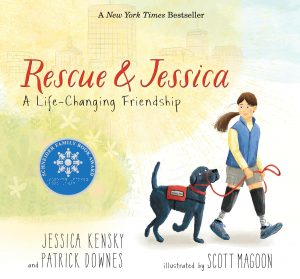
For more help with searching, please visit the Library Service Desk or e-mail ed.lib@ubc.ca.
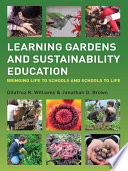
PDF Booklist

Spam prevention powered by Akismet