Categories
Commentary 3

Learning Multiliteracies

There are approximately 5000 – 10,000 different languages in the world (Wikipedia, 2009). According to statistics from 2001 Census of Canada, the population of visible minorities living in Canada is approximately 29,639,030 out of Canada’s total population of 3,983,845 of that 1,029,395 are Chinese, 917,075 are South Africans and 198,880 are Southeast Asians(Statistics Canada, 2001). Although many are aware that Canada is a multilingual and multicultural nation, most are ignorant about the results such differences can have on society. Today’s classrooms especially in metropolitan cities consist of students of various backgrounds; however, the current traditional approaches to teaching and learning cater mostly to students’ whose mother tongue is English. The melting pot is boiling over. The current literacy education structure needs to be re-designed and re-organized in order to better prepare students for the multiliteral and diverse environments.

In the article “A Pedagogy of Multiliteracies: Designing Social Futures” the New London Group views that considering the multiliteracies of diverse students with various cultural backgrounds is important to teaching and learning multiliteracies for they believe “effective citizenship and productive work now require that we interact effectively using multiple languages, multiple Englishes, and communication patterns that more frequently cross cultural, community, and national boundaries” (The New London Group, 1996). Queensland’s Department of Education and Training is also advocating multiliteracies and communication media through diversity. They believe “the ability to operate in the middle world between cultures can be generated in very young learners of another language. While the experience of the so-called third place may occur through the learning of one language, it is a skill that can be transferred to dealings with other cultures in other contexts. Knowledge of the intent and tone of the language allows a true understanding of the messages in intercultural communication” (Queensland, 2004). To make intercultural communication possible the traditional four wall classroom needs to be reorganized and thought of as a borderless learning and teaching community where students can venture off to classrooms of different cultures and experiment with multiliteracies. This can be made possible with the use of various communication technologies and the analysis of various cultural texts. This valuable experience will help to equip isolated students with skills to attack real world challenges.

New London Group argues that the current literacy education system is inadequate and cannot effectively prepare students for full participation in their working, community and personal lives. We exist in an information age where information is vital to success and even survival. Even though information is more accessible than before, information is hiding behind different faces or representations. The New London Group urges that schools’ literacy curriculum be mindful to include multiliteracies closely associated with communication technology of the 21st century. According to Queensland’s Department of Education and training“multiliteracies and communications media refers to technologies of communication that use various codes for the exchange of messages, texts and information. Historically, communications media have included spoken language, writing, print and some visual media like photograph and film. Since World War II, the various electronic media such as television and other digital information technologies have provided much more complex audiovisual layers to these” (Queensland, 2004). Communication technologies alter the way people interact with information and culture. Keeping up with new communication technologies used in our information age is vital because they “change the way we use old media, enhancing and augmenting them” (Queensland, 2004) To become multiliterate “What is also required is the mastery of traditional skills and techniques, genres and texts, and their applications through new media and new technologies” (Queensland, 2004).

Multiliteracy is more than knowing how communication technologies affect information, it also includes how various texts are used together to construct meaning. Text today is blend of traditional print, visual arts and audio text. These texts do not exist in solitude. Their relationship on a page creates the overall meaning that the creator is attempting to establish. For instance, the graphs and charts that accompany a newspaper article are vital to the readers’ general understanding of the subject. The inability to read or interpret charts is the same as the inability to understand the visual images used along with written text. Decoding information from various representations to which it can be understood and analyzed requires one to have prior experience with such texts. Therefore, teaching information literacy is important in schools for such skills and capabilities will enable students to “locate, evaluate and use effectively the needed information” (Dobson & Willinksky, 2009). To do this, The New London Group emphasizes on the concept of design “as curriculum is a design for social futures, we need to introduce the notion of pedagogy as Design” as design is “the idea of Design is one that recognizes the different Available Designs of meaning, located as they are in different cultural context” because it is “through their co-engagement in Designing, people transform their relations with each other, and so transform themselves” (The New London Group, 1996). The result of the meaningful transformatin is the creation of new meanings and identities where individuals are “creator of their social futures” ( The New London Group, 1996).

The job of today’s educators is challenging because they are having to constantly learn new practices and revise learned approaches to effectively prepare young learners for the rapidly changing world. However, once learners have master the fundamentals of multiliteracies they will be able to explore and learn independently.

References:
Dobson T, Willinsky J. Digital Literacy. In: Olson D, Torrance N, editors. Cambridge Handbook on Literacy. Cambridge, UK: Cambridge University Press; 2009. Retrieved the November 24, 2009 from: http://pkp.sfu.ca/files/Digital%20Literacy.pdf

Multiliteracies and Communications Media. Queensland Government: Department of Education and Training. Retrieved on November 25, 2009 from http://education.qld.gov.au/corporate/newbasics/html/curric-org/comm.html.

New London Group. (1996). A pedagogy of multiliteracies: Designing social futures. Harvard Educational Review, 66(1), 60-92. Retrieved, November 25, 2009, from http://newlearningonline.com/~newlearn/wp-content/uploads/2009/03/multiliteracies_her_vol_66_1996.pdf

Wikipedia. Retrieved on November 25, 2009. Retrieved from http://en.wikipedia.org/wiki/Lists_of_languages
Statistics Canada. Retrieved on November 24, 2009. Retrieved from http://www12.statcan.ca/english/profil01/CP01/Details/Page.cfm?Lang=E&Geo1=PR&Code1=01&Geo2=PR&Code2=01&Data=Count&SearchText=Canada&SearchType=Begins&SearchPR=01&B1=All&Custom=.
Categories
Commentary 2

Original Hypertext System

The current electronic literary structure and system is widely used. Because of its ease in accessibility and transferability, students, researchers and scholars rely heavily on e-documents for research. However, the present day system is limiting especially for knowledge workers. In the article “Xanalogical structure, needed now more than ever: Parallel documents, deep links to content, deep versioning and deep re-use” Theodore Nelson offers the Xanadu Project as an alternative that would maximize the advantages and minimize the disadvantages of the electronic document system.

Nelson describes the Xanadu Project as “an alternative paradigm for a computer universe, with its own alternative history of the computer field and alternative ideas of media, computer life and the nature of connections” (Nelson, 1999) and it is the original hypertext project; [however] it is often misunderstood as an attempt to create the World Wide Web” (Nelson, 1999). The Xanadu Model is more advanced than the world wide web in fact the world wide web was what Nelson was trying to prevent (Nelson, 1999).

In comparison to Nelson’s ambitious xanalogical model, the current electronic literary system operates on many flaws and implications that prevent users from making full use of the global internet system. Today’s e-document is simply an electronic version of the original document and nothing more. Even though the document is viewed online it does not offer any additional features that would enable further reading and understanding of the subject. As a result, the level of connectivity is low. As Paul Delany notes in “Hypermedia and literary studies” the “first essential capability of a good electronic document system is to provide a means of promoting the connection of ideas and the communication between individual scholars. The capabilities can be conceived of as a set of tools for creating a hypertext structure or the underlying framework of all electronic document systems developed” (Delany, 1995). In addition to the limitations, the electronic literary system fails to provide adequate information of related materials and resources used. Nelson believes “serious electronic literature (for scholarship, detailed controversy and detailed collaboration) must support bidirectional and profuse links, which cannot be embedded; and must offer facilities for easily tracking re-use on a principled basis among versions and quotations” (Nelson, 1999).

Nelson’s solution to these implications is by creating a parallel universe which begins with a basic interface model of parallel visualization. Parallel visualization is viewing documents side by side simultaneously as a result creating a web of information. This model will enable knowledge workers to have access to original documents and other related resources all at the same time. Furthermore, the origins of quotations will appear along with the electronic document. This is the result of establishing a permanent link between resources. Nelson also proposed a “valid copyright system … for frictionless, non-negotiated quotation at any time and in any amount” (Nelson, 1999). This will encourage more electronic publications for authors will be credited for their work.

Nelson’s xanalogical structure is practical than today’s one way hypertext structure. Critics such as Gary Wolf commented on Nelson’s model in his article entitled “ The Curse of Xanadu” where Wolf said the Xanadu Project “ was the most radical computer dream of the hacker era. Ted Nelson’s Xanadu project was supposed to be the universal, democratic hypertext library that would help human life evolve into an entirely new form” (Wolf, 1995). The Xanadu model would not only raise the standards of text representation but also transform the way of thinking and learning. Despite these advantages the Xanadu project was unsuccessful. Wolf notes that “the fact that Nelson has had only since about 1960 to build his reputation as the king of unsuccessful software development makes Xanadu interesting for another reason: the project’s failure (or, viewed more optimistically, its long-delayed success) coincides almost exactly with the birth of hacker culture. Xanadu’s manic and highly publicized swerves from triumph to bankruptcy show a side of hackerdom that is as important, perhaps, as tales of billion-dollar companies born in garages” (Wolf, 1995).

Nelson’s Xanadu Project struggles to achieve success against the widely used electronic literary system. In the forty years of development, Xanadu is still in its initial planning stage. Despite Nelson’s lack of success, the Xanadu Project received a great deal of attention and it continues to inspire numerous other software programs. The Xanadu model is built with knowledge workers in mind. This model strives to improve the uni-directional system and transform the ways people interact with electronic documents.

References:

Delany, Paul. (1995). “Hypermedia and literary studies.”

Nelson, Theodore. (1999). “Xanalogical structure, needed now more than ever: Parallel documents, deep links to content, deep versioning and deep re-use.” Retrieved November 14, 2009.

Wolf, Gary. (1995). “The Curse of Xanadu” < http://www.wired.com/wired/archive/3.06/xanadu.html> Retrieved November 13, 2009.

Categories
Research Paper

Remediation of the Chinese Language

chinese

The Chinese logographic system has faced pressures to reform both from within and from external forces over the course of its almost 4000 year evolution. As communication needs of greater numbers of people and wider levels of education were introduced into the language community, more strains were put on the developing linguistic system. The foundation of the Chinese logographic system can be traced back to at least as far as the Shang dynasty’s use of Oracle Bones (1600-1100b.c.e.) (Britannica). The linguistic system that is most widely seen as a unifying force in China was beginning to show in the Han dynasty (206 b.c.e.–220 c.e.) (Norman). The current universal system of Chinese logography has been a strong push of the 20th century leadership (Halsall).

The concept of language remediation is apparent within the Chinese logographic system. In an alphabet-based system only a few dozen characters are required in order to create meaning, whereas in a logographic system each new meaning of an older word requires a new symbol. It is estimated that there may be as many as 80,000 symbols for language meaning units in the Chinese system, but to be fluent in the language requires knowledge of only 3000 to 4000 unique characters (Norman). Each time a new descriptor is added to a word, a new symbol had to be created to coincide with it. In line with Bolter’s view of linguistic remediation (Bolter 2001, p. 23) the new language is built upon the old language, keeping it recognizable but creating something new and worthy of its own recognition.

The use of a logographic system to unify diverse ethnic and dialectic groups would seem to make it easier to control a larger area. The logographic system remains constant throughout the region, but different pronunciations are permitted or expected for each region. The symbol for “dog” would be universal, even if the individual aural versions are different. The Chinese logographic system developed from a system of pictographs used to describe a specific unit of language, typically one item or object (Halsall).

A major problem in trying to unify vastly different areas of a country like China lies in the regional dialects. Cantonese, the second most-spoken Chinese language, is focused in the southern regions of the country. Hakka and Min (both Northern and Southern dialects) are common in the south-eastern coastal regions. Hsiang is found in the south-central portions of China. Wu and Kan are spoken along central regions of the eastern coast. Mandarin dominates the majority of the country. Beijing Mandarin, specifically, has been implemented as the official language of communication in China during the 20th century (Halsall). Regional dialects have not been eliminated since the introduction of the new language policy, but Mandarin is now the required language of educated communications. A powerful central government in Beijing has attempted through its language programs to bring the country together as a single united voice.

Without an easily reproducible way of recording and disseminating written material, art and information of a culture risk being lost in an oral-based history. The technologies of moveable type and the printing press were developed in China, in no small part because of the strains involved in having to reproduce complex symbols repeated for any type of manuscript. The earliest surviving woodblock prints are from the Han Dynasty. Each page was sculpted from a wooden block for use rather than keeping a full set of symbols in supply. Clay-based movable type was invented in the 11th century, followed by wooden type in the 13th century and metal (bronze) type in the 15th century (Needham, pp201-206). Each of these leaps forward in technology provided opportunities to refine and expand upon the language that had come before.

Remediation of the Chinese language can be seen in the 20th century efforts to update the written and spoken word. During the 1920s and 1930s, Chinese intellectuals saw the script as
a serious problem in China’s attempt to become a part of the modern
world. The Chinese language was portrayed as cumbersome, difficult to learn and out of date. (Norman) The goals of reform have been to simplify the logographic process by reducing character strokes, introducing a phonetic alphabet, and instituting a common spoken language. The current spoken language of Putonghua (common language), commonly called Mandarin, was adopted in 1949 and become the language of school instruction in 1956. It is based on Beijing Mandarin (Halsall). Pin yin is the phonetic written alphabet based on Romanization of the logographic system and was introduced in 1958, meant to help spread the learning of Chinese symbols (Britannica). During the Cultural Revolution it was used in part to create common spellings for place names in the country.

The Chinese logographic system and current attempts to modernize communication in the country show how strong the roots of the language truly are. It has survived both subtle and punctuated evolution over nearly 4000 years of use, each time bringing it closer to a universal language for all people in the country. The 20th century’s attempts to update the language are unlikely to antiquate a system that has lasted for millennia, but the continual remediation process may make older works more accessible to the current generation. Efforts like pin yin introduction of symbols in a phonetic way is the gateway to symbolic understanding. The language is not being modified because of obsolescence. It is being updated because of a passion for the long history that the language embraces. Any steps that can be taken to bring together over a billion people so that they can share in a united voice, a united history, and a united sense of self must be seen as a step forward for the evolution of the country. In this particular instance, Bolter’s view of remediation indicates a bringing together of China’s ancient past with its future position as a world player through the power of language.

References:

Bolter, J. D. (2001) Writing space: Computers, hypertext, and the remediation of print (2nd ed.). New Jersey: Lawrence Erlbaum Associates.

Halsall, Paul. Chinese Cultural Studies: The Chinese Language and Writing.
http://acc6.its.brooklyn.cuny.edu/~phalsall/texts/chinlng2.html based on David Crystal, The Cambridge Encyclopedia of Language, (Cambridge: Cambridge University Press, 1987)

Needham, Joseph. (1986). Science and Civilization in China: Volume 5, Chemistry and Chemical Technology, Part 1, Paper and Printing. Taipei: Caves Books Ltd.

Norman, Jerry. (2000) Tradition and Transformation in the Chinese Writing System,. http://sites.asiasociety.org/education/VISIBLE_TRACES/curriculum/pdf/CIAessay1.pdf

Categories
Commentary 1

Text Endangered

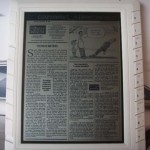
Digital-E-book-Reader-with-WIFI-Play-Flash-in-SWF-Format-S008-2-

The dictionary defines “text” as the original words of something written or printed as opposed to a translation, paraphrase or revision. According to this definition primary documents would constitute as text whereas the translation of a novel into Korean or Swedish would not. In that case, O’Donnell argues text today is highly unstable due to the changes in technology.

Text is endangered due to the way it is digitalized and organized. Rules of writing such as grammar and punctuation did not govern writing systems of the past. Instead “the ancients made do in a wilderness of irregular scratches on a page, and made do quite well.” (O’Donnell, 1998) Writing in the past was less formalized and structured which indicates that the purpose of writing was not for wide distribution but for personal use. This belief created a casual and utilitarian culture for writing.

People today may view such text as chaotic due to the absence of paragraphs and punctuations. But instead of appreciating the distinctiveness of the original text, people today impose their own system of writing by adding punctuations and revising the grammar to make the text fit into the current period. O’Donnell illustrates text found during the 20th century was very stable with appropriate formatting and editing, the attention to appearance was present as well. However, it was during the late 1900’s that “we have now returned to a time of instability marked by debate over means of presentation.” (O’Donnell, 1998) The vast options of representing and storing text are diluting the original work.

O’Donnell illustrates that “[t]o enter a text in a computer means to make choices. It is possible to make the simplest possible set of choices and to allow the text to take the form of a series of Roman alphabet characters, upper and lower case, delimited by carriage returns, tabs, and a handful of standard punctuation marks.” (O’Donnell, 1998) Such choices made by people today assigned to transfer information and ideas of the past will have a significant impact on how newly presented text will be understood. Before virtual libraries replace libraries it is important to consider just how fragile text is. Even the simple process of changing the font of the text can take the life and time out of the text.

Despite the implications associated with the digitalization of text, the concept of the virtual library is a step many libraries especially in the post secondary level are taking and planning towards. O’Donnell describes the “ ‘virtual library’ as a dream that many share” (O’Donnell, 1994) The public’s confidence in virtual libraries can be observed “in 1992, [when] public libraries throughout California suffered major budget cuts up to 65% forcing branches to layoff staff, reduce hours of operation, and eliminate new purchases. In some counties libraries closed down altogether when voters failed to approve taxes that would have supported them. In the same year, according to The Washington Post, the state suspended all construction plans for new university libraries in order to focus its attention and budget on ‘virtual libraries.’” (Roy, 1997) With this much focus and government support, soon print-based libraries will become museums or historical sites where tour guides announce through their loud speakers that people used to read, research and relax in such an institution.

One of the main benefits of virtual libraries is that it does increase access and availability because resources will be made available online anywhere. However, switching from print-based libraries to virtual libraries only replaces previous limitations with new restrictions. O’Donnell explains the problems surrounding accessibility in the representation of text by various word processing formats in that “[a]n abundance of word processing formats has generated another abundance of would-be standard formats. Recognition of these formats depends on users’ choices of hardware and software. If, for example, I need to get tax forms from the U.S. Treasury, I can find them on the World Wide Web and print them at home in minutes. But I must have previously acquired one of (at last count) four different ways to manage text (PDF, PCL, PostScript, or SGML) in order to get those forms at all.” (O’Donnell, 1998) Therefore, users with computers or software that is not compatible or up to date will be denied access. Thus, what seems to be progression is actually regression.

In addition to computer incompatibility, technologies are changing rapidly thus information is constantly being formatted and reformatted into the technology of the time. The transfer of text from one entity to another is a dangerous risk because the process threatens the survival of the original text. Similar to oral cultures as information is passed down from generation to generation details and meanings are altered and in today’s society each generation of technology is replacing the next generation at a much faster rate. Perhaps “our present plans to convert as much as possible of our print heritage to digits might, for the most part, be a waste of money…since, as reading loses favor… in one hundred years almost no one will read the literature–books and journals–from the past because it will be obsolete in the electronic medium. As a consequence.”(Seiler and Surprenant, 1991)

It is important to re-evaluate the process of managing and presenting text. In order to strengthen the quality of electronic resources and virtual libraries relationships between libraries, creators, publishers and aggregators of electronic resources need to be well established to reduce the loss of text in the process.

References:

O’Donnell, J. (1998). Hyperlink: The instability of the text. Avatars of the word: Papyrus to cyberspace, Retrieved September 20, 2009, from http://www.public.asu.edu/~dgilfill/speakers/odonnell1.html

O’Donnell, James J. (1994) “The Virtual Library; An Idea Whose Time Has Passed.” Gateways, Gatekeepers, and Roles in the Information Omniverse: Proceedings of the Third Symposium. Eds. Ann Okerson and Dru Mogge. Washington, DC: Association of Research Libraries Office of Scientific and Academic Publishing. 19-32.

Roy, Michael V. (1997) “The Virtual Library: Rhetoric and Reality” © IT Journal On-Line: Spring 1997. Retrieved October 1, 2009, from http://etext.virginia.edu/journals/itjournal/1997/Articles/miker.html.

Seiler, Lauren, and Thomas Surprenant. (1991) “When We Get the Libraries We Want, Will We Want the Libraries We Get?” Wilson Library Bulletin. 29..157.

Categories
Discussion

Module 1 Reflection

blog_illo499x461
To be honest, my initial reaction to the community web log was “ oh, another forum”. There are too many similar forums out there that the experience of sharing ideas and thoughts within a virtual community has become repetitive and predictable. However, after exploring the Etec540 weblog and reading my classmates’ submissions, I have discovered that this weblog is not just another forum. Posting responses, comments and opinions on the weblog encouraged me to think about reading and writing and how they change as the environment and technologies used alter. The same message written on the word processor and on a piece of paper communicates different information. For example, the penmenship and spelling errors associated with writing on paper can suggest author’s character. This compels me to define text and technologies carefully and consider the power and influence technologies have on text and vice versa.

The technologies used for the postings on this web log allow students to attach relevant and unique images and video clips to the posts therefore making exploration through the blog more fun at the same time indicating the extra time and effort people have invested into the blog. The blog is a collage of our thoughts. As we continue to make meaningful posts we continue to inspire one another thus further nurturing a purposeful virtual community.

Categories
Technology

Technology?

shrn123l

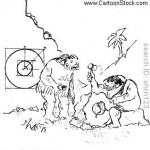
Contrary to popular belief, technology does not refer solely to computers. Technology is any instrument, machine, tool, weapon or appliance carrying out a purpose. The wheel, for example, was an ancient technology that revolutionized transport and changed the world. Technology is constantly improving and transforming into something more superior than their predecessors.

In many ways, science and technology are closely related and dependent upon each other. In the cartoon above, science appears to be “perfect”; however, the actual technology or creation did not measure up to the theory thus leaving a gap between the two fields.

Carmen Chan

Categories
Text

Meaning of Text

japanese text
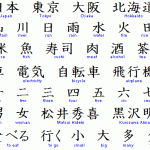
Text is any written language or series of symbols that contain meaning. The collection can be printed, engraved or painted as long as it is readable then it is considered as text. Hieroglyphs is an example of text. Electronic text is a version of the written word. Texting is the transfer of text.

The image above is a sample of Japanese texts or symbols used alone or in combination for communication. As time progresses, text and its meanings undergo transformations. Text is constantly being invented and introduced as humans progress and require extra texts to communicate effectively.

Carmen Chan.

Categories
Introductions

Woodblock Print, Part 7

Woodblock Print, Part 7, originally uploaded by dailyartmasomenos.

Hello, I’m Carmen Chan. After graduating from UBC four years ago, I packed my bags and flew to China to begin my career as a teacher. I taught in China for four years and is currently teaching in Cairo, Egypt.

One of China’s four greatest inventions is the invention of woodblock printing. The photo above is a modern version of a woodblock print which originated in China. The Chinese woodblock was used for printing on fabric first then later on paper. I selected this image because this invention started China’s print culture. Since then communication and interaction has never been the same.

I look forward to learning more about how text technologies such as the woodblock printing transformed reading and writing.

Spam prevention powered by Akismet

Creative Commons Attribution 3.0 Unported
This work is licensed under a Creative Commons Attribution 3.0 Unported.