Categories
Media

VFM launches at SFU

In my life, there’s always time to kill. And now I have a fresh method of doing it. Mark Latham has begun sponsoring a Voter Funded Media contest of a slightly different stripe over at SFU. Take a look at the SFU VFM page HERE. The idea is broadly the same as VFM here at UBC, but instead of being a one-off coinciding with the student society elections period, prizes are instead being distributed on a monthly cycle of continuous voting. The prizes are $300-$500 per month, which will add up to around $5000 in a year (compare to UBC’s contest which had a prize pool of $8000 for a whole year, given out all at once). Votes are calculated using the interpolated consensus method that we used here at UBC this year.

(Note to newer readers: VFM is the media contest that birthed this blog. According to Latham whose brainchild it is, rewarding media democratically from the public purse will improve democracy. For a previous posts discussing VFM, take a look here, here, here, and here. )

Another interesting difference is that the SFU contest is administered by Latham himself, not the Simon Fraser Student Society, which is equivalent to our AMS. This is interesting to note, because though one would think that having the institutional and organizational support of the student society behind such a project would be a boon, this year’s contest at UBC was magnificently botched by the AMS, both on the political and bureaucratic side. Not surprisingly, Latham has managed to run things smoothly at SFU so far.

The continuous monthly model maps much more closely to the ultimate goals of VFM: providing long-term, in-depth media which are accountable to their readers through a democratic reward process. SFU certainly has a smorgasbord of contentious issues to deal with at this moment, with their SSFS elections and referendum to defederate from CFS, the national lobby they are a member of. Media outlets could certainly provide a valuable service to the SFU community by providing some insight on these issues, and make a buck into the bargain.

All this is to not say that the SFU contest is anywhere near effective. So far, it seems to be marginal in both content and readership. The SFU campus radio station has entered, which I think is a brainwave (hint hint, CiTR), and one or two of the blogs have some content worth reading. Nobody seems to be trying very hard at this point. But these things take time to build momentum, and it seems almost stochastic whether such an idea will catch or not.

The question is, how much of a future does VFM really have? If Mark continues to encounter tepid half-successes, how long can he be expected to fund these experiments? And if he stops before the value has been unequivocally demonstrated through a jump in voter turnout or irrefutable data (which the AMS has yet to collect through exit polls. *strangle strangle*) would student societies be inclined to fund such innovations themselves? According to Jeff Friedrich, the incumbent AMS President, probably not. He told me in a meeting last year, that to him these projects are bonuses, and not as essential as making the AMS democracy itself run well through systemic reform in the AMS structure which has yet to be achieved. To me, innovative democratic projects like VFM (or a students’ assembly) should be looked at separately from improving the AMS democratic and organizational structure. We shouldn’t shy away from investing time and money in either.

For now though, Mark is still willing to pick up the tab. And UBC may soon be transitioning to the continuous model itself. A proposal for this just went up today on the VoterMedia.org website – take a look.

Categories
AMS

Why can't we all just get along? the executive dynamics post.

Once upon a time amidst the tacky coloured walls of the Almar Mater Society’s student union building, executive council was dominated by slates (basically political parties). Back then, elections were in some ways more colourful (in both the literal and figurative sense). Brand names were recognizable from miles away – the extreme conservative “The Right Choice” in navy blue, the centrist “Students for Students” in a lighter hue, and a communist resembling “SPAN”, not to be confused, though understandably often mocked, as SPAM. I need to insert here right away that I am a political product of the latter, though my political career took me past the great era of formal slates. Anyhow.

I have seen my share of executives interact with one another over the years, since 2002 until 2007, both before and after slates existed. By being a peripheral nuisance around the office, and having inherited some institutional gossip, I find myself unable to feel the same degree of outrage over recent events as the visitors who comment on this and other blogs

The reason I bring in slates into the picture is because they were a key vehicle through which politics was driven at the executive and council level. And I also include petty bickering into the term ‘politics’.

When I was running with SPAN, I experienced for the first time the true viciousness that is brought out of individuals during the electoral process. For instance, a colleague who I had previously considered a friendly acquaintance, sprayed me intentionally with water in order to get to a key postering spot before me. At another instance, physical threats had been posed. By the time the elections were over, the atmosphere was so tense that it was difficult to separate the personal from the professional. I personally got over it. And because my slate had swept the election that year, I did not experience the tensions that threaded through the year before.

Apparently (and this is a one sided claim) within executive council, it was an iron rule that each member of one slate would vote one way, and the other slate would oppose. Frequently the minority slate was voted down in their endeavours to the point where it was suggested that it was purely for the sake of sabotage. How valid this claim is I cannot assess, but I am willing to entertain the notion.

Enter the banning of slates. Former AMS president Spencer Keys championed this project primarily from an inclusiveness standpoint –individuals, no matter how qualified, who do not gain access to slates are severely disadvantaged in an election. This is true in “real life” as well, and in the AMS especially so.

Others would claim that there were other reasons why they supported this motion. For one, they found the blind loyalty towards a strict party line excessive and tiring. They may have felt like a footsoldier than a free thinking individual. There was enormous peer pressure within one slate to oppose the other parties.

Whether slates should in some way or form be reinstalled is a debate I would like to see on a different post. If I have one last comment on this, it would be that emotional baggage is an unfortunate part of continuity of a slate and its agenda. It’s the nature of the beast. It happens in the real world too.

And it’s this emotional baggage inherited from all these previous years which may have culminated into bitter executive dynamics, which is more the topic I would like to focus on. From the comments seen in previous posts, there seems to be a romanticized ideal of ‘executive cohesion’ floating around, the purpose or exact definition of which has not been elaborated by anyone so far. My guess would be that the executive should achieve a certain amount of reliability and trust among one another, as well as the ability to collaborate on joint executive projects. Personal squabbles should not sabotage the job they are elected to do, as in “I hate A so I am going to vote against anything A wants to do”. I don’t think anyone expects AMS execs to be best friends, or wear the same T shirts, or have brunch together every Sunday, or engage in a communal brainwashing program such that they become the same person (although I wouldn’t be surprised if these things have been done before).

This idea of ‘cohesion’ has been brought into conflict with an individual’s political agenda. The question here, then, is if there is a degree to which an executive (and I would argue council member) should limit her/his own politics in order to achieve cohesion with their (potential) colleague(s). This question has become especially pertinent in this particular case regarding the photo we published, where the political agenda antagonizes the very position of their colleague. I suppose it is a sticky situation. I can see how it could be taken personally by the individual affected. But should it? And will it?

Is it too naïve to believe that in our post-slate era, we should still be allowed to charge with political valence while allowing others to do the same? Removal of official slates did not equate political lobotomy. In the past few years we happened to experience little slate-like activity and consequently, a relatively quiet year. However, political assembly is a right everyone can exercise, and it is inevitable and arguably necessary at times. Kudos to A-Lo fans who mobilized to launch a poster campaign. Kudos to Knolligarch(s?) for mobilizing to deface them. I suppose I expect a sort of cordial professionalism once in office, which allows for a working rapport while their own individual politics still manifests into defacing each other’s posters.

In the end, and from the practical perspective of a former councillor, I would sprinkle enough of this “cohesion” ingredient into the executive bunch in order to achieve productivity from them – as individual executives fulfilling their elected portfolio, and as the group that is at times required to present some sort of unified front. It seems to me like the latter point is threatened for some readers here. From a very systematic point of view, the people have picked their representatives and all the strings that come with these individuals. The political passion which I see in both team Lougheed and team “Knollarchy” does not have to be squashed just yet for the sake of executive cohesion, or pleasantries, or platitudes. Not yet at least. It will be the role of AMS council to watch the progress of the executives and decide if some or all of the executives are unable to splice out the personal from professional well enough to meet council’s standard. I have a feeling it will become obvious soon enough.

Categories
Government

Transit: Kevin Falcon speaks

A few months ago, BC Transportation minister Kevin Falcon announced a 14-billion dollar transit bonanza for B.C. The announcement made front page news in a both national newspapers, and rightly so. It is rarely in Canada that we see such long-term investment in long-term infrastructure. The money will see five new rapid transit lines being built in the lower mainland over the next twelve years (one of which will branch to UBC), a doubling in the bus fleet (up 1000 buses) and the development of a new network of rapid bus lines (akin to the B-lines we all know and love). The goal is to double transit ridership by 2020. Info on the plan is available on the provincial government website, here. Falcon, in addition to these transit commitments, is also going forward with the controversial highway expansion plan that would see the Port Mann Bridge twinned in the “gateway” project. He has also overseen changes to the structure of TransLink: it now consists of an unelected professional board, and overseen by a mayor’s council instead of the previous arrangement which had elected appointed members of the GVRD on 1-year turnover cycles.

Last Friday, Falcon was on campus for a brief but intense gathering hosted by the UBC Young Liberals at Mahoney’s pub. He mingled for about 5 minutes, spoke for about 20 minutes, and answered questions for another 15, as people munched the complimentary heart-attack-on-a-plate deep fried snacks. Falcon started his spiel with a general campaign-style defence of the budget Carole Taylor just released – including the much-touted carbon tax. He then focused in on his transportation plan, outlining the main spending areas. Falcon was quite direct. While the fluent and campaigny extolling of everything the Liberals have done, are doing, or will ever do was a bit tiresome, as was the self-glorification about making “tough” decisions (isn’t that the definition of leadership, pray tell?), Falcon was actually quite convincing in the question/answer period.

There were some tough questions. When challenged that the new TransLink structure was less democratic and accountable Falcon was blunt. He said that the old structure was dysfunctional because of the high turnover and lack of expertise. He defended the fact that the new board’s meetings are closed to the public, saying that letting people come in to “scream and shout” wouldn’t accomplish anything. Now, you can agree or disagree about that, but he didn’t beat around the bush. When asked if the highway expansion to the suburbs negated plans to increase public transit ridership, Falcon was also blunt. He said that compared to the road and bridge infrastructure Vancouverites enjoy, Surrey and the fraser valley are very undeserviced – and as the fastest growing areas in BC, they deserve to have both better transit and better commute times. To me, this sort of missed the greater point, which is that as a province with pretensions to sustainability, we should be looking at ways to make Vancouver more affordable, thus minimizing the sprawling growth of suburbs in the first place. Unfortunately this is beyond the scope of Falcon’s portfolio per say (and also way beyond his staunchly suburban constituency voter base).

With rapid transit out to UBC by 2020 a few things could happen: the importance of living close to campus in the Kits and Point Grey areas will decrease. You’ll see alot more students talking advantage of cheaper rents in the tri-cities and Surrey. Demand for on-campus housing will probably stay the same. There will always be people in search of the campus life experience, and that won’t change. We’ll just see commuter student living farther away, and perhaps even less able to participate in campus life. On the other hand, people that do stay in Vancouver will have an easier time getting around, and might engage more. Analyzing student engagement on the basis of transportation is always a bit dubious – just because the reasons people choose at what level to engage on campus are complex. We don’t have good data about it, that’s for sure. The AMS should look into including some well-designed questions about finances, location, and transportation on its next survey.

Categories
Academic Life Campus Life Development

UBC Farm: Why they aren't taking a referendum question to students this March

Due to a hole in WordPress, this post’s author is misattributed. The follow was written by AMS VP Academic ’07-’08 Brendon Goodmurphy.
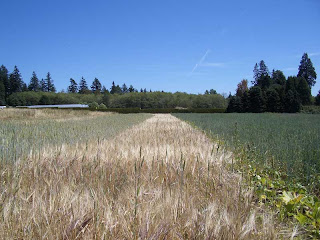
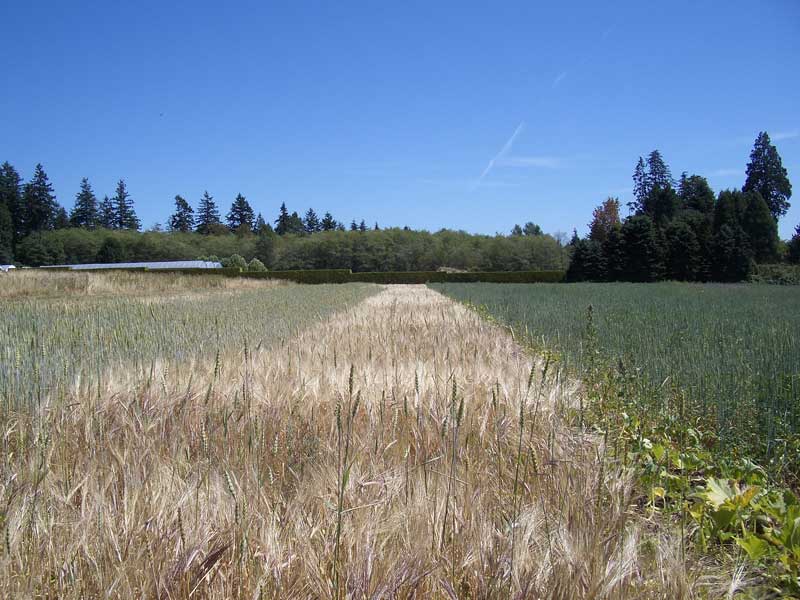
Most students know by now that the future of the UBC Farm is shrouded in uncertainty and controversy. This year strong student supporters of the Farm (particularly Friends of the Farm), wanted to hold a referendum question asking students to increase their student fees to support the farm’s programs and development. The hope was that a passed referendum would show UBC just how much the community supports the farm, and would help secure the farm’s future. But the current political situation within UBC and the region has made some supporters of the referendum question if now is really the right time.

Find out why behind the jump…

A brief history of the UBC Farm:

When UBC first decided to build market housing on campus, they ran into some concerns and push-back from the community (students, faculty, staff, residents in Vancouver and the UEL). So, the GVRD stepped in and said that there would be some regulations and guidelines for how UBC could develop that market housing community. Those rules were all outlined in the Official Community Plan (OCP). Of course, the Farm sits in the middle of prime land that the University ultimately wants to sell to developers. After public outcry over the farm in the development of the OCP, the farm was slated for “future housing reserves” – meaning that they weren’t going to develop housing there right away, but it would be set aside, and we would come back to it later to make a decision (that date is supposed to be 2012).

Of course, this stamp of “future housing reserves” also gave UBC an excuse to not invest in the Farm, and refuse to help build its research capacity and refuse to see its value as a community amenity. In fact, when some market housing residents worked with the farm to create a community garden, UBC denied the proposal and said it wasn’t allowed! UBC has been actively impeding any development of the farm for many years, so that they can more easily deny the farm’s importance in 2012 when the issue is up for consideration.

The current situation:

To understand the current situation, you have to understand some local politics. UBC would like to make changes to the South Campus Neighbourhood Plan – they would like to densify the neighbourhood (add more units, make more money). This requires a change to the OCP, which requires approval from the GVRD.

However, the community has some allies in the GVRD who have an interest in a) preserving the farm, and b) seeing UBC become part of the City of Vancouver. Both of these fit into policies that the GVRD already has (for the farm, they are worried about food security and how quickly farmland in the region is being depleted, for governance, they GVRD would like all electoral areas to become part of a municipality). Therefore, some elected officials at the GVRD were saying to UBC: “We’ll let you densify the South Campus Neighbourhood, if you promise to deal with the farm issue and do a governance review.”

Well, UBC doesn’t really like the prospect of being told what to do by the GVRD when it comes to the Farm or governance, so at the most recent Board of Governors meeting, UBC decided not to pursue the South Campus Neighbourhood densification – for now…

But to appease the GVRD, UBC also said that they are going to deal with the farm issue and the governance review right now. I told the GVRD at a recent meeting that I didn’t really believe UBC’s commitment to dealing with the governance issue – I genuinely believe they are dragging their feet, they have no interest . And the farm issue is going to be dealt with through the Vancouver Campus Plan…this is where the concerns from Friends of the Farm comes from.

Hidden motives:

Nancy Knight, UBC’s Associate VP Campus & Community Planning, has decided to ‘deal with the farm issue’ through the Vancouver Campus Planning process. That may sound like a good idea at first, but its much more complex than it seems.

The Campus Plan process is an institutional planning process, meaning UBC has complete control over that process, meaning the GVRD has no say in what decisions are made. Thus, when the farm gets addressed through the Campus Plan, we lose some really powerful allies in the GVRD who could put a lot more public pressure on UBC to “do the right thing.” For now, we as students and as members of the University community have to flood the Campus Planning process in order to save the farm. Of course, we all know that UBC isn’t that great at listening to students, and is quite selective about what it hears in consultation processes.

The point is that if the farm review is part of any OCP changes, then the broader community, including the GVRD, and the UNA residents have some sort of say in what happens to the farm. If it’s a Campus Plan process, then UBC gets the ultimate say, and the GVRD really has power to interfere. The Campus Plan is about institutional spaces – aka, learning and research spaces. Taking care of the farm through the campus plan process conveniently means that UBC can look at it primarily for its research value, and thus it’s easier justifying that it move to the bio sciences research area – the same amount of research can occur no matter where its located.

Now add to this the fact that Nancy Knight and the team at Campus & Community Planning have gotten external consultants to come in and review the “potential” of the farm. These consultants were chosen without letting the farm or the faculty of Land and Food Systems know, and it has mostly been all behind closed doors. Nancy Knight wants to have these consultants come back and say: “the Farm is very valuable, but they only need half the land and could probably move to the Bio-Sciences research area and still do the same great work.” Perhaps she sees this as some sort of compromise between the Board’s agenda to maximize the $250 million that can be made off of that area, while still preserving some sense of a farm for the community.

As long as the Farm issue is dealt with through the Campus Plan, the result is going to be cutting the area by at least half, or moving it way down to the bottom of campus in a very remote and inconvenient location, or both.

The other thing to consider, is this process to deal with the farm through the Campus Plan is only looking at the farm from a research-value standpoint, and not from a community amenity standpoint. The Farm is so much more than a research facility, it’s a place that brings students and residents and researchers and learning all together in one place. This is more than just an institutional facility, it’s a community facility, and the community should have a much greater say about its future.

Canceling the Farm Referendum

I told the Friends of the Farm that it was a big mistake to back down from the referendum now. The concern is that the political situation is too tense right now to take the risk. I say that a referendum is always going to be extremely risky. The only reason there are more backroom deals being made about the farm right now is because UBC is facing a lot of pressure from the GVRD, students and the community-at-large to save the farm. As long as UBC is facing pressure on the Farm, they are going to push back, and push back hard. The farm lands are worth over $250 million dollars in Endowment revenue. We’re up against a huge beast, and that is never going to change.

But, if we as students could come to the table and say “students care about the farm so much that we are willing
to pay out of our own pockets to develop the farm’s capacity” then we’re in a really strong negotiating position. Don’t forget, it’s UBC who has been financially neglecting and starving the farm for years, and its students who are stepping up and footing the bill.

If the referendum were to fail, then it would be a tragedy. But, as far as I’m concerned, certain people within the University are always going to misconstrue the evidence and use any referendum outcome against us. But there are also a significant number of people in the University who will take a passed referendum seriously, and that will be way more powerful than the few who discredit it.

The Farm needs a student movement behind it right now, and there is nothing better to get a student movement started than through a “Save the Farm referendum campaign.” Getting hundreds of students around campus, handing out pamphlets and saying “UBC is trying to take away our farm, we can’t let that happen” – what better way to start a genuine student-movement. That’s something almost all students can say yes to.
Spam prevention powered by Akismet