Categories
BoG News Senate

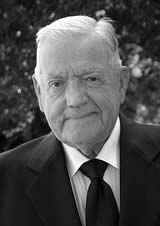
Allan McEachern, Chancellor of UBC, dies at 81.


Allan McEachern, UBC’s chancellor passed away last night. No more details are available at this time. McEachern became UBC’s chancellor in 2002, and this year marked the end of his term. A UBC alumnus several times over, McEachern earned his Bachelor of Arts and his Law degree here. In 1990 he was awarded an honorary doctor of Laws degree.

Throughout a long and distinguished career both in legal practice, and as a judge, he was involved in many significant cases and handed down several landmark rulings, including one that denied aboriginal title to the Gitskan first nation, setting the precedent for aboriginal land settlements through government treaty processes, not the courts. McEachern served as the Chief Justice of both the B.C. Supreme Court, and the B.C. Appeal Court, the highest court in the province. Justice McEachern only retired from the bench in 2001 at 75, the next year accepting the appointment as UBC’s chancellor at the recommendation of the UBC Alumni Association.

May he rest in peace.

More on Allan McEachern’s life and career to follow from Tim.

Categories
AMS Elections 2008 BoG President

Candidate Questionnaire: Rodrigo Ferrari Nunes

Rodrigo is a candidate for both BoG and AMS President

Why do you want to be the BoG representative for students and President of the AMS?
First of all because I am proud of being a UBC student and alumni. My model of representation is participatory engagement with the implementation of a transparent structure for governing AMS and serving students responsibly according to their own demands.

One idea we are considering for the transparent budget is the following:
-Students log in to SSC or AMS link, and can access the ‘services’ webpage. To ensure presidential and executive responsibility, transparency and accountability, students will allocate a portion of their AMS fees into particular services, projects, and decisions.

-Agenda items will be posted online by AMS councillors, committees, and execs, as well as clubs; these posts will be all time-stamped and will be subsequently categorized by the president as soon as received.

-The president will then select agenda items and post the agenda before hand online, where all councillors and constituents will be informed of upcoming items and solicited to post comments and suggestions by all UBC students.

-This will create a large accumulative database of engaged student discourse, time stamped and linked to specific individuals. A solution to apathy is the production of online polls for each agenda item and the circulation of paper ballots by AMS councillors between each cycle. This will provide the student body with valuable information on student needs without restrictions.

-Duncan is cited on the Knoll, which endorses my campaign, saying that he wants to hold round-table discussions with student ‘leaders’. The very idea of putting in a separate category ‘student leaders’ and ‘non-student leaders’ marginalizes 90% or more of potential student discourse and ‘discussion’.

As AMS President, I will engage professors in all departments to suggest projects centered on understanding UBC and making it am even better place. Professors should allow and encourage academic projects focused on the UBC campus, its services, facilities, activities, and so on.

How would you use your position on BoG to enhance students’ voice on campus?
I will communicate extensively with not only UBC students, media, faculty, and staff, but also Student organizations from other universities and media sources around the world. The will ensure, through external pressure, that the Board of Governors serves student needs by being directly and constantly informed by them (e.g., through dynamic blogging of committees and agenda items, the AMS budget and student service choices). Communication with outside student associations and media outlets will transmit our issues far and wide, and elicit public responses that constraints the university from making terrible decisions (e.g., underground diesel bus loop) without being subjected to extensive critique.

What specific changes to the University Boulevard project would you advocate?
If possible its immediate halting due to reported warnings by Translink itself that it is not large enough. The galleries that are being excavated on indigenous lands now despite extensive and concerted student protest and loud criticism, could be transformed in a feature of Trek Park, endorsed officially by David Suzuki, and destroyed by the UBC administration without warning.

What experience(s) and skills do you have that will enable you to convince the Board appointees that your point of view is preferable to theirs?
I am a UBC alumni with a double major (2006), a Master Student and a Teaching Assistant. I am also older than most of the other candidates (30 years old- born in 1977)I have always been an International Student at UBC. I am officially endorsed by the Knoll newspaper, which endorsed the current AMS president’s campaign last year. I have extensive training in social sciences, and languages (Portuguese, English, Italian, Spanish, German [Recipient of the German Government Book Prize], Classical Latin [average 84 in 24 credits], and Classical Greek. Now passionate, I was once also apathetic, and by studying through participatory engagement the AMS and GSS Councils, and most importantly, the differences between them, I am now in a position to understand and to engage with apathetic students. Thence my resolution of attending different classes throughout my term, in several departments, to engage students directly and to experience the kind of education they are getting. My knowledge of languages and cross-cultural experiences allow me to represent International Students. I am not an AMS ‘hack’ and I am passionate about serving student needs.

What is your vision for the governance model of UBC?
In one phrase: Transparent, engaging, responsible, responsive, participatory and collaborative.

Categories
AMS Elections 2008 BoG

Candidate Questionnaire: Andrew Carne

Andrew Carne is a BoG candidate. Here were his answers.

Why do you want to be a student representative on the BoG?
I want to be one of the BoG reps because I am interested in university politics, administration and campus development. As my time here at UBC increases, i have found out more and more about the aforementioned topics, and what I learn often intrigues or angers me. I feel that I could do a very good job as a BoG rep, putting in the required time and effort to read through every issue in the docket, communicate important information to the students and back, as well as investigate every concerning element found in items presented to board.

How would you use your position on BoG to enhance students’ voice on campus?
I would do this primarily by ensuring very open lines of communication are maintained between myself and students. I would not hesitate to speak at Board on issues raised to me by the general student body, and I would ensure that everything public discussed at board is communicated effectively to interested students.

What specific changes to the University Boulevard project would you advocate?
I can identify several issues with the University Boulevard project. The biggest one is that the most recent consultation showed a very strong dislike for housing and non-food retail, yet these elements have not been completely removed from the current project plan. I fail to see the point in running a consultation if one of the biggest identified issues is being ignored. I believe the project needs housing removed, retail largely reduced or removed, and an increase in student study/social space, for there is not nearly enough currently present on campus.

I also think some serious thinking needs to be done regarding the underground bus loop. Translink has stated that the proposed project would not be large enough to accommodate anticipated traffic in the next few years. What is the point in building this hugely expensive facility if it is going to be overcrowded almost immediately after construction. Also, since the Skytrain line to UBC was finally announced this week, it seems ridiculous to be investing this huge amount of money in a bus terminal that is going to be replaced or at least seriously renovated by 2020.

This year Jeff served as both a governor and AMS president, which seemed to strengthen his voice at the BoG table. What would be your relationship with the AMS?
I am not running for any particular AMS position, as I feel that two positions would not leave me with enough time to fulfill either one properly. I do however intend to be active in AMS activities and meetings so people can get to know me and pass information back and forth.

What experience(s) and skills do you have that will enable you to convince the Board appointees that your point of view is preferable to theirs?
In regards to experience, I have worked fairly closely with the Dean of Applied Science on several matters, which has given me a taste of higher-level interactions. I also have spent the past two years in an executive role with the Engineering Undergraduate Society, which has given me many insights into what students want on campus, and what some of the important issues are. I feel that one of the best ways to ‘convince the appointees’ of my point of view would be to contact members of the Board in advance (prior to the actual meeting) with questions and arguments, as this provides a more one-on-one situation. I would also ensure that my points are very well researched and persuasively phrased, which will show them that I do actually know what I’m talking about.

What is your vision for the governance model of UBC?
It has always struck me as bizarre that the Board is largely composed of provincial appointees who don’t necessarily have any real interest in what goes on at UBC. They also are not stakeholders in any way, so the decisions they make don’t actually effect them. It seems to me that a body making such important decisions should be made up of representatives of the people effected by it’s decisions. As such, my vision would be that Board would be solely made up of the President, Chancellor, and representatives from students, staff, faculty and possibly a representative from the provincial government. In this vision, the total size of the Board would not be reduced greatly, which would mean more representatives each from students, staff and faculty.

On a related note, I would also like to see more transparency on the hiring policies and processes for senior administration (President, VPs) and Deans of faculties. I would like to see detailed guidelines showing how these people are selected, and the proper procedures for doing so. The policies currently available on the UBC website only list the composition of advisory committees and no other details.

Categories
AMS Elections 2008 BoG

Candidate Questionnaire: Tim Blair

Tim Blair is a candidate for the UBC BoG

Why do you want to be on the Board of Governors?
The BoG need a clear voice in favor of the UBC Farm and one that has experience in promoting sustainable building practices. The BoG listens to students through the AMS, the two elected officials and through student consultations but direct student consultations have typically been poorly designed and poorly recorded.

How would you use your position on BoG to enhance students’ voice on campus?
I would strongly advocate for proper student consultation. True consultation involves inclusion of students at the beginning. The university must be open about its preferences and its future ideas, otherwise students do not know to what they are expected to respond. Consultation questions should be specific, or if they are vague then adequate explanation should be provided as to why, and student responses should publicly tracked so future students can easily understand how ‘the plan’ evolved from the input of past students. I would use my voice to ensure that the mistakes made in planning the University Boulevard and the problems with the consultations of the 1997 Official Community Plan and the 2000 Campus Community Plan are not repeated.

What specific changes to the University Boulevard project would you advocate?
The University Boulevard, while far from being complete, is almost out of the hands of the BoG. The problems we have encountered over the past several years on this project are the result of decisions made many years ago (by the BoG and others). I would focus small design details related to the project to ensure it helps create a central vibrant core, with green space, that serves students.

This year Jeff served as both a governor and AMS president, which seemed to strengthen his voice at the BoG table. What would be your relationship with the AMS?
The BoG rep needs to be continually communicating with students and I plan to serve the AMS though the referendum committee and help with the ongoing work of VP Admin and the SAC. While Jeff’s dual role gave him some clout (as representing students), due to his busy schedule he also needed Darren to provide deep insight and foresight into some issues. The pair worked really well.

What experience(s) and skills do you have that will enable you to convince the Board appointees that your point of view is preferable to theirs?
I have experience in sustainable community planning from my past work with engineers and community planners. The BoG are struggling with the ideas of sustainable building design (or more specifically they are struggling against the developers resistance towards green building construction practices). The new BC Green Building Code will be release this spring and it is important that UBC not only meet but exceed the standards for ALL new construction projects. I have been involved in LEED building design (example 1) and I understand the benefits, requirement, and most importantly the pre-requirements needed to make a building ‘sustainable’ by today’s standards.

The BoG is also getting involved in the recently initiated review of UBC’s Integrated Stormwater Management Plan (ISMP). Up until now UBC has had a very piecemeal approach to stormwater management with the usual plan to flush our slat ridded stormwater out into the sensitive seagrass ecosystem next to Wreck Beach. I have worked on several ISMPs (example 1, example 2), and I am able to help lead the BoG though this process to ensure it is done right, that proper questions are asked, and that time and money isn’t wasted.

What is your vision for the governance model of UBC?
Metro Vancouver (formerly GVRD) wants UBC to decide what it’s going to be when it grows up. Metro believes that the existence of UBC outside of a municipal boundary has had adverse effects on both residences and neighbouring communities.

The campus population is 40,000 daytime and 20,000 night-time and we are still unincorporated. There are many incorporated town in this province with populations of 2,000 or less. Following the failed attempt by Metro to get the provincial government involved it has become obvious that we have to resolve this issue ourselves. It’s not rocket science that we need an adequate governance system and this will be a major topic at the BoG this year.

There are many difficult details to work out but the future system must be free of development red tape that can cause political interference. There will likely be a mayor and council, who can manage the municipal services and infrastructure, but who will approve permits to build, who will continue the community planning? We will likely need to develop a sharing model whereby half the members of the Advisory Urban Design Panel, and the Development Permit Board must be appointed by the Mayor and Council. The UBC appointees would likely help keep the approval process streamlined while a sober second look is provided by council. Community Planning should be handed over to council and given a clear mandate to work the UBC Campus Planning.

There are still many outstanding issues; such as how will students in residence be represented? How will cost sharing work for recreation facilities? Will UBC pay municipal taxes?

Other models include creating two municipalities (UBC and UEL) that may lead to municipal bickering and appeals to Victoria, or annexation of UBC into the City of Vancouver (most unlikely option).

Categories
AMS Elections 2008 BoG

Candidate Questionnaire: Bijan Ahmadian

Why do you want to be a student representative on the BoG?
As a student senator of three years, I have built a constructive working relationship with the University administration. For example, I successfully drafted and negotiated a new policy for viewing marked work which requires instructors to respond to students’ requests within 30 days. I feel that my skills and experience will make me an effective voice for students – a voice that can bring tangible results. I would like to use the position a representative to bring more constructive engagement between students and the Board and to help support student communities such as student clubs on campus.

How would you use your position on BoG to enhance students’ voice on campus?
I have learned that as a student leader, my strength comes from my ability to negotiate in a collaborative manner. Rather than attacking the University, I have learned to engage with the University and attack the problem together. I would first get to know the members of the Board and start off with setting a collaborative atmosphere between us. I would listen, educate myself and pick my “fights” carefully to maximize my effectiveness with the members. I have been very effective with bringing positive change for students and I have a track record supporting that.

When I was appointed the AMS Ombudsperson, it was well known that the administration did not think highly of the Ombuds Office, convinced that it created more conflicts than resolutions. I decided that I would devote myself to transforming the office of Ombudsperson, making it a useful resource for both students and administrators.

Over the course of the year I put effective new protocols in place for dealing with student-administration conflicts. I also began to hold a workshop I called ConRes to help train students to deal with conflict on their own. The workshops consistently filled up, and soon particular departments began requesting private sessions for the benefit of their students and staff. A turning point for me was the day a student walked in saying his Associate Dean had told him to file his complaint with my office. I had progressed in transforming the image of the Ombuds Office. At the end of my term, the Ombuds Office was granted the 2003 Helen McRae Award from UBC for “exceptional contributions and significant improvements to the student experience and learning environment at UBC.”

What specific changes to the University Boulevard project would you advocate?
I would advocate for a a campus development vision that emphasizes an accessible, welcoming, sustainable and and environmentally friendly space for students. Whether it’s about the University Boulevard, the University Square or generally the campus plan, students are a significant stakeholder. They care about affordable housing. They want to see buildings that use energy efficiently and are environmentally friendly. Students need affordable access to suitable space for project work, conferences, meetings, studying and for running licensed events.
Students also have their differences on what they think the campus plan should look like. Issues such as the amount of green space, the presence of retailers and development of the endowment lands have been sources of tension for many students.

Issues around the campus plan are complex and involve many stake holders. As a leader with a track record for reconciling competing demands, I am committed to ensuring that students’ diverse opinions are sought and taken into account by the Board.

This year Jeff served as both a governor and AMS president, which seemed to strengthen his voice at the BoG table. What would be your relationship with the AMS?
I would stay engaged with the AMS by regularly going to Council meetings. I would also keep AMS executives involved with discussions that relate to their portfolio. My goal would be to speak with a sense of confidence that I have consulted my peers and can represent their views as accurately as possible.

What experience(s) and skills do you have that will enable you to convince the Board appointees that your point of view is preferable to theirs?
I have graduated from a three year negotiation program at the Justice Institute of BC and have since then run Conflict Resolution workshops on campus. As a Senator, I worked constructively with the University executives and with the current Chair of the Board. As AMS Ombudsperson, my job was to influence the University to try an alternative approach that also takes students’ interests into account. The Ombuds Office was recognized for excellence at the end of my term.

What is your vision for the governance model of UBC?
The governance of UBC is done by two boards: the Senate and the Board of Governors. Along with students, the academics on the Senate preserve the academic rigour and integrity of the University. The Board of Governors preserves the fiscal integrity of the University – making sure that University stays financially viable. This has proved to be a functional model to protect both academic and financial aspect of the University. While effective, the model presents some challenges.

One challenge is in how these two bodies communicate and work together. As a member of the Agenda Committee of Senate, I was part of creating a communication process that overcame some of the challenges especially around expediency.

Another challenge is striking a balance between the Board of Governor’s duty to ensure that the University is fiscally responsible and its duty to providing an accessible education to students.

Categories
BoG

Foresight: UBC's annual report; AGM today!

UBC, over the last several years, has adopted the practice of holding an Annual General Meeting, to coincide with the release of its annual report. The AGM is happening today at 12:00-1:00, in downtown Kelowna. It is being broadcast live (at 12:00) in two ways so that we can watch it too:

This year’s report, “Foresight” is a short, spiffy, and readable document outlining the major accomplishments and programs at UBC in the past year. You can read it HERE. The report is structured around the personal narratives of individuals, who are featured in attractive colour photos on half the pages. Summary graphics of finances, donors, and sustainability targets constitute the remained of the report to complete a gushing profile of our illustrious institution. I learned about a few new things from the report. For instance , there’s a new fancy rowing facility in Richmond for varsity athletes. There’s a new Centre for Microbial Diversity and Evolution, funded by a $7 million investment from the Tula Foundation, being headed up by Patrick Keeling, who does awesome research on understudied protists. (This is especially cool, since most types of microbes are almost completely unstudied). Anyway, the report supplies an optimistic, incomplete glance at the positive accomplishments at UBC. By looking briefly at the financial summary page, you’d have no idea about the recurring structural deficit.

Categories
BoG Development

Unpublished U-square consultation results!

Well, results from the September U-Square consultation have been compiled, but not yet published. I thought they were pretty interesting, so here they are, in handy graphical format. Click the graph images to enlarge them. Thanks to Margaret Orlowsky for sending me the results.

If you filled out the forms, you’ll recall that the 1-5 ranking represents a range from 1 (“would not meet vision”) to 5 (“would meet vision”).


This graph (above) has the results from the first part of the survey form, which asked about individual prospective elements for the U-Square space. I didn’t include all of them, but the main ones are there. As you can see, housing and store retail are the most unpopular, with most people ranking then at 1. Food retail fares better with a more even distribution. Surprisingly, neither the Boardroom (intended for conferences, BoG and Senate meetings) or Alumni Centre were especially popular – I like both these elements quite well. The grassy knoll and open space elements are the most popular. “Grassy Knoll substitute” (some sort of structured green space) was fairly was popular. The only buildings with an upwards trend in the whole questionnaire are a SUB expansion and student social space, and more moderately, the vague “community hall” (which nobody seems to be able to define). All the others, including the university’s development office, and continuing studies do poorly.


This graph shows the results for the four combinations of elements that were suggested on the feedback forms. Combo 1 (with housing and retail as well as service stores) is essentially what the plan for U-square was before May, when the student petition and AMS policy opposing the plan convinced the BoG to redesign. So it’s not surprising that it’s the least well-received. Combo 4 was put on the form due to the efforts of the student representatives on the U-square planning committee, and contains less built space than the others.

To me, these results show that a combination with minimal building, mostly open space, a knoll, and some public social space would be the most welcome option. I think an alumni/welcome centre and boardroom in the centre of campus, would be great too, but most of the respondents seem to disagree. Looking at the results from the individual elements, it looks like none of the combos integrate the most popular items. The important thing to remember is that we can’t really have it all. If we want a SUB expansion, that’s less open space and less green space. It’s important to keep in mind that only about 300 people answered the forms – not a great sample. It’s possible that the results are skewed towards the organized “save the knoll” faction.

About the committee process: This feedback form and the responsiblity for dealing with the results resides with the U-Boulevard planning committee, which includes 3 student reps: Brendon Goodmurphy from the AMS, Matt Filipiak from the GSS, and Margaret Orlowsky, at-large. This committee was touted by the President as the harbinger of a new era of working together with students on development issues. It seems that according to Matt and Margaret, the process hasn’t been exactly what they expected – the students on the committee are giving input and coming up with ideas, but the actual decisions are made by Nancy Knight, and Joe Stott, the two university representatives. Like all committee structures, the people who do the actual work (ie. the writing) have the real power: in this case, these are people that work in Nancy and Joe’s offices. Now we’re hearing that Nancy and Joe are unhappy with the results I’ve just outlined. Since they’re the ones that give instructions to the architects, and there’s no binding vote on the options, we may have reason to worry, despite the presence of student representation. To quote Margaret “they keep asking what meaningful consultation is – it’s asking what people they want you to do, and then doing it”. It seems like the university still has problems with this concept – especially when the people doing the consultation are the same people that were responsible for (and are still personally attached to) the old and failed plans.

Categories
BoG Campus Life Development

Trek Park update, and related topics.

Trek Park, the space “liberated” from the old bus loop as a protest for the U-boulevard re-development project, is looking a little worse for wear. The park, consisting of some grassy areas, a large checkerboard, and some benches and furniture, was set up to create a student-friendly, free public space, and raise awareness and opposition to the underground bus-loop that the UBC Board of Governors is planning to give final approval to this year.

The ‘park’ was set up by a group of students loosely affiliated with The Knoll newspaper and AMS resource groups on the first day of school this September. It has since become somewhat of a fixture in the campus centre: but lately, a bit of a decrepit one. Moldy furniture sponges up the rain, bits of wood and metal collect in rickety piles, and the once-emerald grass is drowning in a little lagoon. “Trek park is in shambles,” admits park originator Nathan Crompton, “but we still love it!” he adds. “People keep trashing the park…more than once a week” he explains. It seems like some students are sick of the protest park, and willing to show it. When Trek Park volunteers tried to throw out some of the weather-damaged furniture, taking it to the dumpster on the north side of the SUB, it was placed back by the next day. The dome, some artwork, and other areas of the park have been vandalized too. Park signs have been removed and one showed up near the fraternity houses. Someone put a foot through the “free speech” park notice board a few weeks ago.

“I think they’ve made their point” said one student from my genetics class, as we were walking by. “A few weeks was fine, but I think everyone has seen it by now,” said another, “and who had the idea to put grass on an impermeable surface?” Some students view the park as vaguely “too hippy,” or for the slightly more political, a rag-tag protest effort that won’t make a difference. Others simply think it’s a scar on the landscape.

Stephanie Ratjen, another trek park volunteer, said that while students may have seen the message already, the university administration still hasn’t taken the action they’re demanding. The things that the park is there to protest are still unresolved, she said, adding that the consultation now going on about the above-ground portion of the U-boulevard has been “a failure,” despite student representation on the consultation planning committee. The process she refers to is the result of a turnabout in the U-boulevard planning process that occurred in May. At that time, a student petition opposing the plans for the area, and pressure from the AMS and GSS, persuaded the BoG to scrap the above-ground plans, and create a new consultation process. This process is being conducted now (remember the free burgers and booths in the SUB this month?) to find out what land-use options were best for the area. It’s being led by a committee that includes student representatives from the AMS and GSS. The BoG remains steadfastly committed (or so they say) to the underground bus loop, though it has yet to gain final approval. “They just want it to go away, ” says student BoG rep Darren Peets, “they’ll approve it to get rid of it.”

Whether or not it’s worth fighting the bus loop, and whether or not this renewed consultation is failing or not or not, is up for debate. Perhaps the park protest is a case of the vocal few making a fuss while the rest of us just want get on with life. Maybe some of their rhetoric makes park volunteers look like clowns, not serious players. Maybe they are alienating people that should be worked with. But the thing I like about this protest is it’s pro-activeness, it’s creativity, and the ideas coming out of it. No it’s not a picture of urban design, but at least the park is trying to lead by example. At lest the people doing it are bringing up the real problem issues behind campus development and planning: the democratic deficit in UBC’s governing structure, the skewed balance of power in committee processes, and an administrative culture that is only lately waking up to the real stake the student community wants in its physical surroundings.

To me, the protest also brings up a conversation that’s really important: strategies for activism. Where’s the effective balance between defying the status quo and working within its structure to have an inside voice?

This Thursday from noon to 8, Trek Park is hosting Knoll Aid, a jam session and general jamboree. Lots of music is lined up, should be fun.

Categories
BoG Development

Campus Plan Report


You’ve all seen the signs carpeting our pavements and draping our buildings at UBC, asking you “what’s the plan?”. This fancy publicity campaign is promoting the process of coming up with a ten-year strategic plan for the academic campus of UBC. The Plan addresses the holistic, and specific vision for all of the university’s institutional buildings and spaces ; these include residences, research facilities, classrooms, administration buildings, gardens, etc. Basically, the consultation and publicity campaign regard the academic core of the campus – as distinct from the various outlying areas owned by UBC where private development has taken place: these are not considered academic buildings. Important to note, is that the University Boulevard area is not included in the academic Campus Plan process, though it is located in the centre of the campus; it is designated as a “neighborhood,” like the outlying private developments. This means that, first, it’s farther along in the development process (time-wise) than the main Campus Plan, and that second, its development process has not been tied to that of the rest of campus, and has been fraught with conflict. Refer to earlier posts on this topic.

Anyhow, this month the report summarizing Phase Three (titled “talking about the future”) of the ten-year Campus Plan process came out. This phase comprised of various consultations, as well as a speaker series. The report, which can be found here (click), details the feedback from focus groups, presentations (including to AMS council), and an extensive on-line survey form which was open to students faculty, staff, and community members. The structure of this planning process involves the University’s Campus and Community Planning office, who conduct the consultations and public relations, and three committees that actually carry out the analysis and planning work. These are the Steering Committee, Technical Advisory Committee, and Project Team. They all report to the Board of Governors and each committee comprises of people from the University Neighborhood Association, students, staff, faculty, alumni, etc.

It strikes me as strange that the UNA has a stake in the main Campus Plan development process while students faculty and staff have historically had very little to do with the vision and design behind the various neighborhood developments (starting with Hampton Place, the first, which, under former President Strangway had basically no consultation). The relationship should arguably be the opposite. While the university seems to have taken a slightly more consultative approach to its profit-driven neighborhood developments in recent years with the creation of the University Town committee, it is odd that the UNA should be interested in the University’s academic buildings. Extreme deference for the Neighborhoods‘ interests in the campus’s academic core seems to be thematic, in fact: at the recent BoG meeting at least three governors repeated commitments to the neighborhoods regarding the stalled underground transit station, though such a station would hardly serve their locations at all, having nearer transit stops on the way. Could all this concern and all these committee posts be because Premier Gordon Campbell himself (a former developer and buddy of David Strangway) has taken up residence in Hawthorne Place, across from Totem Field?

In any event, the feedback was fairly predictable. Services near work and living spaces, green spaces, focus on sustainability, cycling and pedestrian focus, social spaces, density in the academic core, flexible collaborative research/work environments like the UBC Farm, and a sense of ‘place’ (whatever that means).

The UBC Farm came up repeatedly in the reported feedback, and seemed to be the single most addressed topic. It figured in the contexts of sustainability, integrative research, community outreach, and green spaces. Well done to the farm supporters for getting such a strong message across through this official consultation. It’s on paper now!!

Some of the questions in the online survey, I found very easy to either support or be concerned with. A few though were vague, hard to understand, and nearly meaningless. For example, key policy direction 3, reads thus:

New buildings should maximize the flexibility in the design of the learning
spaces to enable students and faculty to incorporate innovative teaching and
learning methods.

Now, I truly have no idea how buildings, however “flexible,” can contribute in any way to having “innovative teaching methods”. It is my impression that with appropriate AV equipment, which UBC already possesses, it is up to each instructor to teach. Key policy direction 2 is also strange. It postulates that

Building locations should enhance the opportunity for interdisciplinary research and study and collaboration between allied disciplines, and provide opportunities for undergraduate students to participate in faculty research projects.

Again, how a building’s location will create collaborative relationships and internship opportunities is a mystery to me. The campus as it is, is not vast or labyrinthine. I have never walked into an office or a lab and decided to volunteer there because it was handy to my English class. Nor have I heard of someone declining a summer NSERC because it was located more than 100 meters from their favorite lunch spot. I fear that collaborations and undergrad research opportunities still depend on people creating them. Anyhow, other than said incoherencies, the survey was fairly satisfactory. Some of the “key policy direction” statements were a little hard to disagree with because of the positive-spin phrasing, but there was plenty of space to provide written comments, and these seem to be faithfully reported (excepting my specific complaints, which I included at the time and make no appearance) in the document.

Sadly, for all the publicity, and visibility, only 277 people total and 170 students mustered the personal resources necessary to go and answer the survey. An additional number of people (amount not noted) participated in the focus groups and presentation sessions. Considering the enormous publicity effort, and the fact that farm-affiliated students alo
ne probably comprised at least a third of student respondents, I’m disappointed with the response to the online survey. 170 students is just enough to cover AMS involvees, farm people, interested parties from the school of architecture and urban planning, and a few other scattered keeners. If banners, fancy websites, and broadcast emails aren’t enough to get the general student population interested enough in their physical academic surroundings to answer a half-hour survey, I do not know what is.
Categories
BoG Development

BoG goes ahead with tunnel, utilities.

In an embattled, but clear decision, the UBC board of governors passed final approval of the University Boulevard project’s first phase on Tuesday. Though the faculty, staff, and student representatives were opposed, President Toope remained staunchly in favor of the the phase, which ensures the future of an underground bus terminal on the site of East mall and U-Blvd. The terminal itself is was not approved – only the tunnel along U-blvd that will lead to it and the movement of utilities. Discussion about the issue lasted 45 minutes. It is rare that the board pushes a decision through while it has significant opposition – but for this project, the pressure is on.

Interestingly, since the above ground potion of the plan is being brought back to consultation and re-designed, the terminal itself may have to be re-engineered too, to carry the weight. Al Poettcker, the president of UBC properties trust, doesn’t seem to like this idea, since he continuously claims that only the “programming” of the buildings, not their location, can be changed. Perhaps he does not understand the level to which it is generally expected the plan will change following consultation: buildings could conceivably change their size, location, or be eliminated entirely.

The underground loop however, is coming. It won’t be approved until the above-ground plans are further solidified, in the fall.

Have a listen to Margaret Orlowski (of the anti- U-Blvd student petition) and Nancy Knight of the campus community and planning office face off with the CBC’s Rick Cluff on the Early Edition Wednesday:

Listen here

Spam prevention powered by Akismet