Categories
AMS Elections 2010 Senate

Race Profile: Senate

.

UBC Insiders Analysis

Click here to skip to profiles of the candidates in this race.

Note: Alex was a student 2008-2009 senator.

The Senate represents one of the places where students can influence the most change over the lives of every student. The highest governing academic body on campus, the Senate drafts the academic calendar, is the final body of appeals on academic issues, and is consulted on all issues pertaining to the academic side of the house, such as the University’s budget and academic building use.

Why the most important basis for the job is showing up, after the jump

Categories
AMS AMS Elections 2010 Senate

Debate: Senatorial Quarrel

The problem with having an election for five spots is you end up with a race of twelve candidates (last year aside). Fortunately for us, only seven candidates showed up today to answer some questions from the moderator, Forestry Senator and All Around Good Guy Mr. Angus Cheung, and from the audience.

More on their answers behind le jump.

Categories
Senate

The Quest for Admissions Fairness

Earlier this week we posted about a new Senate admissons policy, J-50. While it represents a small step in the quest for fairness in the admissions process, there is still a great deal more going on behind the scenes that is also more controversial.

Indeed, while J-50 received widespread support from Senate, there were some concerns with it. As an example, even if the curriculum of another Canadian province results in those students being over- or under-represented at UBC, Senate may not be able to actually address it. Sonia Purewal, who sat on the working group said “Until data is available on all provinces, there is still going to be differential treatment for a subset of students as some students will not get any grade adjustment whereas others will… Despite this, we can’t ignore information that warrants attention. We have to begin the process to create a fair admissions practice.”

Senator and debater extraordinaire Joshua Sealy-Harrington also raised the point that if there was an international jurisdiction where grades had to be adjusted downwards, it may work against the university’s diversity goals.

Downward adjustments in general are something that makes everyone nervous. The rational argument goes that to achieve fairness you have to be willing to do both upward and downward adjustments. The obvious problem that gets in the way is that the optics of lowering students’ grades is horrible. Regardless of how justified it may be, the politics will always get in the way.

To see an example of this, you don’t need to look far. The Senate working group that was working on J-50 was also examining a much hotter issue: adjusting grades of incoming BC students based on which high school they come from.

Categories
Senate

Senate Enacts New Admissions Policy: Alberta Students get 2% Bump

Like all of the students whose studies it governs, the UBC Vancouver Senate found itself busy during the last exam period. At their meeting on Dec 16, Senate approved a new admissions policy, J-50, which allows the Senate Admissions Committee to adjust the admissions averages of incoming high school students based on where they originate from.

In practice, all this policy does in the near term is add 2% to the entrance average of anyone coming from Alberta. However, the policy is written broadly that it would allow the Senate Admissions Committee to introduce these types of adjustments for any jurisdiction outside of BC/Yukon at any point in the future. Which, in reality, is only formalizing certain admissions practices that have been happening out of necessity for a long time.

Categories
Senate

Costeloe, First-Ever Student Vice-Chair of Vancouver Senate

Just confirmed with the Senate Secretariat that Mr. Geoff Costeloe, of Terry fame, was elected to the position of Vice-Chair of the Vancouver Senate this Wednesday.

This is the first time a student has been elected to the position since its creation in 1916. No one formally asked for the tally, but I’m told it was “close”.

The role of the Vice-Chair is to be speaker of the Vancouver Senate in the absence of the Chair, Prof. Stephen Toope.

The last election of the Vice-Chair, student senator Mr. Blake Frederick lost to incumbent Vice-Chair Dr. Rhodri Windsor-Liscombe in a close tally of 36:23.

This would mean in the occasional absence of the President, a student reigns over the most powerful academic body at UBC Vancouver. The vote indicates a strong show of support and trust in the student body by the faculty, alumni and administration, and a progressive vision for the current Senate.

Categories
AMS Elections 2008 Issues Senate

Issue of the day: Student Senate Caucus, efficacy of.

I admit that I cannot comment on the senate proceedings this past year, as I am now living on another continent. However, if history is an indicator of the present and future, I will allow myself to write a short excerpt on student senator’s and their caucus’ effectiveness.

The Continuity Harp

The majority of the Senate’s members are faculty members and deans, so by virtue of tenure they can be elected to three year terms successively with no limit (life permitting). This contrasts with student senators rather starkly, whose university career often gallantly flickers away after four or five years, and for this reason serve a term which lasts only one year. By no means is it shocking to see a faculty member serve the senate for over a decade, whereas the rare student will stick around for three terms (three years).

Continuity in the student caucus of senate is painful at best, due to the sheer nature of the electoral process: you get elected onto the senate based on experience of university/academic matters (in theory at least), which by definition requires you to have completed a minimum of one year of university, often more.

It has been the case that most student senators happen to be senior students, graduating the next year to go on to other things in other places. Since the Senate meets once a month at best, and its committees meet anywhere between twice a month to not at all, often the most focussed, well prepared items brought forth by student senators require more than one year’s worth of effort. Even with the least amount of cynicism do I dare say that in order to achieve any change, one needs to sit on the senate for more than one term. Often, this does not happen.
We have been lucky in the past to have incredibly thorough senators, who have created, revised, and passed down a monstrous volume of a senate transition package (now probably exceeding 70 pages). The upside of it is that each student senator for the past four years has left their advice and insight. The downside of it is that the incoming senators have to read it, and very few of them actually do for whatever reason.

Quite often, the same cycle is repeated: the first few meetings, no matter how integral the timing of them, receive very little student-driven items on their agenda.

Internal Dynamics

The efficacy of a caucus is determined by the leadership and drive of the group itself. There may be concrete goals a caucus wishes to achieve, and there may be key developments in which students need to take a solid stance. In both cases it is up to the individual senators, under the guidance of the chair, to put in many hours to be well prepared by digging up institutional memory and history to present a clear argument effectively and eloquently.

There are thousands of students in some faculties, and only one designated representative to the senate. Not all senators are elected based on key platform points which they want to see through. Some senators are simply elected on a promise to show up to every meeting and contribute to discussion as well as they can. If this senator happens to find a birthday party more appealing than a senate meeting, she or he may have failed to present a valuable, unique perspective (and vote) on behalf of these students. It is a pet peeve of mine to see some student senators lose interest in a seemingly tame agenda, and subsequently fail to attend a valuable discussion where their presence could have turned the outcome of the vote.

Coherence with the AMS

The relationship with the AMS is murky at best. Why two senators have voting power at AMS council is mysterious to me, their presence at council less so. According to the AMS, it is recommended that their VP External attend the student senate caucus meetings. However, it would make more sense if the (already overworked) VP Academic and University Affairs took on this role. Unfortunately, AMS Council meeting and caucus meeting often overlap, and Senate meetings are scheduled seven years in advance.

There is room for greater coherence between the student council and the senators. Oftentimes it simply requires greater communication, as tiny nuances from one body is lost in a quick report to the other, and vice versa. I see this issue to be prescribed for those rare senators and councillors who go above and beyond their duties, but it can be done over a beer or three.

Overall, I believe a caucus is effective if each member wants to be there, instead of feeling they are obliged to be there. Being a student senator can be intimidating, boring, thankless (no we do not get paid), stressful and exhilarating. If any of those emotions have not been felt, then chances are the individual elected ran for the title and fancy-looking business cards.
Categories
BoG News Senate

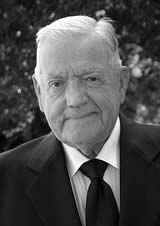
Allan McEachern, Chancellor of UBC, dies at 81.


Allan McEachern, UBC’s chancellor passed away last night. No more details are available at this time. McEachern became UBC’s chancellor in 2002, and this year marked the end of his term. A UBC alumnus several times over, McEachern earned his Bachelor of Arts and his Law degree here. In 1990 he was awarded an honorary doctor of Laws degree.

Throughout a long and distinguished career both in legal practice, and as a judge, he was involved in many significant cases and handed down several landmark rulings, including one that denied aboriginal title to the Gitskan first nation, setting the precedent for aboriginal land settlements through government treaty processes, not the courts. McEachern served as the Chief Justice of both the B.C. Supreme Court, and the B.C. Appeal Court, the highest court in the province. Justice McEachern only retired from the bench in 2001 at 75, the next year accepting the appointment as UBC’s chancellor at the recommendation of the UBC Alumni Association.

May he rest in peace.

More on Allan McEachern’s life and career to follow from Tim.

Categories
Senate

New Tidbits from Senate

The UBC Vancouver Senate met and here are some updates:

1. We just established five new Chairs in the UBC Institute of Mental Health, three of which were donated by the Sauder Family through a $10 Million endowment fund, matched by the provincial government: The Sauder Chair of Child and Adolescent Psychiatry, SC in Geriatric Psychiatry and Depression, and SC in Psychotherapy.

This establishment, most of which will physically realize itself in the Brain Research Centre (UBC Hospital), is highly overdue. Senator Kirby said it best when he stated that “Mental health has become the orphan of our healthcare system”.

2. We’re in a budget crisis. Hiring “chills” have been implemented. So what? So we need to establish a “mid-level strategic academic planning process” which will enable us plan ahead in a long term budget process that’s sustainable. President Toope has been talking about this for quite a while, and so has the AMS after the NSSE Survey results put us dead last from other colleges in terms of performance in student engagement. President Toope has emphasized that this has been the constant topic of discussion at the Executive Committee.

George Mackie (VP Academic and Provost pro tem) reported to the Senate on the SCAPP (Steering Committee for Academic Planning Process) which has an aggressive timeline and aggressive goals: it wants to ask the questions we’ve been shunning these past years – how do the forces and tensions that run through the University arrive at a planning process for a sustainable budget?

Clearly, there are four “forces” that are immediately identifiable: 1) Trek 2010 which is our Mandate, 2) student needs for high quality of learning and the faculty’s interest in quality research, 3) the government interest in our activities and consequent support, 4) and what we actually contribute to society and the perception of us by the public (insert cynical comment on ivory tower syndrome here).

So how do we arrive at a sustainable budget process keeping all of these dynamic forces in mind? That’s what the Steering Committee plans to address. George Mackie clearly recognizes that the perfect budget process is not a realistic goal given that all universities have been striving for such for hundreds of years and still not succeeded, but noted it was nevertheless integral to work towards.

He’ll be consulting the AMS, Student Senate Caucus, GSS, Faculty Association, Committee of Deans, and so on. What wasn’t addressed (and what I forgot to ask) was who exactly sits on this committee? I just emailed him to find out.

3. Nancy Knight presented on Stage III of the Campus Plan. We are at the Key Policy Directions stage – the thirty broad policies are listed on the website here: http://campusplan.ubc.ca/process/phase_3/consultation/. Some of personal interest (arbitrarily picked out by me, sorry) are:
University experience
#13. Improve the experience of the University through the establishment of a pedestrian-only core, centred along Main Mall that contains high quality amenities and services, recognizing the need for handicapped access and be supported by improved transit service.

Flexible learning spaces
#3. New buildings should maximize the flexibility in the design of the learning spaces to enable students and faculty to incorporate innovative teaching and learning methods.

Safety
#21. Create a campus where people feel safe at all hours of the day. New buildings should provide entrances and windows onto well-lit main streets and pedestrian corridors throughout the campus.
[interestingly, now there is a significant number of students taking night classes (7-10pm) and therefore the original campus plan – to have a very quiet, low lit campus, needs to be revisited. Lots of areas are not safe for students.]

My critique of these policy directions is that they seem suffocating. Unlike the Trek2010 vision, these policy directions leave very little flexibility without sparking imagination of what they actually arrive at. This sentiment was also echoed by other senators last night.

4. English 112 might not be a requirement anymore! There was an ad-hoc committee struck in 2001 that looked at writing and communication requirements for first year students, which unfortunately died in 2004, never to actually report to senate like it was supposed to. Now we’re at a second try and it’s looking like some infrastructural support is willing to occur – Nancy Gallini was mildly in favour of this committee happening so long as the English Department and the Faculty of Arts was involved in the dialogue. Some ideas were that first year students could take other courses so long as they had essay writing components in the course (like a History course or PoliSci course instead of English 112). Currently the only program that has an exemption is one Engineering program. I can’t speak to the course quality itself because I milked my AP credits, but I don’t like how our Faculty Janet Giltrow is making so much profit on the book that all undergraduate students going through this campus have to get their hands at.

5. There’s a fresh crop of student senators (I’m done!). The capable Tariq Ahmed is the new Caucus chair, and the AMS rep is the super keen Alfie Lee. I hope Brendon Goodmurphy will start to show up to Student Senate caucus as it is important that he involves himself as part of this body early such that this relatively new and inexperienced group knows to involve the AMS in its communication and planning – historically there’s been a lot of overlap yet lack of dialogue.

6.
Jaspreet Khangura’s Pass/Fail option is going forward to the senate committee levels – Teaching and Learning and Academic Policy (as the final stop). Jeff and Jas have been working at this a lot and since Jas sits on both committees I am cautiously optimistic that this project will go through. When was the last time a student-driven policy motion passed? A long time. (It’s interesting to observe that our ivy-league crop of faculty members and administrators get slightly nostalgic when this issue came forward. “I benefited from this at MIT, indeed” or “My daughter is at Columbia and boy did she like this option”, or from the President himself who attended Harvard University.)

Spam prevention powered by Akismet