Categories
Commentary 3

Web 2.0

bulbs

Introduction

Bryan Alexander’s article “Web 2.0: A new wave of innovation for teaching and learning” relays the emergence and importance of Web 2.0 in information discovery. It highlights a number of important aspects of Web 2.0 including social networking, microcontent, openness, and folksonomy, and than continues on to describe how it can enhance pedagogical ideologies. Each of these characteristics will be examined below.

Information on the Internet is presented in a variety of ways. Graphics and multi-media now define the Web, challenging the very definition of literacy. Information flows in numerous directions and paths offering the ‘reader’ or ‘visitor’ multi-layered information. Web 2.0 is based on interactions between people in asynchronous and synchronous communication, offering flexability and accomodation. This has a significant impact on our society, education system and our culture.

Definition

There is much debate over the definition of Web 2.0. Alexander (2008) defines Web 2.0 as “…a way of creating Web pages focusing on microcontent and social connections between people” (Alexander, 2008, p. 151). Wikepedia defines Web 2.0 as “…commonly associated with web applications which facilitate interactive information sharing, interoperability, user-centered design and collaboration on the World Wide Web” (Wikepedia, 2009). Many argue that this is not something that is a recent technological invention, but more of an evolution of sorts.

Social Networks

Social networking is one of the major characteristics of Web 2.0. This includes listservs, Usenet groups, discussion software, groupware, Web-based communities, blogs, wikis, podcasts, and videoblogs, which includes MySpace, Facebook and Youtube (Alexander, 2008). Facebook alone has thousands of users, allowing people to stay connected using a variety of methods.

 “Social bookmarking is a method for Internet users to share, organize, search, and manage bookmarks of web resources” (Wikepedia, 2009). Social bookmarking and networking are constantly evolving, changing and metamorphing ways to acquire knowledge and stay connected. It allows various people from around the world to bond together and engage, where otherwise this would not be possible. It enlarges the definition of community and links people by topic, concerns, human interest, educational needs, political perspectives, etc. For example, Twitter allows people to instantly communicate with their ‘followers’. This type of social networking was used recently during the American Presidential campaign to keep voters and constituants in touch. Instant messaging allows spontaneous contact with others, which is strongly associated with the characteristics of immediacy within our society.

Microcontent

One critical aspect of social networking is microcontent. Microcontent is an important building block of the Web as information is in bite size pieces that can be accumulated, edited, manipulated and saved. Microcontent allows participants to contribute small pieces of information that can take little time and energy, is easy to use, and provides foundational pieces to web pages. An example of this is Blogs and Wikis.

Openness

Another characteristic that Blogs and Wikis share is openness and accessibility. Openness is “…a hallmark of this emergent movement, both ideologically and technologically” (Alexander, 2006, p. 34).  Users are considered the foundation in this information architecture (Alexander, 2006), and therefore play a pivotal role in developing, creating and designing spaces. Participation is key and Web 2.0 encourages openness and participation from all.

Folksonomy

“A folksonomy is a system of classification derived from the practice and method of collaboratively creating and managing tags to annotate and categorize content” (Wikepedia, 2009). Managing tags and collecting information from peers is an important aspect of social networking and Web 2.0. Tags and hyperlinks are two of the most important inventions of the last 50 years (Kelly, 2006). By linking pages each book can refer to multiple other books. References and text are endlessly linked to each other, creating exponential knowledge.

Pedagogical Implications

There are many pedagogical implications that come with the advent of Web 2.0. A list of beneficial websites, ideas and tools for teaching with Web 2.0 applications were put together by myself, using Webslides, and can be found at http://www.diigo.com/list/etec540debg/head-of-the-class-with-web-20. These tools can be a valuable asset in the classroom. 

Social bookmarking can play a role in “collaborative information discovery” (Alexander, 2006, p. 36) allowing students to connect with others, follow links and research references. It can also enhance student group learning, build on collaborative knowledge and assist in peer editing (Alexander, 2006).

“The rich search possibilities opened up by these tools can further enhance the pedagogy of current events” (Alexander, 2006, p. 40).  This allows students to follow a search over weeks, semester or a year (Alexander, 2006). The ability to analyze how information, a story or an idea changes over time allows collaboration between classes and departments and provides the ability to track progress (Alexander, 2006).

Wikis and Blogs can chronicle student’s development over a semester, provide occasions for partnering and discussion, and provide opportunities to practice literacy skills and communication techniques. Blogs and Wikis can give each student a voice and provide equal opportunities for all participants. Storytelling provides creativity and allows students the opportunity to tell their own story. Chat can develop critical thinking skills while podcasting and voicethread can develop opportunities for documentation and interaction.

 The interactivity that Web 2.0 offers encourages group productivity and consultation. Projects like connecting students with real-time astronauts or with sister schools in another country heightens learner interest. Whether it is Science fairs or projects, English literature, history or social studies, Web 2.0 can enhance the multiple aspects of the learning paradigm.

Alexander’s arguments are compelling, however, he does not address the downside of Web 2.0. This would include cyberbullying, cyber-predators, web cameras used for pornography, and the unreliability of the Internet. Accessibility and openness is all inclusive, meaning right and wrong information can be contributed. Learners need to be taught how to find reliable sources on the Web while sifting through mountains of information with a critical eye. The Internet is a Pandora box of sorts – the good comes with the evil. Not every technology and Web innervation has acceptable pedagogical implications, or can be used appropriately in the classroom. Applications can be unstable, come with technical issues, and can be cost prohibitive for those that come with licenses.  Applications are tools to be used to assist in learning and not to replace exceptional teaching methods. However, even with multiple tools available, teachers may not use them as they may not be available for every class, they do not have the knowledge to use them, or find them too time consuming.

The Future

The future of Web 2.0 is Web 3.0, which will be a highly interactive and user-friendly version. The advancement of the above characteristics will ideally enhance applications that are already being used, and provide new applications/opportunities for learning. Skills that are developed in the classroom now will prepare students with the necessary skills that they will require in their future workplaces.

Conclusion

The evolution of the Web will continue to ebb and flow and evolve over time, bringing learners and creators together (Alexander, 2006). Gone are the days of ‘reading’ web pages, which are now designed to be more interactive and purposeful, inundating the user with myriads of information. The availability of social networking, microcontent, folksonomy and openness on the Web will continue to provide learners and educators with multiple learning opportunities. With guidance from the educator, learners can be provided with positive learning outcomes, while using multi-layered applications.

References

Alexander, B. (2006). Web 2.0: A new wave of innovation for teaching and learning? Educause Review, 41(2), 34-44. Retrieved April 5, 2008, from http://www.educause.edu/ir/library/pdf/ERM0621.pdf

Alexander, B. (2008).Web 2.0 and Emergent Multiliteracies. Theory into practice.47(2), 150-60. Retrieved July 20, 2009, from http://dx.doi.org/10.1080/00405840801992371

Kelly, K. (May 2006). Scan this Book. The New York Times.

Wikepedia. (2009). Folksonomy. Retrieved November 11, 2009 from http://en.wikipedia.org/wiki/Folksonomy

Wikepedia. (2009). Social bookmarking. Retrieved November 11, 2009 from http://en.wikipedia.org/wiki/Social_bookmarking

Wikipedia. (2009). Web 2.0. Retrieved November 11, 2009 from  http://en.wikipedia.org/wiki/Web_2.0

Categories
Rip.Mix.Feed.

Rip*Mix*Feed

For this assignment I put together a Webslides demonstration using Diigo, to look at how Web 2.0 can be used in the classroom. This ties into the final commentary that I did on Web 2.0 and the pedagogical implications.

At first I was hesitant about this assignment, not knowing quite what to do, but as I got into it, I realized that there were a number of advantages, and disadvantages, to using Web applications. 

I thought the idea of putting together a slide show of web pages was clever. I collected (bookmarked) a number of web pages that could assist an educator in the class by using Web 2.0 applications. I labeled it ‘Head of the class with Web 2.0’. It is one of the lists in My library. 

The site is located at http://www.diigo.com/list/etec540debg/head-of-the-class-with-web-20

Click the green arrow button at the top of the page to view the slides in sequence (as a slide show). If you go into each individual article, you will find helpful literature on Web 2.0 applications, highlighted areas and sticky notes for comments that I made on the literature. They have all been appropriately tagged. 

I started out by showing a number of slides that: 

  • Highlighted the Web 2.0 educational tools that can be found on the web. I followed this up by showing a number of pages on:
  • Social bookmarking
  • RSS feeds
  • Chat
  • Wiki
  • Podcasting
  • Digital Storytelling
  • Blogs
  • VoiceThread
  • A social networking site for teachers
  • And finally a study looking at the impact of Web 2.0 on education 

I think Webslides is a beneficial tool, however, it is also plagued with a number of issues. I found that the program sometimes appeared unstable – now this just might be my slow computer or security software, however, even at work I encountered these same problems. The ‘highlight’ and ‘sticky note’ functions caused me particular grief – sometimes it would work, while other times it would not, despite repeating the same sequence of events. These functions appear not to work consistently on all web pages. My security software did not like the Diigo toolbar that I downloaded either. Due to the host of technical issues, and the amount of time it took to work out the problems, I am not sure that I would use this process in the future; but it was an interesting exercise.

Categories
Commentary 2

In Search of Connections

Introduction

  Kevin Kelly articulates in “Scan this Book”, (New York Times, May 2006) the concept of the virtual library. The dream has always been to have “…in one place all knowledge, past and present” (Kelly, 2006, p.1). There are two common themes throughout the paper: one of access and the other of relationships. There are a number of hurdles presented, including ownership and copyright laws.

The universal library will change the concept of the book and the nature of what we call libraries (Kelly, 2006). “The collective intelligence of a library allows us to see things we can’t see in a single, isolated book” (Kelly, 2006, p. 5). Universal access will break down the barriers and change the concept of knowledge acquisition.

However, is having ‘all’ knowledge in one place realistic? Can we not find the knowledge we need already present on the Internet? Will greater access to text increase society’s wisdom and present knowledge and preserve our history and maintain our present culture? Is text we presently have available to us through the written work in libraries and on the Internet sufficient, or what is it lacking? These questions appear not to be answered in Kelly’s article.

There is a lot of information in this article, but I would like to focus on the access to virtual libraries, and their relationships with books and with people. The virtual library devises a new culture of interaction and participation, which changes how readers interact with books and the individual (Kelly, 2006).    

Access

 Kelly explains that the universal library will be accessible to all. “We can provide all the works of humankind to all the people of the world. It will be an achievement remembered for all time, like putting the man on the moon.” (Kelly, 2006, p.1). He also reiterates that the process will be  “…truly democratic, offering every book to every person” (Kelly, 2006, p. 1). O’Donnell (n.d.) cites total inclusiveness and access to the virtual libraries as the ideal (p. 2). One needs to wonder how this process can truly be democratic when any country or individual who does not have the technology will not be able to access a universal library, or have a vote in the ‘democratic process’. Google has taken on the initiative to scan, and also glean the benefits, of creating a central location to accumulate all the knowledge and information of the world. With these ambitions come many barriers.

The digital divide continues to persist throughout the world. The article continues by telling the reader that the people who will most benefit will be the underserved by ordinary paperback books (Kelly, 2006). Countries and people who presently do not have access to libraries, or money to buy books will still not be able to access the virtual library as the technology, which costs money and resources to obtain, will still not be available. While those who do have access (equipment and the Internet), searching, creating and access will be inherently free.

The virtual library will allow a new infrastructure within a library setting. A reader will be able to access the library from anywhere and will be able to access multiple books at one time. With the mass production of the book came improved access to the written text. Mass production also provided the availability of cheap books to individuals (individual ownership) and libraries now had a large quantity of books at their disposal (Kelly, 2006).

Relationships

Digital libraries will keep books and people connected in new and various ways to each other. This is inherently done through the ‘link’ and the ‘tag’, which are considered one of the most important inventions of the last 50 years (Kelly, 2006). By linking pages, each book can refer to multiple other books. Bibliographies and references can be automatically linked to other bibliography and reference lists, making it easier to research and follow a theme, topic or idea. Books will now have relationships with each other. “The process can continue indefinitely as the reader moves through textual space that, in the case of the World Wide Web, can extend throughout the Internet”(Bolter, 2001, p.27). The interlinking of information forms communities of knowledge that are linked with new meaning and worth.

When books are interconnected, four things occur:

  1. Books on the fringes will find a wider audience
  2. History will be recorded
  3. Society will cultivate a new sense of authority
  4. A new infrastructure will develop, allowing never seen before services and functions (Kelly, 2006).

Hypertext also allows various connections and associations. “The connections of a hypertext constitute paths of meaning for the author and for the reader. Each topic may participate in several paths, and its significance will depend on which paths the reader has traveled in order to arrive at that topic” (Bolter, 2001, p. 35). With hypertext the writers and creators can now interact, create and communicate with a computer screen that has no equivalent in oral language (Bolter, 2001). Along with hypertext comes the significance of ‘search’.

The function of search has altered the concept of knowledge acquisition. Search adds social and inherent value to what you are looking for (Kelly, 2006) and creates connections as new information is linked with existing information. Searching allows access and gives the reader the control and freedom of discovery.

Barriers

Kelly states that there are a number of barriers that are present to block the universal digital library from occurring; including lack of books, copyrights, intellectual property laws and the very logistics of scanning a copious amount of books. Presently there is a lawsuit against Google for copyright infringement as laws surrounding intellectual property, particularly of the deceased, continue to burden Google’s objectives.

Conclusion

Many books add more value than one book. The task of organizing all knowledge and information is an onerous one. Linking text with tags, hypertext and search functions allow relationships between readers and text. Organizing knowledge to be easily accessible and at the same time to prevent obscurity, is an arduous task which is laden with barriers. Is it a realistic goal to bundle all knowledge in one place? Only Google has the answer.

References

Bolter, D. (2001). Writing space: Computers, hypertext, and the remediation of print [2nd edition]. Mahwah, NJ: Lawrence Erlbaum.

Kelly, K. (May 2006). Scan this Book. The New York Times.

O’Donnel, J. (n.d.). The Virtual Library: An Idea Whose Time Has Passed. Retrieved from http://web.archive.org/web/20070204034556/http://ccat.sas.upenn.edu/jod/virtual.html

Categories
Research Paper

How Did We Get to Number 1?

ARE WE MORE THAN THE SUM OF OUR NUMBERS

Introduction

    Pythagoras, the Greek philosopher, once stated that everything could be expressed in numbers (Lahanas, n.d.). Numbers are an integral part of our society; they can represent meaning, communicate significance and conotate importance. The evolution of numbers has infiltrated every aspect of society as it has changed the characteristics of reading, writing, language and therefore communication. Even Galileo declared that the very language of nature was mathematics (Nickel, n.d.).
    In the following paragraphs, the origin and history of numbers will be discussed, along with the impact the development and application of the numeric system has had on our culture; including our social, educational and commercial systems.

Origin of Numbers

    The first and oldest calculating system was the hand (Ifrah, 2000). Then came notches (tally sticks: various dates are debated), pebbles, followed by numbers on strings (Ifrah, 1985). These are all considered memory aids or mnemonic devices, which allowed society to store and record imperative information (ETEC540, 2009). The abacus, (which is a direct descendant from pebble counting: pebble meaning calculus in Latin), was than followed by Roman numerals (Ifrah, 1985). The invention of numbers was not a linear process; some cultures developed numbering systems independent from each other, or tried to improve on an old system when they discovered that it did not meet their needs.
    Egyptian, Chinese, Roman, Greek, Mayan, Babylonian, Inca, and Indian numbering system were developed; some of which were base 10, 20 and 60 (Uhl, 2008). Our present numbering system is a base-ten system, which means numbers 0 – 9 are used and multiplied by increasing powers of ten (Uhl, 2008). This is a Hindu-Arabic system developed in 60 AD, which was preceded by the Roman numeral system (Uhl, 2008). The Mayans, Aztecs, Celts, and Basques had a base 20 systems, while the Sumerians and Babylonians had a base 60 system (Ifrah, 2000).  This is where the division of 60 seconds in a minute, 60 minutes in an hour and the division of a circle being 360 degrees originated (Ifrah, 2000).
    Numbering systems came out of necessary economic and social development, and therefore there are no differences between prehistoric rock paintings, memory aids (mnemonic devices), winter counts, tallies, knotted cords, pictographs or the alphabet; these were all forms of necessary information storage and messaging (ETEC540, 2009).

Changes to Culture

Impact on the Social System.

The technology of numbers has infiltrated every aspect of our culture, and is closely linked to language and the alphabet. “To realize that representation begins with language, actualized in the creation of a reproducible formal structure, is already to apprehend the fundamental tie between language and number[s]” (Zerzan, 2009, p.1). The numerical system has had a substantial impact on the social systems that followed. The meaning behind 1st, 2nd and 3rd place or level 1, 2 and 3 on the salary scale, are some examples. 

Numbers have significantly impacted the communication system, and therefore the social structure of society. Whether it is a telephone number, fax number, e-mail address, pager number or cell phone number, it is the basis of many forms of communication. And how a society communicates with one another determines its boundaries and defines its communities. Technology creates a new language in society and along with it a different way of communicating.

Some argue that numbers were more than a cultural invention; that it reflected more of a cognitive evolution (DeCruz, 2006). Whereas others believed that numerical concepts were a gradual accumulation of mathematical knowledge, and therefore the result of cultural evolution (DeCruz, 2006). Regardless, the technology of numbers has evolved to fill the necessary voids of knowledge, information storage, and data analysis.

Impact on the Educational System

The invention of time using numbers altered the educational system. Time allowed the increments of classes. Numbers permitted the use of grades, along with the conditioning of the technology of numbers (Postman, 1992). Grades, IQ and GPA’s communicate to society one’s level of intelligence. Numbers have given us chronological age with various meanings. We start school at age 6, age 16 comes freedom and independence with a driver’s license, and we end school at age 18, at which age we are considered an ‘adult’. Completing these milestones is an expectation of society

With numbers came the advent of calculation, math and science. “The invention and democratization of our positional number-system has had immeasurable consequences for human society, since it facilitated the explosion of science, of mathematics and of technology” (Ifrah, 2000, p. 594).  Scientists have linked math to art and music, and surmise that the language of mathematics involves a particular kind of visual and sensory motor thinking that goes beyond ordinary language (Peat, 1990). Mathematics is considered a unique language related to clear cut criterion that can begin or end communication (Nickel, n.d.).

Numbers allow easy referencing. The dewy decimal system is built into every library while numbering of chapters and verses in the bible allow access to passages. Previously the religious elite would have to read through many papyrus scrolls or manuscripts to locate a specific verse or passage.

 Impact on Commercial and Commerce System.

Numbers and time have had a significant effect on the commerce system.  “The division of time into regular, predictable units is fundamental to the operation of society” (Weisman, 1995, p.1). For example, the clock was invented by monks in monasteries to provide precision in worship rituals. Now it is a product of capitalism, for without the clock there would be no workday, no standardized production or standardized product (Postman, 1992).

Numbers created a clearer way of communicating trade. Quality, quantity and grade of product are all assigned a numerical value, each representing or denoting a specific concept. Grade A eggs or a ton of number 2 grade Winter Wheat has definition and meaning to those in agriculture.

The banking system is number based. Every business transaction has numbers associated with it. Whether it is in the form of pay cheques, taxes, social security numbers, account numbers, property tax roll numbers, hydro account numbers, etc. Credit card numbers are large financial gains for credit card companies, and allows the acquisition of goods that otherwise would not be amassed by the population.

Language of Computer

The creation of numbers allowed the binary system – the language of computers – to be established. Computers have changed every aspect of our culture, including the way we learn and think, acquire education, commerce, our community identities and how we conduct business.

Digital books have replaced papyrus rolls, manuscripts and paperbacks. One manufacturer advertises that their digital book holds up to ten bibles, thereby replacing the standard unit of measuring manuscripts, which was sheep (Keep, 2001). Parchment was originally made of sheep and a 160-page book was referred to as a forty sheep book (Keep, 2001).

The advancement of computers has changed the very nature and space of reading and writing, and challenges our concept of knowledge. It has impacted the entertainment and news industry, which is the very mode of communication that feeds society. The long-term effects of computers are still to be seen.

    Conclusion

     The advent of numbers has had a profound impact on society; from a social, education and commerce viewpoint; providing the foundation of many essential aspects of one’s life. “New technologies alter the structure of our interests: the things we think about. They alter the character of our symbols: the things we think with.  And they alter the nature of community” (ETEC540, 2009). Numbers have changed how we communicate, the spaces in which we read and write, how we perceive meaning, store data and organize information. In essence, everything.  

     References

    DeCruz, H. (2006). Why are some numerical concepts more successful than others? An evolutionary perspective on the history of number concepts. Evolution and Human Behavior, 27, 306-323.

    ETEC540. (2009). Text technologies: the changing spaces of reading and writing. Retrieved from https://www.vista.ubc.ca/webct/urw/lc5116011.tp0/cobaltMainFrame.dowebct?JSESSIONIDVISTA=Z2RGKkRXyLxB4z8tZMLhcLJc9QkgMbVsZywhJn4GTb7cf2gJSCH9!-170808859!node08.vista.ubc.ca!20001!-1!2016739437!node09.vista.ubc.ca!20001!-1

    Flegg, G. (1983). Numbers: Their History and Meaning. New York: Schocken Books.

    Glaser, A. (1971). History of Binary and other nondecimal numeration.Pennsylvania: Tomash Publishers.

    Ifrah, G. (1985). From one to zero. New York: Viking Penguin, Inc.

    Ifrah, G. (2000). The universal history of numbers from prehistory to the invention of the computer. New York: John Wiley & sons, Inc.

    Keep, C., McLaughlin, T., & Parmar, R. (2001). The electronic labyrinth. Retrieved from http://www2.iath.virginia.edu/elab/elab.html

    Lahanas, M. (n.d.). Pythagoras: The whole thing is a number. Retrieved from http://www.mlahanas.de/Greeks/PythagorasNumber.htm

    Nickel, G. (n.d.). Reason’s Nature— The Role of Mathematics. Retrieved from http://sophia-iberia.pbworks.com/f/Reason’s+Nature+-+Role+of+Mathematics+G-Nickel+Madrid.pdf.

Peat, D. (1990).  Mathematics and the language of nature. Retrieved from http://www.fdavidpeat.com/bibliography/essays/maths.htm

Postman, N. (1992). Technopoly: The surrender of culture to technology. New York: Vintage Books.

 Uhl, T. (2008). Evolution of Number Systems. Retrieved from education.uncc.edu/cmste/summer/newcourse9.htm

  Weissman, J. (1995). A Brief History of Clocks: From Thales to Ptolemy.Retrieved  from 1995http://www.google.com/search?q=A+Brief+History+of+Clocks%3A+From+Thales+to+Ptolemy&rls=com.microsoft:en-us:IE-SearchBox&ie=UTF-8&oe=UTF-8&sourceid=ie7&rlz=1I7SUNA_en

 Z rzan, J. (2009). Number: Its Origin and Evolution. Retrieved fromhttp://www.primitivism.com/number.htm

Categories
Commentary 1

The White Flag of Surrender

Technopoly: The Surrender of Culture to Technology

By Neil Postman

Introduction

            How has our culture changed because of technology? Are the effects of technology positive or negative? Do we get to decide which technology society keeps and what we disregard? Are we just ‘tools of our tools’ (Postman, 1992)?

            As technology’s pace continues to hit warp speed, we see an ever changing, increasingly new list of benefits and burdens; and changes to our culture, which had not been anticipated. We may learn from this that it is a mistake to suppose that any technological innovation has a one-sided, limited effect (Postman, 1992).

Blessing and Burden

            Technology is a myriad of discoveries that can be akin to Pandora’s box; both good and evil emerge. Society is unable to stop the advancement or progress of either. Postman (1992) states that once the hand of technology is played in society, it does what it was designed to do. A good example of this is the Internet. The Internet was originally designed by the US military as a tool for communication. The original creators could not have foreseen the magnitude and impact that the Internet would have on society. It allows society to build and create new forms of communication and business that is constantly being rediscovered; it also advances social ills like child pornography and gambling. It can create chaos and change culture at the same time. Unforeseen consequences do arrive, and therefore the discoverer is not always the best judge of the good or harm that is a result of an introduction of a new invention in society (Postman, 1992).

Technology Changes our Culture

     Changes the power structure.

Technology produces an elite group that has been given undeserved authority, prestige and power (Postman, 1992). Unfortunately, this power structure is not distributed equally (Postman, 1992). Countries that do not have the capability of developing or using technology fall quickly behind the rest of the world.

Power changes hands without warning and is unpredictable, creating power struggles and shifts. Technology provides the elitists with weapons that only encourage this unbalance of power.

     Influences the masses.

Postman (1992) states the obligatory truth that the medium is the message. The medium and the message are influenced by each other due to the fact that “…embedded in every tool is an ideological bias, a predisposition to construct the world as one thing rather than another, to value one thing over another, to amplify one sense or skill or attitude more loudly than another” (Postman, 1992, p, 13). This has the ability to influence the individuals who are receiving the message via the innovative modern medium.

     Changes our lexicon.

Our very language and definitions have been altered by technology. New words have been added to accommodate our new possessions, like ipod, RAM, memory stick, etc. Words are now redefined by the new paradigm in which technology creates.

     Redefines our values.

Technology changes our ideologies, theories, context, ideas of freedom, truth, fact, wisdom, and history (Postman, 1992). It changes our context in that it influences our reference point in society and history. It changes what we think about and how we think about it (Postman, 1992).

Technology challenges our understanding of what is real. “…New technologies change what we meant by ‘knowing’ and ‘truth’; they alter those deeply embedded habits of thought which give to a culture its sense of what the world is like; a sense of what is the natural order of things, of what is reasonable, of what is necessary, of what is inevitable, of what is real” (Postman, 1992, p. 12). When a culture changes the context in which they live, a paradigm shift occurs, influencing the very structure and foundation on which society rests.

     Changes our community.

            Our community is no longer the people who live next door. Our community is the entire world. The very arena in which thought and ideas are developed (Postman, 1992) is impacted by technology. Society is constantly ‘wired’ via e-mail, voicemail, fax, Blackberry, texting, cell phones; keeping us connected to everyone at all the times. It changes our environment, and how we use the tools determines our work places and private spaces.

     Changes our worldview.

Technology promotes a certain worldview; when this view is challenged, an institution feels threatened. When this occurs, a culture feels threatened (Postman, 1992). “…New technologies compete with old ones- for time, for attention, for money, for prestige, but mostly for dominance of their world-view” (Postman, 1992, p.16). Society’s worldview changes according to what we have been exposed to. Therefore, those who control our exposure, also control our views of family, society, ethics, etc.

     Changes us.

How do we process the many megabytes of information that is thrown at us everyday? Information overload, techno-stress, carpal tunnel syndrome, user frustration and technosis are symptoms of our constant changing technological environment. The quantity and quality of information is uncontrolled. Authority of authors and creators are not questioned, challenging us to give authority to those individuals who did not earn it and do not deserve it.

Conclusion

There are many benefits and burdens to technology. It does not add or subtract to our culture, it indeed changes everything (Postman, 1992). Technology has far reaching affects that impacts our culture in varied ways- both positively and negatively. Society can change, adapt and metamorph to accommodate and live with new technology and the innovations and creations that it produces. Or it can allow the degradation of our culture to remnants of a civilized and orderly existence.

Do we have any choice but to surrender to the technology age? Yes, but only if you want to be left behind. 

References

Ong, Walter. (1982.) Orality and literacy: The technologizing of the word.   London: Methuen.

Postman, N. (1992). Technopoly: The surrender of culture to technology.     New York: Vintage Books.

Categories
Text

The Power of the Written Word

Canadian Charter of Rights


According to the Merriam-Webster’s Dictionary, the definition of text is: “the original words and form of a written or printed work (2) an edited or emended copy of an original work”( http://www.merriam-webster.com/dictionary/text). 

Text is made up of Words.   Words=Freedom.   Freedom=Power.

I chose the picture of the Canadian Charter of Rights to indicate the power of text. Text can record history, put laws into effect, allow us freedoms that are documented for the next generation, and enables the recording of the passage of time. Text can describe in such a way as to ignite our imaginations and incite our passions. Putting on to paper the visions and aspirations that only lie in our minds is an amazing innovation.

Categories
Technology

tech

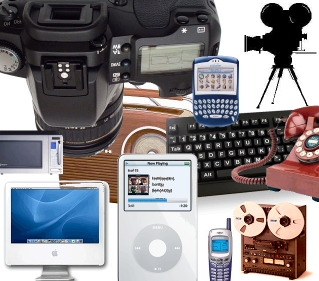
I liked the way the Merriam-Webster Dictionary defines technology: “…the sum of the ways in which social groups provide themselves with the material objects of their civilization” ( http://www.merriam-webster.com/dictionary/text). 

Ong describes technology as not to degrade human life but to enhance it (Ong, 2008, p. 82). Unfortunately, technology has encapsulated many parts of our society, and instead of enhancing it, has enslaved it. A quick look around your environment will reveal the extent that technology has encapsulated us. Drivers who are glued to their bluetooth, people who cannot live without their cell phones or blackberries tied to their hips, people interrupting your conversation with them to attend to their vibrating cell phones, etc. All signs of a society that is techno-savy.

 I chose the picture Slave to Technology as it reinforces the idea that these tools are not necessarily our slaves, but we are in some ways slaves to it.  It was a great picture depicting how our hands are tied to technology. However, after fighting for an hour trying to insert it into my post – I gave up and chose this picture instead. Ironic isn’t it? Technology got the best of me!

Finding the balance of integrating technology into our lifestyles is the key to our success.

Categories
Introductions

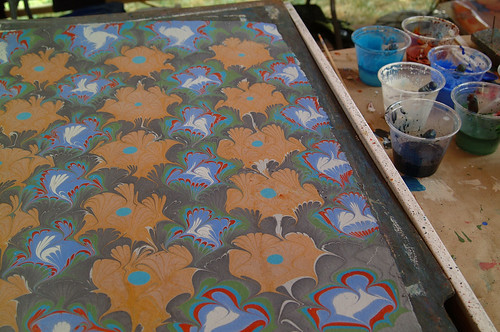
Technology can be beautiful………

Paper Garden, originally uploaded by Smithsonian Institution.

I chose this picture because it demonstrates that technology can be used to create something beautiful. Technology has been successfully integrated into many aspects of society, including the Arts, (textiles, paintings, sculptures, etc) and Humanities. Without the advancements of techniques, the different textures of the paints, the design of the paintbrushes, the construct of the medium, etc., this beautiful mosaic could not be made. Simple, yet beautiful. Technology does not have to be complicated. It can be simple, but at the same time sophisticated and elegant. I generally find that people make it more complicated than it really needs to be.

Hi, my name is Deb Giesbrecht. I have been a nurse for 21 years. I work in Winnipeg and I teach nurses how to use computer programs within their working environment. Many nurses have difficulty with new technology, including computer programs that are designed to assist them in their daily tasks. My role is to support and educate them in this process. Electronic charting is a few years away, however, we are beginning to get nurses acquainted in using computers in their own work environment – which is challenging enough! I have recently implemented a Learning Management System, which allows learners to do online learning prior to face-to-face classroom time. This has proved to be challenging and enlightening all at the same time.

This is my 4th MET course and I am looking forward to seeing what kind of positive impact this will have, not only to me personally, but also in my own classroom. I am always looking for new and varied ways to get messages across to the learner, and I have found that my previous courses in the MET program have equipped me with skills that I than pass along to the learners. I am eagerly anticipating what new skill set I will be acquiring this term!

Spam prevention powered by Akismet

Creative Commons Attribution 3.0 Unported
This work is licensed under a Creative Commons Attribution 3.0 Unported.