Categories
Commentary 3

Social Tagging

Third Commentary by Dilip Verma

Social Tagging

Many popular web based applications are described as belonging to the Web 2.0. Alexander (2008) suggests that what defines Web 2.0 software is that it permits social networking, microcontent and social filtering. Users participate in the Web 2.0 by making small contributions that they link to the works of other contributors to form part of a participative discourse based on sharing. In social filtering, “creators comment on other’s creations, allowing readers to triangulate between primary and secondary sources.” (Alexander, 2008). One of the offspring of this new cooperative form of literacy is the creation of Folksonomies.

Folksonomies are user-defined vocabularies used as metadata for the classification of Web 2.0 content. Users and producers voluntarily add key words to their microcontent. There are no restrictions on these tags, though programs often make suggestions by showing the most commonly previously used tags. Folksonomies (also known as ethnoclassification) represent an important break with the traditional forms of information classification systems. This technology is still in its infancy; presently it is used for the categorizing of photos in Flickr, of Web pages in Del.icio.us and of blog content in Technorati. However, its use is sure to spread as the Web 2.0 gains popularity.

Berner- Lee, designed the Web to allow people to share documents using standard protocols. His proposal for the Semantic Web (see video) is that raw data should now be made shareable both between web programs and between users. At the moment social tagging is program specific. There is no reason to assume that it will or should remain this way. For tags to be readable by different programs, they will require a common structure. A system whereby tags can be shared and analyzed across applications is possible by creating an ontology of tags. This ontology will merely be a standard of metadata that records more than just the tag word applied to an object. Gruber (2007) proposes a structure for the metadata including information on the tag, the tagger, and the source. In this way tags will be transferable and searchable across the Web, making them a much more powerful technology.

Standard classification systems are structured from the top down. Professionals carefully break down knowledge into categories and build a vocabulary, which can then be used to hierarchically categorize information. Traditionally, categorizing is a labor-intensive, highly skilled process reserved for professionals. It also requires users to buy into a culturally defined way of knowing. Social tagging is the creation of metadata not by professionals (e.g. librarians or catalogers), but by the authors and users of microcontent. The tags are used both as an individual form of organizing as well as for sharing the microcontent within a community (Mathes, 2004).

Weinberger (2007) divides organizational systems into three orders, defining the third order as a system where information is digital and metadata is added by users rather than professionals. Apart from the physical advantages of storing information digitally, the author sees that this change in the creation of metadata will “undermine some of our most deeply ingrained ways of thinking about the world and our knowledge of it.” Weinberger (2007) sees tagging as empowering, as it lets users define meaning by forming their own relationships rather than having categories imposed upon them. “It is changing how we think the world itself is organized and -perhaps more important- who we think has the authority to tell us so.” (Weinberger,2007, ¶ 48). Mathes notes that “the users of a system are negotiating the meaning of the terms in the Folksonomy, whether purposefully or not, through their individual choices of tags to describe documents for themselves” (2004, ¶ 46). In Folksonomies, the creation of meaning lies firmly on the shoulders of the user.

The interesting thing about social tagging is that a consensus of meaning is naturally formed. “As contributors tag, they have access to tags from other readers, which often influence their own choice of tags” (Alexander, 2008, p. 154). Udell notes that “the real power emerges when you expand the scope to include all items, from all users, that match your tag. Again, that view might not be what you expected. In that case, you can adapt to the group norm, keep your tag in a bid to influence the group norm, or both” (2004, ¶ 5). Folksonomies are organic as they develop naturally through voluntary contributions. Traditionally, society defines the “set of appropriate criteria” by which things may be categorized (Weinberger, 2007, ¶ 6). But Folksonomies should allow us “to get rid of the idea that there’s a best way of organizing the world” (Weinberger, 2007, ¶ 7).

However, Boyd raises some concerns about who is forming this consensus and its influence on power relations. The author notes that “most of the people tagging things have some form of shared cultural understandings” (2005, ¶ 3) and that these people are ” very homogenous” (2005, ¶ 3). The author adds that “we must think through issues of legitimacy and power. How are our collective choices enforcing hegemonic uses of language that may marginalize?” (2005, ¶ 7). At the moment the use of tags is restricted to a small homogenous group. This is representative of the wider problem of the globalizing influence of a web dominated by “a celebration of the “Californian ideology”” (Boshier & Chia, 1999). The consensus formed in Folksonomies will be representative of only a small sector of the population. To address this requires providing access and a voice in the Web 2.0 discourse to minorities. If user defined tags become the standard for metadata on the Web 2.0, it is important that all groups take part in the forming of the consensus. Without access for marginalized communities, Folksonomies will not achieve their true liberating potential.

References

Alexander, B. (2008). Web 2.0 and Emergent Multiliteracies. Theory into Practice, 47(2), 150-160. Retrieved November 20, 2009 from http://dx.doi.org/10.1080/00405840801992371

Boyd, D. (2005). Issues of Culture in Ethnoclassification/Folksonomy. Retrieved November 26, 2009, from Corante Web Site: http://www.corante.com/cgi-bin/mt/teriore.fcgi/1829

Boshier, R. & Chia, M. O.(1999) Discursive Constructions Of Web Learning And Education: “World Wide” And “Open?” Proceedings of the Pan-Commonwealth Forum on Open Learning Retrieved November 15 from http://www.col.org/forum/PCFpapers/PostWork/boshier.pdf

Gruber, T. (2007). Ontology of Folksonomy: A Mash-up of Apples and Oranges. Int’l Journal on Semantic Web & Information Systems, 3(2). Retrieved November 27, 2009 from http://tomgruber.org/writing/ontology-of-folksonomy.htm

Mathes, A. (2004). Folksonomies-Cooperative Classification and Communication Through Shared Metadata. Retrieved November 26, 2009 from http://www.adammathes.com/academic/computer-mediated-communication/folksonomies.html

Udell, J. (2004). Collaborative Knowledge Gardening. Retrieved November 25, 2009, from InfoWorld Web Site: http://www.infoworld.com/d/developer-world/collaborative-knowledge-gardening-020

Weinberger, D. (2007). Everything Is Miscellaneous: The Power of the New Digital Disorder. New York: Times Books. Retrieved November 26, 2009 from http://www.everythingismiscellaneous.com/wp-content/samples/eim-sample-chapter1.html
Categories
Rip.Mix.Feed.

Communicative Language Cartoon by Dilip Verma

Hello my friends,

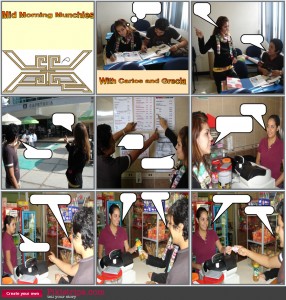
I have had the idea of making cartoons to create communication in the foreign language classroom, but though I had searched the Net, I hadn’t found anything suitable. Well, from the great site Cogdogroo: 50 Web 2.0 Ways to Tell a Story (http://cogdogroo.wikispaces.com/StoryTools#toc33), I got on to PikiStrips (http://www.comeeko.com/”>http://www.comeeko.com/)

It actually took me a long time to make the comic, first taking the pictures and then figuring out how to work the software. The program is pretty cool, but it has a few bugs; plus it doesn’t give much flexibility with the layout. Nevertheless, I am happy with the results (except for the photo on page 2 that is rotated 90º; I can’t fix it, so never mind).

The idea was to make a comic with photos and bubbles instead of words so that students create their own dialogues. Of course, the next step would be to have the students create their own comics and then switch them around, so each group got another group’s comic.

This is the first page of the three that make up the complete story:
Mid Morning Munchies

They look a lot better if you download them, as the images are much bigger.

You can find page 1 at: http://www.comeeko.com/ps/gallery/view_image/33124353

You can find page 2 at:
http://www.comeeko.com/ps/gallery/view_image/33124943

You can find page 3 at: http://www.comeeko.com/ps/gallery/view_image/33125163

There is a button on the page to download the image. I hope you enjoy the story.
Dilip

Categories
Commentary 2

Formal Commentary #2 by Dilip Verma

Hypermedia Literacy and Constructivist Learning Theory

The changing form of representation in modern media, and the changing relationship between reader and author in hypertext both call for a change in the method by which literacy is taught. The way that hypertext, or better still hypermedia, is experienced and produced requires a different set of skills than those taught in the traditional classroom. The fact that some of the changes called for by the New London Group closely mirror practices suggested in constructivist learning theory gives added weight to the impetus for a shift in classroom methodology. In constructivism, learning is student centered, and meaning is personal, being constructed actively by the student within a social context. These teaching techniques are precisely what are required to produce students literate in hypermedia.

Hypermedia incorporates multi-modes of meaning involving design decisions in, at the very least, the linguistic, audio, spatial and visual realms. Education has traditionally focused on the linguistic logical intelligence, but multi-literacy requires designers and viewers to develop multiple intelligences (as defined by Gardner) and multiple grammars for different modes of representation. Though parallel means of representation do exist between grammars (Cope and Kalantzis, 2006 citing Kress, 2000b and Kress and van Leeuwen, 1996), on the whole, different modes of representation present meaning differently. For example, speech, and consequently writing, organizes events temporally, whilst images represent spatially arranged entities (Kress, 2005, p.13). Therefore, language literacy requires a different grammar to visual literacy. Individual students naturally vary in their mastery of these grammars; one may have an instinctive understanding of spatial representation, while another is more aware of linguistic meaning. Traditionally, literacy has been taught mono grammatically, whereas constructivism embraces the idea of individual perspectives in a classroom that work collectively to create meaning.

The Pedagogy of Multiliteracies (The New London Group, 1996) calls for the active construction of meaning and teaches learners how to be “active designers of meaning” (Cope and Kalantzis, 2006, p10). In the traditional classroom, learners are encouraged to repeat modes of representation in the production or consumption of media rather than construct new, personalized designs influenced by their own perspective, a perspective influenced by cultural mediation based on Vygotsky’s Cultural Historical Activity Theory. In the “Multiliterate” classroom, students become constructors of meaning and are transformed in the process. “Meaning makers remake themselves” (The New London Group, 1996, p15). The Pedagogy of Multiliteracies is a student centered, active process that furthers a Constructivist agenda.

In the traditional text, as in the traditional classroom, the author offered a single vision or mode of representation to which the student adapted herself and “followed the strict order established by the writer while needing to interpret the word signifiers, turning them into his or her signs” (Kress, 2005, p.9). In hypermedia, it is the visitor, not the author, who determines the path (Kress, 2005) and students are “agents” (Cope and Kalantzis, 2006, p. 7) of their own knowledge path. Rather than being passive, hypermedia readers are “meaning makers (that) don’t simply use what they have been given; they are fully makers and remakers of signs and transformers of meaning” (Cope and Kalantzis, 2006, p.10). The fluid nature of meaning suggests a constructivist epistemology and a shift from the author or teacher as authority. The New London Group does not see meaning as a concept external to the learner, but rather as internal. Traditional teachers, just like authors, were authorities, establishing a path through their text, which the reader or student followed diligently. Digital authors and teachers are no longer mappers of knowledge; they are not sources of knowledge, just sources of information. If the students of today are to be “actors rather than audiences” (Cope and Kalantzis, 2006, p. 8), a student-centered focus for education is called for.

Finally, digital literacy requires a “more holistic approach to pedagogy” (Cope and Kalantzis, 2006, p.3). The interconnected modes of representation suggest a classroom where the focus is on ways of knowing rather than the division of knowledge into isolated areas. Modern literacy requires a knowledge of multiple grammars, those of linguistic, visual, audio, gestural, and spatial and representation (The New London Group, 1996, p. 17). Moreover, an understanding of how these modes combine synaesthetically is a separate grammar all together. This last form, the multimodal representation of meaning, is special in that it represents the way the other modes play off each other to create interconnected patterns of meaning (The New London Group, 1996, p. 17). This multimodal grammar is important for digital literacy as children are naturally synaesthetic, in the way they combine their modes of representation, and “much of our everyday representational experience is intrinsically multimodal” (Cope and Kalantzis, 2006, p. 13). If literacy is to be relevant to learners, then pedagogical activities must be authentic and related to students’ experience in a world of multimodal communication. Hence it is counterproductive and unnatural to compartmentalize modes of meaning as traditional pedagogy has done.

References

Cope, B., & Kalantzis, M. (2006). ‘Multiliteracies’: New Literacies, New Learning. Pedagogies: An International Journal, 4(3), 164-195.

Kress, G. (2005). Gains and losses: New forms of texts, knowledge, and learning. Computers and Composition, 22(1), 5-22.

The New London Group. (1996). A Pedagogy of Multiliteracies. Designing Social Futures. Harvard Educational Review, 66(1), 60-92.

Categories
Research Paper

Research paper on Punctuation by Dilip

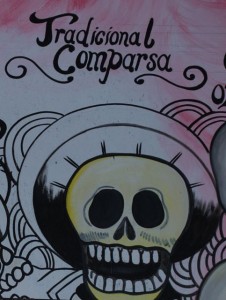
Day of the dead
It's a special time here in Oaxaca

Hello my virtual friends.Please visit this link to read my research paper on punctuation

Take care

Dilip

Categories
Commentary 1

Dichotomies by Dilip Verma

Our society is inextricably interwoven with technology to such an extent that we have become completely dependent upon the tools of our own creation. Technology is such a part of our reality, and has been so internalized that we are no longer always conscious of its influence or presence, but rather take it for granted. There is very little public discourse about the effects that technology has had and is having on our consciousness, so it is enlightening to read works by authors such as Ong and Postman. Postman (1992) analyses the influence that technology has had in shaping our society, while Ong (2002) looks at one technology, literacy, and examines the changes it has caused to our cognitive processes. These authors present technological dichotomies that help us to “become aware of our biases…and to reflect critically on their implications” (Chandler, 1994, Photocentrism, ¶ 1). There are dangers, however, in reducing complex continuous processes into discrete elements.

By simplifying the nature of our interrelation with technology, by taking a dichtomatic approach, it is easy to highlight the important issues in technological discourse. However, there is a risk of exaggerating or over stating the case. Sweeping statements are powerful and eye-catching, but all too often hyperbole. Deterministic discourses are by nature over-analytic and take an idea to extremes. For example, Ong goes so far as to suggest that writing has a “close association with death” (2002, p. 80). And Postman declares that in the United States of America there has occurred “the submission of all forms of cultural life to the sovereignty of technique and technology” (1992, p. 52). These are interesting and important concepts, but not necessarily realities.

Postman is a valuable addition to the technological debate as he is a lone voice standing against the predominant tecnophilic utopian discourse. Postman’s fear of our belief in “scientism” (1992, Chapter 9) is valid and thought provoking. Nevertheless, Postman notes that “A new technology does not add or subtract something. It changes everything” (1992, p. 18). This is a very broad statement. Chandler counters that “any medium facilitates, emphasizes, intensifies, amplifies, enhances or extends certain kinds of use or experience whilst inhibiting, restricting or reducing other kinds” (1996, Engagement with Media, ¶ 12). Technologies act on the culture that was already there, which is why countries such as Norway and the United States, both having the same technologies, do not use them in the same way.

Though the distinctions that Ong (2002) makes between orality and literacy are extremely thought provoking, it is very difficult, if not impossible, to physically separate and distinguish oral and literate cultures as two discrete elements. In opposition to the arguments of Ong, Graff (1986, p. 69) notes that “the oral and the literate then, like the human and the printed, need not be opposed as simple choices. Human history did not proceed in that way; rather it, allowed a deep rich process of reciprocal interaction and conditioning to occur as literacy gradually spread and gained in acceptance and influence”.

To define a dichotomy, I have chosen the following, cited by Nubiola (N.D.), from the Dictionary of Philosophy and Psychology (1901-1905). A dichotomy is a “form of logical division in which, at each step, the genus is separated into two species, determined by the possession and non possession, the presence and absence, of a mark or attribute. The species so determined satisfy the rules of division: they exclude one another, and they exhaust the extent of the genus divided.”

         The idea of exclusion is important here; If Ong sees literacy and orality as a dichotomy, then he is suggesting in some way that they are mutually exclusive mediums that “give shape to experience” Chandler (1996, Engagement with Media, ¶ 11). Both orality and literacy have always been interwoven in all literate cultures. For example Graff (1986, p. 70) notes that “for many centuries, reading itself was an oral, often collective, activity, and not the private, silent one we now consider it to be.” What is more, the influence of orality and literacy varies greatly between societies. For example, the percentage of the Mexican population that are regular readers is low whilst in Japan it is very high. Television, the linguistic staple of Mexican culture, is both aural and visual but not textual as is the written word. Doesn’t it over simplify the subject to neatly categorize Japan and Mexico in the same group?

         If we are going to make a distinction between modes of communication, then surely linguistic and non-linguistic are more natural choices. Ong (2002) argues that spoken language is natural whereas written language is artificial, but all language is artificial as it is language that mediates experience. Chandler (1994) notes that language allows for the construction of reality. Because we have so completely internalized language, we are no longer aware of its mediating effects. It is language and not the written word, as Ong contends, that separates the world into discrete things. Chandler (1994, Logocentrism, ¶ 6) cites Arieti (1976) as arguing that  “we tend to perceive what we can subsequently understand or place in some category, and we tend to overlook the rest.” Our senses receive an infinite amount of information that we organize or filter by categorizing through the naming of objects. Even here though, the dichotomy simplifies reality. Surely, at the most basic level, organisms can distinguish between what is edible and what is not as a basic form categorization without words. Categorizing in fact is not something that started with language, but was enhanced by it.

         In general great divides succeed as discourse but fail as realistic approaches. Society is not cut and dry, but made up of continuous variables. To divide societies into literate or oral, or into technopolies or technocracies is not practical. Chandler (1994, Great Divide Theories, ¶ 6) quotes Finnegan (1988) as stating that ·”’continuity theories’…. stress a ‘continuum’ rather than a radical discontinuity between oral and literate modes, and an on-going dynamic interaction between various media”. This is much closer to our techno-shaped reality, a shade of grey rather than black or white.

Baldwin, J.M., ed. (1901-1905). Dictionary of Philosophy and Psychology. 3 vols. New York. Macmillan.

Chandler, D. (1994). Biases of the Ear and Eye: “Great Divide” Theories, Photocentrism, Graphocentrism & Logocentrism. Retrieved September 27, 2009, from http://www.aber.ac.uk/media/Documents/ litorial/litorial.html

Chandler, D. (1996, February). Engagement with media: Shaping and being shaped. Computer-Mediated Communication Magazine. Retrieved September 27, 2009, from http://www.aber.ac.uk/ media/Documents/litorial/litorial.html

Graff, H. J. (1986). The legacies of literacy: continuities and contradictions in western society and culture. In S. De Castell, A. Luke & K. Egan (Eds.), Society and Schooling: a reader. Cambridge University Press.

Nubiola, J. (N.D.). Dichotomies and Artifacts: A reply to Profesor Hookway. Retrieved September 30, 2009, from http://philpapers.org/archive/NUBDAA.1.pdf

Ong, W. (2002). Orality and Literacy. New York, Routledge

Postman, N. (1993). Technopoly: The Surrender of Culture to Technology. New York. Vintage

Categories
Technology

What isn’t technology?

After reading and thinking (and dreaming!) about the definition of technology, I have come up with this:

Technology is tools, skills and techniques that we use to control and shape our environment.

Which leads me to two questions:

  1. Obviously writing is technology, but is language itself also  technology?
  2. Is there anything that isn’t technology?

That is as far as I can get on my own. I now look forward to entering into the debate.

 Dilip Verma

Categories
Text

A text is more than just words


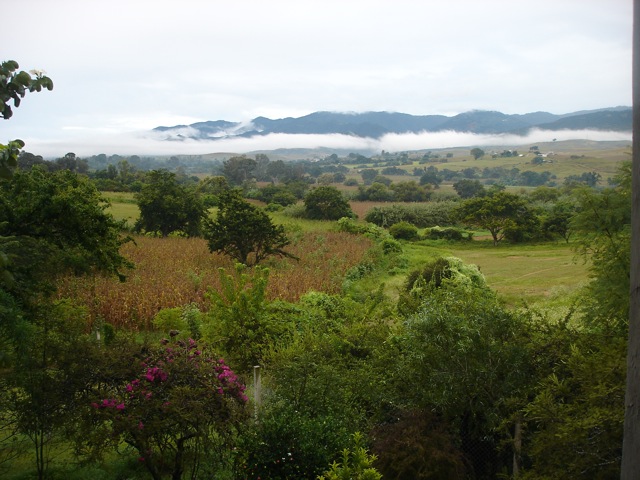
Is this a text?
View from my house near Monte Alban, Oaxaca

My definition of a text:

A text is a collection of symbols that carry meaning. A text can be interpreted or “read” because the symbols are coherent and understandable, i.e. they are a code in the semiotic sense.

In this way, I hope to define a text as more than just words, but also include images, tattoos, facial expressions and gestures, and perhaps even landscapes.

Could an ancestral landscape be considered a text to an indigenous community, where rocks, trees and clouds can be read as they have meaning?

Spam prevention powered by Akismet

Creative Commons Attribution 3.0 Unported
This work is licensed under a Creative Commons Attribution 3.0 Unported.