Categories
Rip.Mix.Feed.

Adventures in storytelling…

Here is post 2 of 2. I have played around all week with Kerploof, Tikatok, and writing a story that didn’t sound lame. Needless to say, each time I played around on the websites I was annoyed at what I had written/created. So, there is no link here as to what I’ve done, but instead I’ll share my thoughts about these sites.

I was really intrigued by the ease of the Tikatok website, and since it was designed for primary students I  created a few mini-lessons for my own students for next year. Kerploof was also easy to use in creating a story. What I really liked was the way that one could enlarge, rotate the graphic and even add a text box. I think this website would appeal to my students as well.

After I created, deleted, and recreated over and over again, I decided to check out other ways to tell a story. For my intermediate students, the Dandelife timeline site will be an excellent addition to the social studies curriculum. It would be neat for the students to create a timeline of  themselves throughout elementary school and share with their peers, teachers, and parents at the end of the school year. They could add photos and link to other students in their class.

Overall, I enjoyed this activity more the second time around, as I have more time to take what I have learned and write up some lessons for the upcoming year.

Categories
Commentary 3

Web 2.0 tools: educational friend or foe?

Commentary #3 ~ K. Kerrigan

After reading Bryan Alexander’s article, “Web 2.0 A New Wave of Innovation for Teaching and Learning? (2006), my assumption that I was a teacher who was “with the times” came suddenly crashing down. Alexander gives even a modest techie a run-down on what Web 2.0 can now offer. As a teacher, one must ask: are these tools an educational friend or foe? Within the classroom, the importance of using Web 2.0 tools, such as social networking, has a mixed reaction among educational professionals. Walling (2009) points to two different camps in education, those who think that social networking is a distraction to the education process, and those who see this tool as way to exchange ideas and enhance the education process. Motteram and Sharma (2009) discuss that by using Web 2.0 tools it allows students to be social in many sorts of ways: textually, orally, visually, and aurally.  For example, podcasting, weblogs, wikis, Skype, Google Docs, and chat programs like MSN Messenger. “The process of creating Web 2.0 materials involves the engagement of a community, consisting of developers who create tools and the users who produce the content using a range of digital technologies” (Motteram & Sharma, 2009, p. 88). Current debate is whether those users should be students within a classroom.

Why would a teacher want to use these tools?

Alexander states that “ …Openness remains a hallmark of [the Web 2.0] emergent movement, both ideologically and technologically” (Alexander, 2006, p.34). For today’s students, this openness is an easy task, whereas for teachers and parents it is a bit harder to grasp. This open, social environment can be conducive to learning with the right teacher and the right tools.  “Tech-savvy teachers who work with students to produce media will find that openness to exploring Web 2.0 strategies for idea networking and creative sharing can be highly productive” (Walling, 2009, p. 23). One might argue that it shouldn’t just be those ‘tech-savvy teachers’ who utilize these resources. Are other students and entire schools missing out on Web 2.0 and what it has to offer? For benefit of all students,  it will require for some teachers to move away from their technophobia and worries about the constant sharing of information.

Motteram and Sharma (2009) state that  “…when we stop seeing such technologies as somehow extras and when they blend into the background, they will have become as accepted as books are now, as a part of the classroom furniture” (p. 86).Teachers must first look at the inherent value of these tools and the effect it will have on their students. Web 2.0 responds more deeply to its users versus Web 1.0. As Motteram and Sharma (2009) declare, “Web 1.0 tools deliver information to people, Web 2.0 tools allow the active creation of information by users”  (p. 88).  Students are a lot more social today with the utilization of these tools. For many, it is almost second nature to blog, bookmark, or tag something for themselves and for their peer community to view. Within the classroom these tools, especially social networking sites, create a new and exciting environment for the students. “It enables the face-to-face class to be extended in various kinds of ways and also extends the time that the students spend on tasks” (Motteram & Sharma, 2009, p. 90). Students are also encouraged to be more collaborative within this environment. This can be accomplished by using wikis or weblogs.  As Alexander reminds us that “these services offer an alternative platform for peer editing, supporting the now-traditional elements of computer-mediated writing-asynchronous writing…” (2006, p.38). Editing, reading, and writing are affected when a student uses one of these tools. When they realize that their peers are going to be reading their work (via a weblog or wiki), many students create work surpassing that done within the f2f classroom. The changing face of literacy in today’s classroom also allows for the student to become the author, the producer and the critic of text. They are now active learners with these technologies, rather than passive consumers of text (Handsfield, Dean & Cielocha, 2009).  Having students who are active learners, who are passionate about literacy, and who want to post their work, means that the teacher can spend more time supporting and encouraging their students rather than fighting them on basic assignments.

In short, Web 2.0 tools need to be embraced by all teachers within the classroom. It will not only enhance their curriculum, but excite and motivate all students. Web 2.0 tools are friend to the teacher and ultimately the student, offering a plethora of resources and opportunity for collaboration among peers globally.

References

Alexander, B. (2006). A New Wave of Innovation for Teaching and Learning?. Educause Review, 41(2), 32-44.

Cox, E. (2009). The Collaborative Mind: Tools for 21st-Century Learning. MultiMedia & Internet@Schools, 16(5), 10-14. Retrieved on November 26, 2009 from Academic Search Complete database.

Handsfield, L., Dean, T., & Cielocha, K. (2009). Becoming Critical Consumers and Producers of Text: Teaching Literacy with Web 1.0 and Web 2.0. Reading Teacher, 63(1), 40-50. Retrieved on November 26, 2009 from Academic Search Complete database.

Motteram, G., & Sharma, P. (2009). Blending Learning in a Web 2.0 World. International Journal of Emerging Technologies & Society, 7(2), 83-96. Retrieved on November 26, 2009 from Academic Search Complete database.

Walling, D. (2009). Idea Networking and Creative Sharing. TechTrends: Linking Research & Practice to Improve Learning, 53(6), 22-23. Retreived on November 26, 2009 from doi:10.1007/s11528-009-0339-x.

Categories
Rip.Mix.Feed.

(Re)telling a story…

For this activity, I was drawn to a previous assignment for another MET course. I wanted to share this story with you all (and some of you, again) because it was my first foray into the world of online slide shows. I used the Slide site for a anniversary present for my husband this past summer. It tells a lot about our lives, which took me a while to be comfortable with posting it. As I saw what we had to do for the Rip. Mix. Feed. assignment, I was excited to try some new tools that I normally wouldn’t take the time to explore. So this is really post 1 of 2! Enjoy the video!

A present for BK Fresh

Categories
Commentary 2

Refashioning the Writing Space

Refashioning the writing space for the elementary school student

Commentary #2~ Kelly Kerrigan Section 65A

What does the writing space look like today?

The writing space has undergone many changes in technology, from stone to papyrus to manuscript to computer screen. “Each writing space is a material and visual field, whose properties are determined by a writing technology and the uses to which that technology is put by a culture of readers and writers” (Bolter, 2001, p. 12). Bolter discusses how recording, organizing and presenting text is now done with a word processor and the Internet. One might see this as the modern take of the wall of a public bathroom stall. There are thoughts to ponder, to take away, and others to merely disregard. Sifting through these thoughts can take a moment or a few trips. It is our prerogative to decide what’s worthwhile.

Most adults are aware of changes to our current writing space, but what does that mean for the elementary school student? “Our culture has chosen to fashion these technologies into a writing space that is animated, visually complex, and malleable in the hands of both writer and reader” (Bolter, 2001, p. 13). For a parent of an elementary school student today, this image of the computer and online writing space as being malleable could provoke major fear for their child. This is especially true if the parent has never used the internet during their secondary or post-secondary education years. As a teacher, I have come across many parents who are opposed to using the internet as a writing space. For the children that I teach, their generation needs to be taught how to use this space appropriately and to their advantage, for this is their codex!

Bolter argues that the writing space is a cultural decision. Our current use of the internet as a writing space is a refashioning of the printed book. That being said, do we try to differentiate within this writing space? Do we as readers and writers tend to shun those rants and raves on weblogs and prefer instead those who have posted a document? As if those who took the time to post a document are much more competent in their thoughts than those who write in the common forum or wiki. Teachers must help students discern what is appropriate, but also help them use these spaces effectively.

For the elementary teacher and student, the forum and wiki are great spaces for students to develop their writing skills (McPherson, 2006). Collaboration within these contexts also provides an excellent space for skill development. “Unlike much of the individualized writing required in school and the real world, writing entries in a wiki demands that students be taught writing skills that emphasize negotiation, cooperation, collaboration, and respect for one another’s work and thoughts” (McPherson, 2006). One could imagine the wiki as the technology replacing the bathroom stall!

How does the changing writing space affect literacy?
As Bolter states, “literacy is, among other things, the realization that language can have a visual as well as an aural dimension, that one’s words can be recorded and shown to others who are not present, perhaps not even alive, at the time of the recording” (p.16). Within a wiki, students can use different mediums to enhance their message. “… Students can use wikis to insert music, graphics, video, and photos in their writing and to communicate meanings that were once inaccessible or not fully expressed through the printed word” (McPherson, 2006). This has a huge effect on the overall literacy of a group of students. For those who struggle with writing assignments or with conveying meaning in their work, using a multimodal approach to complement their writing can foster student achievement in literacy.

Research has shown that these new technologies being employed in the classroom challenge the traditional views of literacy (Jewitt, 2005). The technologies that create a new writing space enable a new level of literacy for elementary school students. What it means to be literate in the 21st century is very different from previously set standards. Unfortunately, students are caught between what is written in the curriculum and what is real. Teachers who embrace the new literacy standards are often criticized or held back from trying out new ideas, such as wikis; While older generations of teachers force their students to maintain the literacy levels they were once held to. The refashioning of the writing space for today’s student population involves new technologies, including the use of online writing spaces. All teachers need to embrace these technologies in order to maintain a high level of literacy for their students.

References

Bolter, Jay David. (2001). Writing space: Computers, hypertext, and the remediation of print [2nd edition]. Mahwah, NJ: Lawrence Erlbaum.

Jewitt, C. (2005) ‘Multimodality, “reading”, and “writing” for the 21st century’,
Discourse: Studies in the Cultural Politics of Education, 26(3), 315–31.

McPherson, K. (2006). wikis and student writing. Teacher Librarian, 34(2), 70-72. Retrieved from Academic Search Complete database on November 4, 2009.

Categories
Research Paper

See Jane Read: The rise of the basal reader in education

The basal reader has been seen an invaluable tool in reading to many teachers for over a century. The reader has undergone a few changes, but the basic premise remains the same. Students read leveled books that prepare them for grade level examinations and curriculum. Teachers are not to deviate from these readers when teaching reading comprehension, though this is not always the consensus in the education community. “Reading is seen as a flexible tool for learning rather than an inflexible set of skills to be acquired, stored, and brought out for use as the situation arises” (Harste, 2001, p.265). As Harste states, this is the viewpoint by most teachers on basal readers in education today. In this paper, I will first give a brief history of the introduction and usage of basal readers, followed by an overview of the changes to education as a result of this technology.

Basal readers were introduced to school children in the mid-to-late 19th century. It was during this time that students would congregate into one room schools, where the ages would range from 5 to 18, to be taught by one teacher. There were very little textbooks available during this time. One teacher, William McGuffey, was asked to create a series of books for primary students. Known as McGuffey Readers, they were filled with stories of strength, character, goodness and truth.  These primary books contained many pictures and followed a phonics based approach to teach reading. Over time, readers were then created for older students, which focused more on skills in oral reading and presentation. The readers for older students contained poems, stories, and bible passages. Another known basal reader is the Dick and Jane series, written by William S. Gray in the 1930s. These readers focused more on reading the whole word and with using repetition and did not follow the same phonics lessons the McGuffey readers did. The modern day basal reader used from about the 1950s onwards, has books for students, a guide for the teacher, as well as some predetermined activities (Hoffman, McCarthey, Elliott, Bayles, Price & Ferree, 1998). When working with basal readers, students are divided into groups “…according to their abilities to read accurately and to complete written assignments successfully” (Shannon, 2001, p.235). These skill based books/activities are taught in sequential order, with the teacher providing pre- and post- reading activities.

For much of the 20th century, teachers relied on basal readers to fulfill requirements for the reading comprehension curriculum. It was in the late 1970s that the pendulum shifted away from basal readers and workbooks to trade books and “experimental programs”. Goodman (2001) used both basals and trade books in her reading program and asked her students for feedback at the end of the year. She notes that her students “…were vehemently opposed to basals, almost all with the same reason: Basal readers are ‘boring’” (Goodman, p.277). Early basals, such as the Dick and Jane series, were criticized for their lack of diversity in the choice of characters and in storylines. “…The researchers suggest that the meaningless stories of beginning basal anthologies pose serious problems for young children. As as result, those students experience difficulty in learning to read” (Shannon, 2001, p. 237). In an infamous 1955 book, Why Johnny Can’t Read, author Rudolf Flesch criticizes the methodology of these readers. The whole word approach had students stumped when they came across a word they didn’t know when reading. The student was not versed in the phonics approach, since teachers were not supposed to deviate from the basal reading program, and overall literacy was declining. Flesch advocated for a return to the phonics approach, though it was many years after this book was published before schools began to do so.

At first, the basal reader was an excellent addition to education. It solved the dilemma of how to teach multiple ages and levels under one roof. As schools became bigger and there were more teachers, the lack of anything different kept the basal reader in circulation. The only change came with the readers of the 1930s, which had students reading whole words and not using a phonics approach. This resulted in many students scoring lower on literacy tests and a large number of students showing an overall disinterest in books and reading. Educational advocates went back to the phonics approach with great success, though it was not until quite recently that teachers started to try using trade books and activities other than basal ones.  Harste’s (2001) research shows that “…almost anything teachers do beyond a basal reading program significantly improves reading comprehension”  (p.265). Based on Flesch and Harste’s research, one might conclude that basal readers hindered progress in literacy for many years. “The basal sequence is so instruction-intensive that, by the end of the year, only one fourth grader had completed the fourth grade book. Instead of providing access to reading, the basal denies it” (Goodman, 2001, p.275-276). Teachers who had been taught with basals, continued to use them, unknowingly retarding reading skills for generations.

When speaking with fellow educational professionals, many share the sentiment that basal readers are outdated. “Advocates argue that basals have not lived up to their original promise to remain on the cutting edge of educational science in order to ensure that all students will learn to read” (Shannon, 2001, p.236). Many feel that using a varied approach will instead increase the literacy levels of their students.  “…Through daily writing and reading and sharing they begin to recognize and remember words and their speaking vocabulary increases their reading vocabulary daily at a much faster rate than any basal reader could ever do” ( Oxendine, 1989, p. 12). Using a basal reading program, children must make the “…transition from ‘learning to read’ to ‘reading to learn’…” (Walsh, 2003, p.24). Walsh continues to argue that children are not gaining or extracting meaning from the text and the basal reader is merely a place where children learn to sound out words.

As an elementary school teacher, it is hard not to imagine a time without basal readers influencing reading comprehension lesson plans. Many generations of readers were the result of an implemented basal reading program. This program was not all bad, but it did not provide a variety in teaching methods, as many teachers did not deviate from the program manual. In the past 20 years, basal readers have seen a decline within the classroom. Teachers are choosing a varied approach when teaching reading skills, including a phonics component, using trade books, and having students create their own stories to read aloud. This approach has students more interested in reading, as well as using reading skills to learn new tasks in other subjects.

References

Flesch, R. Why Johnny Can’t Read–and what you can do about it. New York, Harper: 1955.

Harste, J. (1989, September). The Basalization of American Reading Instruction: One Researcher Responds. Theory Into Practice, 28(4), 265. Retrieved September 17, 2009, from Academic Search Complete database.

Hoffman, J., McCarthey, S., Elliott, B., Bayles, D., Price, D., Ferree, A., et al. (1998, April). The literature-based basals in first-grade classrooms: Savior, Satan, or same-old, same-old?. Reading Research Quarterly, 33(2), 168. Retrieved September 17, 2009, from Academic Search Complete database.
Oxendine, L., & Appalachia Educational Lab., C. (1989). Dick and Jane Are Dead: Basal Reader Takes a Back Seat to Student Writings. http://search.ebscohost.com

Shannon, P. (1989, September). Basal Readers: Three Perspectives. Theory Into Practice, 28(4), 235. Retrieved September 17, 2009, from Academic Search Complete database.

Walsh, K. (2003). Basal Readers: The Lost Opportunity To Build the Knowledge that Propels Comprehension. American Educator, 27(1), 24-27.
Categories
Commentary 1

Commentary #1 ~ The use of symbols for early language acquisition

Commentary #1

Kelly Kerrigan  ETEC 540- Section 65A

The use of pictures to convey meaning or as tool to aide memory has been used both in traditional oral cultures and literate cultures. Ong, in his book Orality and Literacy (1982), discusses the ideas of rebus writing, ideographs, and pictographs in both cultures, including specific cultural examples. I will first summarize these ideas and examples and then will further the argument that pictures are a necessary part of language acquisition in a literate culture. Specific focus will be on younger learners, those who are learning disabled, and secondary language learners.

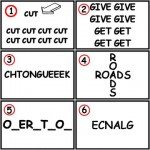
Ong (1982), discusses the use of symbols and pictures as the beginnings of the modern alphabet. “Most if not all scripts trace back directly or indirectly to some sort of picture writing…”(p.85). One example that is still used today is the Chinese writing system, a complex array of characters which takes, on average, twenty years to master. This writing system enables a level of understanding that would not happen orally, due to the diverse collection of dialects within the Chinese culture. The use of pictographs, symbols that convey meaning to a physical object, allows for scripts to emerge, however  with each culture each will use a different meaning associated with the symbol. For example, an image of a book could mean simply a book, or it could mean a building, such as a library, depending on the cultural use.  Similarly, an ideograph, according to Ong, is where the “…meaning is a concept not directly represented by the picture but established by a code” (p. 86). Egyptian hieroglyphs contain examples of pictographs, ideographs, and rebus writing. Rebus writing, another type of pictograph is a sound/symbol, with the symbol representing what the sound signifies. Since the English language has many homonyms, the meaning of the word might not be immediately clear. An example that Ong points out is the picture of a foot, with an arrow pointing to the sole. In rebus writing, the image could mean the sole of the foot, the spiritual soul, or a type of fish. Rebus puzzles are now commonly used in educational settings.

rebus_puzzles_1-6

Example: Rebus Puzzle
Image source: victorkoo.blogspot.com/2008_04_01_archive.html

Ong discusses pictographs with specific attention to their use in oral cultures. I must expand on his explanations in saying that the use of pictographs is also incredibly important in the language acquisition of young learners, those who are learning disabled, and secondary language learners. When young children begin to acquire language, it is done so aurally, with children picking up phonemes and basic word commands from a very young age. Their baby babble then moves into more audible reflection of everyday speech. When children enter school, their vocabulary increases, however it is when a child sets down to write in a literate culture, that symbols and pictures begin to aid in their learning. Much like young learners, older learners will use pictures as a way to aid their memory for specific tasks (aides memoire). Their aides memoire, however are not as rudimentary as those who are in the early stages of language acquisition. “In the semi-phonetic stage, we’ve found children use one, two or three letters to represent words [in their writing]…represent[ing] some speech sounds heard in the words” (Cook.1995, p.66). Most children will soon move from this stage and introduce vowels and form more coherent written word, however for learning disabled students, this is not always the case. “… The ability to make paradigmatic responses in oral language tasks does not ensure that a child will automatically transfer and apply this ability to written language tasks…” (Cartelli, 1978, p. 314).

Learning disabled students, in Cartelli’s (1978) study “…appeared to experience major difficulty in organizing key verbal elements and in understanding the use of language in unlocking the written symbolic code” (p.318) This has major implications for those teachers who work with learning disabled students, for more emphasis must be placed on the use of symbols to represent verbal and written language. Some learning disabled students only use pictures as a form of language communication. The use of pictographs to create sentences and to respond to commands (either by pointing to a fixed board, or using specialized technology to type out answers) are the only way for non-verbal children to communicate in the literate world. The same can be said for secondary language learners. In the early stages of language acquisition, many learners are parroting or mimicking other native speakers. They will respond well to visuals from the start, and will then use these same pictures as support for questions and small assignments later on (Haynes, 2005, n.p.).

To conclude, the use of pictographs have their place in both oral and literate cultures. The necessity of using pictographs, including rebus writing and ideographs within the classroom, have shown to have merit for early language acquisition. Learners rely on the use of symbols to communicate from a basic rudimentary level as well as at a cognitive level for those who are non-verbal and learning disabled.

References:

Cartelli, L. (1978). Paradigmatic Language Training for Learning Disabled Children. Journal of Learning Disabilities, 11(5).

Haynes, J. (2005) Stages of Second Language Acquisition.
Retrieved October 1, 2009 from  http://www.everythingesl.net/inservices/language_stages.php

Ong, W. J. (1982). Orality and Literacy: The Technologizing of the Word. London and New York: Methuen.

Robertson, K., & Randolph, L. (1995). First steps for early writers. Teaching Pre K-8, 25(6), 66.

Categories
Discussion

Module 1/Weblog reflections

This module has been a great introduction to the changing world of text and technology. I have been struck by all the different types of images that we (as a class) were able to find on Flick.r and how they all seemed to relate to technology and its impact on writing and literacy.

I like the collective space and can see how this experience will help when I introduce blogging to my students in the future. That being said, I  like being able to post my musings to the forum within the Vista platform. I find it’s much easier to read and respond to others.

Categories
Technology Text

Text and Technology

Example of Boardmaker software

What is text? Is its classification still the same as it was when I was in school? Or my parents?

Do we allow for the shortened, grammatically incorrect form of language to be applied to this same category? The kind that is seen in countless text messages or quickly written emails?

Text comes in many forms, including the use of braille for those who have vision difficulties.
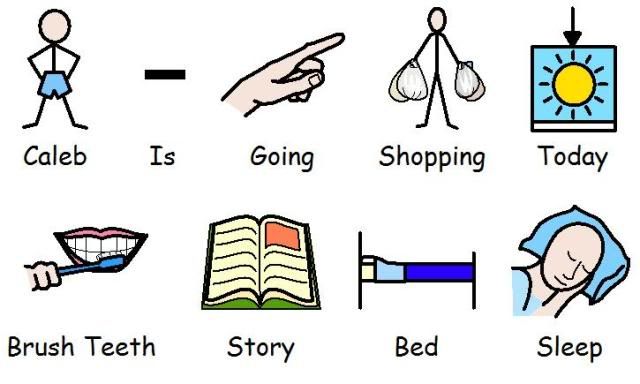
When I think of text and technology, I think of my students who cannot write. Those who use software that conveys an image or multiple images into a logical sentence or story.  Boardmaker software, as shown above, is one example of how one can express their thoughts, and feelings without using the conventional alphabet.

Though I must ask: Is it still text?

Categories
Introductions

Language (Text) Barrier?

Language Barrier, originally uploaded by Xiangdian.

Though many countries have access to the printed word, be it through the local library, bookstore, or the Internet, there are places where text is censored. I typed into the search engine the words “language barrier” with images already in mind, however when I came across this image, I was immediately taken in another direction. I realized that even though technology is helping to establish dialogue in a greater worldwide community, there is still some censorship. This also made me think about personal experiences where I was traveling that made me crave the written word, albeit a newspaper or a trashy novel. It made me feel connected somehow. This photo reminded me that many are not connected.
This then made me think about the benefits of technology for those in other countries, those with lower literacy levels, etc., but I’ll spare you my meandering thoughts–this is merely an introduction!

I’m Kelly Kerrigan and this is my sixth/seventh course in the MET program. I’m currently taking 512 this semester as well. As an elementary school teacher in the Vancouver area, I am fascinated by the changing role that technology brings to text, to the classroom, and finally to my students.

This looks to be an exciting course! Looking forward to working with you all.

Spam prevention powered by Akismet

Creative Commons Attribution 3.0 Unported
This work is licensed under a Creative Commons Attribution 3.0 Unported.