The last two chapters of Bolter (2001) were an excellent choice to close our readings. As an aside, I would like to say how much I enjoyed the sequencing and intertextuality of the readings in this course. Most courses I have taken offered carefully chosen readings around the key ideas and topics, but none linked them so successfully and recursively as was done here. It was helpful to my own thinking and enjoyable to read Bolter on Ong, Kress cited in Dobson and Willinsky, and so on. I could cite such pairings all the way back to the first readings. It’s one of those subtle displays of good pedagogy that makes me wonder if I could do a better job selecting and sequencing the readings in my classes.
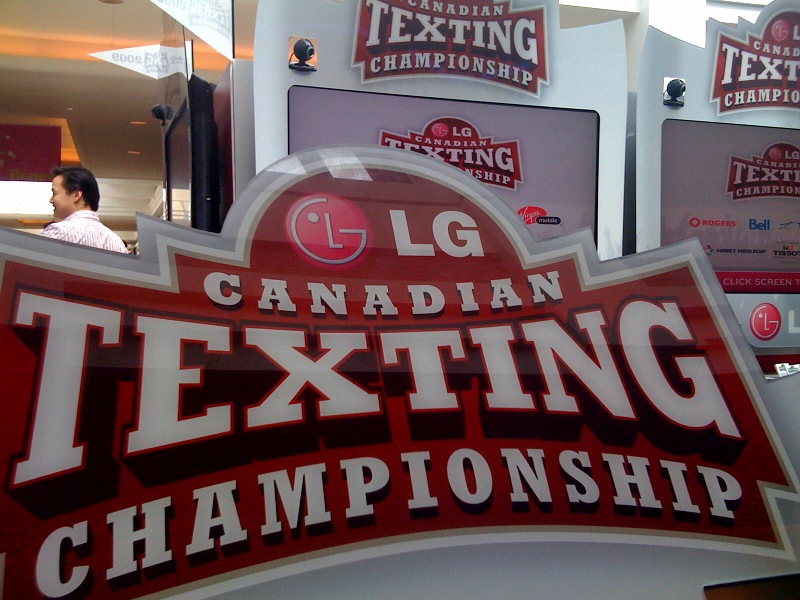
To return to Bolter, however, the argument that the technology used for writing changes our relationship to it (p. 189) seems almost self-evident. I know that my approach to writing changes when the tool is a pen versus a word processor. And it is largely for this reason that I avoid text messages. I worry how typing on a tiny keyboard with my thumbs to any great extent would affect my relationship with writing (which is already sufficiently adversarial). The discussion of ego and the nature of the mind itself as a writing space was also interesting. I’m not sure that I can follow where Bolter leads when he suggests that if the book was a good means of making known the workings of the Cartesian mind, hypertext remediates the mind (p. 197). That, it seems to me, accords too little to the ego and too much to networked communications—at least as they currently exist.
Bolter is certainly correct, however, when he asserts that electronic technologies are redefining our cultural relationships (p. 203). This is especially true for my students. Writing in 2001, Bolter preceded Facebook by at least three years, but he could have been doing Jane Goodall-style field research in my school (watching students use laptops, netbooks and handheld devices to wirelessly access Facebook) when he suggests that we are rewriting “our culture into a vast hypertext” (p. 206). My own efforts at navigating the online reading and writing spaces of the course were, I fear, somewhat hampered by having lived most of my life in “the late age of print.”
I didn’t post a lot of comments, although I attempted to chime in on the Vista discussions. What I realized late in the game was that I should have been more active in posting comments to the Weblog. The strange thing is that I enjoyed reading the weblog posts—and especially enjoyed reading the comments people made about my weblog postings. For some reason, however, that didn’t translate to reciprocating with comments in that space. Perhaps it’s because I’m not a blogger or much of a blog reader outside of my MEd classes. I still prefer more traditional (read: professional, authoritative) sources for news and opinion. Though, truth be told, I probably read as much news and opinion online as in print. It doesn’t hurt that the New York Times makes most of its content available online for free and that I have EBSCO and Proquest access at work. It might also be because the other online courses I’ve taken in the past two years tended to use the Vista/Blackboard discussion space as the discussion area, so I think of that as the “appropriate” space for that type of writing. It’s fascinating to analyze one’s own reading and writing behaviours and assumptions in light of what we’ve read and discussed. It also takes me again to my own practice as a teacher. When I next use wikis, for example, with my students, I will try to devise a way (survey, discussion tab in the wiki, etc.) to find out how they believe their previous online reading and writing experiences influence their interactions and contributions.
References
Bolter, J.D. (2001). Writing Space: Computers, Hypertext, and the Remediation of Print. Mahwah, NJ: Lawrence Erlbaum.
