Categories
Introductions

The panic key

The panic key, originally uploaded by Phil Romans.

At what point have we gone too far?

Have we turned too far from the idea of text as an accurate representative of oral culture?

This photo instantly made me think, not only about the consequences of our actions and race toward the ever-advancing technological frontier, but about our control in altering, stopping, or slowing the technological advancement.

What would it look like if we had time to reflect on how we are changing the purpose and definition of communication, text and recording of our history? Where as once, history was recorded carefully through memorization and retelling of oral legends (Beowolf), it may be argued that history may be viewed as a collection of massively overproduced chaotic relics by those who study us in the thousands of years to come.

Do we have the power to push the PANIC button if we need to?

I am looking forward to exploring the history of text and how technological ‘advancements’ have altered our thoughts, values and approaches with regards to recording our voices.

I am currently teaching at the secondary level in Terrace, BC.  I am taking 2 courses this semester (5 and 6) and anticipate a very busy few months with work, the MET program, my kids, and everything else!  Looking forward to working with everyone in the course!
Caroline Faber
Categories
Introductions

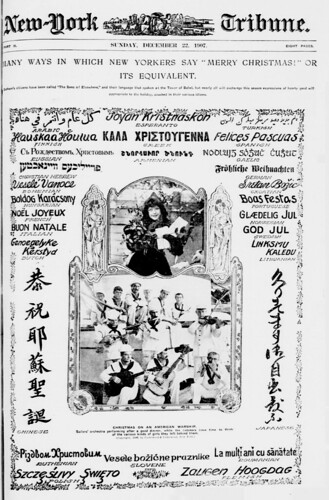
Many ways in which New Yorkers say “Merry Christmas” or its equivalent. (LOC)

Many ways in which New Yorkers say “Merry Christmas” or its equivalent. (LOC), originally uploaded by The Library of Congress.

I have selected this image because words, or to be more exact the actual mechanics of the process of writing, fascinate me. I am also interested in translations of a text into different languages and how the original message changes or remains the same depending on the cultural variations in what words we use.

My name is Svetlana Gibson and I teach grade 5 in an inner city school in Coquitlam. My attention was captured by this course because I teach with laptops. Students in my class show remarkable improvements in their writing and reading when using the computers to demonstrate their learning. I am currently at home with an eight month old baby and her four year old big sister.

Categories
Introductions

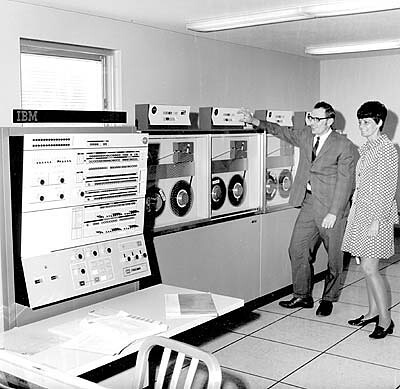
My First Computer Experience

Mainframe computer, originally uploaded by scriptingnews.

Hi There!

I’m Michael Haworth, I am an Information Technology 8 to 12 teacher at a distance education school in British Columbia. ETEC 540 is Course #7 for me, and I am really looking forward to it. My interest in this course was piqued, because often when we talk about technology, I believe we often forget about text and focus on all of the other bells and whistles that frequently accompany technology. When I create new online courses, I focus a considerable amount of time on trying to write high quality text that helps students, and I appreciate any further skill development that I can get in this field. Further, the books by Ong and Bolter look interesting and I am looking forward to learning and working with everyone in the course.

I chose this image because it represents my first personal experience with computers when I was in Grade 1 in 1975. Our Grade 1 class went on a field trip to a office building where they had a computer that looked similar to this one. I remember being in awe of this machine with the whirling tapes, flashing lights, card punch and teletype machine – it was like being in a holy shrine of technology! The text element of the computer and the field trip was that the class was able to take turns working on a teletype machine playing some sort of text adventure game where text commands were given to the computer and then it would type out what was happening in the game – I thought it was simply astounding. The people in the office also gave each student a computer punch card with our names punched out on it and a large sheet of computer paper with our name printed out in very large ASCII-based letters.

That computer experience stayed with me throughout my life and I believe that my fascination of computers eventually led me to my career as an Information Technology teacher. For me, technology has been a lifelong fascination.

Categories
Introductions

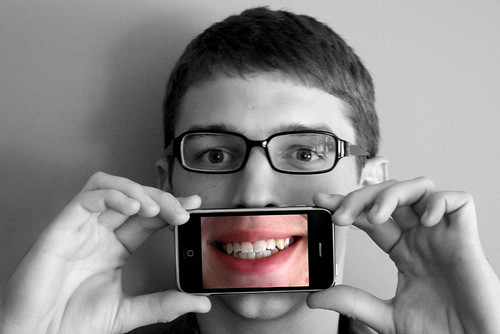
iTeeth

iTeeth, originally uploaded by Brophy Photography Club.

My name is David Berljawsky. I actually found this picture pretty easily. To me it is a very relevant to the discussion that we will be having in this course. Talking and communicating through technology is what I thought about right away. This picture is certainly art, and is created in a form that was impossible just a couple of short years ago.

I am an elementary school teacher in North Vancouver, and regularly teach computers, and other technology related classes. This is my passion and what I want to pursue, so I feel that this program is ideal for me. I find that the current generation of students are very technologically aware and communicate in ways that older generations do not. It could be texting, facebook, twitter or a blog. One thing that I really enjoyed about this picture is that the author used a modern cell phone, hooked up to the internet for this picture. It is artistic and representative of the current generation of elementary and high school students.

I struggle with implementing and developing my philosophies concerning modern technologies. On one hand, I love computers, the internet, and all of those technologies. They make my life easier, assumedly better and, well, they entertain me to no end. However, I can see many negatives with the ways that students use this technology, and how it educates them. I’m hoping that I will be able to plan ways to open up my students understanding, using technologies as a tool, not as a crutch.

Categories
Introductions

Times Square revisited

Times Square revisited, originally uploaded by michael_davies.

My name is Drew Murphy and I chose this photo of Times Square because it speaks to me about our deep immersion in text and technology. There’s an incredible power and excitement about the photo and also a sense of danger and excess. The text and the technology are literally engulfing the pedestrians who calmly wait to navigate the chaos. The scene alludes to Postman’s ideas that new technologies alter the things we thing about, the symbols we use and the arenas in which thought develops.

I’m a high school technology teacher in Sechelt, British Columbia. I apply technology in the teaching of our planning and graduation program. I’m very involved with technology , pedagogy and the design of educational software. I’m looking forward to taking my third course in the MET program and working with everyone.

Categories
Introductions

Technology, Text, Orality & the Body

Text Messenger- The Evolution of Texting, originally uploaded by s l i m d a n d y.

Hello Everyone,
Barb Fraser here. I choose this image because for me it is a very good visual representation of some of the concepts that are at play in this course. Technology, Text, Orality, the Body…. the very Human creation of Speech and expression of Thought realized as words, manifested either orally or in the form of text. Just like our subject matter this image is extremely complex and is comprised of multiple connotations and implied or inferred layers of meanings. Moreover the image itself issues out of a complex art genre [minimally; photography, mixed media, and surrealist art] and it “speaks” to a technologically advanced cultural milieu.
Specifically, it places text onto or within Technology [represented by a keyboard]. It then subsumes the physical body [that place where we imagine the text issues out of, that is the head or brain], specifically covering or replacing the mouth, again where speech, orality [non text based communication] or oral versions of text alone…are created/born. That is, it plays with the idea of the fusion of text not only onto and within technology but also within and through the vehicle of the body as a medium for the creation and the communication of text and also [implied] of speech and orality.
I have worked in health care all of my life in various management capacities, at BC Children’s, VGH and St. Paul’s Hospitals. Currently, I am happy to be working on campus [away from hospitals!] as manager of the MHA program here at the SPPH [School of Population and Public Health], UBC.
I am specifically interested in what makes online learning different [for example the F shaped scanning patterns of readers of text on line] from conventional learning and to better understand how to present e-learning content so as to maximize its advantages and compensate for some of its perceived disadvantages. I am a former psych major [originally art and psych], from Simon Fraser University and regard art and psychology as two of my primary passions in school and in life. I have somewhat eclectic interests and have an ongoing passion for film [Vancouver film festival et al], books, music, politics, and painting…
Look forward to learning with all of you….

Categories
Introductions

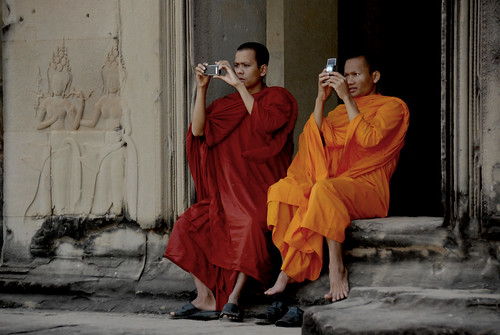
When East Meets West – Technology

When East Meets West, originally uploaded by CiaoChessa.

Hello,

My name is Lindsey Martin and I chose this photo because I believe it demonstrates the idea that new technologies change communities and cultures. The course thus far has indicated that some cultures use new technologies while others choose not to. I find this photo to be indicating the balance of power that some of the readings have shown. New technologies create a shift in the balance of power and I believe the image, in an almost ironic sense, shows this. The two men, who are clearly traditional in their culture, using cameras could indicate that new technologies will have an effect on how we live and changes how we see our world and community.

I am a secondary school teacher in Surrey, BC and have been teaching for five years. I primarily teach social studies and history. My interest in this course initially was the idea of looking at technology and writing in a new way. I have always looked at technology and writing in a very broad sense and I am now excited to look at it from all different vantage points. I am also excited to use all this “new technology” in my teaching practice and hope that I can become a better educator through this course and the MET program. This is my first course in the MET program and so far it has been intellectually stimulating! I look forward to working and getting to know all of you!

Categories
Introductions

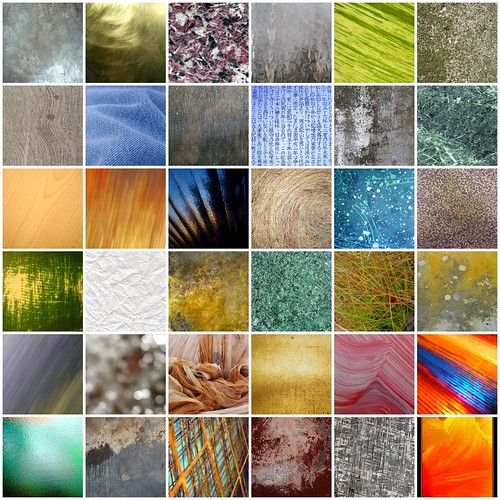
Common Textures

Reference Mosaic: Creative Commons Textures, originally uploaded by Jasen Robillard.

Hi, I’m Maureen Coyne.

I chose this photo because it reminded me of what I had just learned in the introductory module about the fact that the word text shares the same prefix as texture and textile. I had never made those connections before. This photo displays many different textures, which reminds me of the word text, which is a group of words that are woven together.

I work as a learning consultant with the Canadian federal government in Ottawa, Canada. I’ve been working as a public service employee for the past three years. My principle work duties involve designing and developing e-learning courses and programs for public service employees and project managing these projects. I’ve also been involved in editing course content, creating e-learning standards, and developing facilitator-led courses.

I have a Degree in Geology, a Diploma in Technical Writing and a MET Graduate Certificate in Technology-Based Distributed Learning. This is the 10th course that I’ve taken in the MET program.

I look forward to working with you!

Regards,

Maureen

Categories
Introductions

Australia Indigenous dancers

Aboriginal dancers, originally uploaded by NeilsPhotography.

Hello everyone, my name is Ashley Jones.

I picked this picture of Aboriginal dancers for a couple of reasons. I am currently residing in Australia and the beliefs and traditions of the Indigenous People facinate me. Oral communication is greatly valued within Aboriginal communities and serves as a method of passing down specific cultural practices, values, beliefs, languages, laws, histories and family connections. These can be communicated through storytelling, song, dance and art. It is believed that there were over 700 distinct language groups in Australia prior to the European Invasion.

As for myself, I completed a Biology degree and then went on to complete a year-long internship to obtain my teachers certificate. Soon after I took off to teach for a year in a small town in Costa Rica where I developed a passion for surfing and cooking with hot chilli peppers!

Upon returning to Canada, I taught at a Secondary Distributive Learning School in Victoria, BC for three years. The courses I taught and developed were all online for the students to access, while I was avaliable at the school for drop-in help, tutorials and to supervise test writing.

This year, my husband took a year-long job in Australia so I am fortunate to be able to complete my Masters while in beautiful Perth!

I look forward to getting to know you all as we go through this course!

Categories
Introductions

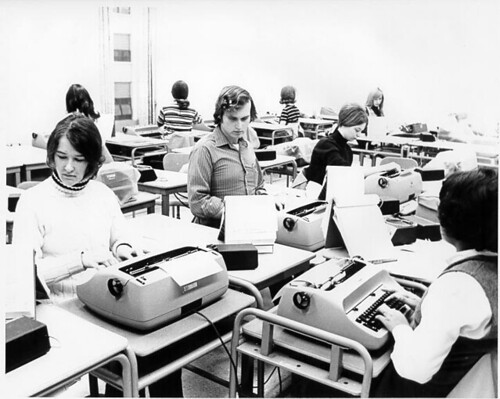
Typing Class, 1970s – an update is available on this classroom

Typing Class, 1970s, originally uploaded by SinclairCommunityCollege.

Update the hair and clothing by a decade, and this would look like my high school typing class. Take away the power cords and regress a few decades, and this would look like my mom’s high school typing class. Now, typing classes have been replaced with computer applications courses, which teach touch typing in two to three months (e.g., http://south.sd41.bc.ca/depts/courses/cselection.htm – from the website of my alma mater), as by the time most students enter high school, they have been using a QWERTY keyboard attached to a computer for years, many without a lesson. This allows for a greater exploration of the creative applications of the technology far beyond the endless speed drills I spent doing in Typing 10. What change will the next innovation bring?

As a side note, I also considered the furniture and electrical systems that needed to change from the time when the first manual typewriter was introduced in typing classes, through electric typewriters, through a constant upgrade of computers. Education is, indeed, getting more expensive!

Hello! I am Tracy Gidinski. I will be teaching grades 6 and 7 at Taylor Park Elementary School in Burnaby, British Columbia. I have been teaching for 16 years, always focusing on grades 5 to 7 (and, for a four-year time, teaching a multiage 5/6/7 class). My preferred grade is combined 6/7. For the past few years, I have had my students create personal blogs and cooperative wikis, and am interested in further extending my students’ abilities to use technology to improve their literacy and thinking skills, which leads me to this course. This is my second MET course – I took ETEC 512 last year, and am hoping that the steep learning curve of taking a course online will be less steep this semester!

Categories
Introductions

the power of a simple word

YES, originally uploaded by jeremyhead.

It is said that when John Lennon visited Yoko Ono’s art exhibit, he climbed a ladder to see a single word on a paper attached to the ceiling. That word was…Yes. He was so impressed with an artist who would have such positive thoughts that he decided to meet Yoko, and then, well the rest is history. All words have magical powers. The power to inspire, the power to intimidate, the power to woo or soothe…And words take on different powers depending on how they are spoken or how they appear in print. And most importantly, it is the knowledge of words that gives us such power over circumstances and surroundings. Empower yourself! Learn a new word today!

I am a Business/Computer teacher in Ontario. Literacy is of interest to me in that it is a necessary component of student success. Equally important is that my own son was touched by the power and magic of learning to read. It opened the door to a whole world that would have remained silent to him and allowed him to share his sometimes chaotic, sometimes frightening thoughts.

Catherine Gagnon – Orleans, ON

Categories
Introductions

My Mashup of Mike’s Mashup of My Mashup


My Mashup of Mike’s Mashup of My Mashup, originally uploaded by cambodia4kidsorg.

Hi all, this is Brian, one of the putative instructors…

I like this image for a lot of reasons. The multi-dimensional tensions it illustrates between digital and analog, read-only and read-write formats. The clever, low-tech mixture of media… paper, photography, Second Life. The way it playfully explores an ongoing controversy concerning alternative copyright approaches. The slightly mischievous insertion of Stephen Downes (the first ed tech blogger, so far as I know) makes me smile.

I came across this image while preparing a presentation on mashups. I didn’t end up using the image, but it was too cool to pass up. So I did what I often do when I encounter something I don’t know what to do with — I blogged it. And was delighted the following morning to see that Beth Kanter, a very interesting and accomplished educator and the creator of the image, had commented on my post. She shared some resources having to do with how social media can be employed by people in the non-profit sector, which I have subsequently shared with others.

I’ve since come to think of Beth as part of my personal learning network. And this image and the stories behind it illustrate to me how content, and the reuse of others’ materials, has moved beyond simply managing inert resources. Increasingly, the work we do online becomes the framework for rich and ongoing social learning relationships.

Categories
Introductions

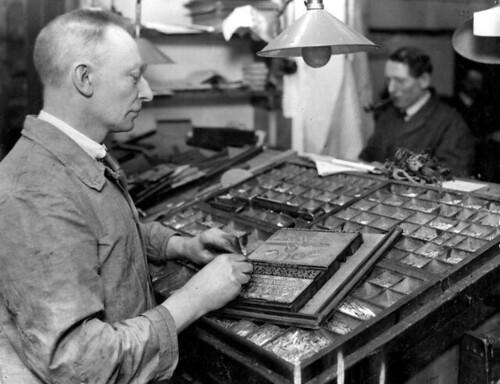
Typesetting the old fashion way!

Typesetting the old fashion way!, originally uploaded by etec540’s photos.

This is a blog posting from Jeff, one of your instructors. You’ve likely read some bio information about me in the course introduction already. I wanted to also post a blog entry here to get us all started with our class introductions.

This early 19th century photograph of typesetters nicely depicts the close relationship between literacy and technology. The two men sitting before rows of dirty lead type, have their hands covered in the industrial processes by which books or newspapers of the time were published. I now have in my kitchen a similar wood tray that was once used by typesetters such as these. It is an antique, an artifact from a different time when type had to be set by hand. It holds old corks and knick-knacks (and a lot of dust) and is a nice reminder of how dramatically can change the means by which we produce, reproduce and consume texts.

An historical perspective is essential in fast changing times such as these, particularly when we are perpetually told that all of our media are new, that books are going the way of the dodo, and that all of children are now digital natives of a country that we can only hope to visit with a visa and an accent. This course will challenge us to think about historical periods in which different technologies have impacted the ways by which people communicated with one another through different media. Hopefully some of the artifacts we encounter, as well as the social and cultural responses to these media, will help us to better analyze the changes currently underway in a world swept with digital media, convergence technologies and networked communications.

I look forward to exploring these issues with all of you in the course!

Jeff

Spam prevention powered by Akismet

Creative Commons Attribution 3.0 Unported
This work is licensed under a Creative Commons Attribution 3.0 Unported.