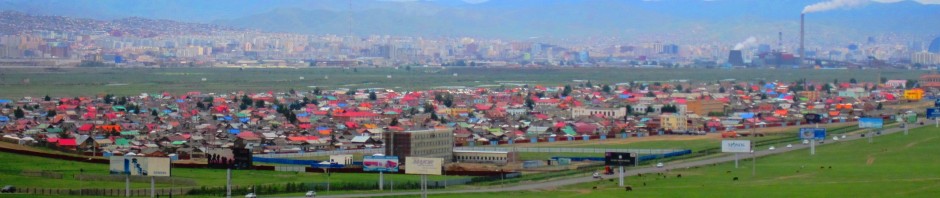
An article in the January 21 2012 edition of The Economist vividly describes Ulaanbaatar and Oyu Tolgoi in the winter of 2012. The story that some have been telling for some years, “Mongolia is the next Eldorado” is repeated here with only some cautionary notes on Dutch disease, inflation and the like.
Some of the usual suspects when it comes to foreign views of Mongolian development, turn up in this article, like Munhkbayar of the Ongi River Movement and the Hon. Oyun. Ms Oyun especially is a wonderful interlocutor when it comes to understanding contemporary Mongolia, of course.
What I find missing in the article is the extent to which the promise of a mining boom is skewing and distorting all aspects of Mongolian development – economic, political and social.
This is the point I made when I presented at a symposium at Hokkaido University yesterday.
Take the political populism that the Economist article refers to. This is a product – in my mind – of the on-going discussion about what to do with coming mining riches in the 2000s. While political development was focused on democratization and the construction of the attendant institutions in the 1990s, the 2000s were the decade where patronage politics established itself as a product of politicians desire to join in the decision-making (and, apparently, spoils) about mining policy. Rewards for supporters and clinging to power (note the long duration of the grand DP and MPP coalition) have become the political modus operandi.
The Economist article is quite right to ask whether Mongolia will be able to “handle” the revenue streams that will be growing steadily, especially with the beginning of production at Oyu Tolgoi. Elsewhere, I’ve written and spoken about the long-term stability of democracy in Mongolia. One of the main concerns beyond Dutch disease and related macroeconomic threats is rising inequality. Currently, while the poor are not getting poorer, they are also not getting significantly less poor through the increased economic activity related to mining. Ultimately, even in a small population, not everyone will be able to work at OT, TT or any other large and small projects that might still develop. So far, the Mongolian government has primarily headed for an emphasis on transfer payments (to children, to the old, etc.) and financial stakes in mining projects (whether that is the government stake in OT or the stakes in TT that are to be distributed). Whether that will be a successful strategy in the long term to avoid unrest and to begin to think about a diversification of the Mongolian economy will remain to be seen.
Julian Dierkes
“The Central Role of Resource Policy for Mongolian Development in the Past and Coming Ten Years”
The economic, political and social development of Mongolia has come to revolve around mining policy. Decisions that are made about mining – especially the selection of partners, structure of royalty, taxation and ownership regimes, and the use and distribution of income streams – will continue to dominate political discourse and have a determinant impact on virtually all areas of social relations. In this presentation, I discuss the development of democracy, mobile pastoralism, and inequality in terms of their relationship with resource policy.
Mikiya Nishimura
“The Rhapsody of the Taiga in Mongolia: Gold and Money”
Tsaatans, the reindeer herders, have been thought to be very poor people by Mongolians. However, they are getting wealthier than Mongolian nomads. Tsaatans have started to derive income from foreign visitors and mine workers (because of having reindeers). Today, Tsaatan people are in the rhapsodic situation of much money and gold. But to make more money, they have to change the way of their living in Taiga. In this presentation, I will report some changes in the purpose of keeping reindeers and the way of seasonal migration and discuss the impact of money and gold on the livelihood of Tsaatan people.
Dalaibuyan Byambajav
“Gold Mining and the Origins and Consequences of Social Mobilization in Mongolia”
While the extensive discovery and extraction of mineral resources in Mongolia have come to dominate the national development discourse, there is an increasing public concern over the environmental and social effects of mineral extraction. Over the past decade, we have seen an apparent increase of the local conflicts over land, water sources, and the livelihood of local people and protest actions in the country. Both academic and popular writing have failed to present a nuanced understanding of the emergence and trajectories of these conflicts. By tracing the trajectory of a local protest movement (road blockade) in the Tsenkher district of Arkhangai province, I will examine the origins and consequences of anti-gold mining social mobilization in Mongolia.
Namiko Abe
“The Expansion of Insect Damage and Regeneration in the Mongolian Larch Forest Considered from Dendrochronology”
In recent years, the large-scale insect damage has become a major problem in Mongolian forests. It could be considered that the factors such as climate change and the surrounding environment facilitate the insect damage. Tree-ring analysis is used to examine the process of the decline and recovery of the Mongolian larch forests affected by the insect damage.
Ryo Takiguchi
“The Environmental Problems in Contemporary Ulaanbaatar: A Movement for the Improvement of Living Conditions in Ger-district”
Ulaanbaatar, the capital city of Mongolia, has experienced great changes since 1990. Examples of these changes include the population growth, the rapid rise in the market of real property, and the environmental issues such as air pollution. Ulaanbaatar has become one of the worst city of the environmental pollution in the world. This presentation focuses on a ger-district in Ulaanbaatar where a movement for the improvement of living conditions and the solutions for the environmental problems has been facilitated by the Government of Mongolia and international aid organizations.
Chifumi Ono
“Land Use and Contemporary Pastoralists in Northern Mongolia”
Both settled-pastoralists and mobile-pastoralists have used a valley as their common land throughout the year in a village located in the north of Ulaanbaatar. However, little is known about how these pastoralists manage their common land. We conducted interviews among the pastoralists in August, 2011. In this presentation, I will discuss the actual situation of land-use in the valley and the problems resulting from the interaction between settled-pastoralists and mobile-pastoralists.
Shin Miyazaki
“Long-term Hydrometeorological, Ecological and Dendrochronological Monitoring over the Larch Forests on the Permafrost in Northern Mongolia”
To clarify the heat, water carbon exchange process and dynamics by comprehensive approach, we started long term monitoring of the eddy-correlation based flux observations, the hydro-climatic observations, the phonological camera monitoring and sap flow measurement at the 25-m height tower and forest around the tower in the Udleg (48 15’43.7” N, 106 50’56.6”E, altitude: 1264m) over the larch forest in Research Forest of NUM in northern Mongolia since 2009. We’ve also carried out the tree-ring observation to get the stand history (age, growth rate, fire, drought etc.) and dendrometer observation to get the diameter growth of larch trees.
Mamoru Ishikawa
“Representing and Enhancing Environmental Literacy to Share Knowledge – The Changing Environment of Mongolia”
Environmental literacy means the ability to appropriately read and utilize environmental information, to anticipate rebound effects, and to adapt according to information about environmental resources and system and their dynamics. This would be a key concept to share knowledge between societies and scientists in the context of potential human-environmental system to function and evolve in a sustainable manner. Under this framework I would like to provide the matter of arguments for sustainable Mongolian socio-natural environments.
Tye Ebel is a member of the 2010/2011 cohort in the Master of Arts Asia Pacific Policy Studies at the University of British Columbia. While at the University of British Columbia, he focused heavily on sustainable tourism development and promotion, with a secondary focus on international trade. As the capstone requirement for his degree, Tye spent 10 weeks working at the Mongolian Ministry of Nature, Environment and Tourism, where, among other things, he produced a report on the state of sustainable tourism in the country.
An Overview of the Mongolian Tourism Industry and Obstacles to Maximizing Its Potential
The Mongolian tourism industry has undergone significant changes in the past few decades. Throughout the socialist period the industry was controlled by the state owned Juulchin, which catered almost exclusively to tourists from the former Soviet Bloc. Following the political transformation in the early 1990s, a variety of new industry stakeholders began to emerge while changes to the country’s immigration policy in 1998 saw a spike in international visitors. Western Europeans, North Americans, Japanese and Koreans quickly emerged as the primary leisure tourists and the government began to advocate a policy focusing on high quality and low volume. Meanwhile, numerous international development agencies began to address tourism, hoping to transform it into one of Mongolia’s major growth industries.
Unfortunately, despite attempts by countless hard-working individuals both in Mongolia and internationally, the tourism industry has failed to realize its potential. International recognition of Mongolia as an attractive tourism destination remains low and accurate data on tourist numbers, expenditures, expectations and impressions that could be crucial to improving the industry is lacking. Additionally, the country suffers from significant seasonality resulting in an influx of visitors during the summer months that place strain on the country’s infrastructure and a dearth of visitors during the cold winter months. This in turn increases the cost of tourism products and reduces the attractiveness of careers in tourism. As a result, the industry is suffering from a significant lack of well-trained human resources.
A unified effort by the industry’s stakeholders could significantly improve the country’s international recognition, the quality industry data, the degree of seasonality, and the shortfall in human resources. Sadly, there is a lack of communication and cooperation between the various public, semi-public, and private organizations that have been created to develop and promote the industry. The public sector, represented by the Ministry of Nature, Environment and Tourism has focused most of its attention on supporting Mongolian participation in international trade conventions while advocating for the development of large, capital intensive tourism complexes. Although the ministry has attempted to better engage the private sector, it has not been overly successful. The publicly owned Mongolian National Tourism Center and a variety of private organizations, meanwhile, raise a mixture of public and private funds to pursue individual and often redundant projects. This inefficient duplicity of effort seems to be driven by a lack of communication and trust amongst stakeholders. The result has been that the industry lumbers forward without an efficient and unified plan or objective. At the same time, international development agencies such as USAID are beginning to distance themselves from the tourism industry as they focus more and more on the mining sector.
The situation is not entirely bleak though. Individual companies and small-scale development projects have made significant strides toward creating high value added products that promote environmental and socially sustainable tourism development. If the industry can build off of these success stories and unite behind a single brand image while reducing the duplicity of effort that currently holds it back, then it has real potential for significant, high value growth.
An inter-disciplinary symposium on Nature, Human, and Mining in Contemporary Mongolia will be held at Hokkaido University in Sapporo, Japan on January 20, 2012. This symposium will bring together scholars from diverse areas of expertise (both natural and social scientists) to promote sharing of knowledge and expertise from the field study on the human-nature relationship in contemporary Mongolia.
The guest speakers for the symposium are Julian Dierkes and Mikiya Nishimura. Proffessor Julian Dierkes will talk about the central role of resource policy for Mongolian development in the past and next 10 years. Mr. Mikiya Nishimura, the president of North Asian Culture Exchange Center-SHAGAA, a nonprofit organization, will talk about his field research among the Tsaatans, reindeer herders in Huvsgul, and the impact of gold mining on the livelihood of the local people.
Program of the symposium
Date: 13:00-17:00, January 20, 2012
Place: D102, Faculty of Environmental Earth Science, Hokkaido University
Julian Dierkes (Associate Professor and Coordinator, Program on Inner Asia, University of British Columbia)
“The Central Role of Resource Policy for Mongolian Development in the Past and Coming 10 Years”
Mikiya Nishimura (President, North Asian Culture Exchange Center – SHAGAA)
“The Rhapsody of the Taiga in Mongolia: Gold and Money”
Dalaibuyan Byambajav (PhD Candidate, Sociology, Hokkaido University)
“Gold Mining and Origins and Consequences of Social Mobilization in Mongolia”
Discussion
14:20~14:30 Coffee Break
14:30~15:30 Part 2: City and Suburbs
Namiko Abe (Graduate student, Environmental Science, Hokkaido University)
“The Expansion of Forest Pest Damage and Regeneration in the Mongolian Larch Forest Considered from Dendrochronology”
Ryo Takiguchi (Part-time lecturer, Hokusei Gakuen University)
“The Environmental Problems in Contemporary Ulaanbaatar: A Movement for the Improvement of Living Conditions in Ger-district”
Chifumi Ono (PhD student, Environmental Science, Hokkaido University)
“Land Use and Contemporary Pastoralists in Northern Mongolia”
Discussion
15:30~15:40 Coffee Break
15:40~16:30 Part 3:Nature
Shin Miyazaki (GCOE Assistant Professor, Faculty of Environmental Earth Science, Hokkaido University)
“Long-term Hydrometeorological, Ecological and Dendrochronological Monitoring over the Larch Forests on the Permafrost in Northern Mongolia”
Mamoru Ishikawa (Associate Professor, Faculty of Environmental Earth Science, Hokkaido University)
“Representing and Enhancing Environmental Literacy to Share Knowledge – The Changing Environment of Mongolia”
The Democratic Party (DP) left the Coalition Government, now the Mongolian People’s Party will remain in power until the parliamentary elections in June. The DP’s decision is connected to its preparation for the election, but it indicates power struggle within the DP, decay of the government bureaucracy, and new patterns of Mongolian politics.
The National Governing Committee of the Democratic Party officially declared the end of the Coalition Government with the Mongolian People’s Party yesterday, January 11, 2012. This decision was expected by many, but the coalition had survived until MP Kh. Battulga’s candid interview, which revealed the true internal dynamics of the coalition government.
At the National Governing Committee meeting, while DP Chairman Altankhuyag, who served as the #2 in the coalition government and other DP cabinet ministers boasted the 82 percent of the Coalition Government Action Plan, MP Kh. Battulga again criticized the false statements by the DP Chairman and other ministers. Battulga served as the Cabinet Minister for Road, Transportation, Construction and Urban Development and wholeheartedly pushed the industrialization plan by capitalizing on mineral exploitation. Although Battulga’s frustration with the inefficiency and ineffectiveness of the Coalition Government and criticism of the DP Chairman could be explained as political tactics toward upcoming election or a move for the DP Chairman post, he seems to be pointing out the institutional deficiencies of today’s Mongolian bureaucracy.
Even though the DP Chairman Altankhuyag stated in his speech that the DP fulfilled its historic tasks for the nation while collaborating with the MPP, one could hardly see any decision beyond the Oyu Tolgoi mining deal with Ivanhoe and Rio Tinto. The government again passed the most inefficient budget, which allotted several million tugrugs for MPs to spend on their electoral districts and failed to finalize the Tavan Tolgoi mining deal. The government had not done much on many other plans of the Coalition Government. Just a month ago, the DP Chairman was declaring his firm stance on the Coalition Government until the election, but within one week, he gave up. This demonstrates how internal power rivalries in the DP have intensified as the election nears.
The disintegration of the DP and MPP, two major political forces, potentially provides opportunities for other political parties to compete in the upcoming election. Apparently, the DP will not oppose the continuation of the MPP government – even promised to pass their nominees replacing the DP cabinet members quickly. The MPP will now certainly use its advantage of running the government until the parliamentary election in June, 2012. All failed programs of the Coalition Government will be subject to a political ‘blame game’ between the two parties. Although the revised election law could be certainly considered the best, its effectiveness will depend on the enforcement.
Although the parties are not making ‘cash transfer’ promises under the revised Election law, now they are promoting “Mongolian Person – 2020” by DP and “2030” dream plans. Will they be false promises as many earlier political party slogans?
Above all, the end of the ‘non-standard’ coalition will come again – may become a familiar pattern of Mongolian politics because the political institutions, which set under the 1992 Constitution, have many flaws. One of which is inefficient decision-making mechanism and disintegrated political institutions that will never be fully accountable for the people. Rather the system will consolidate more web-like informal networks among politicians and business entrepreneurs. Because the formal institutions face frequent “no-go”, only charismatic political entrepreneurs like Bayar and now likely Battulga (as would-be) introduce the political innovations (as we, Mongolians, coin ‘non-standard’ decisions) using the informal networks. This ‘non-standard’ pattern of integration and disintegration of the Mongolian political forces seem to continue until the formal institutions are fixed and followed.
The 10th International Congress of Mongolists met Aug 9-13 2011 in Ulaanbaatar and I was privileged to have been invited to attend and was able to do so with some help from the Canadian Dept of Foreign Affairs and International Trade.
The fact that I had been invited to participate makes me feel like a bona-fide Mongolist, even though the ride from the airport made it blatantly clear that my Mongolian has deteriorated from the simple conversational level that it had previously achieved. At least, I still seem to be understanding enough snippets of sentences.
First two things to notice about the Congress: a) how international it is, and b) best conference swag ever.
International Mongolian Studies
The conference is somewhat dominated by academic and cultural links to Russia. The organizers very usefully provided a facebook (including a photograph) of participants, and the Russian section was by far the largest.
Many of the affiliations listed there were to various levels of Academies of Science, many of which I have never quite figured out in their meaning (“corresponding member”). Clearly, there are people who specialize in various forms of research on Mongolia throughout Russia and Russian academic institutions. Other languages and countries were also well-represented, however, both European as well as Asian, while the N American contingent is relatively small.
Conference Briefcase
Many N American conferences now give registrants a very cheap briefcase with some kind of logo printed on it. These are generally useless. They are generally cheap and shoddily made so even if you wanted to use them, you couldn’t use them for long, but they are also generally of such a small format that they are not useful (the AAS tote bag is a notable exception).
For the Congress, however, participants have received a beautiful blue leather bag with the logo of the congress hand-embroidered on it. This is a bag that I will be delighted to use as it also seems reasonably well-made.
Focus of Discussions
I was somewhat shocked to find how philological the Congress was. From my perspective, the short walk from the Bayangol Hotel to the National University offers enough topics of pressing importance in contemporary Mongolia to a whole army of dissertation writers. Yet, most presentations at the Congress were either historical or linguistic. I suspect that this is a function of the strong Russian presence and also of the focus of research in the Academies of Science. In the end, this left me somewhat dissatisfied, however. As interesting as especially the early history of Inner Asia is – populated with various kingdoms and peoples that are only known to specialists now -, my interests are focused entirely on contemporary Mongolia and these interests were somewhat underserved by the presentations in the Congress.
The Congress was a tour de force in terms of languages, however. Presentations were given in English, Mongolian, and Russian and these were generally mixed within panels. My non-existent Russian meant that there was at least one presentation per panel that I missed out on entirely. Given the strong Russian flavour, most questions to the Russian presentations came in Russian and I thus lost out on that discussions as well.
Among the presentations on contemporary Mongolia, there was a strong contingent of political economists, political scientists and international relations specialists. Among these, a number were not particularly focused on Mongolia, but instead discussed Northeast Asia more generally, or Asian security relations.
While I did see a number of friends and Mongolia scholars whom I’ve known for longer, there were some individuals and groups that were notably missing, for example the entire Cambridge group.
Best Program Typo Ever
Elizabeth Endicott (Middlebury College) whom I also know through our mutual involvement in the American Center for Mongolian Studies, presented very interesting research on the on-going changes to pastoral herding practices in Mongolia. This presentation was announced in the Congress program as “Pastoral Nomadic Nerding in Twenty-first Century Mongolia”. It’s the nomadic nerding lifestyle that I also aspire to myself. 😉
Dr. N. Bolor
Freelance Consultant, Toronto, Canada
Formerly Associate Professor, National University of Mongolia and Policy Analyst, Mongolian National Mining Association
We started this blog in July 2011 based on the numerous conversations that Byambajav Dalaibuyan, Mendee Jargalsaikhan and I were having about Mongolia around the office at the Institute of Asian Research at UBC. It has been a great way to put some of those conversations down in pixels and to share them with readers.
And readers we’ve had… Over 1,200 unique visitors to the site have added up to over 5,000 page views. In the average over 3 min that people visit the blog, they read 2.3 pages on average. Not surprisingly, visitors from Canada and Mongolia are our most frequent readers. About a third of traffic comes from referrals which seems relatively high compared to other sites, while keywords seem to generate relatively less traffic.
FAQ Mongolia: Some Answers to the Most Frequently Asked Questions on (Mining) Policy
Supported by
Presentation Summary
How Have Recent Policy Shifts in Mongolia Shaped Environmental Management in the Mining Sector?
Kirsten Dales
Uniquely situated between the Siberian Taiga, Central Asian Steppe and Gobi dessert, Mongolia’s iconic landscapes support incredible biodiversity and a distinctive culture strongly tied to the land. Traditionally, as a pastoral centric nomadic herding society dependent upon fragile grasslands, Mongolian herders migrated their herds to allow for revegetation of recently grazed areas to maintain ecosystem function and sustain future generations. These age-old practices serve as simple but effective approaches to environmental conservation, which, is deeply embedded, in Mongolian national identity. Contemporary environmental management however faces new and complex challenges with the rapid expansion of the mining sector and adapting to the adverse effects of climate change.
Resource rich developing nations such as Mongolia face a number of difficult issues to overcome the ‘natural resource paradox’ and to identify environmental priorities in the wake of rapid economic development. Global commodity markets can swing creating uncertainty in revenue streams and unstable, corrupt or limited capacity of government institutions can fail to implement effective environmental management strategies leading to land degradation, water pollution and scarcity, biodiversity loss, increased vulnerability of rural populations, conflict, and particularly in the context of Mongolia, the loss of cultural heritage which is inextricably linked with ecosystem health.
Policy in Mongolia has faced a number of challenges since emerging from behind the iron curtain, adjusting to a market economy and adopting democracy as a parliamentary republic in 1990. Environmental management is not as the name would suggest, managing the environment but taking action to manage the adverse impacts on human societies on natural systems and this constitutes a difficult task even for stable democracies of developed nations. Environmental policy and management approaches in Mongolia have been shaped by policy shifts and proximate geopolitical influences of Russia and China, as well as resource demands of the global market place. Although at times viewed as politically unstable, in the context of environmental policy Mongolia has seen a devolution of environmental responsibility from central powers to local aimag (province) and soum (village) administrations, indicating a trend towards more decentralized approaches, supporting environmental mainstreaming.
Surveying the political landscape in the context of mining, the Mongolian government focused to a large degree on encouraging foreign investments and enabling trade, particularly in the 1990s. The National Environmental Action Plan of 1995 implemented 14 Environmental laws significant in the communicating the message of environmental values but, alas, were weakly enforced and lagged behind the rapidly expanding mining sector leading to widespread environmental degradation from the formal and informal mining sectors. In following years, a number of additional laws were passed aimed at more strict enforcement, increased administrative and civic liability, and development of a more conducive legal, economic and institutional environment for the sustainable use of natural resources.
The Mongolian Minerals Law of 1997 drew on western mining models and was regarded at the time as the most foreign investor friendly mining policy in Asia. By investors it was considered to be progressive, internally consistent and effective but there were weaknesses in relation to environmental responsibilities. This greatly improved the legal climate for direct foreign investment by clearly defining legal regulations and simplifying the mining licensing process while reducing royalty and exploration fees.
In 1998 the enactment of the Environmental Impact Assessment law reflected international policy norms of EIAs in the mine licensing process and at the same time the Ministry of Nature and Environment instigated a stronger push towards decentralized control to the aimag, soum and bagh level. This can be viewed as an important step in the right direction and emphasizes the intent on adopting international best practices however some feel this law lagged the rapid development which had already taken place in the extractive mineral sector.
Controversial legislative changes arrived in 2006 with amendments to the Minerals Law. The 2006 Law reserved some of the substance of 1997 version, but contained new provisions reflecting a shift towards resource nationalism providing for State entitlements and increasing potential for political interference. The legislative reform weakened rights and security of mineral titleholders in Mongolia and was criticized by investors for lack of detail and clarity in a number of articles. Uncertainty still exists as to how a number of important provisions will be interpreted and applied in particular around provisions surrounding concept of ‘Deposits of Strategic Importance’. This provision allows the government to designate certain deposits as strategic and demand a particular share with limited recourse for the mining industry and was not well received by investors. Further, the imposition of a 68% Wind Fall Profit Tax destabilized direct investment sending a strong message that times were indeed changing in Mongolia’s ‘wild west’ gold rush era paralleled to that of the 1800’s in North America.
The Mongolian Nature Protection Civil Movements Coalition (MNPCMC) and the Mongolian Environmental Civil Council (MECC) were formed in 2008 with the goal of advancing cooperation across environmental NGOs and to engage with the government. The vocal and instrumental River Movement groups focused on the serious issued of water pollution and over use associated with mining and a number of other NGOs continued to promote environmental advocacy and demand increased accountability. These organizations were seen as instrumental in the creation of the 2009 Law on the Prohibition of Minerals Exploration in Water Basins and Forested Areas, also known as the law with the long name.
This law is particularly of consequence as it suspended mining near headwaters of rivers, in sensitive riparian habitats and in protected forest areas. Cancelled licenses were not however released from their duty to rehabilitate the environment and must be completed within 2 years under the monitoring of Local governors and citizens emphasizing decentralized environmental co-management and public inclusion.
This law is not without its problems however, as the Government is required to pay compensations to the mineral license holders whose licenses were cancelled, but a mechanism to enable this has yet to be developed or implemented. Further, this law is seen as inconsistent by a number of actors as although some licenses were revoked, a number that breached the conditions outlined in the law were allowed to continue operations. Further, this law does not apply to ‘Deposits of Strategic Importance’, for which, the criteria and decision making process remain vague and may hypothetically create a loophole for specific mining areas.
Although the ‘Law with the long name’ was seen as a breakthrough for the environmental movement, mixed signals were sent as the highly publicized Oyu Tolgi mega mine project, thought to be the largest copper-gold mine in the world, was finally signed. In addition, an announcement was made that the Wind Fall Profit Tax was to be reversed in 2011 seen as a move to again promote foreign investment but left some wondering what the future would hold for the Mongolian sector.
As a consequence of the rapidly shifting legislative frameworks and number of unknowns, mining companies are obliged to cope with an unstable investment climate, inadequate infrastructure and limited financial and human resources of local administrations in charge of environmental management, thus the adoption of the principals of responsible mining practices may not constitute as a priority nor does the implementation of environmental rehabilitation efforts or civic engagement. While a limited number of mining companies have taken the lead in developing best practices in land reclamation, environmental rehabilitation and integrating community engagement into the process, supported by the ‘Law with the long name’, most companies have yet to make concerted efforts in these areas.
As of 2011 approximately 6,300 exploration and mining licenses have been issued in Mongolia covering approx 32% of the country. Historically due to its vast size and with the lowest population density in the world, Mongolia has always faced difficulties with enforcing regulations on the mining industry largely attributed to a lack of resources and overlapping areas of institutional responsibility. Although arguably in place, Mongolian environmental policy has been viewed as reactionary and inconsistent however, it must not be forgotten that progress is being made albeit not fast enough for some … and perhaps to fast for others.
The increasingly prevalent role of CSOs and Environmental NGOs in environmental advocacy and management approaches at the local level are linked to policy reform and reflected in recent legislative revisions indicating a positive trend towards strengthening the capacity of natural resource and environmental management. However with that said, the process is an imperfect one and a number of issues with institutional capacity, legislative enforcement and accountability remain. Looking ahead, the nexus of tripartite engagement between Government, Industry and civil society that will be required to support sustainability in the mining sector, if that can in fact come to fruition depends not only on social responsibility but a continued commitment to environmental sustainability that hopefully will become more then just a normative concept in this unique and vast Asian nation.
Video Recording of the Presentation
6’28” – 20’45”
About Kirsten Dales
Kirsten Dales is a Masters of Science Candidate studying Environmental Management and at Royal Roads University in Victoria BC. She has worked as a researcher for Duke University, Dartmouth College and the University of California Irvine in environmental science. Ms. Dales has been involved in environmental conservation projects in Nepal and most recently as an Independent researcher with the Engaging Stakeholder for Environmental Conservation (ESEC) project with The Asia Foundation in Ulaanbaatar, Mongolia.
FAQ Mongolia: Some Answers to the Most Frequently Asked Questions on (Mining) Policy
Presentation Summary
Supported by
What role are environmental movements playing in Mongolia’s civil society?
D. Byambajav
Environmental movements are an organized expression of heterogeneous concerns over environmental risks and problems. The institutional core of the environmental movement is a network of organizations, activists, and supporters that share concerns. This inclusive approach allows us to look at environmental movements as networks of like-minded NGOs, individual activists, journalists, and political actors in Mongolia. The Mongolian government’s neoliberal economic policy and its weakness has resulted in unorganized expansion of mining that threatens the natural environment and local livelihoods. Local movement organizations opposing local mining operations (primarily gold mining) have emerged as important actors in environmental politics in Mongolia. While I focus on these movement organizations in this talk, I will also present other crucial actors in environmental activism.
NGOs
Although official statistics in Mongolia show that there are more than 500 environmental NGOs, about 20 percent of these organizations might actually exist. Until recently, environmental NGOs were dominated by scientists and ecologists. In recent years, especially since the mid-2000s, this situation has been changing due to the active involvement of grassroots organizations and activists. In addition, some domestic and international NGOs that previously worked in different issue areas have turned their attention to environmental problems.
Movement organizations
The Ongi River Movement has become the most popular environmental organization in Mongolia over the past decade. In 2006, the Homeland and Water Protection Coalition was established by eleven local movement organizations. Local movement organizations grew out of environmental problems caused by mining operations in specific local areas, but the formation of a coalition enabled them to transcend localism and frame the solution of local problems broadly. Since 2008, these movements have organized campaigns to ban mining operations in headwater areas and water basins. After a series of direct actions including hunger strike organized by the movements, the Mongolian parliament passed a law that prohibits mining operations in headwater areas, river basins, and forest zones in July, 2009.
News media
There have been prominent journalists who were a strong voice for the environment. In the late 1980s, a newspaper article written by Ts. Baldorj, a founder of Today newspaper, about the environmental effect of the extraction of phosphor deposits in the area surrounding Lake Huvsgul stirred public outrage, which led the government to revoke its plans. Besides environmentally conscious journalists, the diversity of Mongolia’s media outlets provides a good opportunity for environmental debate. The role of the media including social media was crucial in protest campaigns against rumored talks on building a nuclear waste dump in Mongolia
Political parties
A “green group” was established by a small group of MPs in 2009 as a loose coalition of environmentally conscious parliamentarians to consider the environmental side effects of mining operations in general and big projects such Ouy Tolgoi and Tavan Tolgoi in particular. Some members of the group played key role in the passage of the “law with a long name.” Its prominent members are D. Enkhbat, B. Bat-Erdene, and G. Bayarsaikhan. The Green Party of Mongolia was established in 1990. In 2008, its candidate won a seat in the parliament for the first time (perhaps, for the first time in Asia). Until recently, the green party has been a weak voice for the environment, but representation in parliament and increasing public concern about environmental issues put it in a better position.
Recent debates over the “law with a long name” between the business community and environmental movements in Mongolia suggest that networks of these four types of actors are able to create a strong coalition if their concerns and interest intersect.
FAQ Mongolia: Some Answers to the Most Frequently Asked Questions on (Mining) Policy
Supported by
Presentation Summary
How to Improve Governance in Mongolia?
Hon. Jim Abbott PC
The “Mongolian Vision”
Developing countries must work through two challenges. Their civil service capacity and expertise must be strengthened to address budgetary and financial oversight demands that come from their expanded economies.
Concurrently, accountability of parliamentarians, and their financial and regulatory roles must be reflected in their nation’s parliamentary processes.
The bad news: Transparency International’s 2011 Corruption Index ranked Mongolia as 120th in the world. The good news: Mongolian bureaucrats and politicians have been working with Canadians on these challenges for more than two years and we’ve responded at the highest level.
Prime Minister Harper and Mongolian Prime Minister Batbold witnessed the signing of an MOU September 2010 in Ottawa. The Canadian Standing Committee On Foreign Affairs held hearings and issued a unanimous report in support of the Prime Minister’s initiative.
The Civil Service Council of Mongolia (CSC) and the Public Service Commission of Canada (PSC) have laid down a basis of cooperation between public service institutions of the two countries. Detailed work began in Mongolia in January this year.
The PSC developed a draft project document and work plan that included strengthening good governance practices in Mongolia. The PSC introduced Canada’s experience in developing merit-based, non-partisan public service.
Prime Minister Batbold wrote, “The Government of Mongolia is fully committed to this cooperation which would play an important role in strengthening democracy and promoting public service reforms in Mongolia.”
Also, Mongolian President Elbegdorj accepted a Canadian invitation for his staff to work on the project in separate sessions in both countries.
That’s noteworthy because there is structural tension in the Mongolian governance model. The tension is compounded with the Prime Minister and President leading competing political parties.
There have been continuous joined working sessions between Mongolians and Canadians in Ulaanbaatar and Ottawa involving the most senior bureaucrats in the PSC and CSC.
Mongolians have observed our Canadian model “on the ground” in order to help implement civil service reform in Mongolia.
Today, most of the bureaucratic work has been completed and the necessary Mongolian legislation is well advanced. The next action will be passage of the legislation through the Mongolian parliament.
Mongolians comprehend this reality as witnessed by the composition of their delegation to Canada in May. They had both the political and bureaucratic sides of their government represented. I engaged an advisor to the Mongolian PM and a Mongolian MP. They understand the entire excellent product expertly created could simply languish.
In 2010, the Secretary General of the Parliament of Mongolia officially requested the assistance of the Canadian Parliamentary Centre in Ottawa to conduct training for newly elected parliamentarians. They also want to strengthen the capacity of professional staff to assist parliamentarians.
The Parliamentary Centre is a Canadian non-partisan, non-government organization that has more than 43 years of experience in strengthening parliaments worldwide. It has worked in more than 45 legislatures with the support of a variety of funders and is recognized globally as a leader in its field.
The Centre helps parliaments to build and strengthen the capacity to pass laws focused on the improvement of government accountability, transparency and fight with corruption as well in building the capacity to oversee the way governments are using public funds. This includes revenues from extractive industries.
By happy coincidence, the World Economic Forum (WEF) has identified Mongolia and Vietnam as their countries of focus for their efforts to sign up private sector corporations to their Partnership Against Corruption initiative (PACI). I recommend that you review the WEF initiative on their website.
Canadian businesses are serious about developing mineral and other assets in a responsible manner. They are looking for the Mongolian government to operate with a clear process and a level playing field.
In spite of all this good news let’s be clear. Public Service reform will not necessarily be an easy project.
Notwithstanding the official good will, where corruption may be endemic and seriously entrenched into some levels of the Public Service, there will be significant push back to upgrading and professionalizing the service.
Momentum will continue with the following initiatives:
Incremental improvements in legislation – Mongolians cannot go from where they are to a western style apolitical professional public service in a single bound.
Implementation of the legislation – There will need to be trainers and other people in place to implement the transition.
Creation of an independent Mongolian assessment body to report on progress.
Appropriate parliamentary oversight needs to be in place.
Companies in this room can play an important part. To secure funding from Canadian funding agencies the Canadian Parliamentary Centre is researching and developing a detailed proposal for further action.
Because the Parliamentary Centre is a non-partisan, non-government organization, we will are looking for partners to assist with the initial research that will accurately identify the most expeditious steps forward.
I thank you for your attention. We are here today because we share the Mongolian vision.
Video Record
1:33’08’ – 1:46’08”
Aboutthe Honourable Jim Abbott, P.C., Member of Parliament, Canada (Retired)
Initially elected to the House of Commons in 1993, Jim Abbott retired from the Canadian Parliament May 2, 2011. Mr. Abbott was the Parliamentary Secretary for the Minister of International Cooperation.
October 15, 2007 Mr. Abbott was called by The Right Honourable Prime Minister Stephen Harper to serve on the Privy Council to her Majesty the Queen.
MP Abbott is fully engaged with the political realities of the “Mongolian Vision”.
Mr. Abbott sat on the Foreign Affairs and International Development Standing Committee, and the Special Committee on the Canadian Mission in Afghanistan.
Mongolia’s democratic polity make it not only fascinating for research and especially comparative research, but make it a – sadly – unusual case in its general neighbourhood. For more than 20 years Mongolia has now been nominally democratic and many of the tell-tale indicators of democracy in action are in place: multiple well-established political parties, repeated peaceful changes of government, a free press, significant participation in the political process by the electorate, etc.
Yet, most conversations that I have about Mongolia turn to the question of how long this democracy will last. The main threats to further institutionalization of democracy are generally seen to be: corruption, populism, and resource nationalism. All three threats revolve around the rapidly developing mineral wealth of Mongolia.
What are the prospects for Mongolian democracy then? Below I offer some tentative prognoses or likely developments.
The Next Six Months
Why six months as a time span? Because Mongolia is heading to its next parliamentary election on a four-year electoral cycle in June 2012.
I don’t expect any major decisions or changes before the election. Some of the decisions that will have to be made before then include specifics of the electoral law which has just been revised.
However, the current coalition government is likely to last up until the election campaign, and even if it were to break up, little would change in terms of decision-making which is paralyzed by the looming election in any case.
No radical steps on Oyu Tolgoi will be taken, though there will be plenty of noise in this regard, especially as we approach the campaign itself. Time and again, as parliamentarians and other politicians have made noises demanding revisions to the structure created by the Oyu Tolgoi Investment Agreement, representatives of the executive branches have stepped in to reaffirm their commitment to the IA. None of the political parties, whether the ruling coalition partners of the MPP and DP, or the opposition of the Civil Will/Green Party and MPRP, have taken an ideologically-rooted coherent stance for or against mining and no parties along these lines are likely to emerge.
Likewise, there will probably be more meandering on the lingering Tavan Tolgoi decision. Overall I suspect this process will last as long as the Oyu Tolgoi negotiations, roughly five years or so, and will include as many twists and turns.
Beyond the Immediate Future
What outcome will the June 2012 election bring? Obviously, any prognosis is highly speculative at this point, but the bottom line might be that independent of the exact party constellations, there is no hint at radical policy change associated with any of the parties, in part because none of the parties have really crafted a coherent position on the impact of the mining boom on the country.
Large parts of the MPP clearly feel threatened by a) the strength of the DP in Ulaanbaatar, and b) the prospect of a resurgent MPRP under frm. president Enkhbayar who has turned himself into the wildcard and loose cannon of Mongolian politics. Even if the Civil Will/Green Party makes gains in the election through proportional representations, they are at best likely to join a coalition and to bring a renewed focus on anti-corruption and some noticeably competent candidates.
All bets are off for the presidential election that would follow in 2013. Pres. Elbegdorj would be eligible for re-election, but the outcome of the parliamentary election will obviously have a significant impact on his chances.
Mongolian Democracy in the Longer Term
In thinking about three roughly distinguishable paths for Mongolian democracy, I would see an approximate continuation of the past 10 years as the most likely path. That is, most political decision and contests will revolve around mining more or less directly. The party landscape will remain roughly as it is now, though patronage politics will continue to dominate over ideological profiles. There will be some flare-ups of populism that will result in more noise about the ownership of mineral resources and the growing inequality will lead to more or less violent/visible expressions of grievances.
A more pessimistic scenario is also possible where Mongolia would fall into some kind of authoritarianism as it is prevalent in Central Asia. Factors that would contribute to such a scenario would be the emergence of a charismatic, populist leader, an exacerbation of inequalities to the point that it creates revolutionary ferment, or a worsening of corruption and descent into violent confrontations between competing oligarchs and their supporters. International pressures from convulsions in China or Russia may also bring about some such dire scenario.
Sadly, a more optimistic scenario may be the least likely. This would require the emergence of a new generation of political and business leaders who are willing to place the nation’s fate ahead of their own greed. Such an attitude may then lead to sharper contours of political profiles for the parties, a reduction in high-level corruption, a more equitable and sustainable distribution of mining wealth and all the good things that might be associated with such developments.
While this optimistic scenario may be unlikely, it is not entirely out of the question. The human as well as capital/mineral resources available in Mongolia as well as the small population do lead many observers to dream about possible optimistic scenarios. This – again – distinguishes Mongolia from many other countries around the world, where an optimistic scenario seem outside of the realm of the realistically possible without a major reconfiguration of the current situation.
Video Record
1:18’40” – 1:33’05”
About the Presenter
Dr. Julian Dierkes is an associate professor and the associate director of the Institute of Asian Research (IAR) at the University of British Columbia where he coordinates the Program on Inner Asia. In the Master of Arts Asia Pacific Policy Studies (MAAPPS) program, Julian has co-supervised graduate projects on mining regulation in Mongolia with colleagues in mining engineering. He has served as an election observer in the 2008 parliamentary and 2009 presidential elections in Mongolia. He writes occasional Asia Pacific Memosabout Mongolia and also consults on political risk in Mongolia.
FAQ Mongolia: Some Answers to the Most Frequently Asked Questions on (Mining) Policy
Supported by
Presentation Summary
How Is China Viewed In Mongolia?
MENDEE Jargalsaikhan
The Western literature and occasional articles like one in The Guardian (2 August 2010) refer to a deep-seated, traditional, historic, high-degree of anti-Chinese attitudes in Mongolia. It is astonishing to see that Mongolian media also carry more negative headlines on activities of Chinese nationals in Mongolia and low quality of Chinese goods. This could lead anyone to believe that there is a high prevalence of anti-Chinese attitudes in Mongolia. However, anti-Chinese attitudes in Mongolia need to be disaggregated.
First, people in any nation express negative views, feelings, and attitudes toward their neighbouring nations. These negative attitudes wane and wax depending on issues and circumstances. If there is a conceivable power imbalance in terms of economy, military, and demography, people in smaller nations are often concerned about their bigger neighbours. At the same time, people in smaller nations develop symbols, which are opposite to their neighbours’, to define and consolidate their own unique identity. Mongolia and China have been neighbours for over two thousand years. There was a high degree of anti-Mongolian attitudes in China during the Mongolian Empire while both Mongolia and China shared anti-Manchu attitudes during the Qing Dynasty and anti-Japanese attitudes during the Japanese expansion in the 1930s. Mongolians use opposite symbols than Chinese – for example, if the number 4 is an unlucky one in China, then it is the luckiest one in Mongolia. Mongolians pick a different date for their lunar New Year celebration than Chinese even though both follow the lunar calendar. Therefore, anti-Chinese attitudes in Mongolia are a normal phenomenon which exists in any neighbouring nations.
Second, anti-Chinese attitudes in Mongolia were intentionally constructed during the 1960s-70s as Mongolia became a hostage of the Sino-Soviet confrontation. The Soviets used the traditional anti-big neighbour attitudes for political purposes to justify their military deployments into Mongolia and at the same time, Mongolian ruling elites of that time marginalized their political opponents in alleged connections with China. Well-known American journalist Harrison Salisbury visited Mongolia in 1959 and 1966. In 1959, he observed a visible Chinese presence, small numbers of Soviet advisors, and the participation of Chinese workers in the Naadam parade in 1959. But, by 1966, the friendly relationship had disappeared, according to his observation; there was a huge Soviet presence, the disappearance of Chinese participants in the annual Naadam parade, guarded encampments of Chinese laborers (Salisbury, Orbit of China, 1967, pp. 107-121). During this period, national films, drama, and literature were used to introduce negative images of China and Chinese people. For instance, only one movie, Ardiin Elch (People’s Envoy), depicted a positive image of the Chinese settlers in Mongolia. The movie was produced at the height of friendly Sino-Mongolian relations, in 1959. The movies, documentary films, dramas, literature, and patriotic songs all painted an evil image of Chinese people. Chinese citizens, mostly laborer and their families, were also controlled (guarded) until their departure in 1964. Moreover, Chinese settlers, their children, people who were believed to have Chinese ethnic links, and experts on China (linguists, historians, and others with experience in China) were marginalized by having their access to privileges (party membership, higher education, and government works) limited.
Third, these intentionally constructed anti-Chinese attitudes in Mongolia are currently undergoing a de-construction process. Mongolia and China agreed to increase economic, cultural, and educational cooperation within the strategic partnership agreement, which was concluded in June 2011. The conclusion of a strategic partnership agreement with China would have been an unthinkable policy option two decades ago. The number of Mongolian students in China reached 6,200 in 2010, compared to 170 Mongolian students a decade before. Unlike earlier periods, the government of Mongolia is no longer controlling the sources of information and promoting systemic anti-Chinese propaganda. All sorts of images, views, and information, ranging from negative to neutral and to positive, about China, Chinese people, and their culture are becoming available in Mongolia. However, like anti-Americanism in France, Mongolians will use China as a target of their self-definition and Mongolian identity consolidation.
Finally, there are generational factors. Each generation will view China differently. The following three generations could be good examples.
A cohort born in 1930 would have seen high-level exchanges of Sino-Mongolian leaders, a visible presence of Chinese workers and their families in Ulaanbaatar, unique Chinese goods (e.g., silk, fruits, and tea), and culture (e.g., song and table tennis), and heard about Mongolian participation in the Liberation War in northern China during their formative years (17-25 years). Many of those who were educated in the Soviet Union would have interacted with Chinese students in Moscow and a few might have had opportunities to study in Beijing. The generation would have also lived through a period of three decades (1964-1989), when all these interactions would have ceased. They have seen a good China (providing assistance to Mongolia) and a bad China (cultural revolutions, political struggles, and the Tiananmen incident). This group of people might have played a crucial role in resuming normal relations with China at the end of the 1980s, since most members of the Political Bureau of the Mongolian Communist Party had been born in the 1930s.
The 1970s generation has mixed views about both China and Russia. They would have first-hand experience of anti-Chinese propaganda, strained relations with Russia (withdrawal of Russian military and the anti-Soviet attitudes), and increasing interactions with China. They would likely have similar feelings about the Tiananmen incident and the growing Chinese economy, as would earlier cohorts. Nevertheless, Russia would no longer be the window through which to see the world, as it was for earlier generations. Cohorts from the 1940s and the 1960s were more familiar with Russia, its people, and culture, since 32,000 Soviet civilian workers with their large numbers of dependents, and 80,000 Soviet troops were in Mongolia in the 1970s and 1980s. The Russian language was a mandatory second language for thousands of Mongolians who were studying in the Soviet Union, from the time of their elementary school. This was not the case for generations, from the mid-1970s and afterwards.
Logically, generations of people, who were born in the 1980s and 1990s, will likely have the most neutral view of China and be rather cautious and mistrusting of Russia. They have not experienced the anti-Chinese (pro-Soviet) propaganda, and are able to have multiple views on most issues, links with the West, and access to vast amounts of information (from the Internet, cable TV, and newspapers). The most significant events they are likely to recall are the winning of two gold medals by Mongolians at the Beijing Olympic game, rather than second-hand knowledge about the Tiananmen incident and bad images of China from the 1960s.
FAQ Mongolia: Some Answers to the Most Frequently Asked Questions on (Mining) Policy
Supported By
Presentation Summary
How is the mining boom affecting the macroeconomic stability and competitiveness of Mongolia?
Bolor Naranhuu
Mining has just started booming in Mongolia. In six years mineral exports increased by almost 4 times from little over 1 billion to 4 billion US dollars. Especially, coal exports played a gigantic role in skyrocketing exports in the last couple of years. And much greater expansions are underway in the near future.
Although Mongolia is just starting to receive an unprecedented flow of mineral-dollars, it has been challenging to manage them for its development. Due to inexperienced fiscal management and political pressure in the country, the mining boom tends to deteriorate both political and business environment, and even social development.
Technically, the mining boom definitely affects all 4 economic sectors: real, monetary, fiscal, and external sector. It brings massive revenues to government through various taxes and state equity earnings, which push the aggregate demand to a higher level. As a result, the general price level goes up. This inflationary pressure leads the monetary sector to contract, which causes higher interest rates. A substantial amount of foreign currency inflows through private investments as well as export revenues lead the local currency to appreciate, which makes other export-oriented sectors less competitive in the global markets.
In Mongolia, due to less absorptive capacity of the economy, rapid economic growth has generated higher inflation. During periods of higher economic growth the CPI inflation rates were much higher than when the economy grew modestly. On the other hand, political pressure has played a considerable role in the impacts. The inflation rate was higher due partly to political pressure throughout the political seasons (election years). For example, inflation was 15-22 percent per annum during the election years of 2004 and 2008.
The mining boom has brought an enormous amount of windfall revenues to the government. The budget revenue almost doubled just in 3 years (from 2009 to 2012). Unfortunately, the government eagerly increased its expenditures (cash handouts, civil servants wage increases etc.) following its revenue increase. This, rooted in significant political pressure, in turn, raised the aggregate demand at the given unchanged capacity of aggregate supply and as a result, inflation soared. To counter-act against the soaring inflation the central bank of Mongolia needed to tighten its monetary policy, and raised the policy rate several times. However, due to the mining sector indirect effect on other economic sectors – higher aggregate demand in products markets – money supply (credit supply in part) has also had enormously high growth.
The local currency exchange rate against US dollars gradually appreciated until early 2009, and depreciated dramatically just in a couple of months due to the huge balance of payment deficits resulting from the drop in commodity prices. The global commodity market started to stabilize in the second half of 2009, and commodity prices started to recover in late 2009 and for all of 2010. As a result, Mongolia’s balance of payment improved substantially, and the local currency began to appreciate. The local currency appreciation has been one of the negative impacts of the mining boom on the some critical parts of the economy – which are animal-originated goods producers (herders) and export-oriented small and medium scale businesses due to the fact that local currency appreciation results in lower income in local currency and higher prices in foreign currency that causes less competitive power in international markets.
The mining sector has been the strongest competitor in the labour market with the highest offering wages and benefits. Therefore, it absorbs skilled professionals even from other sectors, creating skills shortages and disadvantages for other sectors, particularly the manufacturing sector. Since Mongolia has been considered as having an efficient labour market in the sense that there is no strong government regulation in the labour market, the mining sector’s wage setting determines overall tone of the labour market, and impacts wage levels of the other sectors. As a result, wages make the export-oriented manufacturing sectors costly and increase competitive disadvantages.
In conclusion, just in one decade of the 21st century the Mongolian mining sector has received a big push from favorable commodity market conditions, but due to inexperienced decision-makers with too much political pressure the mineral windfall revenues tend to hurt the Mongolian macro economy, and lately, the vulnerable low- and middle-income citizens. In fact, the Mongolian mining sector has a great potential to bring a bright future for its people only if Mongolia’s political leaders can build strong institutions, implement consistent and sound macro policies, and value long-term prosperity over short-term populism.
Video Record
50’18” – 1:05’35”
About Bolor Naranhuu
Dr. Bolor Naranhuu is a freelance consultant based in Toronto, Canada. He has been doing policy research in mining industry in Mongolia since 2008. Dr. Naranhuu was a lecturer and an associate professor at the School of Economic Studies, National University of Mongolia in 2008-2010 and 1994-1997, and worked for the Mongolian National Mining Association as a policy analyst, and as an economist for the Development Alternatives Inc. and PA Consulting at the USAID-funded Energy Sector Restructuring Project. He earned a MA degree in economics from University of Kansas, USA, and doctorate degree in economics from Lund University, Sweden.
It seems that the revisions to the electoral law yesterday brought three main changes:
A switch to mixed member proportional representation
Enfranchisement of Mongolians living abroad
20% of all candidates have to be women
While the parliamentary election (June 20 or 27) is still far off and all speculation is just that, speculation, there are some scenarios what these changes might mean for the election.
Proportional Representation
Throughout the debates about changes to the electoral law, the Democratic Party (DP, party of president Elbegdorj) has pushed for more proportional representation while the Mongolian People’s Party (MPP, party of prime minister Batbold) has resisted this push.
The conventional wisdom has been that the MPP fears that its organizational strength in the countryside will be challenged by the orthodox (in name) re-founding of the Mongolian People’s Revolutionary Party under former president Enkhbayar, as well as by the electoral strength of the DP in areas that the MP has dominated through majoritarian elections.
I have personally not been entirely convinced by this point of view, but it is difficult to tell from abroad whether the MPP is loosing support in the countryside and how dominant the DP may be in Ulaanbaatar.
I would note, however, that it is still unclear what impact the revisions of the electoral system will have on the overrepresentation of rural voters in the Ikh Khural as that will depend on the boundaries that are drawn for the 48 constituencies.
Clearly, the Civil Will Green Party stands to win from the changes in the electoral system. Its current MPs, Enkhbat and Oyun, may have a good chance at direct re-election leaving some room for other candidates to be elected via proportional representation on a party list. Their party may also be set up best for the women’s quota, not only because of Oyun’s status as one of only three female MPs, but their cultivation of professional voters where competent female candidates may well garner a lot of favour.
Mongolians Abroad
Given the growth of the Mongolian diaspora (not, the Inner Mongolian Autonomous Region, but rather Mongolians living abroad), there has been a strong push to allow these Mongolians to vote. Some are looking to Mongolians educated abroad as a source for the modernization of Mongolia and as a source of the human resources necessary to turn mineral wealth into a sustainable and equitable economy.
There may also be a sense that Mongolians abroad may be less susceptible to populist arguments and resource nationalism on the basis of their education and familiarity with developed economies, at least when these Mongolians reside in OECD countries.
Will Mongolians abroad vote less on patronage considerations and more on ideological bases or policy profiles? Certainly an attractive prospect, but not an obvious development either.
If there is a significant impact of the vote from abroad it may show in campaign styles already, but until the campaign gets going, I don’t see Mongolians abroad as an obvious constituency for either the MPP or the DP, but perhaps for the Civil Will Green Party.
Women’s Quota
There are currently three female MPs. Obviously, the major parties will have some soul-searching and candidate-identification to do before they will be ready to field 20% female candidates. While there is no shortage of competent women per se, intra-party dynamics may unfold in an interesting way when some incumbents will have to be dismissed by the large parties as candidates in order to make room for female candidates.
Incumbents
Mongolia is no exception to the rule that incumbents have an advantage in most electoral systems. Of the revisions in the electoral law, the women’s quota may post the greatest obstacle to incumbents. By contrast, mixed member proportional representation may be an opportunity for incumbents to run a local campaign as well as lobbying their parties for a high placement on party lists.
If we assume that the 48 direct seats are distributed roughly evenly between the DP and the MPP with up to 8 seats going to other parties, that would suggest 20 seats elected directly for the MPP and DP. If they are likely to concentrate something like 3/4 of the votes through proportional representation, that would suggest around 10 seats to the two large parties through PR. Assuming that most direct candidates are also placed highly on party lists for PR (and that such a double-candidacy is allowed by the electoral law), that would suggest that the first 30 candidates on the large parties’ list may have a reasonably good chance at being elected.
Let the intra-party jockeying for candidates and party lists begin!
I would very much welcome discussion on my speculation.