2012 Local Elections and Parliamentary Runoffs

Although the General Election Commission hasn’t announced the official results of local elections, the two major political parties have already accepted the election results and have begun preparing for the run-off elections in five capital city districts where the voter turnout was under the 50 percent threshold. [The runoff election is scheduled on November 30, 2012.]

The Democratic Party (DP) won in 12 provinces and 7 districts of the capital city and the Mongolian People’s Party (MPP) in 9 provinces and 2 districts. According to the General Election Commission, the DP won 379 seats, the MPP 334, the other parties 23, and independent runners 6 of the total seats of provincial Citizens’ Representative Khurals (link). This means that two major parties will establish the Citizens’ Representative Khurals at the provincial and county level in coming weeks and nominate their party officials for the posts of provincial and county governors – the most important positions in local politics. In fact, some analysts argue that a party’s influence at the local levels and especially the strength of their on-the-ground organization, has been an influential factor in parliamentary and presidential elections.  In the past, the MPP has been dominated in the local politics partly with its strong network that it inherited from the one-party era.  In addition to the capital city’s Citizen’s Representative Khural and Mayor, victories in 12 provinces demonstrate the DP’s strength and influence.

At the same time, the local elections highlight the weaknesses of smaller parties that lack local network and resources.  For small parties, the likelihood of gaining some role in the local elections is low in the absence of further disintegration of the two major political parties as happened prior to the parliamentary election in 2012.

Along with local elections, the runoff for the parliamentary election in Ulaanbaatar’s Bayanzurkh district ended with the victory of former MP Arvin (MPP).  According to the speaker, five new MPs are planning to sworn-in.  Ms. Sarangel (MPP) will fill in the seat vacated by MP Khurelsukh (both nominated by the party list).  Mr. Oyunbaatar (MPRP), whose sworn-in ceremony had been postponed in connection with former President Enkhbayar’s trial, will fill the seat of the MPRP party list.  Two DP members, Batkhuu and Zorigt, are cleared to become members after the disputed election in Uvurkhangai Province in according the General Election Commission, but the MPP still objects their sworn-in ceremony.  Their earlier sworn-in ceremony was delayed by the MPP’s “sofa boycott” which blocked the entrance of the parliament because the MPP nominees in Uvurkhangai Province appealed the initial court decision.  Since the Supreme Court hasn’t decided on the appeal of the MPP nominees, the MPP continue to object the General Election Commission decisions in regards with two DP members.

At the same time, the investigation of two current MPs of Uvs province (both MPP members) on violations of the election law (i.e., cash transfer) is ongoing and the DP majority parliament has still delayed the recognition of the MPP’s parliamentary group.  Without  parliamentary group status, the MPP will not have much say on upcoming bills, one of which will be the changes to the Presidential Election.

There wasn’t much debate nor allegations about new voting machines or citizens’ biometric IDs during this local elections. This will enable to organize the parliamentary and local elections simultaneously starting from 2016 – as decided in the revised Election Law.

Posted in Democracy, Democratic Party, Elections, Local Elections 2012, Mongolian People's Party, Party Politics, Politics | Tagged | Leave a comment

Working Paper on Human Security of Mongolia

I am posting the abstract and link of my recent paper, “Unkept Human Security Promises in Developing Countries: A Case of Mongolia,” which is published as a working paper series of the Central Asian Program.  There are many weaknesses in the paper, and, I am really looking forward to any comments and criticisms.

Here is the link and following is the abstract.

Human security challenges in developing nations attract little attention when the latter are not experiencing armed conflicts. In spite of declarations and good intentions to improve human security, populations in developing countries remain vulnerable to both non-systematic violence and non-violent human security threats such as poverty, disease, and disasters. Non-conflict related human security is often worsened by three main factors: 1) the unprecedented difficulties of political and economic transitions in post-Communist Eurasia; 2) nation-specific geographic and ecological features; and 3) the ineffectiveness of the state to deliver security, social justice, and sustainable development. Mongolia is an excellent case study to understand the unkept human security promises of the developing world as it represents a new democracy, a landlocked state with specific geographic and ecological constraints, and ineffective state bodies unable to manage their limited resources.

Posted in International Relations, Politics, Publications, Research on Mongolia | Tagged | Leave a comment

2012 local elections: pre-election observation and analysis

A record high over 19,000 candidates will run for the upcoming local elections slated for November 21 (A festival of democracy!). Seven political parties, two coalitions, and 893 independents will compete for the 8108 seats of Citizens’ Representative Khurals of aimags (provinces, 745 seats) and soums (counties, 7068 seats) and districts of Ulaanbaatar (295 seats). Two weeks of election campaigning have ended and Mongolians will vote for their local representatives tomorrow.

Voter turnout for the parliamentary election in June 2012 hit a record low of 65%, declining nearly 10% from the previous election. Voter turnout for local elections has been lower than parliamentary elections and it was 66% in 2008. Considering the low turnout in June we may see a number of run-off elections in Ulaanbaatar where voter turnout has been significantly lower than provinces. The festival needs more visitors and judges.

This year’s election differs from previous elections in several ways.

First, one reason of why the local elections attract much attention from political parties and independent candidates might be the new budget law. The law provides more opportunities for local governments to accumulate and spend local revenues as an effort to diffuse over-centralization. From next year, local governors, for example, will have more authority on local budget planning and spending.

Second, the new local election law was adopted by parliament. It introduced a number of important changes and innovations. Like the new parliamentary election system, the local elections will be organized under a mixed electoral system. One third of the members of the Citizens’ Representatives Khurals will be nominated from the political party list while the remaining two third will be elected through the majoritarian system. A similar mixed electoral system was used in the 1996 local elections, but a majoritarian system had been applied since 2000. This new system will likely to allow smaller political parties to have more representation than a majoritarian electoral system. Moreover, the local elections will use electronic counting, new personal identification cards, and biometrics to identify and check registered voters. In addition, political parties were required to follow a 30% gender quota when they nominated their candidates. More women are expected to enter local Khurals and acquire local government posts.

The result of the 2012 parliamentary election left the ruling Democratic Party and the opposition Mongolian People’s Party in a political situation in which either needs big win in local elections. The DP needs to have local institutional channels that would allow smooth and effective policy implementation. One obstacle of the DP’s policy effectiveness during 1996-2000 when the party led the government could be that the MPP controlled much of the local government. For individual members of parliaments it is also necessary to have local institutional bases via inserting own representations in local government institutions.

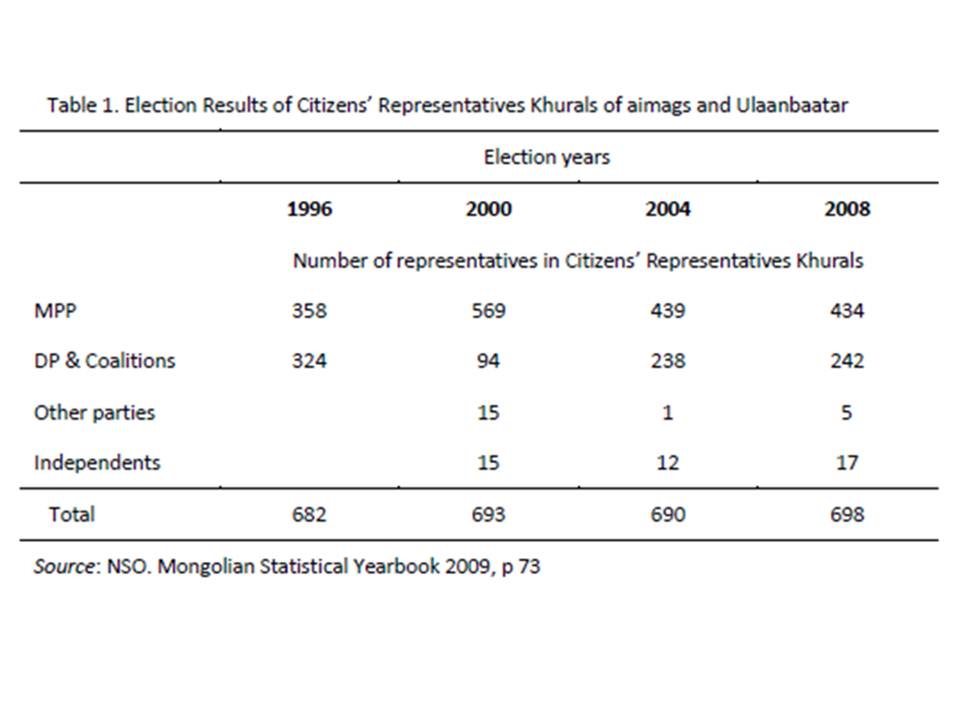
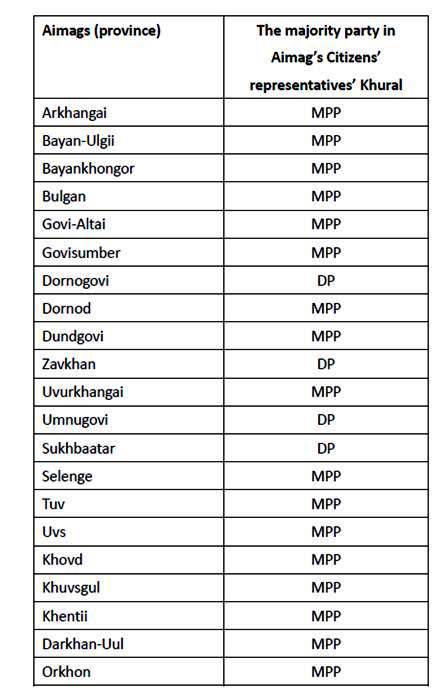
The opposition Mongolian People’s Party (MPP) faces much tougher test at the local elections. Since the inception of local elections in 1992, the MPP has been the majority party in most provinces and districts of Ulaanbaatar. In particular, since 2000 when the MPP became the absolute majority in parliament it could significantly cement its local dominance. Of 693 seats of Citizens’ Representatives Khurals of provinces and Ulaanbaatar the MPP won 569 seats or 82% of all seats in 2000. Since then the MPP has maintained its dominance (Table 1). Although the MPP’s number of seats in the Citizens’ Representatives Khurals decreased in 2004 (64%) and 2008 (62%), it still controlled the majority of provinces and Ulaanbaatar. Of 21 provinces, the MPP was the majority party in 17 provinces (See, Table 2). Moreover, the MPP controlled all districts (duureg) and satellite cities of Ulaanbaatar except the Khan-Uul district where the DP constituted the majority.

However, the MPP’s strength and confidence in local elections has ebbed since the election of the City Council or the Ulaanbaatar city’s Citizens’ Representatives Khural in June 2012, which was held simultaneously with the parliamentary election. The MPP had continuously dominated the City Council. Most recently, the MPP held 36 seats of the City Council’s 45 seats in the period between 2008 and 2012. So, it was a devastating result for the MPP to lose the control over the City Council this year. The DP won big in Ulaanbaatar in June in both the parliamentary and City Council’s elections. The DP’s successful campaign led by its preeminent leader Erdeniin Bat-Uul earned them 26 seats, enabling the DP to govern the Ulaanbaatar city the first time. Except two run-off elections in which at least one MPP candidate will be elected to parliament, the MPP has not won a seat in parliament from Ulaanbaatar.

The new local election law requires that the elections should be held on Wednesday of the fourth week of November. Unlike previous local elections that held in the early-October, the new law has provided a longer period or broader opportunity for the ruling party and coalition to formulate their policy and implement concrete programs that would gain them public support. During the last three months the new governor of Ulaanbaatar city E.Bat-Uul and his administration gained much support for their quick action to tackle with traffic jams, to improve public transportation, and to suspend illegal construction works and land ownership. Moreover, Prime Minister Norovyn Altankhuyag’s new initiative to reduce the price of coal for Ulaanbaatar’s ger district residents has seemed to be widely appreciated, adding strength to the DP’s campaign in the city. Thus, the MPP will have tough test in Ulaanbaatar and might lose their dominance in most districts.

It seems that the MPP has expended much effort in provinces and soums (districts). In the system of the MPP, the work of local party leaders or the governors of aimags have often been a step towards preparing to run in parliamentary elections. In provinces and soums, the party has had a well-functioning network of election mobilization comprising a large number of local government officials, local business connections, and party members. The vertical relations between the central and local units of the MPP are well institutionalized and there have been little local resistance to the elites at the top. A number of leading MPP members moved from Ulaanbaatar to provinces like Umnugovi to run for the local elections.

However, the MPP has some challenges there, as well. First, like the last parliamentary election in June, the Mongolian-People’s Revolutionary Party (MPRP) will be an annoying contender and will likely to attract some voters from the MPP. Even though the MPRP is in the coalition government, the party runs for the local elections independently. But in some electoral districts the MPRP is in coalition with the Mongolian National Democratic Party (MNDP) or with the Civil-Will and Green Party (CWGP). Second, over ten aimag governors who are all MPP members have been investigated by the Independent Agency against Corruption during the last couple of years, apparently humiliating the public image of their party. Third, the MPP did not propose an alternative, catching manifesto or policy priorities. The party’s electoral campaign largely focused on the critique of the ruling coalition, sending a message that the MPP will constrain and resist the unlimited power of the rulers. This might not be a good strategy and would not bring more seats for the party. According social media sources, there have already been open discussions within the party about a looming crisis of leadership and policy innovations in the party. If the MPP loses in the local elections it may prompt to a major intra-party reform or reshuffle in the party.

Meanwhile, the DP insists on the effective implementation of the coalition government’s program and asks the electorate to help them to increase their representation in local governments. While the DP may win big in Ulaanbaatar, it will likely to be difficult for them to have a massive victory in provinces. The defeat in the local elections would give the DP much-needed institutional infrastructure that could help the government policy to be implemented smoothly. It is also an opportunity to strengthen local party organizations, which is same for other smaller parties, as well.

See posts earlier this year for analysis of the June parliamentary election.

Posted in Democracy, Elections, Politics | Tagged | 11 Comments

Book Chapter: Introduction to Change in Democratic Mongolia

Research on Contemporary Mongolia

Julian Dierkes in J. Dierkes, ed. Change in Democratic Mongolia – Social Relations, Health, Mobile Pastoralism, and Mining Leiden: Brill, 1-13.

Brill: Change in Democratic MongoliaIn my introduction, I document the origins of the volume in a conference I organized through the University of British Columbia Program on Inner Asia to commemorate the 35th anniversary of diplomatic relations between Canada and Mongolia.

One of the aspects of the conference that was a grand success and laid the foundation for the present volume was its inclusiveness in terms of topics addressed across the social sciences and origins of the authors from Asia, Europe and North America.

In the preparation I had selected eight focus areas that seemed to host particularly vibrant communities of researchers focused on contemporary Mongolia: 1. pastoralism, 2. ecosystems, 3. mining, 4. religion, 5. education, 6. politics and international relations, 7. health, and 8. transition studies. The papers collected in this volume represent a cross-section of works across these areas.

The introductory chapter situates these chapters within their larger academic context, provides an overview over the volume, and a brief synopsis of the historical background of Mongolian development that provides the backdrop for all the contributions to the book.

Posted in Book: Change in Democratic Mongolia, Research on Mongolia | Tagged | 1 Comment

Guest Post: Southern Gobi Water Shortage

Guest Post by Michelle Tolson

Looking Past Oyu Tolgoi to the Southern Gobi’s Water Shortage

Of late, Mongolian media has been obsessively focusing on the investment agreement between Oyu Tolgoi and the Mongolian government.  Little attention is paid to the effect that the mine is having on locals in Omnogovi region, for good or ill.  Foreign media also seems to largely focus on the investment aspect of Oyu Tolgoi, monitoring how this affects other foreign investment opportunities.  Few foreign media publications delve into the environmental impact and the effect on herders in the region, but when they do, like Mongolian media, they scrutinize Oyu Tolgoi rather than Tavan Tolgoi and the mining situation overall.  Though negative articles about Oyu Tolgoi seem to dominate local media, Tavan Tolgoi has escaped this scrutiny relatively unscathed.

The World Bank published a water assessment in 2010 which provided a breakdown of the mining industry’s impact on water resources in the Southern Gobi Region, using data from the Dundgovi, Dornogivi, and Omnogovi.  The report listed the livestock population and their water use contrasted with mining operations’ water use in relation to known water sources.  The situation is potentially dire—mentioned discretely in one paragraph on p. 35—that the current water resources in the Southern Gobi region have an expected life span of 10-12 years, taking into consideration the abundant mining licenses, growing population and limited current knowledge of water resources in the area.  For example in 2005, water use was estimated at 85,000 meters cubed (m3)/day but in 2020 it could rise to 425,000. The water usage for people (rural and urban) is estimated at 10,000 cubic meters per day (m3/day)—a relatively small amount. Taking into consideration the livestock of the region, the usage increases.  The study estimated that the entire region has approximately 3.8 million head of livestock comprised of 120,000 camels, 260,000 horses, 100,000 cows, and 3.4 million sheep and goats. Camels consume an estimated average of 45 liters of water a day, while horses consume 35 L/day, cows 35 L/day and sheep-goats consume 4 L/day. This comes to a total of 31,600 cubed meters a day for the combined total of livestock in the Southern Gobo region.  However, the two main mining sites’ water use (and this would represent the construction phase) is each double the amount of all the livestock on the three Gobi aimags. The World Bank report found Tavan Tolgoi topped the charts at 76,000 meters cubed (m3) of daily water usage for 2010 taken from groundwater resources, while Oyu Tolgoi used 67,000 cubed meters taken from ground water resources. There are also several smaller mines gearing up which will further impact the situation.

Similar to Ulaanbaatar, the soums and aimags in the Southern Gobi region have experienced a population boom, stressing limited infrastructure.  The World Bank report notes population growth in the Dornogovi and Omnogovi provinces “has followed the national trend. Between 1985 and 2004, the human population in 13 soums of these two aimags increased 53 percent, from 41,072 to 62,735 persons.”  Most soums in the Southern Gobi region utilize water kiosks, much as ger districts dwellers do in Ulaanbaatar.

This migration has been influenced by the climatic changes which have been making the herding livelihood more difficult.  The UNDP action plan report for 2012-2016 noted the extreme environmental degradation on the steppes caused from overgrazing and higher rates of carbon in the air from the massive livestock population which grew beyond the capacity of the land when limits on herd sizes were abolished in post Soviet years.  Overgrazing has contributed to climate changes which have resulted in lower levels of rainfall and the reduction of the grasslands.  About 70 percent of the country is experiencing desertification.  Mining meanwhile has been booming and filling in the employment gap, further drawing people to the urban areas.

The World Bank report’s intended audience was stakeholders of the government of Mongolia.  In order to learn what plans are in the works, I interviewed the Ministry of Environment and Green Development regarding a feasibility study on diverting the River Orkhon by pipeline conveyance to the Southern Gobi region.  This has largely been ignored by the media—both foreign and local—but has been picked up by environmental NGOs and those advocating for herders’ rights such as OT Watch.  OT Watch has ironically linked the river diversion initiative to the Oyu Tolgoi mine, though the company does not wish to participate in this method, preferring to utilize a saline aquifer treated with a water purifier to supply the water needs for both mining and their staff.  Though the feasibility study is still being conducted on the river diversion project, the Ministry said the project “urgently” needed to be implemented for those living in the growing soums and aimags, including the herders.  They see this as a renewable resource.  The Herlen River, which was also part of the feasibility study, will not be utilized, but the Orkhon River is slated to be, according the Ministry.  Mark Newby, the Water Resources Principal Advisor to Oyu Tolgoi, said the company is using their technology to find additional underground water resources to addressing the growing needs of the nearby soums and aimags, which are expected to expand in population when the mine becomes operational.  However, Oyu Tolgoi’s water explorations have been viewed with mistrust according to Sara Jackson, who has conducted focus groups with the herders in the South Gobi for the past few summers as part of her PhD dissertation research on how herders are impacted by the mining boom.  She previously wrote a brief guest post on this blog about the neglected needs of the herders.   By Skype interview she told me that herders view Oyu Tolgoi’s further water explorations as proof that the company does “not even know where their water is coming from.”

The Tavan Tolgoi operation does not have a saline aquifer with a water purifier at its disposal and has limited water resource options.  There is only a nearby fresh water lake, known as Balgas or the river diversion project to cover the mining needs and those of its workers.  A previous story published by the UB Post— “Balgas Lake’s Limited Lifespan,” printed edition June 1, 2012—noted the lake, if used as a water source, would only last until 2020. According to the Ministry of Environment, the Lake Balgas issue is still being discussed and unfortunately is still a possibility—initially at least—until other sources for water are located but is not intended to be a long term solution. However, the river diversion project is still being researched and could take some time.

The recent conference in mid-October titled “Mining and Human Rights” illustrated the conflict in needs between locals in the Gobi and the needs of the rest of the nation.  A panel spoke on the problems in mining, which consisted of S. Oyun, the Minister of Environment and Green Development, Chandmani Dagva, Governor of the Dundgovi, a representative of the Special Inspection Agency and Mr. Ganbold Duvchigdamba, former herder and famous environmental activist.  The audience took part and asked questions.  Many herders came up.  One herder said he represented 4,000 people in his soum and he asked how they were supposed to live with five mines.  There were four already and another was set to go operational.  In contrast, the governor of the Dundgovi spoke of his inability to regulate the number of mining licenses issued and how his aimag had been covered up to 50 percent by mining licenses at one time which had been reducing over time through hard work.  He said what he saw that the local governments’ main problem was a lack of power, as the central government made the decision to issue mining licenses.

The true heart of the debate on mining seems to rest on the development needs the country versus the needs of the herders and locals in the Gobi.  The overall population of the Southern Gobi region is listed is at just 150,000 by the World Bank report, compared to the rest of the nation.  With the central government’s focus on the returns from mining, this conflict looks likely to continue but by looking past a foreign company as the source of the problem and looking at the bigger picture—which is the limited water resources , hopefully this critical issue can be addressed with the help of foreign companies’ technology.  The World Bank report noted that most present day water surveys are being carried out by foreign companies and researchers given the limited technology of the government.

About Michelle Tolson

Michelle Tolson, MSc, studied community development at the London School of Economics and Political Science and brings a background in gender with a human rights frame work to her writing. She has worked on research projects in New York City and Cambodia.  As a journalist, she has contributed to the Phnom Penh Post (Cambodia), Women’s International Perspective (U.S.), the Global Post (U.S.), Women’s News Network (U.S.), Women’s Media Center (U.S.) and the UB Post of Mongol News Group (Mongolia).

Posted in Environment, Environment, Michelle Tolson, Mining, Oyu Tolgoi, Water | Tagged | 3 Comments

Asia Pacific Foundation of Canada: ‘Five Minutes With’ on Mongolia

Following a “Brown Bag” talk on “Mongolian Parliamentary Election” at the Asia Pacific Foundation of Canada on August 15, we had a chance to appear on their first “Five Minutes With” interview.  With the persmission of the Asia Pacific Foundation of Canada, we’re posting the brief interview.

How did Mongolia’s recent election differ from past elections?

This year’s election differs from past elections in several ways. First, the introduction of a mixed electoral system provides greater opportunities for smaller parties. Mongolia has a unicameral parliament with 76 members, and under the new system, 28 members were nominated from the political party lists while the other 48 were elected through the majoritarian system. As a result, the two major political parties are now more vulnerable than before. Second, a gender quota was introduced for the first time. The new parliament now has 9 female members, who have now formed the first-ever women caucus – aimed at advancing political gender equality. Third, the new parliament has more representatives from civil society organizations. Finally, there were number of innovations introduced in the elections – the implementation of new technologies (biometrics, electronic counting), the inclusion of diaspora voting, conducting parliamentary and local elections (esp., of the capital city) simultaneously, and increasing role of judicial institutions, anti-corruption agency, and police in screening candidates. These changes have meant that unless one of two major parties explicitly fails or succeeds to run the government, chances for overwhelming majority by one political party is unlikely. Furthermore, all parties avoided inciting violence, unlike from the past two elections. This can be attributed to limiting participation of the political parties in organization elections and increased security from police personnel.

How has the government responded to public opinion on corruption?

Corruption is the most important concern for the public. Corruption was prominent in the 1990s when state institutions, especially judicial and law enforcement institutions, were weak due to political and economic transitions. As corruption became prevalent, public pressure has steadily increased since early 2000. In 2006, the parliament passed an anti-corruption law and established an independent agency to tackle corruption. Optimists would say that Mongolia has successfully institutionalized anti-corruption efforts by establishing a new legal environment, increasing investigations of public officials, and raising the deterrence for public servants to abuse their powers. Pessimists, on the other hand, would argue that Mongolia’s fight against corruption has proven fruitless so far. Moreover, politicians have started using anti-corruption rhetoric as a method to marginalize/demean their opponents and win popularity. My views are somewhere in between – the prosecution of the former President on charges of abuse of his political authority was an important step forward, but allegations are noticeably one-sided as only minority party members or affiliated officials considered are suspicious.

How does Mongolia’s mining sector factor into domestic politics?

Mongolians view the mining sector with mixed feelings. On the one hand, the mining sector can provide greater economic growth, investment, technology, infrastructure development, and employment. But, on the other hand, it poses enormous challenges for country’s pristine environment, sustainability of key resources (e.g., pastures, water), and nomadic lifestyles. For instance, major mining exploration and extraction operations are occurring in Mongolia’s Gobi area. Since these activities use extraordinary amounts of water, they resort to using up un-renewable underground water sources. What would happen to the Gobi area’s ecology, its 33 oases, and its pastures? This would certainly contribute to Mongolia’s rapid desertification and more dust storms for Northeast Asian cities like Beijing, Seoul, and Taipei. Similarly, many rivers have been exposed to mining pollutants and pastures have been destroyed by other mining activities, including artisanal mining. Increased enforcement of new legislation which prohibits mining and exploration in forestry and river basins, the introduction of new regulatory mechanisms (e.g., license issuance, closure plans), and proposed changes in mining laws are just reflections of increased public outcry against irresponsible mining.

I think this public outcry will become more vociferous because the mining sector has been identified as one of the main sources of corruption (esp., regarding licenses and violation of regulations). At the same time, some populist politicians will likely use this public outcry for their own short-term political goals.

Posted in Corruption, Elections, Environment, Mining | Tagged | Leave a comment

Foreign Investment Considerations in Canada Resemble Mongolian Law

When the Mongolian parliament passed a foreign investment law somewhat hastily in May 2012, partly in response to the proposed purchase of a majority of coal miner South Gobi Resources by CHALCO, this led to a fair bit of tut-tutting in the investment community. To many investors, this seemed like a threat to their ability to cash in on investments in Mongolia that have attracted some attention with frequent headlines such as “Mongolia fastest growing economy in 2011”.

Given the  lack of liquidity and diversification beyond mining in the Mongolian economy, investments in foreign mining companies seem like the obvious way for many investors to participate in the Mongolian boom. Yet, such investments are somewhat predicated on the ability of mining companies to participate in M&A activities to cash in on the value of their resources or production capacity. The foreign investment law limits the opportunity for such activities.

When the law was passed, it already reminded me of Canadian legislation that restricts foreign ownership and thus also foreign takeovers of resource companies. Often this legislation is justified in national security terms or with reference to a need to protect “national champions” with headquarters in Canada to protect economic development from a hollowing out by foreign owners. While the Harper government was already challenged by the proposed takeover of Potash, discussions have resurfaced recently with the CNOOC bid for Nexen.

The most recent twist in these discussions (see for example the Globe & Mail on Oct 23) suggests a two-track investment review process that distinguishes between state-owned and private investors as owners of Canadian assets, presumably being more lenient in decision on private investments and more cautious with the approval of investments by state-owned (primarily, but not exclusively Chinese) entities.

That is a distinction that is quite prominent in the Mongolian investment law as well in distinguishing state-owned from private investors and requiring different review processes for these different investors.

Surely, decisions like the current discussion in Canada give a lot of legitimacy to Mongolian moves to restrict foreign investments. Those who attack Mongolian moves in this regard should consider that similar policies are deemed legitimate, at least if they’re based in Canada.

Posted in Business, Canada, Foreign Investment, Mining, Mining, Policy | Tagged | Leave a comment

Green College Eurasian States and Societies Series: Robert Bedeski “Lessons from Mongolian State Evolution”

Eurasian States and Societies Series
Green College
UBC

Monday, October 29
17-18:30h
Green College Coach House
UBC Campus

Dr. Robert Bedeski

Emeritus, University of Victoria

“Lessons from Mongolian State Evolution: The Anthropocentric Theory of Human Security”

Posted in Events, Mongolia and ..., Nationalism, Politics, Research on Mongolia, UBC Mongolia Lecture Series | Tagged | Leave a comment

Book Chapter Mongolia’s Mining Controversies and the Politics of Place

Mongolia’s Mining Controversies and the Politics of Place

Sarah Combellick-Bidney in J. Dierkes, ed. Change in Democratic Mongolia – Social Relations, Health, Mobile Pastoralism, and Mining Leiden: Brill.

Brill: Change in Democratic MongoliaControversies about mining are not new to Mongolia, and they are never static. There are always new turning points, and earlier controversies provide essential context for understanding current developments on the mining front. This study follows a critical juncture in the mining controversies of 2007, when negotiations on Oyu Tolgoi were stalled and newspapers and magazines covered wide-ranging debates about the role of mining in Mongolia’s future. This case study of development discourse among Mongolian politicians, NGO leaders, businessmen and scholars highlights the ways in which critics were able to erode the legitimacy of the contracts and expand the conversation to include a variety of other options. While the rhetoric of global development casts mining as a standard means of achieving economic development, domestic critics in Mongolia representing a wide range of interests engaged in the ‘politics of place’ to raise questions about the effects of ‘big mining’ on their society and their land. Both the government of Mongolia and the mining sector proved to be more susceptible to such questions than investors had predicted.


Posted in Book: Change in Democratic Mongolia, Development, Economics, Mining, Mining, Oyu Tolgoi, Politics, Regulation | Tagged | 1 Comment

Book Chapter: Discovering Peacekeeping as a New Mission: Mongolia

A chapter on Mongolian peacekeeping, jointly written with Dr. Thomas Bruneau, is published in the The Routledge Handbook of Civil-Military Relations (2012).  The chapter examines Mongolia’s explicit reorientation of its military from territorial defense, although that is formally still a purpose of the armed forces, to peacekeeping operations.  Here is a quick synopsis of the chapter.

In the past two decades, Mongolian military was employed for external peacekeeping missions and domestic law enforcement as well as humanitarian missions, which were real tests for Mongolia’s fledgling democratic institutions. Mongolians have, for example, utilized the peacekeeping role in elaborating their “Third Neighbor” strategy to maintain the maximum amount of independence from their gigantic, nuclear – armed, neighbors by strengthening its ties with Western democracies. There are adjustments taking place, and a fairly wide awareness of the need for updating and adjusting the legal and institutional bases of civil-military relations.

The Mongolian case demonstrated that peacekeeping could reveal interesting dynamics of civil-military relations in a new democracy. First, in a delicate geo-strategic environment, Mongolian political leaders projected peacekeeping as a way to advance its foreign policy goals of achieving bilateral relations with the West and increasing Mongolia’s international profile. Second, peacekeeping was perceived by military leaders to justify the existence of a small military and to consolidate civil-military relations. Third, foreign military training assistance and increased engagements with Western militaries consolidated a new identity for the Mongolian military, which respects democratic civilian control and stands out as the most reformed security institution, whilst many other institutions are wrestling their past legacies and new challenges such as corruption and ineffectiveness.

Despite raising concerns in Moscow and Beijing, Mongolia’s military engagement with the West was necessary for the military to overcome transitional challenges and to adapt new Western military standards and ideas. Mongolia’s current prestige as a forthcoming troop contributor for peacekeeping missions would be impossible without the US military assistance. Without deployments to Iraq, Mongolia’s peacekeeping commitment would have waned in early 2000. The deployments to Iraq brought a momentum for Mongolian peacekeeping efforts and introduced Mongolia’s military to the UN DPKO and other institutions. While militaries are withdrawing from Afghanistan, Mongolia is increasing its contribution to both the UN and coalition missions in Afghanistan.

Over two decades, Mongolia transformed its Soviet-style military into a modern, deployable peacekeeping military. A potential road map could be developed based on Mongolia’s experience since the process occurred within the newly institutionalized framework of democratic civil-military relations. In spite of these minor (fixable) institutional lessons-unlearned, one of the best lessons learned is that the Mongolian military was kept out of politics and economics during transition. A quick consensus reached between political and military leaders on future roles of the military during the transition made them as impartial constructive actors – not destructive ones. Mongolia’s lessons may help the West recalibrate its assistance towards development of the peacekeeping capability.


Posted in Foreign Policy, Military, Research on Mongolia, Security Apparatus, UN | Tagged | Leave a comment

Book Chapter: Changes in Pastoral Land Use and Their Effects on Rangeland Vegetation Indices

Temuulen Tsagaan Sankey, Joel Sankey, Keith Weber, and Cliff Montagne

Changes in Pastoral Land Use and Their Effects on Rangeland Vegetation Indices

in

Change in Democratic Mongolia: Social Relations, Health, Mobile Pastoralism, and Mining

Brill: Change in Democratic Mongolia

Drastic changes have occurred in Mongolia’s grazing land management over the last two decades, but their effects on rangelands are ambiguous. After the democratic changes in 1992, formerly state-owned livestock collectives were disbanded and Mongolia’s livestock population was privatized. There was no longer a state institution to formally regulate pasture use and herders became responsible for pasture use management.  Temporal trends in Mongolia’s rangeland condition have not been well documented relative to the effects of long-term management changes. We studied the changes in pastoral land use management in Tsahiriin tal of northwestern Mongolia and their effects on rangeland vegetation productivity using a remote sensing satellite-based approach.  Grazing lands in Tsahiriin tal that were formerly managed by the socialist collective are now used by numerous nomadic households with their privately-owned herds, although the lands remain publicly owned.  Grazing pressure has more than tripled and herd distribution has changed from a few, spatially-clustered large herds of sheep to numerous smaller herds of multiple species including sheep, goats, horses, and cattle.  Our satellite image analyses indicate that rangeland vegetation significantly decreased (p-value <0.001) from the collective to the post-collective period.  The observed decrease was significantly correlated with changes in the grazing management system and increased herd size. The decrease in rangeland vegetation might be further accelerated, if current grazing land use continues with no formal rangeland management institution or organized, well-structured efforts by the local herding households.

Posted in Book: Change in Democratic Mongolia, Grassland, Nomadism, Research on Mongolia | Tagged | 1 Comment

Mongolia Lecture Series: Y Otgonbayar “Education Reform in Mongolia”

Mongolia Lecture Series
Program on Inner Asia
University of British Columbia

Wednesday, Oct 24
16:30h

Room 231
CK Choi Bldg for the Institute of Asian Research
1855 West Mall
UBC

Yondon OTGONBAYAR

“Education Reform in Mongolia”

Dr. Otogonbayar will provide an overview over the reform of primary and secondary education in Mongolia starting with the introduction of secular education during the state-socialist period, the eradication of illiteracy and the foundations of a Soviet-style education system. He will then discuss the first changes in the education systems in the early 2000s. The pros and cons of current reforms will complete this overview.

The Hon. Otgonbayar is a member of the Mongolian parliament (Улсын Их Хурал) for the Mongolian People’s Party. From 2008-2012 he served as Minister of Education, Culture and Science in the Mongolian cabinet. Dr. Otgonbayar was educated at the Moscow State Institute of International Relations; the Indian Institute of Management and Marketing, New Delhi, and the Academy of Management, Ulaanbaatar. Prior to entering politics he served in Mongolia’s Ministry of Foreign Relations. He tweets @OtgonbayarY

As always, this event is free and open to the public.

Posted in Education, Primary and Secondary Education, UBC Mongolia Lecture Series | Tagged | Leave a comment

New Blog: The Mongolist

Brian White has spent a lot of time in Mongolia, including the country-side, and uses his Mongolian to provide insights on current political and social developments on his blog, The Mongolist. I got to know Brian through his and my association with the American Center for Mongolian Studies and have always appreciated him his for his knowledge as well as entrepreneurial spirit.

With Mongolia’s mining boom seemingly only accelerating, the country has been attracting a fair bit of writing that is not based on any particular insights, but rather on hasty surveys of the political scene or geopolitical situation by writers who get a quick grasp of current developments, but seem to be writing the same stories over and over again.

Brian’s blogging will obviously be quite different as his first few posts show already.

My favourite is obviously his ranking of Mongolian medals at the London Olympics on the sheeple index (total medals) * (sheep population)/(human population).

More seriously, Brian will easily establish himself as an independent blogger who is neither beholden to a particular foreign viewpoint, nor mired in some of the domestic political ties and obsessions. For an example of this independence and insight, see his post on portrayals of foreign investors in the Mongolian public.

The Mongolist posts will certainly become regular and required reading for me.

Posted in Research on Mongolia, Social Media | Tagged | Leave a comment

Book: Change in Democratic Mongolia – Social Relations, Health, Mobile Pastoralism, and Mining

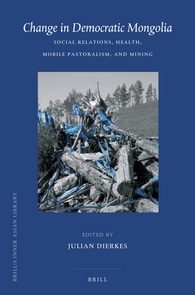
Change in Democratic Mongolia – Social Relations, Health, Mobile Pastoralism, and Mining

Edited by Julian Dierkes

Some 100 years ago, Mongolia gained independence from Qing China, and more than 20 years ago it removed itself from the collapsing Soviet Bloc. Since then, the country has been undergoing momentous social, economic and political changes. The contributions in Change in Democratic Mongolia: Social Relations, Health, Mobile Pastoralism, and Mining represent analyses from around the world across the social sciences and form a substantial part of the state of the art of research on contemporary Mongolia. Chapters examine Buddhist revival and the role of social networks, perceptions of risk, the general state of health of the population and the impact that mining activities will have on this. The changes of patterns of nomadism are equally central to an understanding of contemporary Mongolia as the economic focus on natural resources.

Table of Contents

Introduction: Research on Contemporary MongoliaJulian Dierkes

PART I Social Relations

1. Finding the Buddha Hidden Below the Sand: Youth, Identity and Narrative in the Revival of Mongolian BuddhismMatthew King
2. Formal and Informal Networks in Post-socialist Mongolia:Access, Uses and InequalitiesByambajav Dalaibuyan
3. Democracy and Risk: Mongolians’ PerspectivesPaula Sabloff
4. Local Leaders between Obligation and Corruption: State Workplaces, the Discourse of ‘Moral Decay’, and ‘Eating Money’ in the Mongolian Province – Astrid E. Zimmermann

PART II Challenges to the Mongolian Health System

5. Did the Social and Economic Transition Cause a Health Crisis in Mongolia? Evidence from Age- and Sex-specific Mortality Trends (1965-2009) – Mungunsarnai Ganbold & Thomas Spoorenberg
6. Occupational Safety and the Health of Miners as Challenge to Policy-making in Mongolia? – Oyuntogos Lkhasuren

PART III The State of Mobile Pastoralism

7. Changes in Pastoral Land Use and Their Effects on Rangeland Vegetation IndicesTemuulen Tsagaan Sankey, Joel Sankey, Keith Weber, and Cliff Montagne
8. Collaborative Pasture Management, a Solution for Grassland Degradation in Mongolia? – Raffael Himmelsbach
9. The Twilight of Pastoralism? Livelihood, Mobility, Differentiation, and Environmental Engagement on the Inner Asian SteppeTroy Sternberg

PART IV The Social Context of Mining

10. Mining, Resistance and Pastoral Livelihoods in Contemporary MongoliaCaroline Upton
11. The Cultural Logics of Illegality: Living Outside the Law in the Mongolian Gold MinesMette High
12. Mongolia’s Mining Controversies and the Politics of PlaceSarah Combellick–Bidney

Conclusions: Mongolia in the First Twenty Years of the 21st Century – Julian Dierkes and Byambajav Dalaibuyan

To order, please visit the Brill website or turn to your usual online or brick-and-mortar book retailer.

Posted in Book: Change in Democratic Mongolia, Canada, Civil Society, Corruption, Democracy, Development, Environment, Environment, Gender, Grassland, Health, Law, Mining, Mining, Nomadism, Oyu Tolgoi, Policy, Politics, Population, Regulation, Religion, Research on Mongolia, Social Issues, Social Movements, Society and Culture | Tagged | 3 Comments

The Proof is in the Pudding

Three months after the Mongolian Parliamentary elections, another previously Communist country has gone to the polls. Georgia has managed to develop a strong relationship with the United States and Europe, and its elections on October 1 are being closely monitored by international agencies. What are the results of this election and what do Georgia and Mongolia tell us about the post-Communist democratic experience?

Georgia’s October 1, 2012 Elections

First of all, the results are far from clear at this point, with both major parties claiming a majority-win of 150-member parliament. That means a total of at least 76 seats, combined from 73 directly elected and 77 proportional. (http://civil.ge/eng/article.php?id=25276) While the country’s Central Election Commission is unlikely to release even preliminary results until tomorrow, both President Saakashvili- head of the ruling United National Movement- and Bidzina Ivanishvili- opposition leader of the Georgian Dream Coalition- have claimed a majority win. Some exit polls suggested a slight advantage for the opposition, but since the polls were taken 4 hours before all voting was to stop, their usefulness has rightly been called into question. In his most recent statement, President Saakashvili claimed that while the opposition might have won the proportional race, it is clear that UNM faired far better in the directly elected seats, and would maintain its majority status in the Parliament. It seems that Tbilisi voters as a whole supported the opposition, but that outside of the capital, support for the ruling UNM remained strong. Most recently Ivanishvili claimed that the opposition had won at least 100 seats, putting it well ahead of the number needed for a clear majority.

As we wait for the official numbers to be released, it is worth noting that the results of this hotly debated election may remain contested for some time. Already, a number of complaints are surfacing regarding voting irregularities, with reports ranging from votes being cast without voter ID cards, to polling station officials openly supporting one party over another; but, note that nothing major has been reported. It is, of course, too early to know whether these irregularities are on a scale large enough to actually “buy” the election. As anyone familiar with Mongolian elections would instantly recognize, sometimes the allegations of fraud are just as shady and clouded in mystery as the irregularities themselves.

Regarding the issues, it is clear that Georgians went to the polls with three major concerns: prison reform and human rights, Russian-Georgian relations, and (closely tied to the second issue) how to approach the status of de facto independent South Ossetia and Abkhazia. Just weeks before the election, a video was released showing the abuse of prisoners in a prominent Georgian detention facility, badly damaging the authority of the ruling party. Some have blamed Saakashvili for his handling of the South Ossetia crisis and the 2008 Russo-Georgian War. Ivanishvili, having made his fortune on Russian business ties, seems ready to begin the long process of resetting relations. While Georgian-Russian relations might not thaw anytime soon, with Russian Prime Minister Dmitry Medvedev refusing to meet with Saakashvili, a change in power might be necessary from a foreign policy standpoint.

Comparing Mongolia and Georgia

Looking back at our (Mongolia Focus’ writers’) experience in following Mongolian political developments, particularly the June 2012 Parliamentary election, a couple of important patterns seem to arise, regarding elections in new democracies.

Experience Matters. Mongolia has had slightly more experience with holding multi-party elections than Georgia, and it seems to show. In Mongolia’s most recent election, many analysts, Mongolian and international alike, were predicting huge problems with the new voting machines, voter registration, and voter ID cards. Despite the “rowdy” outcomes in the election this June, the procedure itself seemed largely flawless from my perspective as an international observer. All polling stations we visited seemed organized and the staff well trained. (See: https://blogs.ubc.ca/mongolia/2012/brief-election-observation-break-update/) The reports coming out of Georgia today look more like the claims lobbied against Mongolia 4 years ago. However, comparing Mongolia and Georgia’s history of electoral politics, Mongolia has seen 6 successful Parliamentary and 5 Presidential elections. Georgia, on the other hand, experienced a coup shortly after declaring independence from the Soviet Union, resulting in a new national leader that would not be replaced until the 2003 Rose Revolution. Following the Rose Revolution, Saakashvili was elected as President in 2004.

Mongolia has already been forced to deal with issues such as voter registration, ID cards, and fraud allegations. While they don’t always get it right, they seem to get closer following each election.

A rowdy democracy is still a democracy. The only thing for sure so far in the Georgian election is that nothing is clear, the campaigns were messy and “dirty”, the opposition was not well organized, but was able to garner significant support, and the prison scandal significantly weakened the UNM’s legitimacy and may have effected the final vote as well. If I was writing this post on Mongolia in June, I could have said almost the exact same thing, just substituting the arrest of Enkhbayar for the prison scandal. The good news is that “rowdiness” is hardly a bad sign for a developing democracy. Indeed, increased civil society involvement, a growing opposition, and the ability for observers to report irregularities are all signs of a thriving democratic system.

Trust Matters. Dr. Julian Dierkes and myself have remarked on how a lack of trust between political parties in Mongolia affects the results of elections and voter turn out in Mongolia, in our piece in East Asia Forum. Georgia’s UNM and Dream Coalition are likewise wary of each other, with Ivanishvili having guessed early on that Saakashvili would not relinquish his hold on power and Saakashvili openly accusing the opposition of having ties to the Kremlin.

Elections are the Proof in the Democratic Pudding. I argue that both Mongolia and Georgia are eager to prove their democratic credentials and avoid backsliding on their domestic reforms and commitments to human rights. While democratic development is ultimately dependent on domestic factors, both Mongolia and Georgia have formulated their foreign policy and security objectives with an eye to attracting the involvement of the US, EU, and NATO as a balance against their larger, potential threatening neighbors. Elections such as today’s in Georgia and Mongolia this past June are important bricks in the wall of democratic proof that both countries can leverage their relations with the world’s leading democratic powers.

Conclusion

Mongolia’s experience over the past 22 years has cemented its civil society and democratic system, reaching the “point of no return”. While Georgia has had a different, and significantly more turbulent political and social history following independence, it has already managed to attract attention to its fledgling democracy, at least in part as a result of the 2008 conflict with Russia, which turned the world’s attention to the little Caucasian country. Mongolia, on the other hand, had to prove that its democracy was real in the shadow of the world’s largest authoritarian states: The Russian Federation and the PRC. Historical and geographic differences might not make the Mongolian-Georgian comparison obvious, but both certainly have something to say about small state democratization and foreign policy.

(This Post can also be found on the author’s personal blog, Small Matters)
Posted in Democracy, Elections, Georgia, Ikh Khural 2012, Party Politics | Tagged | Leave a comment