El mundo es ancho y ajeno I

alegria_mundo

Almost exactly halfway through Ciro Alegría’s renowned El mundo es ancho y ajeno comes a turning point, as the members of the indigenous community that is the Peruvian novel’s focus are forced to leave their village of Rumi, in the northern highlands. This day has long been coming, as the culmination of a fabricated legal claim from a neighbouring landlord (named Don Alvaro Amenábar), but also as the latest stage in the centuries-old and apparently inexorable process of what Marx called primitive accumulation and what geographer David Harvey terms accumulation by dispossession. Lands held in common are enclosed and privatized; the people once tied to these lands are then “freed” to become wage labourers, in this case for a mining project that the landlord hopes to establish nearby. Backed by the force of the state and a legal system shown to be absolutely corrupt, capital assimilates and privatizes common goods as it undoes social structures that have existed since time immemorial.

Alegría stresses the indigenous people’s relationship to the earth, not least in a lyrical chapter devoted to the maize and wheat harvests, which concludes that “community life acquires a palpable air of peace and uniformity and takes on its true meaning in its work on the land. Sowing, cultivation, and harvest are the veritable axis of its existence” (159). To be torn from their lands, then, implies the death of the community. And yet there are already signs of a capacity (and willingness) to change and adapt: their mayor, Rosendo Maqui, has led a project to construct a school: “Then we’ll be able to send the best kids to study… So that they may be doctors, engineers, lawyers, teachers… We desperately need Indians who can listen to us, who can teach us and defend us” (154). So another side of the tragedy of their forced dispossession is that the community also have to abandon the half-built schoolhouse. But if they can rebuild and encourage at least some of the next generation to move on from the land, they might ensure that in the future they (or other indigenous communities) might win the right to stay put.

As well as being the tale of the community en masse, Alegría’s novel also undertakes frequent digressions to tell the stories of the people who comprise it or come in and out. For instance, there is a whole minor subplot about Rosendo Maqui’s grandson, Augusto, and his tentative flirtation with a young shepherdess called Marguicha. There is Nasha Suro, the witch or fortune teller, whose father had also been credited with special powers and who had once cured the landlord’s father. Or there is the unlikely pairing of sober villager Doroteo Quispe, known for his prayers, and the bandit El Fiero Vásquez, who bonds with Quispe in his eagerness to learn one of these prayers. Then there is the travelling salesman, El Mágico, who turns out to use his mobility and knowledge of the community to spy for Don Alvaro.

The central figure is perhaps Rosendo himself, the wise leader who is described early on as a “man with traces of mountain” (12). Maqui calls the community to order and negotiates on their behalf in the local town, at the same time as he tries to keep tabs on what the landlord Amenábar is up to. As such, he both records and organizes the struggle against the process by which the community is dispossessed. But there is something more. We are also told that, with his wife, he has adopted a child born to a local woman impregnated by a passing soldier during the War of the Pacific. This son, named Benito Castro and now grown up, is doubly distant from Rosendo’s lineage: both adopted and mestizo (mixed). Over the course of the narrative of the first half of the book, he is (to boot) almost entirely absent from the community. But it is suggested that the circumstances in which he left Rumi were a matter of disgrace affecting Rosendo as much as Benito himself: the “austere mayor” scarcely wants to remember the “one time” that he had “given up being just” (34). Here, the shadowy narrative voice that crops up periodically as the book proceeds now appeals directly to the novel’s readers, promising that all will be revealed in good time, and establishing Castro’s absence as a trauma haunting the entire first half of the narrative.

At this moment of crisis or point of inflection, then, it is no doubt time for the prodigal (step)son to return.

Chotti Munda and His Arrow

devi_chotti-munda-cover

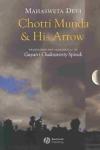
“All’s a story in Chotti Munda’s life,” we’re told near the beginning of Mahasweta Devi’s Chotti Munda and His Arrow, a novel that tells of the eponymous Chotti and his Munda village across seven decades in colonial and postcolonial West Bengal. “Munda language has no script. So they turn significant events into story, and hold them as saying, as song. That’s their history as well” (18). But this is a history that has often gone untold. The Munda people are among the so-called Tribals or Adivasi, the indigenous groups that make up almost 10% of India’s population but remain at the margins (at best) of the country’s national imaginary. Devi’s novel thus rescues an alternative history that troubles and even subverts the official narrative, revealing its blindspots and silences.

Not the least of this book’s subversions is the fact that it forcefully refuses any gesture towards national allegory. Whereas, say, Saleem Sinai, protagonist of Salman Rushdie’s Midnight’s Children, is born symbolically at the precise moment of India’s independence, Chotti Munda is born much more prosaically sometime at the beginning of the twentieth century. Which means that he is almost fifty when the Indian state comes into being on August 15, 1947. But the event hardly enters into his story; independence is a matter for the “Dikus,” the Hindu majority who impinge on the Mundas’ world as landowners, merchants, and shopkeepers. “The August movement did not even touch the life of Chotti’s community. It was as if that was the Dikus’ struggle for liberation. Dikus never thought of the adivasis as Indian. They did not draw them into the liberation struggle.” Yet on the other hand this makes the Tribal perspective a rather good one for assessing the achievements (or otherwise) of the nation-state, given that the adivasis “stand at a distance and watch it all” (96). Among the stories told here, then, is the story of India; what the novel refuses is the way in which allegory enforces an identification between character (and reader) and nation. However much it imitates the myth-making tendencies of folklore, and despite (or even because of) its keen interest in the workings of culture and power, the history told in Chotti Munda and His Arrow is posthegemonic.

Chotti himself has an ambivalent relationship to the story-telling and myth-making that surround him. As a teenager, against family warnings, he is drawn to Dhani Munda, his sister’s grandfather-in-law, who has fame as a rebel (he passes on the history of Birsa Munda’s late nineteenth-century revolt against the British) and as an archer. No one else wants to hear the old man’s stories, so Chotti becomes their guardian when he asks Dhani to teach him to shoot arrows; and by doing so he also “becomes a part of the epic” (7). When Dhani dies, killed by the colonial police for breaking an order expelling him from the region, Chotti takes on his legacy and earns a reputation as an archer with a magic arrow who wins tournaments at every local fair. He finds he now has the “responsibility of keeping alive the legend that is growing up around him as he wins stake after stake. But he hadn’t wanted to be the hero of legend” (32-3), and he resists the notion that there is anything supernatural or magic about his prowess. The secret, he tells anyone who asks, is simply repetition, practice: “That practisin’ is t’spell” (25). And this is the lesson that he later passes on to a younger generation in turn, that they can reshape their bodies through practice, habitual adaptation to the bow: “Spell, spell, all see me spell. Look at me hand man, hard wit’ pullin’ t’ bowstring. I practice all t’ time. Will ye?” (50).

(Devi’s translator, Gayatri Spivak, renders Munda speech in English with an odd patois that seems to be half African American, half Yorkshire. This works in so far as it is a constant reminder of linguistic and cultural difference; the reader–this reader, at least–is always set slightly on edge. But much fluency is also lost, especially given how much the novel relies on dialogue. It is as though the Mundas are perpetually either slightly taciturn or strangely stuttering, even when talking among themselves.)

Chotti thus becomes an agent of continuity and tradition over a seventy-five year period (three generations) in which everything changes and yet nothing changes. Everything changes in that, beyond the departure of the British and the transition to independence, modernity and economic development also transform even this relatively remote landscape of rivers and forests. The railway comes, and even if the train doesn’t always stop, it means “modernity, power, machine” (49). The station is enlarged and Chotti notes that “everything seemed to be changing with the Mundas” (107). Eventually, the arrival of motorcars and movies confirm that the village enters “the modern age” (222). Meanwhile, “the Mundas and lowcastes of Chotti village enter the national economic pattern of independent India” (140) and capitalist relations of commodification and wage labour replace traditional communal ties: “The day is coming. Mundas will not be able to live with their identity. [. . .] Then there’ll be a shirt on his body, perhaps shoes on his feet. Then the ‘Munda’ identity will live only in festivals–in social exchange” (110). Not that the Tribals are simply unwilling victims of these transformations: when feudal, bonded labour is banished it is the landowner who finds himself stuck in the past as his workforce demand that the new law is enforced, and refuse to collect the harvest otherwise, much against his wishes.

If Chotti is not particularly sentimental about the transformations he witnesses (and in fact encourages) over the course of his long lifetime, it is perhaps because in other ways so little changes. In the final, violent showdown over the shift from bonded to wage labour, two agents of the Youth Congress who have been instrumental in repressing the Naxalite insurgency under Indira Ghandi’s State of Exception, the “Emergency,” are killed in the forest. One, named Romeo, had been especially brutal. But when he is killed, and as Chotti Munda considers the inevitable police reaction to come, “terror like we’ve never seen” (285), the narrator muses that “There are adivasis, there are subcastes, the Romeos kill them, it happens like this. But if one or a few adivasis kill the Romeos it is an unexpected event. The Romeos kill, they are not killed. This is the rule. Under all regimes” (283). And though this is in some ways a disheartening observation, in that there seems no end to the villagers’ subaltern status, it is also a source of some comfort: the adivasis will endure this injustice, as they have endured so many before. Or as the outcaste (“untouchable”), Chhagan puts it to Chotti when they go down to the riverbank to discuss the latest crisis, “All’s changed. [. . .] But t’ river’s t’ same.” To which Chotti, who himself is named after the river and is almost as unperturbable, responds: “Nothing’s changed. Just t’ pressure’s on t’ rise” (276).

At the novel’s conclusion, this identification between Chotti and the river becomes explicit, as does the notion that the subaltern is outside of history, not because history has left them behind but more because they see things from the perspective of eternity. At a village festival, in the tense aftermath of the killing of the Youth Congress members, Chotti revives memories of the past as he steps forward to compete in the archery contest. But first he takes a megaphone and, in front of the local administrator as well as the whole community, shoulders the blame for the murders so as to forestall further violence. Then he invokes his former teacher, who six decades earlier had taught him both the art of the bow and arrow and the language of rebellion, as he

says fast in the language of the Mundas, Dhani Munda! I’m raisin’ yer name an’ shootin’ yer arrer today. To stay true, meself to meself.

Chotti comes before the target with light and fast footsteps. And tells everyone, No fear y’all. Then he shoots, into the target.

Then he waits, unarmed. As he waits he mingles with all time and becomes river, folklore, eternal. What only the human can be. Brings all adivasi struggle into the present, today into the united struggle of the adivasi and the outcaste.

The novel’s final lines see Chotti still waiting to see the administrator’s reaction, as “a thousand adivasis raise their bows,” a multitude pronouncing “a warning announced in many upraised hands” (288), a declaration from outside of history that this time, perhaps, history itself may change for good, and a new story be told.

Contrabando

rascon-banda_contrabando

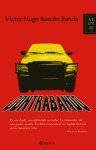
Víctor Hugo Rascón Banda’s Contrabando tells the story of a playwright and scriptwriter living in Mexico City, much like Rascón Banda himself, who returns to his childhood home of Santa Rosa in the northern state of Chihuahua. He has to write a script, and what better place than this remote former mining village? “You’ll be able to rest, sleep in as long as you like, far from the hubbub of that awful metropolis,” his mother promises him in a letter. “You’ll have the time to write, uninterrupted.” And her son agrees: “here, where there is no electricity or telephone, I can stumble upon the ghosts that become characters and the rumors that turn into plots. All I have to do is go down to the river and listen to the washerwomen [. . .] or pop into the billiard hall and see how the balls run into each other on the green felt to break the tedium” (24).

What the narrator discovers, however, is anything but a rural idyll. It turns out that “death arrived in Santa Rosa, and now it doesn’t want to leave” (97). The place is full of ghosts all right, as well as characters, rumors, and plots. But whatever story he hopes to write is constantly interrupted by other stories, of violence, revenge, and betrayal, that urgently need telling but somehow cannot (yet) be told.

One after another, the tales that this book tells reveal a reality that has yet to make its way to the capital. “There they know nothing,” says one of the first people that the narrator meets, a woman called Damiana Caraveo, on the road to Santa Rosa. Caraveo is described as “the very image of a mournful death, or of the soul in pain of a woman still unburied” (12). Learning that she is talking to a writer (though disappointed that he doesn’t write corridos, the popular songs of the region), she bids his attention: “Just look, though they should know. Here in the Sierra, something bad happened, a whole lot of killing or whatever you want to call it” (12-13). And she proceeds to describe a skirmish in which twenty-four people (including most of her family) were killed, for which she was framed and then jailed as the putative leader of a drug-trafficking gang. Yet having told her side of things, Caraveo wonders why she has bothered: “As for my version of what happened [. . .] why am I telling it, what’s the point? Who’s going to believe me?” (22). And yet she carries on with her narrative, as though in the vain hope that there may be someone to hear her.

Indeed, the stories tumble out, twenty-three of them in total, like a chain reaction: each title picking up on a phrase from the sentence of the story that precedes it. So the final line in Camaveo’s tale is “I remembered the reasons for my voyage,” and the next story is “The Reasons for my Voyage,” which ends with the declaration “I am Jacinta, Jacinta Primera,” in turn setting up the story “Jacinta Primera.” And so on, until the last word of the final tale, which is “contrabando,” looping us back to the title of the book itself.

The various segments of this tightly woven chain, however, often take very diverse forms, with a host of different narrators or none at all: there are first-person narratives, testimonio-style, in the voice of rural peasants; there are the diary-like accounts of the Mexico City scriptwriter, the apparently autobiographical presence of Rascón Banda himself; there is dialogue, stream of consciousness, an open letter “to whom it may concern” that turns out to be a suicide note; there is a playscript, and ultimately also a filmscript, apparently the text that the narrator came to Santa Rosa to write. Each one is laced with the fear, uncertainty, and tragedy of a world in which everyday life has been turned upside down by new flows of capital, new fluctuations of allegiance, and new forms of killing as the drug trade takes hold.

Running through the disparate vignetts are some narrative repetitions and continuities. In particular, we follow the disjoint mystery of the narrator’s cousin, Julián, the town’s mayor, who has disappeared a couple of days before the writer arrives. It looks increasingly as though he has been kidnapped. But by whom? The traffickers or the police? The problem is that it is hard to distinguish the two. Sometimes, in the aftermath of one incident or another, you cannot tell if those involved were “narcos with police ID or police disguised as narcos” (87). And whether for reasons of subtefuge, betrayal, or a pragmatic attempt to survive in an increasingly slippery social landscape, people shift between the different sides such that it is misleading to talk even of “sides” at all: “Nobody knew who was who, local or stranger, poor or rich, narco or authority” (103) But everyone is someone; nobody can escape. Though we never learn Julián’s fate, and he and the narrator never cross paths, at one point it is suggested that the writer’s arrival, even though it took place after his cousin’s disappearance, was somehow to blame:

Julián’s kidnapping, said my uncle grasping me by an arm, has to do with you and these papers. [. . .] Worse still, he added in a serious voice, looking me in the eyes, we could say that you are in part guilty of what happened to Julián. No, not in part, he corrected himself, you are the sole reason why my son is disappeared. Why the Hell did you have to come and screw us over, if we were at peace here. (112)

In the insistent chain of reasons and causes, the narrator suddenly finds himself bound fast. Like everyone else, he is unknowingly responsible in a world in which agency is everything, because you have to be continually on your toes, even as it is steadily annuled by force of circumstance. As Damiana Caraveo observes, “When things are going to happen, there’s no way to stop them” (17). Caught up in what is repeatedly described as a “nightmare,” Rascón Banda comes to partake in a generalized condition of responsibility without power, guilt without either intent or the possibility of redemption.

At the end of the book the final vignette is a coda, written (we are told) three months after the narrator has left town, having departed only by the skin of his teeth as his driver ran a roadblock and soldiers fired on their car. With his right hand in a cast, he has to write with his left, telling anyone who asks about his injuries that he’s been bitten by a caterpillar, “the kind they have in the Sierra” (208). Meanwhile he receives another letter from his mother, this one much less sanguine than the one that originally invited him home for rest and uninterrupted writing. “I don’t want you to set foot in this town again,” she says. “Here nobody knows who is who. [. . .] Damiana Caraveo is right when she says that you look like a narco or a policeman, which in any case is the same thing. What’s more, you dress like them. It’s not worth you running the risk.” Finally, she tells her son to “Forget what you saw and heard here. Pretend that it was nothing more than a bad dream” (209). And in response the narrator tells us that he “will burn everything that I wrote in Santa Rosa, that’s what I promised my mother” (210).

What is more, it seems that the person who commissioned the screenplay that first motivated the journey north does not much like it: he wanted a love story, rather than a narco revenge narrative. The playscript finds better success: the piece will be put on in Mexico City’s chic Zona Rosa, with a mechanical scenography that will produce “real waves” that the audience can actually touch. Yet the narrator hardly believes this will happen: “They say that in the theatre, plans fall through and never become reality” (211). So Rascón Banda ends the book telling us that, so he can “forget Santa Rosa,” all that remains is for him to type up (literally, “mechanize”; “pasar a máquina”) the lyrics of the corridos that will be played in the show. As Sophie Esch observes, “The man of letters is no longer a writer, just a copyist” (“In the Crossfire: Rascón Banda’s Contrabando and the ‘Narcoliterature’ Debate in Mexico” 172). The rest is silence. Except that the last word takes us back to the book’s title and the sequence starts up once more, like some hellish Groundhog Day replaying the dissolution of the letrado subject in the webs of drug war violence.

In the end, Rascón Banda does and does not keep his narrator’s promise to his mother (and himself) to forget all he has seen and burn all he has written in Santa Rosa. The manuscript of Contrabando won the prestigious Juan Rulfo prize for a first novel in 1991. Yet the book was not published for almost two decades, until after its author’s death in 2008. By the time it belatedly appeared, at the height of President Felipe Calderón’s ill-conceived war on the cartels, the level of drug violence in Mexico had exponentially increased, and the scale of the killing was such that it could no longer be ignored or denied. Perhaps stories like Damiana Caraveo’s could finally be told and find an audience. Or perhaps it is that now the entire country finds itself in the bind of disempowered responsibility that Rascón Banda describes, caught in a deadly cycle of causes and consequences that has no clear endpoint.
Testimonio and the Politics of Truth

verdad-mentira

This semester I’m teaching what my university designates as a “research-intensive” seminar, and figured that this would be an opportunity, among other things, to thematize and question the practice of “research” itself. This I am aiming to do by means of an investigation into Latin American testimonio and the “politics of truth,” with current events in the USA and elsewhere as an ever-present backdrop to our discussions.

You can check out the course website, but here’s the blurb, and below it are links to posts I’m writing in connection with the course…

“The question of ‘truth’ and its importance (or its unimportance) is at issue now more than ever. Oxford Dictionaries have declared that their ‘word of 2016’ was ‘post-truth.’ The idea of ‘post-truth’ is that people are less concerned with whether something is true or not, than with how it makes them feel. It is argued that some of the most decisive political events of the past year–not least the rise of President Elect Donald Trump in the USA–can be explained by this phenomenon.

“If research (fact-checking, investigation) no longer seems to count, or to make much difference to how people think or act, its usefulness or legitimacy is now in question.

“So we will not simply be practicing research in this seminar. We will also be thinking about what it means to do research, what is the point of doing research, and how our ideas about research might have changed over time.

“As a way to think about these issues, we will be reading a series of texts from Latin America that deal with testimony, witnessing, and historical investigation. They include Rodolfo Walsh’s Operación masacre, Miguel Barnet’s Biografía de un cimarrón, Elizabeth Burgos and Rigoberta Menchú’s Me llamo Rigoberto Menchú, and Mario Vargas Llosa’s El hablador. These often deal with issues of great importance for ordinary people: state violence, human rights, cultural identity. But their truthfulness has also been questioned, or they have even questioned what we think to be true. We will look therefore at the controversies and debates that these texts have provoked. And we will research them, but we will also ask ourselves about what we are doing (and why) as we do such research.”

La noche de Tlatelolco

la_noche_de_tlatelolco

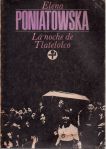
One of the repeated chants of Mexico’s student movement in the 1960s, among the many reproduced in Elena Poniatowska’s La noche de Tlatelolco, is a demand for dialogue: “DIA-LOGUE-DIA-LOGUE-DIA-LOGUE-DIA-LOGUE-DIA-LOGUE.” As one of her informants puts it, this is because “the government’s been talking to itself for fifty years now” (30; 38); or as another puts it, “The PRI,” the ruling Institutional Revolutionary Party, “doesn’t go in for dialogues, just monologues” (86; 90). Hence no doubt the form of Poniatowska’s own book, composed as it is of a multitude of snippets (of interviews, pronouncements, chants, newspaper articles, and so on) from all sides. Dialogue proved impossible in the real world, on the streets or in council chambers, as it was cut short by the violent repression of the student movement, the imprisonment of its leaders, and particularly by the massacre at Tlatelolco, in the Plaza de las Tres Culturas, that gives this book its title. But it is as though that impossible dialogue were now (almost) realized on the page as slogans face headlines, and witnesses from a variety of backgrounds speak of their experiences, one after another. Moreover, as Poniatowska makes little overt effort to impose a unified narrative or reconcile disparities (though there is no doubt that there is artfulness and intention in the ordering and placement of the various fragments), it is almost as if we catch that dialogue in midstream, any conclusion endlessly postponed.

But I say that this fantasy of dialogue is only almost realized on the page, not merely because it is in the nature of testimonio (as we have seen for instance with Biografía de un cimarrón) that the written word betrays, by fixing and so deadening, oral expression. It is also that the extreme fragmentation here threatens to undermine any attempt to make sense at all, refusing not only the forced coherence of the authoritarian state but also any unity to which the student movement itself might aspire. Even the chant itself, as it is printed here, breaks down the demand for dialogue into its constituent syllables and no longer respects either the unity of the word or its separation from any other: “DIA-LO-GO-DIA-LO-GO-DIA-LO-GO-DIA-LO-GO-DIA-LO-GO-DIA-LO-GO.” In the frenetic repetition of the march, meaning slips away to be replaced by sheer sound, by elements that could be recombined in more than one way, to more than one end or effect. The onus then is on the reader to pick up and combine the pieces, but even so it is not clear that any single narrative could ever gather together all the fragments and make them cohere. But then surely this is part of the point: if ever there had once been a chance for dialogue, now not even literature (or testimonio) can bring that moment back.

Poniatowska does not claim to establish the truth of what happened at Tlatelolco. Even as she effectively undermines the official version of events, she makes little attempt to substitute it with a new, more authoritative, version. She wrests the monopoly of the truth from the state, without presuming to claim ownership of it herself.

For hers is less a fact-finding mission than a therapeutic howl that puts language to the ultimate test. As she says in one of her very few editorial interventions, halfway through the book, even to consider delving for the truth would be somehow offensive to the victims: “Grief is a very personal thing. Putting it into words is almost unbearable; hence asking questions, digging for facts, borders on an invasion of people’s privacy” (199; 164). Instead, what she aims to provide is a space for the expression of that inexpressive grief that makes the animal within us (bare, unqualified life) come to the fore, as with the mother that Poniatowska describes as “so stunned that for days and days she uttered scarcely a word, and then suddenly, like a wounded animal–an animal whose belly is being ripped apart–she let out a hoarse, heart-rending cry, from the very center of her life.” This is “the sort of wild keening that is the end of everything, the wail of ultimate pain from the wound that will never heal” (199; 164). As such, even to call La noche de Tlatelolco an exercise in therapy is to say too much, as it would imply that healing can someday come–a claim as offensive and intolerable as the high-handed notion that there is some relationship between truth and reconciliation, or even that either were ever desirable. No. What matters is less what these fragments say than what they can never say, or what they say only by revealing the insufficiency and arrogance of any claims to truth or certainty. These pages, if they express anything, are the place for “the mute cry that stuck in thousands of throats, the blind grief in thousands of horror-stricken eyes on October 2, 1968, the night of Tlatelolco” (199; 164).

See also: Testimonio and the Politics of Truth.

Biografía de un cimarrón

biografia_de_un_cimarron

The key to a testimonio is almost always found in its paratexts–its preface or introduction, epilogue or afterword. Which itself is odd enough: if this is a genre noted for, indeed for some defined by, its presentation of a story as it is, without literary pretensions, it is remarkable how much varnish its truth seems to require. But then it is these paratexts themselves that claim to offer the guarantee of veracity and legitimacy, often enough by laying bare (apparently) the mechanism of the text’s production, assuring us that what we see is really what we get. Moreover, it is in these supposedly ancillary texts that the testimonio’s editor or compiler, who otherwise usually removes his or her traces from the text itself (so that the informant can speak unadorned), outlines his or her role as the stand-in for the reader. For if the essence of the genre is its basis in the oral discourse of a subaltern presumed to be an outsider to literate culture, the original interviewer has to vouch for the bona fides of that original contact, even as he or she betrays it by subsequently translating oral exchange into written form. We are then to imagine ourselves in the editor’s place: listening more than reading, hearing the subaltern “speak,” as our proxy did for us once before. It is in a testimonio’s introduction or preface, then, that the book’s compiler often attests to his or her personal, affective, unmediated relationship to the book’s narrator, conjuring up a bond into which the reader can project themselves even as the editor outlines all the intermediary steps required for that fantasy to stick.

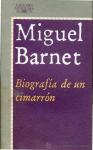
So it is, then, with Cuban anthropologist Miguel Barnet’s introduction to Biografía de un cimarrón (1966), the testimony of former runaway slave Esteban Montejo, which assures us that the book is based on a “living dialogue” between interviewer and interviewee (15). Barnet tells us that, having identified Montejo as a suitable source–mostly because of his extreme age, but also because of the intrinsic interest of his life–he put to good use “the customary resources of ethnological research” (for ethnologists have their customs, too). He tried to resolve some of Montejo’s immediate problems, to do with money, women, and health. He then gave him some small gifts: tobacco, badges, photos. And so the conversation began, if not quite along the lines that Barnet had originally envisaged when he thought that this would be primarily a study of the survival of African religious traits among Cuba’s black population. Indeed, at the outset, Barnet tells us, things were decidedly difficult, as Montejo “showed himself to be rather surly” (16). Perhaps the usual ethnological blandishments had not been enough! But even the tale of these difficulties serves its purpose, in that Barnet is telling us the story of how Montejo came (almost) to trust him, in the end even to “identify with us,” once he “realized the interest of the task at hand” (16). The gap between letrado and subaltern is visibly shrinking as the introduction proceeds.

But testimonio cannot rely on gifts, identification, or affective pact alone. Technology, specifically tape recording, is also a ubiquitous guarantee both of authenticity in that it (quite literally) captures the voice verbatim, and of the seriousness of the investigator’s research in that he or she can then go back over the interview and deepen his or her familiarity with the subject. As Barnet puts it: “Many of our sessions were recorded on magnetic tapes. This allowed us to familiarize ourselves with the linguistic forms, turns of phrase, syntax, archaisms, and idioms of [Montejo’s] speech” (18). The interviewer can thus immerse himself in his informant’s world, even if such immersion then begins to provoke doubt… “The need to verify facts, dates, or other details led us to have conversations with veterans who were more or less his contemporary. But none of them were old enough to have lived through the periods or events that Esteban related” (18).

Ultimately, the paratextual attempt to guarantee the veracity of the text as a whole ends up offering hostages to fortune. The description of the methodology by which the book came into being reminds us, whether we like it or not, of the multiple mediations that give the lie to the direct reproduction of experience that the book otherwise wishes to tell us it is presenting. We are reminded of editorial interventions, such as paraphrase and reordering of the narrative, even as they are justified on the grounds that “if we had faithfully mimicked the twists and turns of his language, the book would have made itself difficult to understand and excessively repetitive” (18). The paratext, then, itself a form of excess or supplement to the main text, exists to rein in the excesses of a different order that would otherwise disrupt any reading of the text. The tightrope or balancing act inherent in any testimonio becomes apparent, as it tries to remain faithful or true to its subject, without falling into the trap of becoming “excessively” so. Only a judicious pruning, or unfaithfulness to the source, can ensure that the text does not slip into incoherence or even nonsense.

Barnet’s introduction is interesting in that his relationship with Montejo seems to have been particularly complex, indeed verging on antagonistic–for all that he claims to have subdued or overcome Montejo’s original surliness. The anthropologist is eager to admit that “undoubtedly, many of his tales are not rigorously faithful to the facts. [. . .] His version is subjective. [. . .] It reflects our informant’s approach to things” (19). But this is less an admission of the testimonio’s weakness than an attempt to attest to its main strength. For unlike many similar narratives, Biografía de un cimarrón does not claim to be typical, or at least not in any simple sense. The very fact that Montejo was a runaway slave (who, we come to learn, spent much of his time alone, not trusting others) marks him out as different and distinct. Montejo is a renegade as much as or even more than he is a representative of nineteenth-century Cuba. But then that is because, Barnet implies, he is perhaps a man out of time: his “honesty,” his capacity to be true to himself (if not the facts), mark him as a “revolutionary” avant la lettre, even if his story never actually touches on Castro’s campaigns of the 1950s and 1960s. In the end, it is the fact that Montejo doesn’t entirely trust us, and is not entirely to be trusted in turn, that ensures less his tale’s veracity (because the truth doesn’t really matter) than its political charge.

Operación masacre

Operacion masacre

Argentine journalist Rodolfo Walsh’s Operación masacre is an investigation into the extra-judicial assassination, on the part of the Buenos Aires provincial police, of a group of men initially suspected to be part of a Peronist uprising on the night of June 9-10, 1956. As much as an account of what actually happened in the hours shortly before and after midnight on those dates, the book is also the story of the investigation itself. Walsh describes how he was initially reluctant to follow up on a rumor about the events he had picked up in a café, but then threw himself into the pursuit of the facts, driven by outrage at the authorities but above all by sympathy for those who had, against the odds, actually survived. He soon finds himself on what is effectively a crusade for recognition and justice, though he is aware of the price he may one day pay for the trouble he is perceived as causing. Indeed, much later, during the military dictatorship of the 1970s, Walsh’s voice is finally silenced when he is killed by soldiers in a confrontation in downtown Buenos Aires, his body dragged away to be burned and thrown in a river.

But Walsh evidently believes that the dangers inherent in seeking out the truth are more than merely personal. In the introduction to the first (1957) edition of the book, he writes that “too much truth can lead to madness, wiping out a people’s moral conscience.” But he goes on implicitly to welcome this eventuality: “One day the tragic history of the June killings will be written down in its entirety. And then we will see the shock overflow our borders” (265). The truth, in short, is something not to be taken lightly; its effects are collective and potentially catastrophic. But ultimately we should take the risk of the madness and destruction it brings with it. After all, he concludes: “I happen to believe, with complete earnestness and conviction, in the right of every citizen to share any truth that he comes to know, however dangerous that truth may be. And I believe in this book, in the impact it can have” (266).

But Walsh is not content simply to leave things there, as an ominous warning for the future. He himself does whatever he can to ensure that the murky details of this “tragic history,” still incomplete when he first publishes it in 1957, should in the end come out. A second and a third edition of the book come out in 1964 and 1969 respectively. Each time he feels that he has better pinpointed the chain of events and responsibility that led to these mostly innocent men having their lives ended or, if nothing else, transformed as they were grabbed from an informal gathering in a private house and finally gunned down in a (frankly, botched) execution on the outskirts of the city. But with each new edition of the book, one also feels increasing frustration and even despair on Walsh’s part as the officials he identifies as the guilty parties continue to evade any repercussions or consequences. In the end, as in the epilogue to the 1969 edition, Walsh’s tone becomes almost frantic and apocalyptic as he expands his frame of reference to “a portrait of the dominant oligarchy” and concludes that “within the system, there can be no justice” (299, 300).

In the first place, the problem is that the investigation threatens to become interminable. The truth “in its entirety” is not so easy to uncover. There are numerous points at which Walsh admits to doubt or uncertainty, in part because witnesses are absent or unreliable, or because their testimonies contradict each other. In the end, even relatively basic facts such as the number of men taken out to the killing zone elude him. The book’s opening paragraph has to admit that “We will never know it all” (31). There will always be a penumbra of doubt however dedicated the effort to ferret out the facts. And so, for all Walsh tries to give substance and materiality to events and participants, they remain strangely ghostly, just out of reach.

But there is a worse possibility: that Walsh may manage to uncover the truth, or enough of it that should count, and yet nothing might happen anyway. At one point in his enquiry, seeking to track down yet another survivor, he comes across a little girl in the street who tells him “The man you’re looking for [. . .] is in his house. They’ll tell you he isn’t, but he is.” To which Walsh replies: “And do you know why we’ve come?” Coolly, calmly, the girl responds: “Yes, I know everything.” And though we never find out this young girl’s name, Walsh gives her one: “OK, Cassandra” (24). For Cassandra was of course the Greek princess, daughter of Priam, who was blessed with the gift of prophetic knowledge but cursed (by Apollo) never to be believed. In fact, Walsh does believe this girl (and finds the man he is looking for as a result), but he must already be thinking of himself as a Cassandra figure, destined to reveal the truth but to no avail. No wonder at times (and increasingly as new editions come out), his prose becomes increasingly strained and reliant on rhetoric as though he were trying to compensate for the fact that the truth alone will never set us free.

For the real scandal is not so much the truth itself as the fact that truth-telling does not have quite the power that Walsh ascribes to it. Perhaps it isn’t all that dangerous. Perhaps “speaking truth to power” (as they say) only puts the truth-teller at risk. Or it may even be that when Walsh is finally gunned down, it is for something else entirely.