Notes on What do pictures want? (2005) by M.J.T Mitchell,

We do not talk about pictures as if they were alive because we idealize them. Pictures, as objects, do not behave as if they were alive but they are alive because they provoke us, because images, signs and symbols establish with us a second nature relationship. This is one of the premises that sustains the foundation of What do pictures want? The Lives and Loves of Images (2005) by M.J.T. Mitchell. From Mitchell’s perspective, pictures are like bodies. They are placeholders, bodies who desire something from other bodies. For Mitchell, a picture is the “reflection of the entire situation of the emergence of an image into a surface” (xiv). Thus, pictures show seeing, that is, they unfold and testify the moment when a likeness (images) in a medium is being supported (object) as a material practice that bonds both image and object (media). The broadness of this definition immediately tackles the Heideggerian understanding of the world picture. It is not that for Mitchell, Heidegger’s world picture is inaccurate, but that the world picture precedes modernity, since pictures and images have been with us for far too long. Knowing this, images, objects and media are things that build and have built our common sense, our being in the world. 

Images surpass words. As the common belief says. Scripture and imagination have a complicated relationship. Yet, from Mitchell’s perspective, images are less about determining ways of marking and more about ways into which those marks acquire life on their own. “Pictures are like life-forms driven by desire and appetites” (6). There’s always been a war on images and as the twenty first century started, we were reminded of this. Mitchell analyzes how two images have drastically affected postmodernity: the images of 9/11 and dolly the sheep. It is not that these images totalize the world’s experience, but in a way both of them summarize and condense to what extend images trigger affects and show desires. What is at stake when analyzing images, Mitchell remind us, is “to see the picture not just as an object of description or ekphrasis that comes alive in our perceptual, verbal, conceptual play around it” (49). Hence, the picture is not something that passively awaits to arise to existence by the power of our eyes, on the contrary, a picture is a “thing that is always already addressing us (potentially) as a subject with a life that has to be seen as ‘its own’ in order for our description to engage the picture’s life as well as our own lives as beholders” (49). Since there is not real definition of life, life is a logical conceptualization that moves the dialectical machine, pictures can have a life on their own, and of course desires and affects by themselves. 

At first glance, then, pictures would want the obvious: that we look at them. As a hole that desires both its life and its death, the relationship that images and subjects establish is like the relationship between Zarathustra and the abyss. The only thing that flows between two holes are affects and desires. However, desire does not serve as channel for communicating two staring at each other holes, but desire constructs, connects assembles, it is something that sustains the “dialectics of biding and unbidding” (63). All this assemblage is very well exemplified in the figure of cupid, for which desire must become a firing machine of line of flights, a machine that shots “the drawn line that leaps across a boundary at the same time that it defines it, producing a ‘living form’” (63). There is not image without desire and the other way around because “images both ‘express’ desires that we already have and teach us how to desire in the first place” (68). Pictures are knotted to their desires and so are we to that assemblage. Hence, for Mitchell, in the picture we don not only witness the intersection of images, objects and mediums, but a desiring production, where its grammar is dictated by an imperative of image producing. That is, for every part of the picture (image, object and media) there is always an “image” assemblage bonded by the encounter between the drive (proliferation, the binding reproduction) and the desire (the fixation, reification, mortification of the life-form, the bind reproducing). Images then, at the same time that they desire, they move us and move themselves, they insert us in the desiring production as they accompany us. 

Images do us as they desire not by brute force or direct aggression but by a “value transformed into vitality” (89). An image captures a potentia, they are ways of worldmaking that always “produce new arrangements and perception of the world” (93). The power of images, then, is similar to that of the Marxist surplus value. If “use value may keep us alive and nourished”, the only force capable of moving us beyond lack and hunger is an image, “it is the surplus value of images that makes history” (94) after all. From this perspective, our neurosis, our schizophrenia, or hysteria, are symptoms not only of a malaise in our culture, but of our second nature relationship with images. 

Idols, fetishes and totems, this are the three ways of image-object relationship that Mitchell identifies. It is not that these ways of relating us with our second nature images are poisoned but that the ways this relationships intoxicate themselves could drive us to death. While an idol, is the strongest and more powerful relation with an object, since it relates to the Lacanian imaginary, as the place where the image —because of its likeness— takes a supreme importance, almost as le nom du père, the fetish and the totem appear as object relations that don’t require us to immolate nothing but our desires. That is, while the idol demands, the fetish needs, and the totem wants. In the same order, the idol is the perversion and sublimation of desire, the fetish is the persistence of it and the totem is, ideally, its safe satisfaction. While Mitchell suggests that idolism, fetishism and totemism relate to world social formations (idolism to imperialism, fetishism to the capitalist world order and totemism to postmodernity) (161), it is unclear to what extend totemism is exercising its desire on us. One can think that Empire, a la Hardt and Negri, is the body without center whose affective strength ties cohesively the world because it exercises a totemic power. For the totem is a figure that controls and prohibits by the force of law (188). However, Empire would be a system that does not adhere to any object relation. That is, Empire would use idols, fetishes and totems as convenient and not only one of these.

Throughout What Do Pictures Want? Mitchell seeks for moments where the image both reflects its lack and attempts to surpass it. Whether it is in sculpture, photography, cinema, painting, caricatures or poetry, Mitchell shows how our world is sustained by image projection and production. More than offering a new metaphysics for images, in What Do Pictures Want? we face ourselves to “an other” that passively exposes to our limit. A picture might just want our look, but what would be that we want so desperately that we ask pictures first incisively without being able to posse us the same question. For one, images are not, necessarily, new ways of binding and unbinding desire, but ways into which desire has persisted. So the question we pose to images, pictures, objects and media, are questions that deep inside sake us. One, then, has the impression that the essays that form the book all finish in similar terms: with and exposure of a limit and an attempt to transgress it. Mitchell recognizes that images —or certain images— are, somehow, inexhaustible, that as much as their desires could be simply stated, it is not only what images want, but how do they want. Without a doubt, Mitchell’s arguments invite for continuing the investigation, for understanding what a theory of images does and is, but more importantly for what such theory might be (209). 

The Tyranny of Merit

Like Michael Young, Michael Sandel frames his critique of meritocracy in terms of a populist backlash against elite condescension but also (hot off the press and presumably added at the last minute) in terms of the botched response to the current global COVID pandemic. Focusing on the United States, he argues that the country was stymied not only by logistical issues or lack of political will to implement the required measures to combat infection. It was, furthermore and more importantly, “not morally prepared for the pandemic” (4). Whereas a coherent response to Coronavirus required solidarity, the USA was laid low by the discovery that this was a sentiment in short supply. Over decades, any sense of social solidarity has been eroded on the one hand by rising inequality fueled by neoliberal globalization and on the other hand by a “toxic mix of hubris and resentment” (5) that Sandel sees as the result of the entrenchment of meritocratic values throughout the body politic.

As such, seeking a culprit for the current woes of the United States, Sandel indicts less Trump than his liberal predecessors, such as Bill Clinton and, perhaps surprisingly, Barack Obama above all. Trump and Trumpism, he argues, are merely the unwelcome harvest of seeds sown long ago by a generation of center-left as well as center-right politicians who pushed equality of opportunity as the compensation for economic transformation, without considering those who, for whatever reason, were unable to take advantage of the opportunities they were given.

For, however level the playing field, meritocracy still envisages losers as well as winners. The difference is that the winners in a meritocratic system are told that they deserve their success, which is a result of their talents and hard work (rather than the accident of fortune). Conversely, the losers are told–and the more perfect the meritocracy, the more they are also likely to believe–that they, in turn, deserve their failures, which come from their lack of talent or their laziness. Rather than protesting the injustice of their lot, those at the bottom of the meritocratic pile tend to feel humiliated, left only to nurse their lack of self-esteem. Moreover, their misfortunes elicit little sympathy or solidarity from those who have done better in life. If everyone started with the same chances in life, the poor have nobody to blame but themselves.

This stigmatization of failure, and its psychological internalization by those who fail to rise to the opportunities they are offered, is the converse of the meritocratic faith that those who rise to the top should be those who deserve to do so. The losers in life’s race are doubly afflicted: not only are they left behind; they are also told they brought it on themselves. They are both victims and culprits of their own demise. Hence a politics of (sometimes violent) resentment, and the attraction of somebody like Trump, who tells them that he knows what it feels like to be called a loser, and how much it hurts. And hence, incidentally, how counter-productive it is for Trump’s foes to brand him a loser, or laugh at his mistakes: it is precisely thanks to that branding and that elite condescension that meritocracy’s underclass recognize Trump as one of their own.

Not that meritocracy’s victims are only those at the bottom of the pack. Sandel argues, especially in his discussion of higher education, that those on top are also afflicted, forever running to stand still as the stakes of every competition become higher and higher. Hence the way in which high school becomes an exercise in CV-building, with tutors and extra-curricular activities indulged in only to increase the ever-slimmer chances of making it to the elite universities that seem to hold the keys to future success. All this under the watchful eye of helicopter parents ready to fly in to ensure that their precious offspring really do fulfil their potential as surely as the meritocrats promise they can. Then at college itself, students have no time to rest on their laurels, as they dedicate their all to improving their GPAs, making the Dean’s List, and moving on to the most prestigious Law School or Medical Program. Especially at the most elite institutions (such as Harvard, where Sandel teaches), university has been transformed into “basic training for a competitive meritocracy. [. . .] The sorting and striving crowd out teaching and learning” (182). If anything, these are the last places to go if you want anything like an education, or the chance to reflect on what Sandel calls “the common good,” a concept long since abandoned in these bastions of excellence.

To remedy these ills, and to restore a lost sense of social solidarity, Sandel offers two proposals, one rather more concrete than the other. First, to give higher education back its meaning, and to rescue it from its fate as the key institution in the conveyer belt that is meritocratic sorting and measurement, he suggests that admission to college–especially its most elite echelons–should be determined by lottery rather than competition. He does admit that there should be some basic threshold, and allows some possible tweaks to the lottery system to enable (say) affirmative action or even the continuation of legacy privileges, but he argues that everyone stands to gain–those who are admitted, those who are not admitted, and the institutions themselves–if access to higher education were to be seen as a happy accident rather than the end-all and be-all of success to which the young dedicate all their time and their talents.

Second and somewhat more vaguely, Sandel insists on the need to accord due dignity to work. His point is that the contribution of the working class to fulfilling social needs is increasingly unrecognized. To add to the fact that ordinary, non-college-educated men and women are disparaged for their failures to measure up to meritocratic ideals, the value of what they do do is frequently ignored or taken for granted. Liberal programs (welfare, for instance) that attempt to enact a distributive justice frame the poor as simply recipients of state aid, passing over their myriad contributions to society. Sandel argues therefore for a what he terms a contributive justice that allows people to feel that they are part of a broader project on more or less equal terms.

The specific policy proposals that Sandel suggests might help shift our perspective on our fellow citizens from seeing them as simply consumers (whether of market goods or state hand-outs) to producers include changes in tax law–a Tobin tax on financial transactions that do not materially contribute to the economy, for instance, or a move from taxing payroll to higher taxes on consumption and capital gains–or perhaps a wage subsidy for low-paid workers. One might add to this list, for instance by suggesting that macroeconomic policy should be less blasé about structural unemployment, or that we might revive the type of public works projects and work programs that Roosevelt’s New Deal rolled out during the Great Depression. (Strangely, FDR doesn’t get much of a mention in this book, despite its attention to the rhetoric of US Presidents; if Obama is the surprise villain of the piece, if anything it’s the Kennedys who come closest to coming out as heroes.) Yet the mere mention of unemployment points to the fact that Sandel’s claim for the dignity of work is undoubtedly the weak point in his argument.

Do not, after all, the unemployed also contribute to society? What about the disabled? Or children, or pensioners? Moreover, putting work at the center of our notion of engaged citizenship is a strange move for an argument that claims to oppose meritocracy. For merit, after all, is not just a matter of talent or credentials, even under the current meritocratic dispensation; it is also a matter of effort. As the narrator of Michael Young’s The Rise of the Meritocracy puts it, “Intelligence and effort together make up merit (I+E=M). The lazy genius is not one” (84). Yet Sandel seems to want to cut away one pillar of the meritocracy–so-called intelligence–while leaving the other pillar intact. In the terms of the religious debates that he (quite interestingly) surveys, despite his attachment to the notion of grace as undeserved redemption, he ends up preaching a doctrine that sounds very much like salvation through work(s). If, as he notes, merit always has a tendency to creep back in through the side door to edge out grace, it is in his drive to accord dignity to labor that this process is repeated in his own argument.

In any case, the erosion of the “dignity of work” is not merely a matter of elite condescension. It might equally be seen as a nascent consciousness of the reality of alienation. Work is indeed often bullshit (as anthropologist David Graeber points out). And even when it is not, we seldom work on terms that we ourselves choose. The enthusiasm with which the contributions of so-called essential workers (from nurses and hospital porters to teachers and lorry drivers and supermarket shelf-stackers) have been belatedly recognized during the current pandemic, with the nightly cheers to their efforts marking the first lockdown last Spring, is poor compensation for the fact that they continue, on the whole, to be not only underpaid but also exploited, their labour power commodified and measured out in terms of socially-necessary labour time (to use the Marxist jargon). Merely noting, and even celebrating, the fact that their labour is indeed socially necessary does nothing to alter the ongoing reality of their exploitation.

Indirectly, however, Sandel’s book point to another argument: a claim made perhaps most famously by Marx’s son-in-law, the Cuban-born Frenchman Paul Lafargue, who in 1883 published the manifesto The Right to be Lazy. Lafargue urges the proletariat to “return to its natural instincts, it must proclaim the Rights of Laziness, a thousand times more noble and more sacred than the anaemic Rights of Man concocted by the metaphysical lawyers of the bourgeois revolution. It must accustom itself to working but three hours a day, reserving the rest of the day and night for leisure and feasting.” Do what you have to do, but do it fast and sloppily if needs be; reserve the rest of your time for enjoyment and relaxation. An entire tradition of the refusal of work has elaborated on this standpoint.

Sandel’s book (perhaps inadvertently) points to something similar in that it strikes this reader, at least, as rather hastily put together, and not simply in the rushed mentions of the current pandemic that top and tail it. Throughout, The Tyranny of Merit is full of repetitions with only minor (and sometimes absolutely minimal) variation; the same points are made over and again, the same figures and statistics reappear as though the author were trying to pad out what would otherwise be an incisive article so as to turn it into something acceptable to Farrar, Straus and Giroux. Moreover, the research on which the book is based seems to rely heavily on Google and other Internet search engines: not simply in that almost all its references are to online material, or the ways in which it uses rather simplistically Google Books Ngram statistics on word frequency, but also in the way it mines the public database of US presidential speeches compiled by UC Santa Barbara’s “American Presidency Project” rather than undertaking a more systematic or nuanced analysis of the ways in which historical discourses emerge and evolve.

At times all this is frustrating, and it is tempting to say that the book was more effective in its earlier incarnation as an eight-and-a-half-minute TED talk, itself a format perhaps more suited to a meritocratic age. But I like to think that Sandel is in fact winking at us, telling us that really the illusion of merit is all that matters, and that we should relax a little and not take our work all that seriously.

La distracción y el vuelo. Notas sobre Las conversaciones (2006) de César Aira

Las notas son a partir de la edición Diez novelas de César Aira (2019) de Literatura Random House

¿A quién leemos cuando leemos una historia? Por vana que sea la pregunta, el viejo tema sobre “la identidad del narrador”, de aquella voz que enuncia, es siempre un tema intrincado. No es que se trate, solamente, de distinguir los niveles narrativos, las voces y las diferencias entre narrador, autor, voz e instancia enunciativa. Más bien, sucede que cuando leemos novelas como Las conversaciones (2006), de César Aira, estos elementos se confunden entre sí y se vuelve difícil ubicar hasta el lugar desde donde se cuenta la historia. En el monólogo que inaugura la novela, se dice que “Ya no sé si duermo o no. Si duermo, es por afuera del sueño, en ese anillo de asteroides de hielo en constante movimiento que rodea el vacío oscuro e inmóvil del olvido. Es como si no entrar nunca a ese hueco de tinieblas […] No pierdo la conciencia. Sigo conmigo. Me acompaña el pensamiento. Tampoco sé si es un pensamiento distinto al de la vigilia plena; en todo caso, se le parece mucho” (pos. 1562). Esa voz que abre la novela se ubica entre un espacio que difícilmente diferencia entre el mundo onírico, la memoria, el pensamiento y la escritura. “Así se me va la noche”, afirma la misma voz. Después, nos enteramos de que quien escribe se entretiene recordando conversaciones con sus amigos, conversaciones que, de la palabra hablada, pasan a la memoria, luego a la ensoñación y finalmente a la novela que leemos. 

Conversaciones no es sólo un ejercicio que arriesga la estructura convencional de una novela. En el texto no sólo se experimenta, reflexiona e improvisa sobre los alcances del género, sino que también se cuenta algo. La anécdota del relato es simple: el registro de una de las conversaciones que “el narrador” del relato tiene con un amigo a propósito de una película transmitida por televisiónEsos amigos, la voz que abre la narración y “un otro”, son hombres de cultura, seres cuyos días consisten en pasarlo “en compañía de Hegel, Dostoievski” (pos. 1603), pero que también a veces, irremediablemente, consumen y son consumidos por el cristalino resplandor de la televisión. El desdén con el que se empieza a hablar sobre la película que ambos amigos vieran anuncia que los hombres cultos no tendrían por qué hablar del entretenimiento de masas, pues “esas producciones estereotipadas de Hollywood se adivinan a partir de una secuencia o dos, como los paleontólogos reconstruyen un dinosaurio a partir de una sola vértebra” (pos. 1607). El problema es que ni todas las películas hollywoodenses, ni todas las conversaciones son como la parte mínima y esencial que permite construir un todo, como la vértebra del dinosaurio. 

Lo simple no es lo simplificado, ni lo común es lo ordinario. O más bien, el sentido común de las formas dadas, sean de la conversación o del cine, es más complejo de lo que se piensa. Los dos amigos discuten en diferentes sus desencontradas opiniones. La película, ese objeto común, banal, desabrido y espectacular, los desconcierta. El momento que desata el desacuerdo entre los amigos es la aparición “descuidada” de un reloj rolex en la muñeca de un pastor ucraniano, el personaje principal del filme. Acto seguido, los amigos se centrarán en discutir los límites de la ficción en relación con la realidad. Así, son mencionados errores de verosimilitud, diferencias radicales entre ficción y realidad, niveles narrativos, historias insertadas, contexto socioculturales que explican las motivaciones del filme y hasta la proyección psicológica del “narrador principal del relato” —pues él desde siempre ha querido un reloj rolex. Todos estos elementos sirven al análisis, pero los conversadores no llegan a un acuerdo. Sin saberlo, los amigos en realidad están repitiendo la forma misma de la película, pues ésta logra condensar muchos temas y motivos pero de una forma acelerada y fragmentada (pos. 2368-9). De este modo, lo que se analiza no es la película, sino la forma en que la película es vista, esto es la forma en que se enuncia (la enunciación enunciva): los mecanismos de la televisión. 

Frente a la televisión, ni ante ningún medio, uno no es uno mismo, y paradójicamente, uno es más uno mismo. Como se dice en la novela, frente a la televisión “una parte de la conciencia se mantenía afuera, contemplando el juego de ficción y realidad, y entonces lo que era inevitable era que surgiera una consideración crítica” (pos. 2294). Ver cine por televisión “dejaba de ser un sueño que uno soñaba y se volvía el sueño que estaban soñando otros” (pos. 2296). Lo que pone en juego la narración de Aira, como la televisión, es la forma en que las cosas pasan y uno se puede dar el lujo de seguir siendo parte del proceso y a la vez estar distraído. Esto es que, como los amigos de la novela, nuestra atención frente a los medios siempre está en otra parte. La película, ambos amigos, la ven a medias, la atención de los dos había sido parcial, y aún así tenían los elementos para conversar e intercambiar ideas.

Estar frente la pantalla es dejarse ir para que la realidad siga y uno forme parte de ella a pedazos. Al final, los dos amigos se dan cuenta que ambos perdieron partes esenciales de la película, el narrador afirma “No habría caído en la confusión si me hubiera concentrado debidamente, pero uno no se concentra en esa clase de pasatiempos” (pos. 2430). Un simple artificio confundió a los amigos y aunque la realidad, a diferencia de la ficción, “no tenía niveles” (2454), muy probablemente la ficción tampoco. Darle niveles a la realidad es darle falsos problemas, igualmente a las narrativas artísticas. Por otra parte, darle análisis a la realidad o a las ficciones, aunque parezcan nuevos niveles —y por tanto falsos problemas—, es nuestra única forma de darle frente a cualquier producto cultural, pues frente a estos uno se encuentra con la marabunta del mercado. Sólo por la conversación, y el intercambio de desacuerdos y análisis, eso que era laberinto se convierte en meseta. Hablar a/con un otro, tan radical en su otredad como uno en su mismidad, sobre un tercero, ese producto que dispersa y fragmenta, sea el cine o la literatura, puede convertirse en otra cosa, ya no una conexión de flujos y escrituras monetarias, sino una constelación de palabras, de pensamientos, luciérnagas que en la noche del narrador y del pensamiento, se convierten en “insectos de oro, mensajeras de la amistad, del saber, más alto, más alto, hasta las zonas de cielo donde el día se volvía noche y la realidad sueño, palabras Reinas en su vuelo nupcial, siempre más alto hasta consumar sus bodas al fin con la cima del mundo” (pos. 2499). En la cima del mundo, la inmensidad absoluta eleva a las palabras, su vuelo es admirable, pero si no regresan a la tierra y sólo se elevan sin cesar, irán probablemente a parar al olvido, a ese hueco rodeado de recuerdos gélidos, desde donde la primera voz narrativa comenzara su relato.

Lujosa inutilidad. Notas sobre Baile con serpientes (1995) de Horacio Castellanos Moya

En dos días, un ocioso y desempleado egresado de sociología se convierte en el hombre más buscado de todo El Salvador. Contada en cuatro partes, Baile con serpientes (1995), de Horacio Castellanos Moya, cuenta la historia de Jacinto Bustillo desde la perspectiva de un sociólogo desempleado, un policía y una reportera. Luego de que un viejo y ruinoso Chevrolet amarillo se posicione frente a la tienda del barrio donde vive el narrador principal, el sociólogo, la vida de este personaje cambiará vertiginosamente. La llegada de la carcacha y su rotoso y taciturno conductor atraen la atención del desocupado narrador. Una vida “sin posibilidades reales de conseguir trabajo en estos nuevos tiempos” y el hecho de que, como afirma el narrador, la sociología no servía “para nada en lo relativo a la consecución de un empleo, pues había una sobreoferta de profesores, las empresas no necesitaban sociólogos y la política —último terreno en que hubiera podido aplicar mis conocimientos— era un oficio ajeno a mis virtudes” (pos. 15), se combinan como ingredientes para que el sociólogo desempleado comience su trabajo de campo con el “extraño visitante”. Por otra parte, salvo el narrador, nadie más parece tener especial simpatía por el rotoso viejo del Chevrolet amarillo. 

Luego de varios días de intentar entablar una conversación, el narrador finalmente triunfa en “su trabajo de campo”, y el extraño visitante revela su nombre, oficio, hábitos y vicios. Jacinto Bustillo, antes de ser un viejo sucio y errante, era contador. Ahora el excontador se dedica a recolectar objetos inútiles (pos. 60), revenderlos, comprar botellas de aguardiente y trasnochar en su destartalado automóvil. Después de que el narrador se gane la confianza de “su informante” y lo acompañe todo un día, un evento sórdido disloca la narración. Jacinto es mordido en su miembro por otro zarrapastroso llamado Coco. Jacinto apuñala a Coco con una botella rota y después, el narrador, que atestigua toda la escena, degüella a Jacinto. Con este evento el narrador deja de ser el desempleado sociólogo y se convierte en Jacinto. Se adueña así del Chevrolet amarillo, donde Jacinto guarda documentos sobre su pasado y además donde moran cuatro serpientes parlantes y lujuriosas.

La nueva vida del narrador consiste en vengarse de quienes arruinaron al excontador. Si la sociología no puede darle revancha a los desposeídos, un sociópata tal vez sí. De tal manera, el narrador y las serpientes emprenden una destructiva vida. Pronto, toda la ciudad se aterroriza. Así, la policía desde la perspectiva del subcomisionado Handal, que sólo quisiera terminar con esa historia sin entregarse a la paranoia, esquizofrenia y la histeria colectiva, intenta atrapar a un escurridizo sociópata a la vez de lidiar con las ansias de la prensa por la exclusividad de la incendiaria noticia. Conforme las serpientes y “el nuevo” Jacinto van esparciendo el pánico luego de sus atroces matanzas, Rita, la principal reportera del diario Ocho Columnas, se ve presa de un ataque colectivo de pánico. La reportera cree ver el automóvil de Jacinto afuera de la casa del presidente y las autoridades reaccionan de la peor manera: con un espectáculo de balas gastadas. Rita se ve en el ojo del huracán, pero es incapaz de escribir un artículo “en primera persona, confesar su terror ante el auto equivocado, relatar el desbarajuste que su confusión causó en la casona. Las dos cuartillas contienen apenas un recuento de los hechos relativos a la evacuación del presidente” (pos. 682). Como los objetos inútiles que recolectaba el Jacinto auténtico, la vida de todos los personajes es un despliegue lujoso de inutilidad: de hacer valiosa la sociología, de resolver un caso absurdo sin recurrir al espectacular ejercicio de la fuerza y de poder escribir un testimonio fidedigno que no exponga también las carencias y fallas de aquellas manos que teclean. 

El terror del nuevo Jacinto y sus serpientes asesinas no tiene explicación pero sí comparación. Toda la gente muy rápidamente comienza a recordar los pasados años de guerra y con ello las diversas formas en que la violencia era leída e interpretada. El despliegue de violencia excesiva del estado, como en otros tiempos, esquilma el terreno, pero también propulsa fugas. El narrador escapa con sus serpientes, pero al final éste se separa de ellas, “Caminaba tambaleándome, como si estuviera totalmente borracho, para despistar a los transeúntes que iban alarmados hacia sus casas, porque semejante estruendo recordaba los aciagos días de la guerra” (908). De regreso a su barrio, el narrador recuerda que como devino el viejo Jacinto en sólo unos días, también puede volver a ser aquel que él fue en unos instantes. Como si la violencia fuera el alcohol en una noche de farra, El Salvador de la posguerra en el modelo neoliberal habrá de acostumbrarse a la intoxicación y el exceso del orgiástico libre mercado, que inutiliza la fuerza laboral, intelectual, y se excita con los motores de los afectos, en los excesos orgiásticos del caos. 

Notas a Esferas II (2004) de Peter Sloterdijk

Capítulos 1 y 2 de Esferas II (2004) Peter Sloterdijk [continuación]

“Las esferas son, por decirlo así, consifugraciones capaces de aprender, sistemas de inmunidad en ejercicio y recetáculos con parecedes recientes” (188). Esa es una de las definiciones que Peter Sloterdijk da a las esferas en el contexto de la macroesferología a desarrollarse en el segundo tomo de Esferas. Con esta definición, Sloterdijk direcciona su proyecto esferológico hacia el exterior. Si el primer tomo se ocupo de la condición del individuo, el segundo se ocupará de la relación del individuo con su exterior inmediato y absoluto: la macroesferología será la reflexión de las precondiciones de la política como una expansión de lo micro hacia lo macro. El motor de esta expansión se da por “la vacuna de la muerte” (189). Esto es que a esa terrible, pero también admirable, fuerza que los seres humanos tienen para superar la muerte del otro indispensable y llenar su hueco, es la única fuerza que permite afirmar la existencia del individuo. 

Al mundo de los “unos”, de los individuos, sólo se puede ingresar una vez que uno “queda marcado por la desaparición del otro insustituible” (190). Sólo en la medida que otro(s) muere(n) es que el sujeto individual existe. Para Sloterdijk, entonces, a diferencia de Lacan, “el yo no surge por un reflejo especular ilusorio [sino que] adopta, primero, una figura autorreferente por la anticipación de orfandad y viudedad; se afirma a sí mismo en tanto abandonado y abandonante” (193). El individuo es un ser que se balancea entre traicionar a su ser amado muerto con el olvido, o traicionar al mundo y serle fiel en el loco amor hacia el prójimo insustituible. La elección fundamental de la existencia, por tanto, está entre estos dos polos. Mientras la muerte loca del amor aísla a la pareja en un cobijo inmanente, siempre habrá un tercero que vuelva a confrontarse a la decisión: para parar la hemorragia, entonces, hay que trabajar el duelo, o como diría Sloterdijk, darle al duelo un “esfuerzo psíquico por llegar a un compromiso entre muertos y el deseo de mantenerlos en otra forma de proximidad, pero ‘allí’” (201). El duelo, como el deseo, no se pueden detener, sólo se pueden relocalizar. El ser humano vive en constante fuga, en movimiento hacia el éxodo, o hacia la distancia segura de sus muertos más amados y sus prójimos vivos más necesarios. 

Si la muerte es el motor de la vida y de las uniones, ¿por qué los muros circulares de las civilizaciones antiguas pueden evocar un “imperativo de forma existencial” (230)? Sloterdijk busca enlazar el proyecto microesferológico con el macro. Si en la “procreación” del individuo, el útero presenta el primer “estar-ahí” con la entidad placentaria, el mundo social, por extensión es la búsqueda desaforada de ese muro perdido, esa pared de carne que sostuvo al cuerpo antes de que el cuerpo se figurara a sí mismo fuera del vientre. La muerte sólo puede ser entendida a distancia y el trabajo del duelo como la lucha constante de estar dispuesto a mover el lugar del sujeto en relación de sus muertos y de sus vivos, ¿por qué empeñarse, entonces, en traer a todas partes al primer muerto radical y sacrificado (placenta)? Sloterdijk retomara el principio del espacio no como la emergencia de los objetos sobre la vida humana, sino como la transferencia de los cuerpos en su empeño por buscar la placenta perdida. De todos los elementos, el que mejor se asemeja al corazón de la madre es el fuego, pues éste aviva el reposicionamiento de los cuerpos en círculos alrededor de éste. Como el fuego abre la posibilidad de socialización y de solidaridad, también el fuego abre los delirios y los complejos de quienes nunca lo han visto porque los cuerpos en círculos de quienes los anteceden nunca les han permitido verlo. Años después de Sloterdijk y su esferología, Mariana Enríquez narrara estos complejos de Prometeo. Sólo en los círculos los seres persisten, el problema, claro está, es que aquello fuera de estos círculos, en realidad, nunca ha sido extraño a la parte más interna de los círculos. El fuego que cura la soledad, también es el fuego que señaló la expulsión primigenia de los expulsados que a las afueras del círculo buscan huir de su destino: ser muros de carne para cimentar un nuevo anillo del expansivo apetito del fuego y sus adoradores.

Notas a Esferas II (2004) de Peter Sloterdijk

Prefacio. Esferas II (2004) Peter Sloterdijk [continuación]

La larga introducción del tomo dos de Esferas de Peter Sloterdijk deja claro cuál es el rol de las macroesferas relacionadas con las microesferas. De la segunda a la primera se tiene que los seres humanos son, como el Atlas, “seres-no-punto-medio”. Esto quiere decir que el ser, al menos en su concepción clásica —según Sloterdijk—, se sabe siempre “exhalado e influido por el aliento de un centro supremo sin poder confundirse con él mismo” (117). De ahí que, como los filósofos que contemplaban la sphaira, descritos en las primeras páginas de la introducción, los seres humanos, episujetos, puedan concebirse no sólo “como una recepción pasiva de estímulos provenientes del centro, sino que ha de dejarse introducir en el proyecto central activamente como una especia de co-espontaneidad inteligente” (126). Desde esta perspectiva, como espontáneas fueron las microesferas y como éstas sólo se empeñaban en el mantenimiento de su ambiente subjetivo, también las macroesferas serán formaciones ambientales espontáneas. Si en lo micro es sujeto buscaba su cobijo, en lo macro sólo vendrá la extensión del primero. 

En ese punto ambivalente que ocupa el ser humano, las tensiones son regla. ¿Cómo hacer que lo micro se vuelva macro sin convertirse en un Atlas poderoso, pero sufriente, condenado a nunca poder levantar la mirada pero capaz de llevar en los hombros el peso del mundo? “Lo que era esfuerzo recalcitrante se convierte en impulso servicial” (133), y con esto, se tiene que aquello cargado por el Atlas, en realidad nunca descansó en sus hombros, sino que por la fuerza centrípeta de la macroesfera-mundo y su omnipotente poder central toda exterioridad se difumina (141). Bajo este esquema, “el ser, como la casa, no pierde nada” porque cada individuo que lleve el peso del mundo, en realidad puede incluirse en el perímetro de la esfera (142). Sólo desde este lugar se vuelven “discernibles satisfacción y coerción” (142). Por otra parte, Sloterdijk olvida que en esa misma distancia lo que satisface y casa coerción también sostiene y así también puede atar. El ser se intoxica de su soporte (sostén) y su horizonte se vuelve dependencia, adicción.

Sloterdijk entiende que las macroesferas consisten en una “relación vibrante en la que los cuerpos se aglutinan y se ven superados por esa relación” (173). La esfera sería una constelación de afectos, un fuego que atrae palomillas, existencia inmanente en la relación y muerte en caso de desbalancear la delicada distancia entre el aleteo y las llamas. Al final, como las palomillas, los seres humanos no saben muy bien qué hacer con esa fuerza que los atrae alrededor de un centro esférico. No podemos hablar de eso que nos mueve, ni tampoco producirlo. A estos procesos los precede una capacidad imaginativa, una necesidad por la imagen como índice de nuestras carencias y ausencias (177). Por eso es que, según Sloterdijk, nuestra historia sólo puede ser comprendida como “historia exitosa de excitabilidad nerviosa creciente y de auto-estímulos lujuriantes mediados de símbolos”, y así, “las líneas de éxitos de esas historias resaltan ante un trasfondo de fatalidades selectivas implacables, en las que la regla es el exterminio y el fracaso” (180). La macroesfera, entonces, tiene sobre todo una labor en oposición a la muerte, pero ¿habrá que confiar que estas esferas en expansión deban siempre intentar vencer a nuestra regla general (exterminio y fracaso)? 

The Rise of the Meritocracy

Michael Young’s The Rise of the Meritocracy is a strange little book, more akin to a dystopian novel than to a work of sociology (though of course all dystopian novels encode some kind of critique of contemporary society). Published in 1958 but set in 2034, it purports to be a work of historical sociology tracing not just the rise of meritocracy, a term that Young coins here, over the long period from 1870 to 2033, but also its crisis. There may be much that Young’s futurology gets wrong, but surely one thing he gets very right is the prediction that some day meritocrats would face a populist backlash that could even end in violence. (In a note to the book’s final sentence we learn that its narrator has died amid the disturbances, and that this is therefore a posthumous publication.) Have we not seen something of that in the events at the US Capitol a couple of days ago? If anything, Young’s dystopian future has come to fruition a decade or so earlier than he anticipated, in 2021 rather than in 2034.

Yet the difference between Young’s critique of meritocracy and the rejection of expertise that characterises not only Trumpism but also (say) Brexit and COVID denialism is that whereas the current populist insurgency is firmly aligned with right-wing politics, often viciously chauvinist and nationalist, by contrast Young imagines meritocracy to be brought down by a fundamentally left-wing (even feminist) protest against its anti-egalitarian injustices. (We are told that the narrator dies at a public meeting at Peterloo, in clear resonance with the Peterloo massacre of 1819, in which the army repressed a crowd gathered to demand that parliamentary representation be democratized.) It is a sign of the distance between our times and Young’s that it is hard to imagine today the struggle against meritocracy to be a progressive cause, so much has the erstwhile left tied itself to its banners.

The particulars of Young’s futurology also (naturally enough) reflect his own British post-war context more than they resonate with today’s political or social realities. For instance, he envisages the continued relevance of state planning, and can hardly imagine the ways in which the market has effectively supplanted the state in so many areas of life. So although he recognizes that meritocracy means that the school and university become ever more the key institutions of social reproduction (think of that uber-meritocrat Tony Blair’s famous slogan, “Education, education, education”), and even predicts both the exhaustion of the comprehensive system and the increasing prevalence of testing at every younger ages, he somewhat bizarrely foresees the withering away of the private sector where what we have instead seen has been the wholesale marketization of public education as schooling has been firmly painted as a private rather than a public good.

At the same time, though Young no doubt correctly envisages the declining relevance of the House of Commons, as meritocracy eats away at democracy, he (perhaps fancifully) portrays the House of Lords taking its place at the center of the parliamentary system, missing the rise of the executive and the triumph of various forms of presidentialism even in notionally parliamentary democracies such as the UK (and again, Blair and Blairism are no doubt paradigmatic here).

Yet for all its failings, and perhaps because of as much as despite its somewhat quaint air, it is worth returning to Young, not least to shock us out of the meritocratic “common sense” that grips us. Merit, which Young defines here as a combination of intelligence and effort, is firmly entrenched as a supreme virtue not only on the left but also, in the form of a valorization of entrepreneurialism, on the right. It is the shibboleth of our times, so much so that few believe it can be questioned: they assume that arguments against meritocracy can only be framed in terms of the fact that “equality of opportunity” has yet to be achieved by many (minorities, women, the poor, or whoever), and so what is needed is for merit to be more, rather than less, perfectly recognized and rewarded. But Young’s dystopia is in fact a fully realized meritocracy: he takes aim at the ideal itself, rather than the obstacles that lie in its path; he is against equality of opportunity, which he opposes in the name of the rather more radical notion of equality, plain and simple.

It is in the nature of any book that goes so against the grain of prevalent common sense that it is misread and misunderstood. In later years, Young felt the need to add a supplementary introduction, in his own voice rather than that of his narrator, to point out that he was arguing against rather than in favour of meritocracy, a point that the satirical tone also perhaps obscures much as some readers apparently felt that Jonathan Swift’s A Modest Proposal (which argued that the eighteenth-century Irish could alleviate their economic woes by selling their children as food for the rich) was somehow a serious proposition. Yet the term that he coined is still almost universally presented as utopian model rather than, as here, dystopian warning.

It is also in the nature of the book’s satirical genre that Young’s alternative to meritocracy is seldom articulated. But it is here, and it comes in the form of a Manifesto that is imagined to have been published in the early 2000s, and which deserves to be quoted at length:

The classless society would be one which both possessed and acted upon plural values. Were we to evaluate people, not only according to their intelligence and their education, their occupation, and their power, but according to their kindliness and their courage, their imagination and sensitivity, their sympathy and generosity, there could be no classes. Who would be able to say that the scientist was superior to the porter with admirable qualities as a father, the civil servant with unusual skill at gaining prizes superior to the lorry-driver with unusual skill at growing roses? The classless society would also be the tolerant society, in which individual differences were actively encouraged as well as passively tolerated, in which full meaning was at last given to the dignity of man. Every human being would then have equal opportunity, not to rise up in the world in the light of any mathematical measure, but to develop his own special capacities for living a rich life. (159)

This is the firmly egalitarian left-wing critique of meritocracy, and it should surely be revived.

Afropessimism

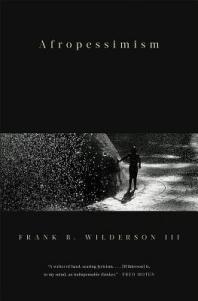
wilderson_afropessimismFrank Wilderson’s much-heralded new book, Afropessimism, is uneven, inconsistent, frequently repetitive and frustrating, even off-putting. At the end of it all, I’m not sure I liked it much. But it is also often compelling and definitely an important statement, a manifesto of sorts, that should be read by anyone involved in critical theory or political movements today. Indeed, its faults and rough edges are part of the point. This is not a book that seeks to win friends. Quite the opposite: Wilderson notes without apology that it is “common for most people to feel like they’d been mugged by Afropessimism” (328). This is a book that aims to take you by surprise and leave you reeling on the ground, even (especially) if you thought yourself an ally of progressive anti-racist politics.

What is Afropessimism? It can perhaps most easily be contrasted (as it is throughout this book) with identity politics such as feminism. If feminism has been defined as “the radical notion that women are human beings,” Afropessimism is the perhaps still more radical notion that Blacks are not human. More precisely, Blacks are “the foil of Humanity” (13). It is their exclusion from the Human, effected through constant, gratuitous violence, that enables the constitution of Humanity as such that is thus parasitical on a Blackness that it both requires and refuses: “just as economic production is parasitic on the labor power of the working class, the production of Human capacity is parasitic on the flesh of the Slave, the Black” (192). Hence, where the aim of feminism (or, say, LGBTQ politics) is to reclaim a humanity denied to women (or lesbians, gays, etc.), Afropessimism by contrast refuses a humanity that it sees as inherently “unethical” (333) because of its dependency on anti-Black violence. Hence, indeed, Afropessimism is cast not simply in contrast to identity politics but also against them, as well as against any other notionally progressive movement (Marxism, postcolonialism, or whatever) for which the Human is taken for granted or even upheld as the terrain or object of its struggle. The “pessimism” of Afropessimism, then, surely arises in part because (it claims) Blacks will be perpetually disappointed if not betrayed by their would-be allies on the Left. And the mugging that it delivers hits hardest at those (Black or non-Black) invested in a solidarity politics that it claims is at best impossible, at worst damaging to any prospect of Black liberation.

What is Black liberation? Wilderson spends much more time describing what it is not than what it is. As he puts it, “Afropessimism has no prescriptive gesture.” In so far as it envisages a future, it is quite literally apocalyptic: “The end of our suffering signals the end of the Human, the end of [the] world” (331). This is, Wilderson admits, “a program of complete disorder” (250). But Blacks can welcome the end of the world because whereas (say) women or “non-Black people of color [. . .] have something to salvage,” Blacks by contrast “have nothing to lose” (176). Moreover, Wilderson adds that “The desire to be embraced, and elaborated, by disorder and incoherence is not anathema in and of itself. No one, for example, has ever been known to say, Gee whiz, if only my orgasms would end a little sooner, or maybe not come at all” (250). As such, liberation seems to involve an affirmation of the Real, not far distant (despite the reference here to the “faux-politics of Deleuze” [183]) from the untamed expression of desiring-production championed by schizoanalysis.

So Afropessimism is not entirely novel, however much it breaks (at time abruptly) from many of the assumed verities of identity politics or the mainstream left, even in its “intersectionalist” guise. It has much in common with at least one strain of Subaltern Studies (à la Spivak, for instance), as well as with the approach that some of us have been advancing in terms of “posthegemony” and “infrapolitics” and the like. Wilderson certainly has no truck with the Gramscian conceptions of hegemony and civil society, but he returns to them repeatedly as they encapsulate all that he finds wrong with so much of what passes for progressive thinking and leftist political strategy today: “coalitions and social movements [. . .] bound up in the solicitation of hegemony [. . .] ultimately accommodate only the satiable demands and legible conflicts of civil society’s junior partners [. . .] but foreclose upon the insatiable demands and illegible antagonisms of Blacks” (222-3). For Wilderson, political analysis and strategy alike must move beyond the confines of a hegemony theory that only makes things worse, blind as it is to the constituent violence that grounds hegemony itself, seared into Black flesh before the play of either consent or coercion can kick in. Where Afropessimism most strikingly breaks from Subaltern Studies or posthegemony, however, is precisely in that it is Black flesh that is at issue. Here, the excluded subaltern position is explicitly and specifically (and uniquely) coded as Black. Women, gays, the indigenous, the working class (and so on) are never, for Wilderson, subaltern in this sense, as they always have something at stake in the struggle for hegemony. For Blacks, by contrast, what is as stake is hegemony itself, which is only thinkable on the basis of their a priori exclusion from civil society tout court.

It is this assertion that is no doubt one of the most controversial among the many incendiary positions that Wilderson stakes out. Indeed, he chronicles at length the fall-out of one occasion in which he made this argument about Black singularity, at a conference in Berlin where all hell broke loose after he gave a paper on Afropessimism. We can agree that there is something at best distasteful about what he calls an “oppression Olympics” in which injustices would be compared and measured. To use Wilderson’s terms, there is no analogy between (say) the genocide that was the transatlantic slave trade and the genocide that was the European Holocaust. The two histories are incomparable. Indeed, Wilderson would argue that anti-black violence is not even historical; it is what grounds historical narrative without fully being registered by it. Yet, on the one hand, it is undeniable that the slave trade is also historical; its trace can be found even in the historical record that can never do it justice. And, on the other hand, there is something about the Holocaust (and not just the Holocaust) that also both subtends and escapes narrative rationality. In other words, we may accept Wilderson’s analytic distinction between a “contingent” violence that is subject to the logic of hegemony, and an “absolute” or “gratuitous” violence inflicted upon those constitutively excluded from that logic, without necessarily agreeing that only Blacks suffer gratuitous violence, or that the violence inflicted on other social groups is always and inevitably contingent.

Take for instance the post-conquest treatment of the indigenous peoples of the Americas, or more generally colonial violence. Addressing the “Native American genocide,” Wilderson acknowledges that “there are pre-logical or libidinal elements to the murder of eighteen million people–to be sure. But,” he continues, “land acquisition and usurpation give the genocide a kind of coherence and reasonableness” (219; emphasis added). Here that qualification that this is only “a kind of” reasonableness is doing a lot of work, and elsewhere even such qualification is absent as when (only a few pages later) Wilderson posits that “I know that I am not Black because when and if I experience the kind of violence Blacks experience there is a reason, some contingent transgression” (225; emphasis in the original). This is all too close to saying that such violence is indeed reasonable (or at least, that it has its reasons), when surely in fact there is always something in colonial violence–and likewise in the violence of anti-Semitism, misogyny, homophobia, and so on–that exceeds or undermines any possible reason. Conversely, it is surely also true that reasons have been adduced to justify slavery, however rephrehensible those reasons may be, mere figleaves for motivations grounded in what Wilderson denotes as “libidinal economy,” but without them there would never have been debates between slavers and abolitionists; without them, the tireless campaigning of someone like Fredrick Douglass would have been literally senseless.

In Wilderson’s book, the argument that Blacks are not (simply) the foil of Humanity is put most eloquently by the author’s mother, and her critique goes unanswered when she tells her son that “she wasn’t anybody’s slave, and that even when our ancestors were slaves they were Human beings” (329). Wilderson’s response is an uneasy joke (with reference to his white wife, “’Being Human isn’t anything to aspire to,’ I said. ‘Just ask Alice’” [329]). A better rejoinder might have been the observation that they weren’t simply Human beings, and that Afropessimism is interested in operationalizing the gap between Human and Black. But one would have to add that, as the old feminist slogan indicates, such a gap between Human and non-Human traverses many social groups, and perhaps ultimately all of us in one way or another. And to say this is not to assert any false equivalence, any reactionary equalization along the lines of “All Lives Matter.” On the contrary: the gap between any violence to which I may potentially be subject and the violence of slavery (whether historical or ongoing) is incommensurable. But as is attested by Wilderson’s own frequent recourse in this book to autobiographical stories (of his childhood in Minnesota, of a breakdown in Berkeley, or of his experiences in South Africa, for instance), the trace of that incommensurability is to be found in narrative, in history, even if it also always subverts and escapes them.

In short, Wilderson concedes all too much to hegemony, as though it fully (and implicitly without remainder) explained all other forms of oppression and violence that are not anti-Black violence. And at the same time, he could do more to think through the relationship, however contingent, between the anti- or non- (post?) hegemonic position that he ascribes to Blackness and the discursive procedures, his own included, by which that position is both acknowledged and inevitably disavowed. This may win no more friends, but it might suggest a theory of friendship (fleeting or otherwise) that could suggest paths to common programs without the mystifications of solidarity.

Pre-Prison Writings III

gramsci_pre-prison-writingsOf this final selection from Antonio Gramsci’s pre-prison writings, there is no doubt that the most interest text is the final one, “Some Aspects of the Southern Question,” a manuscript left incomplete as he was still working on it when he was arrested, tried, and thrown into a fascist jail in 1926. It is here, at last, that Gramsci first pays sustained attention to some of the themes and concepts that will be at the center of his reflections in the celebrated Prison Notebooks, not least the role of intellectuals and the concept of hegemony.
The term “hegemony” appears previously in this collection, but sparsely indeed. It crops up first in a passing mention to “the hegemonic positions of the reformists within the great trade-union organization” in an article on “Our Union Policy” of 1923 (250). It reappears in a piece the following year on “The Mezzogiorno and Fascism” (with a reference to “the Piedmontese and Northern governing hegemony” [261]), and then somewhat more insistently in Gramsci’s “Letter to the Central Committee of the Soviet Communist Party” of late 1926, where we are told that what is at stake in internal debates in Moscow is “the doctrine of the hegemony of the proletariat” (312). This last formulation, in an intervention into squabbles in the wake of the death of Lenin, between Stalin’s faction on the one hand and Trostky’s group on the other (Gramsci sides with Stalin), may well be an indication of the concept’s provenance in Lenin’s use of the term “gegemoniya.” In any case, what is clear is that both here and elsewhere (the rather more two-volume Lawrence and Wishart collection, Selections from Political Writings 1910-1920 and Selections from Political Writings 1921-1926 has other instances, including one dating back to 1918, though one would have to check the Italian original; the three-volume Scritti politici has no mention of “egemonia” or “egemonico” before 1920) Gramsci is far from making the concept his own. It is only with “Some Aspects of the Southern Question” that he even attempts a definition and begins to develop the concept further.

Again, this is not to say that something like the seeds of Gramsci’s own “doctrine” of hegemony are not evident already, even before it has received that name. I have noted his interest in the article “Two Revolutions” in an articulation between populist revolt and working-class self-determination. And a slightly different take on the problem of the relationship between politics and economics can be glimpsed in his observation, in “A Study of the Italian Situation” of 1926, that:

Politics is always one step behind–or many steps behind–economics. The State observation is far more resistant than it is often possible to believe; and at times of crisis, it is far more capable of organizing forces loyal to the regime than the depth of the crisis might lead one to suppose. This is especially true of the most important capitalist States. (297)

Indeed, here we surely get an indication of what will motivate the development of hegemony theory. For this is an analysis premised on defeat. We are no longer in the heady days of the Turin factory occupations of the beginning of the decade. In fact, in the intervening years Fascism has come to power, apparently aided and abetted by the “reformists” and Social Democrats who are the main targets of Gramsci’s critique in these articles. The situation is Italy is precarious at best. Not to mention the fact that (as his letter to the Russians indicates, but also judging from his appraisal of developments in England and elsewhere) events internationally no longer seem to be going the way of the Communist Revolution. Gramsci still fervently believes that the objective conditions are ripe for change, but he has to address the series of setbacks that the working-class movement has suffered year on year. And as others, too, will later discover, the notion of “hegemony” seems to offer solace and hope in such troubled times.

Hence, in “Some Aspects of the Southern Question,” Gramsci provides his first attempt at defining and elaborating on the concept of hegemony:

The Turin Communists had raised, in concrete terms, the question of the “hegemony of the proletariat”: in other words, the question of the social basis of the dictatorship of the proletariat and the workers’ State. For the proletariat to become the ruling, the dominant class, it must succeed in creating a system of class alliances which allow it to mobilize the majority of the population against capitalism and the bourgeois State. In Italy, within the real class relations that exist here, this means succeeding in obtaining the consent of the broad peasant masses” (316).

Seeking this consent, Gramsci goes on to explain, will mean confronting the “Southern question” (the relationship between Italy’s industrial north and its still broadly agrarian south) as well as the Vatican (the role of the church).

For the Italian proletariat, then, winning over the majority of the peasant masses means taking on board these two questions, from a social point of view; understanding the class needs they represent; incorporating these needs into its revolutionary transitional programme; and incorporating them among the objectives for which it is struggling. (316)

Here, then, hegemony is envisaged as a project that entails overcoming long-standing social divisions: between North and South, city and countryside, worker and peasant. The project’s success would also mean acknowledging a diversity of positions and perspectives, albeit then translating them into the idiom of class. But perhaps above all it is a matter of adopting “a social point of view” as a means of establishing the “social basis” for the new, socialist state and the dictatorship of the proletariat that will usher it in. That dictatorship will involve the elimination of the peasantry (just as much as it involves the elimination of the bourgeoisie), but for now a “transitional programme” is envisaged, for which the perspective, needs, and objectives of the peasantry are to be acknowledged.

As Gramsci continues to explore and develop this conception of hegemony, he increasingly associates it with the role and social function of the “intellectual,” a social group to which he had paid little attention hitherto. At present, in this truncated, unfinished text, this is a category that is rather amorphous; it includes civil servants and school teachers, as well as writers and priests. What they have in common is their mediating function: “the Southern peasant,” for instance, “is linked to the great landowner through the mediation of the intellectual” (330). And while Gramsci continues to identify “the urban proletariat as the modern protagonist of Italian history and hence also of the Southern question” (334), he is beginning to come to conclusion that the working class is perhaps not yet ready for revolution. For “the proletariat, as a class, is short of organizing elements; it does not have its own layer of intellectuals and it will only be able to form such a stratum, very slowly and laboriously, after the conquest of State power” (336). It is then just as Gramsci’s pen runs out (the text trails off a paragraph later) that he stumbles across a key paradox, even Catch 22: the working class will only be able to produce its own intellectuals (and so, hegemony) after the capture of state power; and yet the state will not be captured, as the previous five years seem to have shown, without the contribution of intellectuals to the labor of hegemony.

We will see whether the concept of hegemony survives this contradiction in the subsequent phase of Gramsci’s writing, the Prison Notebooks, or whether in some sense the unfinished “Some Aspects of the Southern Question” is both high-water mark and dead-end for hegemony thinking.

“Patriarchy: From the Margins to the Center”

Cross-posted to Virtual Koerner’s.

It has been observed that the higher up a corporate hierarchy you look, the more likely it is you will find a psychopath. Indeed, in an article in Forbes (of all places) we read that “Roughly 4% to as high as 12% of CEOs exhibit psychopathic traits, according to some expert estimates, many times more than the 1% rate found in the general population and more in line with the 15% rate found in prisons.” The same article also reports that “the top four career choices for psychopaths are CEO, attorney, media personality and salesperson.” In other words, there is a congruence between psychopathic personality traits and some of the key institutions of contemporary society: business, the Law, the media, and commerce. So much for psychopathy being an “antisocial” disorder. It is part of the very fabric of the world we live in.

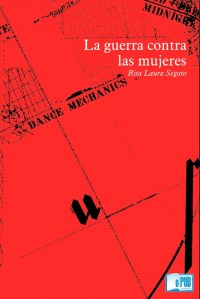
segato_guerraIn her chapter, “Patriarchy: From the Margins to the Center” (from La guerra contra las mujeres [2017]), Rita Segato goes further. We are all trained to be psychopaths now, she tells us, as part of a “pedagogy of cruelty” that is the “nursery for psychopathic personalities that are valorized by the spirit of the age and functional for this apocalyptic phase of capitalism” (102). Segato presents a brief reading of Stanley Kubrick’s A Clockwork Orange to make her point, though what she sees as “most extraordinary” about the film is that the shock with which it was received when it came out (in 1971) now seems to have almost totally dissipated. What was once taken as itself an almost psychopathic assault on the viewer’s senses is now just another movie; this shift in our sensibility is “a clear indication [. . .] of the naturalization of the psychopathic personality and of violence” (102). The narcissistic “ultra-violence” of the gang of dandies that the film portrays is now fully incorporated within the social order that it once seemed to threaten.

For Segato, moreover, this psychopathic violence to which we are increasingly inured is ultimately gender violence: it both establishes and is grounded upon what she elsewhere terms a “mandate of masculinity” by which masculine identity and at the same time both the public sphere and the state is inscribed on and at the expense of women’s bodies. Moreover, all this is folded into a “decolonial” perspective that does not claim that indigenous social structure were free of sexism or patriarchy, but which argues that Western modernity transformed what were once gender relations characterized by reciprocity into a binary system from which empathy is absent and woman are treated as things on which male narcissism inscribes itself.

In short, Segato offers a grand theory of human society and epochal history, at the root of which is (almost) always and everywhere violence against women. As she puts it: “Buried down below, at the foundation, at the foot of the pyramid, sustaining the entire edifice, a woman’s body” (97). As even the reference to a pyramid suggests, confirmed by the frequent invocation of diverse folktales and origin narratives from wildly different contexts, all this adds up to a kind of mythic anthropology that (for all the glancing citations of contemporary theorists such as Judith Butler) has a nineteenth-century feel to it. Indeed, there is a tension between the universalizing gestures on the one hand (an appeal to transhistorical ways of knowing and being), and the attempt to periodize and draw out specificities and differences on the other. Are we all psychopaths now, or is there something psychopathic inherent to modernity? At times, Segato seems to want to have it both ways. Equally, I’m not particularly convinced by her calls to feminine (and indigenous) empathy and reciprocity as modes of resistance to the increasingly violent structure of everyday life, not least because (despite her protests otherwise) all this does indeed sound very much like a form of essentialism.

For me, the parts of Segato’s analysis are very much more interesting and provocative than the whole. I don’t think that we need buy into the (quasi) cosmic unity of her over-arching vision to appreciate the very important ways in which she contributes to our understanding of the mechanisms of gender violence, for instance, not least in her specific studies of cases such as the femicides in Northern Mexico. Even if we see society less as a pyramid (with its base and superstructure) and more as a network or web, Segato’s analyses help us see in new ways how everything is connected, both to ensure the reproduction of forms of domination across many axes, and to offer hope that local resistances can have broad and unexpected repercussions throughout the system. The center has permeated the margins: there are few if any spaces of refuge, and certainly no pre-lapsarian community to which one might fantasize a return. But at the same time, the margins continue to haunt the center: multiplicity is everywhere.